


The best yoga poses for relaxation work by activating your body’s natural relaxation response through gentle stretching, deep breathing, and mindful positioning. Restorative yoga poses like child’s pose, legs up the wall, and gentle spinal twists help release physical tension while calming your nervous system. These poses require minimal effort but deliver real stress relief, making them ideal for both beginners and experienced practitioners seeking quick, accessible calm.
What are the key benefits of yoga poses for relaxation?
Whether you’re new to yoga or returning to your mat after a long break, understanding what these poses actually do for your body and mind makes it far easier to commit to a regular practice. The benefits are both immediate and cumulative — even a single short session can shift how you feel, while consistent practice builds lasting resilience over time.
- Slows your heart rate and breathing, signaling to your body that it is safe to rest
- Reduces cortisol and other stress hormones that accumulate during demanding days
- Eases chronic muscle tension, particularly in the shoulders, neck, and lower back
- Activates the parasympathetic nervous system — your body’s built-in rest and recovery mode
- Improves sleep onset and overall sleep quality, making it a powerful tool for yoga for better sleep
- Reduces symptoms of anxiety and mental overwhelm by anchoring attention to breath and body
- Supports emotional regulation and greater self-awareness over time
- Increases full-body mobility gradually, making everyday movement feel more comfortable
These benefits are accessible regardless of your flexibility level or prior experience. The poses covered below are specifically chosen because they deliver these outcomes without requiring advanced skill, making them ideal starting points for anyone beginning a yoga practice for anxiety or stress relief.
What makes the most relaxing yoga poses so effective for stress relief?
The most relaxing yoga poses trigger your parasympathetic nervous system, which controls your body’s rest-and-digest response. Effective yoga poses for relaxation share several key characteristics that make them particularly powerful for calming both mind and body:
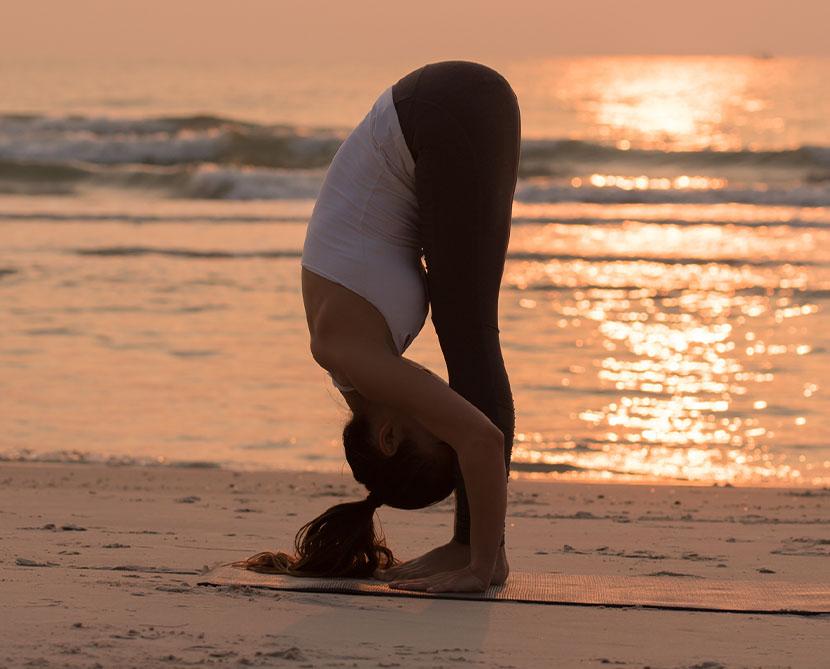
- Forward folds – Compress the abdomen and naturally slow your heart rate while encouraging inward focus
- Supported backbends – Gentle chest opening stimulates the vagus nerve, promoting deep relaxation
- Inversions – Elevating your legs above your heart improves circulation and calms the nervous system
- Minimal muscular effort – Poses that use props or gravity allow complete muscle surrender
- Sustained holds – Maintaining positions for 3–5 minutes gives your body time to fully relax
These characteristics work together to shift your body from fight-or-flight mode into deep rest. When you hold these positions for three to five minutes with mindful awareness, your body naturally releases calming hormones while tension melts away from overworked muscles — relief that beginners can feel within a single session.
Which relaxing yoga poses should beginners try for instant stress relief?
Starting a yoga for relaxation practice doesn’t require advanced flexibility or years of experience. The poses below deliver immediate calming benefits within minutes and can be practiced safely at home without special equipment. Each one targets the most common physical symptoms of daily stress — tight shoulders, a stiff lower back, and shallow breathing — making them ideal for busy professionals, parents, and anyone who needs on-demand stress relief.
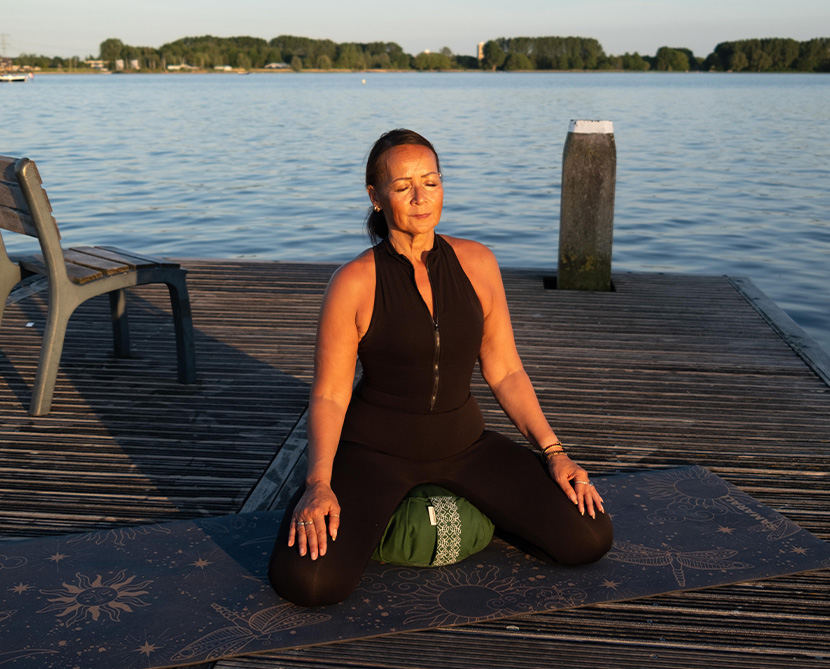
Easy Pose (Sukhasana)
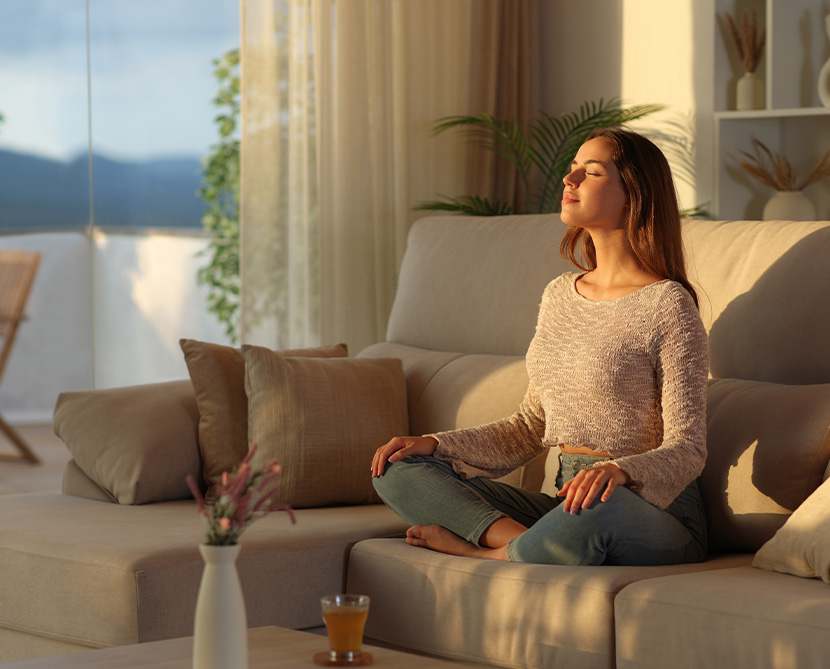
Easy Pose is a simple seated posture that grounds your attention and prepares your nervous system for deeper relaxation. It is especially effective for yoga for anxiety — pairing it with a structured breathing technique can calm anxious thoughts within just a few breath cycles.
- Sit cross-legged on your mat with your sit bones grounded evenly beneath you.
- Rest your hands on your knees, palms facing up.
- Lengthen your spine gently upward and softly close your eyes.
- Inhale slowly through your nose for a count of 4.
- Exhale slowly through your nose or mouth for a count of 6, allowing your body to soften with each breath out.
- Repeat for 8–10 breath cycles before transitioning to your first floor pose.
This extended exhale technique activates the parasympathetic nervous system directly. Even a few rounds can noticeably reduce physical tension and mental overwhelm — making it one of the most immediately effective tools available to beginners.
Modification: Sit on a folded blanket or block to elevate your hips above your knees if your lower back tends to round in a cross-legged position.
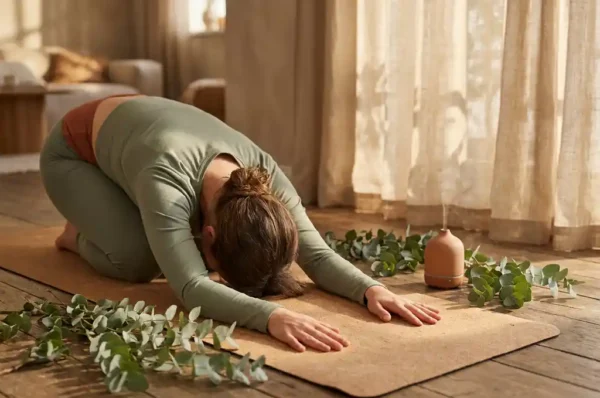
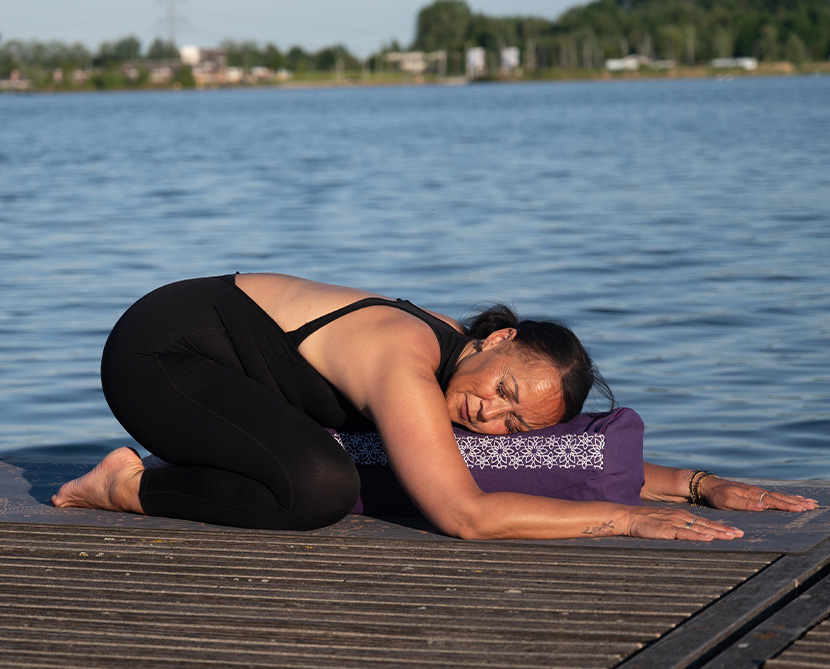
Child’s Pose (Balasana)
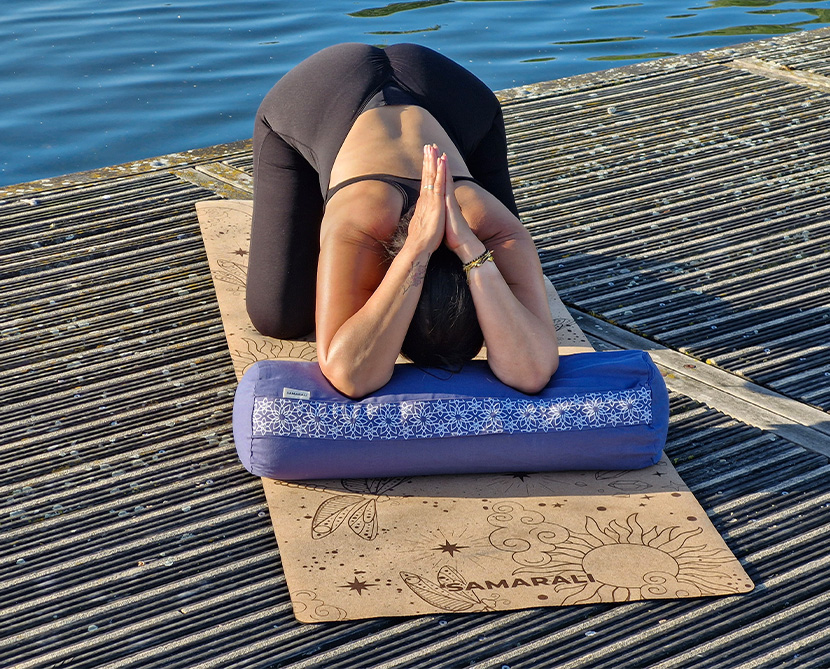
Child’s Pose is one of the most instinctively soothing postures in yoga. It gently compresses the abdomen and encourages a forward-folded, inward focus that signals safety to your nervous system — making it especially comforting when you feel overwhelmed. It is particularly helpful for desk workers and anyone carrying tension across the upper back and shoulders.
- Begin on your hands and knees, with your wrists aligned under your shoulders and knees under your hips.
- Bring your big toes together and widen your knees to about hip-width apart, or wider if that feels more comfortable.
- Exhale and lower your hips back toward your heels, extending your arms forward along the mat.
- Rest your forehead gently on the mat and allow your entire back to soften and broaden.
- Breathe slowly and deeply, holding the pose for 1–3 minutes while releasing any effort with each exhale.
Modification: If your hips don’t reach your heels comfortably, place a folded blanket between your thighs and calves for support.
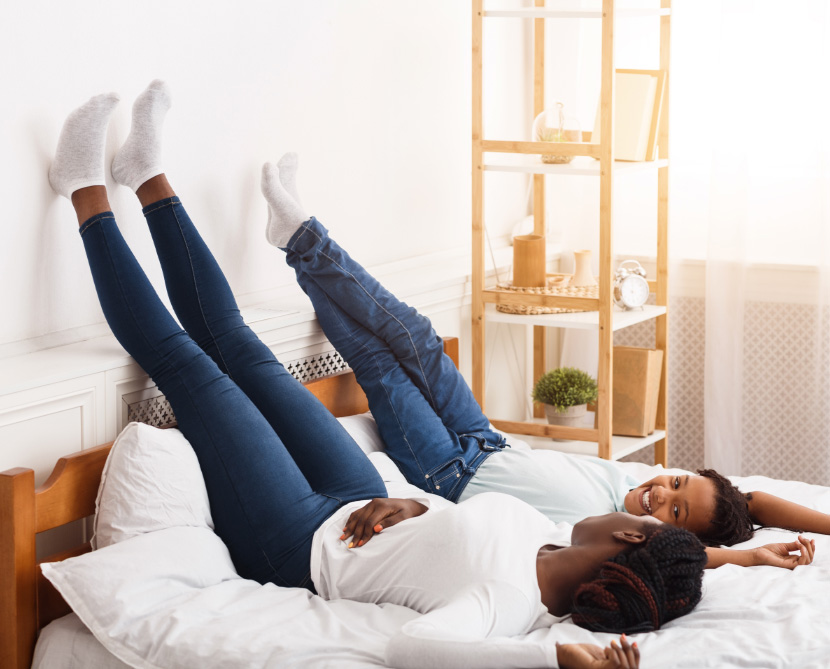
Legs Up the Wall (Viparita Karani)
Legs Up the Wall is a gentle inversion that reverses the effects of prolonged sitting or standing by encouraging blood to flow back toward the heart and torso. It is especially beneficial for relieving tired, heavy legs and reducing feelings of anxiety or restlessness — you can often feel the physiological shift within the first minute.
- Sit sideways next to a clear wall with your hip as close to the baseboard as comfortable.
- Swing your legs up the wall as you lower your back and shoulders to the floor in one smooth movement.
- Let your arms rest at your sides, palms facing up, and allow your legs to be fully supported by the wall.
- Close your eyes and breathe naturally, letting gravity do all the work.
- Hold for 5–10 minutes, then slowly bend your knees and roll to one side before sitting up.
Modification: Place a bolster or folded blanket under your hips to elevate your pelvis if your lower back feels any discomfort.
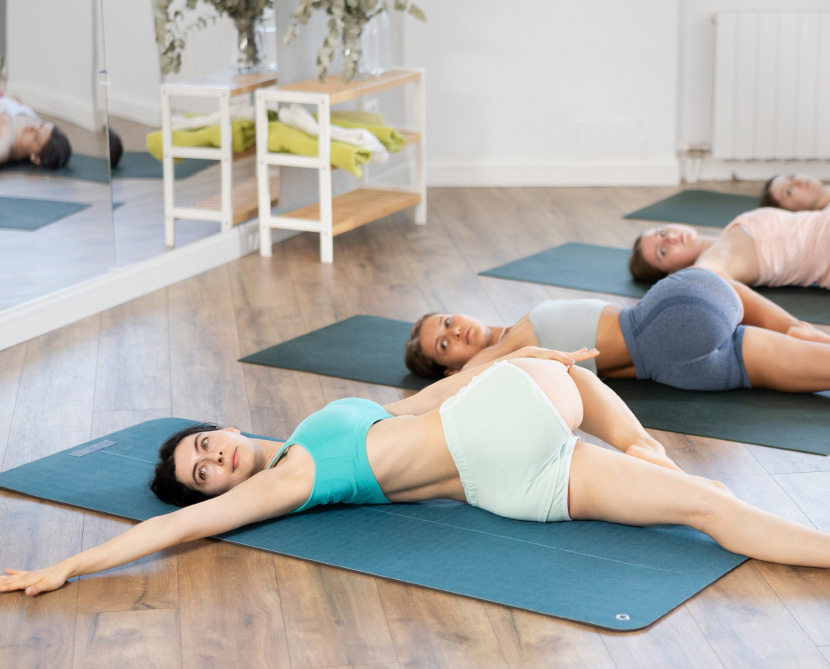
Supine Spinal Twist (Supta Matsyendrasana)
Gentle supine twists release accumulated tension along the entire length of the spine while also stimulating digestion — a system that is frequently disrupted by chronic stress. This pose is accessible to nearly everyone and is a valuable addition to any yoga for stress and anxiety practice.
- Lie flat on your back with your legs extended and arms resting at your sides.
- Draw your right knee into your chest, then guide it across your body to the left using your left hand.
- Extend your right arm out to the right at shoulder height and gently turn your gaze in the same direction.
- Allow gravity to deepen the twist rather than forcing your knee lower — breathe into any areas of tightness.
- Hold for 1–3 minutes, then return to center and repeat on the opposite side.
Modification: Rest a block or cushion between your knees to reduce strain on your lower back and hips if the full twist feels too intense.
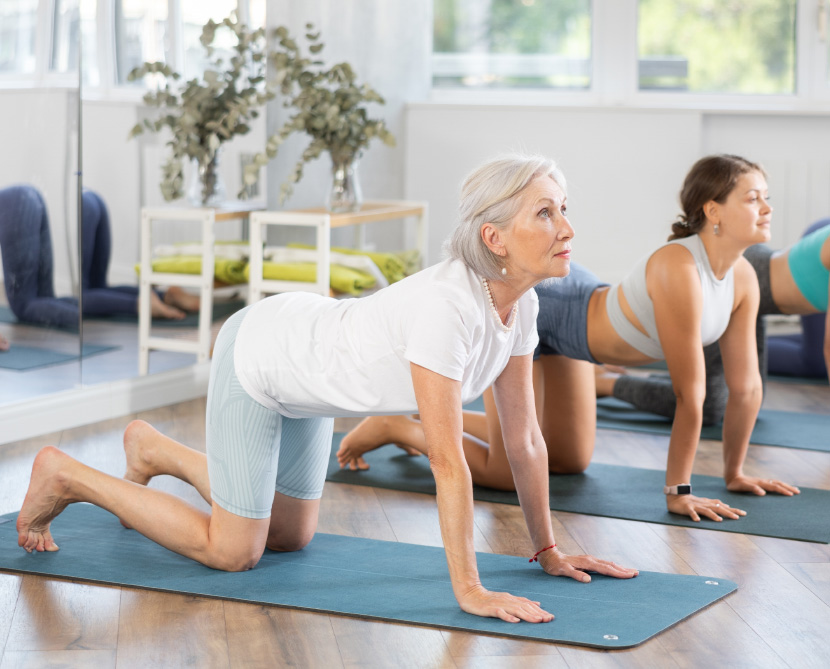
Cat-Cow Stretch (Marjaryasana-Bitilasana)
Cat-Cow flows between two complementary spinal shapes, gently mobilizing the entire back while synchronizing breath with movement. This combination is one of the most effective ways to release physical and mental tension simultaneously, and it works well for anyone with a stiff or sore spine, regardless of fitness level.
- Begin on your hands and knees with wrists under shoulders and knees under hips.
- On an inhale, drop your belly toward the mat, lift your tailbone and chest, and gaze gently forward (Cow Pose).
- On an exhale, round your spine toward the ceiling, tuck your tailbone, and let your head drop (Cat Pose).
- Continue flowing between these two shapes at your own breath pace for 1–2 minutes.
- Move slowly and with full attention, letting each breath guide the movement rather than rushing.
Modification: Use a folded blanket under your knees if you experience any discomfort on a hard floor.
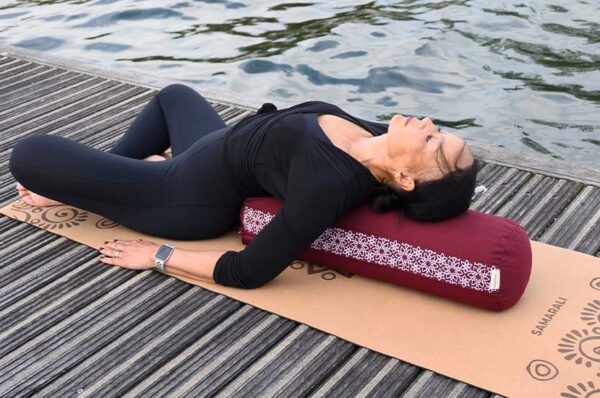
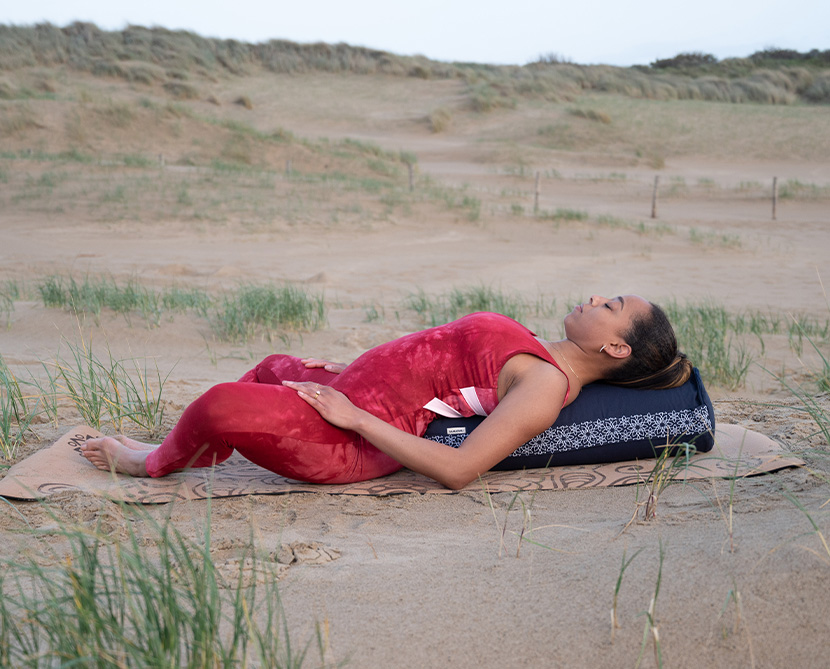
Supported Fish Pose (Matsyasana)
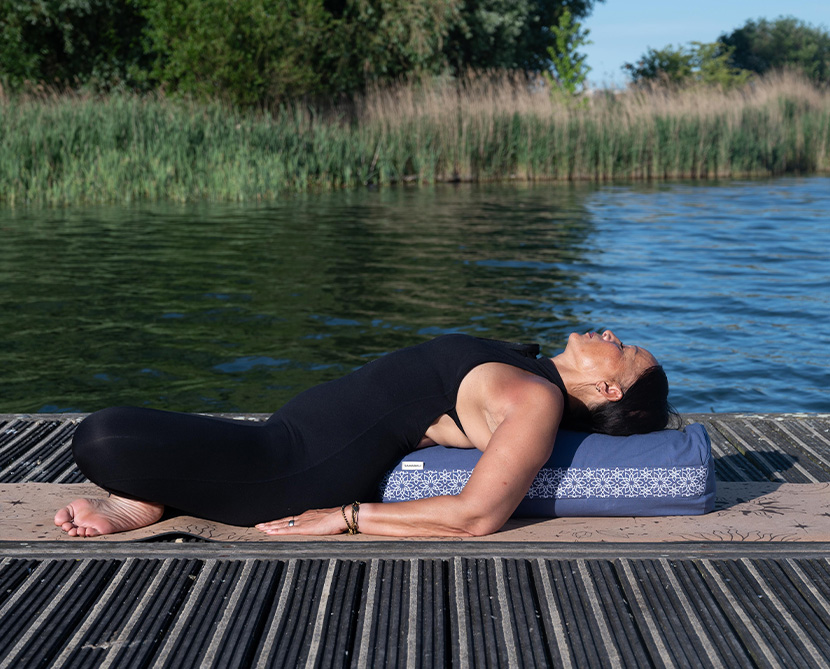
Supported Fish Pose gently opens the chest and throat, counteracting the rounded posture that builds up from hours of screen use or stress-induced tension. By creating space across the front of the body, it encourages deeper, fuller breathing, which directly supports parasympathetic nervous system activation. This pose is especially helpful if you carry stress as tightness in the chest or shoulders.
- Place a bolster or rolled blanket lengthwise on your mat before you begin.
- Sit in front of the prop, then slowly lower your back onto it so the support runs along your spine between your shoulder blades.
- Let your head rest comfortably — use a second folded blanket under your head if needed.
- Extend your legs straight or allow the soles of your feet to meet in a butterfly shape.
- Rest your arms at your sides or overhead, close your eyes, and breathe deeply for 3–5 minutes.
Modification: Position the bolster lengthwise under your spine so your chest opens fully without any muscular effort — this is the intended way to practice this pose.
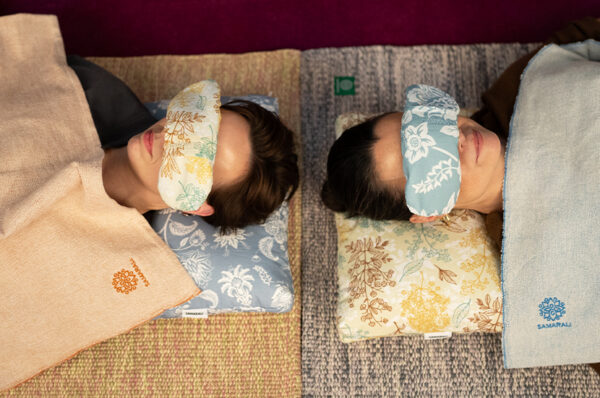
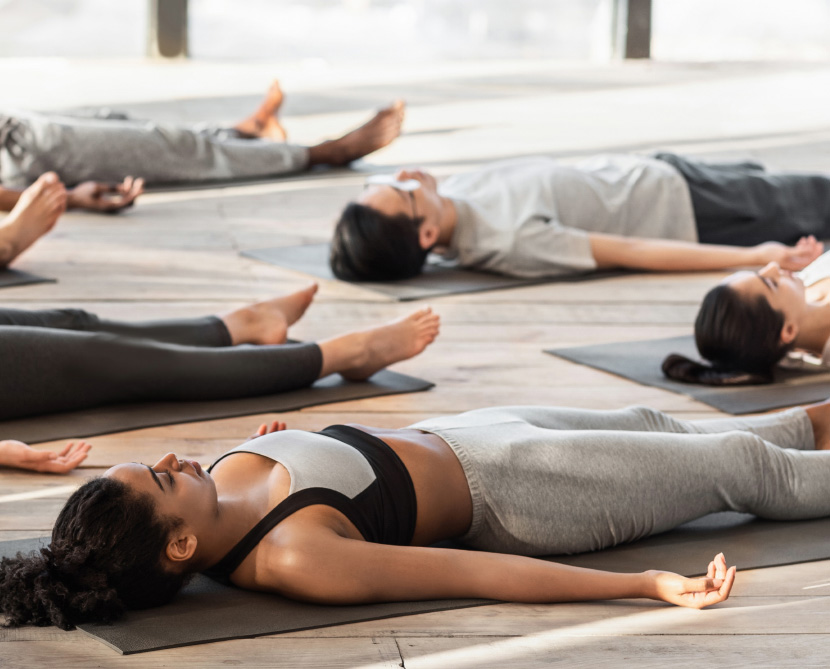
Corpse Pose (Savasana)
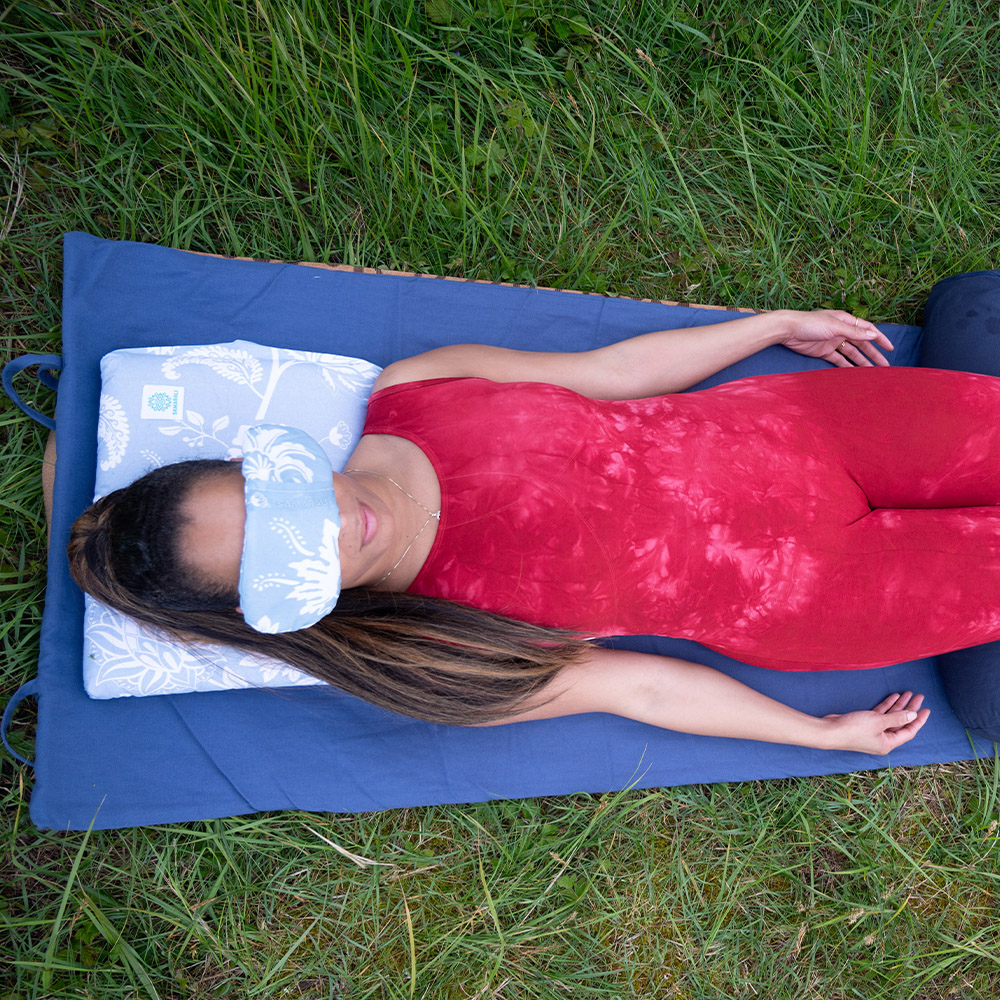
Savasana is widely regarded as the ultimate integration posture in yoga — the moment where your body fully absorbs the benefits of everything that came before it. Far from simply lying down, it is an active practice of conscious surrender that allows the nervous system to consolidate its shift into deep rest. Skipping it leaves any relaxation sequence incomplete.
- Lie flat on your back on your mat, allowing your feet to fall naturally outward.
- Let your arms rest at your sides with palms facing up, a few inches away from your body.
- Close your eyes and release all deliberate muscular effort, starting from your feet and moving upward through your body.
- Breathe naturally without controlling or deepening the breath — simply observe it.
- Hold for 5–10 minutes, remaining as still as possible to allow full integration.
Modification: Place a rolled blanket under your knees and a savasana pillow under your head to release lower back tension if your lower back lifts away from the mat.
How do you create the perfect environment for relaxing yoga practice?
Your practice environment plays a real role in how quickly and deeply your nervous system shifts into rest mode. The right setting amplifies every pose you hold. Consider these elements when creating a calming home space:
- Lighting – Use dim, warm lighting or candles to signal to your nervous system that it’s time to unwind
- Temperature – Keep the room at a comfortable temperature that won’t pull your attention away from your practice
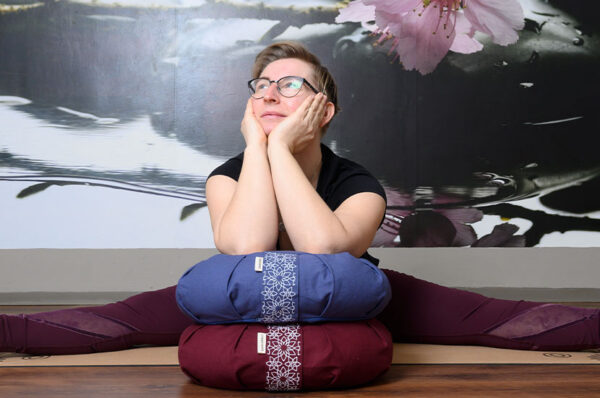
- Props – Supportive bolsters, blocks, and blankets, a neck pillow, allow your body to fully release into each pose
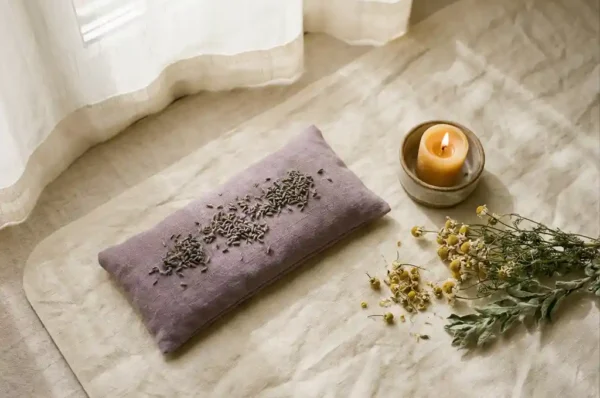
- Aromatherapy – Calming essential oils like lavender or chamomile can deepen the relaxation response
- Digital detox – Switch off devices to eliminate distractions and promote inward focus
- Sound – Choose gentle background music, nature sounds, or complete silence based on your preference
When your external environment supports deep relaxation, your internal experience naturally deepens. These sensory cues work together to tell your body and mind that this is dedicated time for rest — whether your session lasts five minutes or an hour.
What’s the best way to sequence yoga poses for deep relaxation and stress relief?
How you move through poses matters as much as which poses you choose. Rushing from active movement directly into stillness undermines the therapeutic benefit of even the most effective relaxation postures. A structured wind-down sequence allows your nervous system to shift gradually from stress to rest. Follow these steps for an effective transition:
- Gradual cool-down – Slowly reduce the intensity of your movements rather than stopping abruptly
- Breath awareness – Deepen and lengthen your breathing to signal your nervous system to shift gears
- Hip openers – Include poses like butterfly or happy baby to release stored tension
- Gentle twists – Seated or supine spinal twists wring out remaining muscular tension
- Forward folds – Supported child’s pose or seated forward fold encourages introspection and inward calm
- Final preparation – End with legs up the wall or a supported backbend before moving into Savasana
The key is spending adequate time in each posture — typically two to five minutes — since rushing defeats the purpose of restorative practice. When you honor this process with patience, your yoga practice becomes significantly more effective for both sleep and daily stress management. The benefits extend well beyond your yoga mat into improved energy, focus, and overall well-being.
How do you build a consistent yoga relaxation routine that fits your lifestyle?
Knowing the right poses is only half the equation — the other half is showing up regularly enough to feel the cumulative benefits. For busy professionals and parents managing a full schedule, consistency is often the hardest part. The good news is that a sustainable habit does not require long sessions or perfect conditions.
- Start with just 5–10 minutes per day rather than waiting until you have time for a full session — short, regular practice builds the habit faster than occasional long ones
- Choose a consistent time of day that you can protect; a pre-bedtime practice supports yoga for better sleep, while a morning session sets a calmer tone for the day ahead
- Dedicate a specific corner of your home to practice, even a small one — a consistent physical space helps your nervous system begin relaxing the moment you arrive there
- Release the expectation of a perfect session; any time you spend on your mat is genuinely beneficial, regardless of how long or focused it feels
- Track how you feel over 2–4 weeks rather than session by session — the cumulative benefits of regular practice become most visible across this window
- Consider pairing your practice with a short meditation immediately after Savasana to extend the calm into the rest of your day
Consistency matters far more than session length when it comes to building lasting stress resilience. Having quality props — an organic cotton bolster, a supportive block, or a soft blanket — can make your practice feel like a ritual worth returning to, rather than another item on your to-do list. Our range of sustainably crafted yoga accessories is designed to support exactly that kind of intentional, enjoyable practice.
These accessible stress-relief techniques work whether you have five minutes for emergency relaxation or an hour for deep restoration. When combined with a dedicated meditation practice, the results deepen further. At Samarali, we support your mindful yoga practice with sustainably crafted accessories made from organic cotton, packaged without plastic to honor both your wellness journey and our planet’s health.
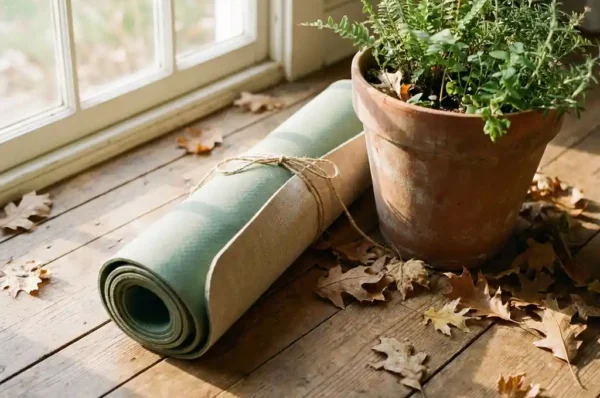
Browse our collection of thoughtfully crafted sustainable yoga essentials, including organic cotton mats, bolsters, and props designed to support every relaxation pose in your practice, made with respect for the planet.