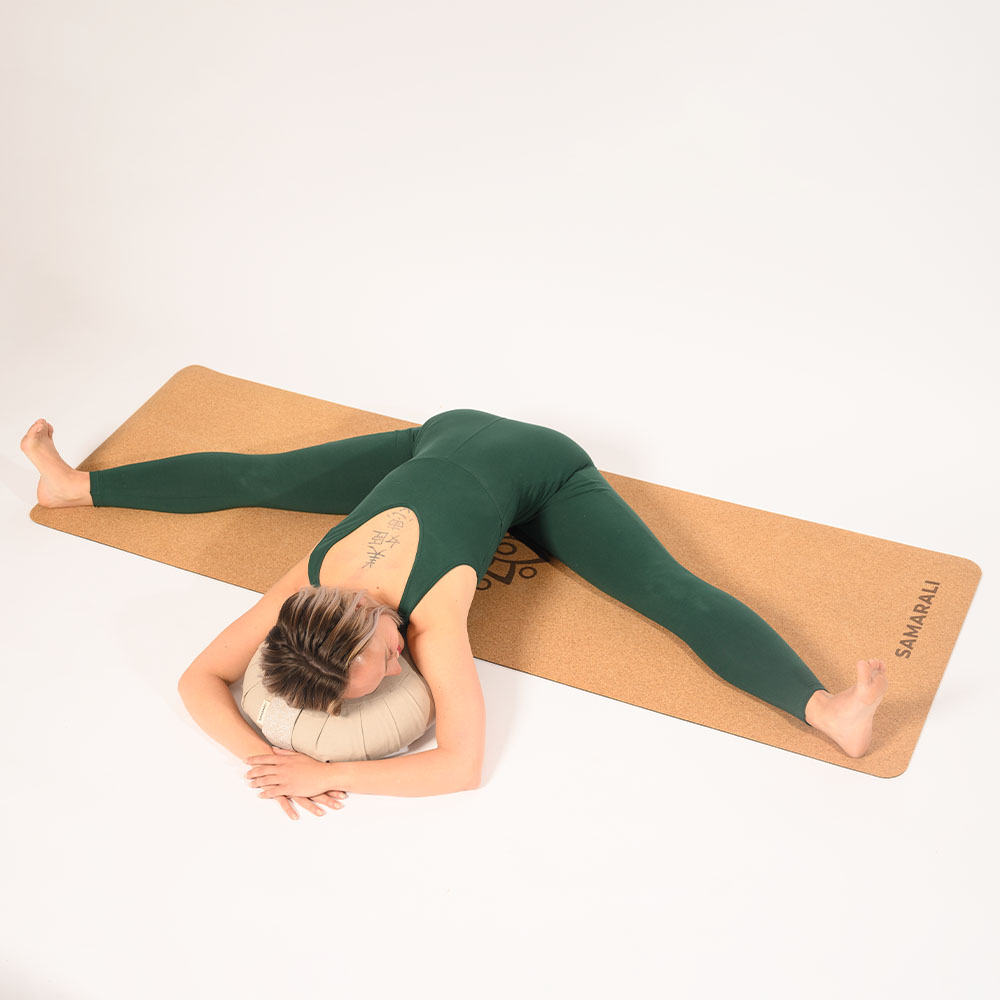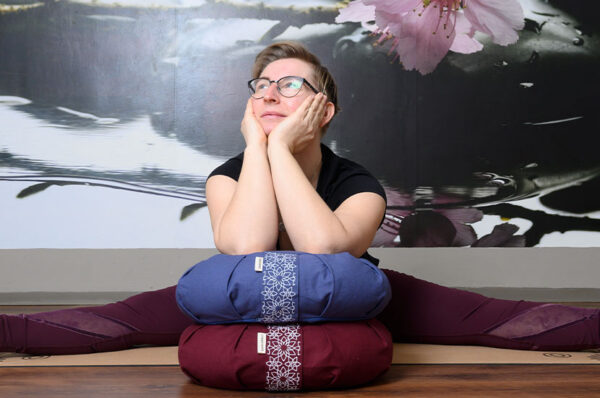



If you are dealing with knee pain or discomfort during yoga, the right mat thickness can make a significant difference. For most practitioners, a yoga mat between 6mm and 8mm thick provides optimal knee protection without sacrificing the stability you need for balance and alignment. Whether you are managing chronic knee sensitivity, recovering from an injury, or simply want more cushioning in kneeling poses like low lunge and camel pose, your body weight, practice style, and degree of knee sensitivity will determine whether you need the lower or higher end of this range.
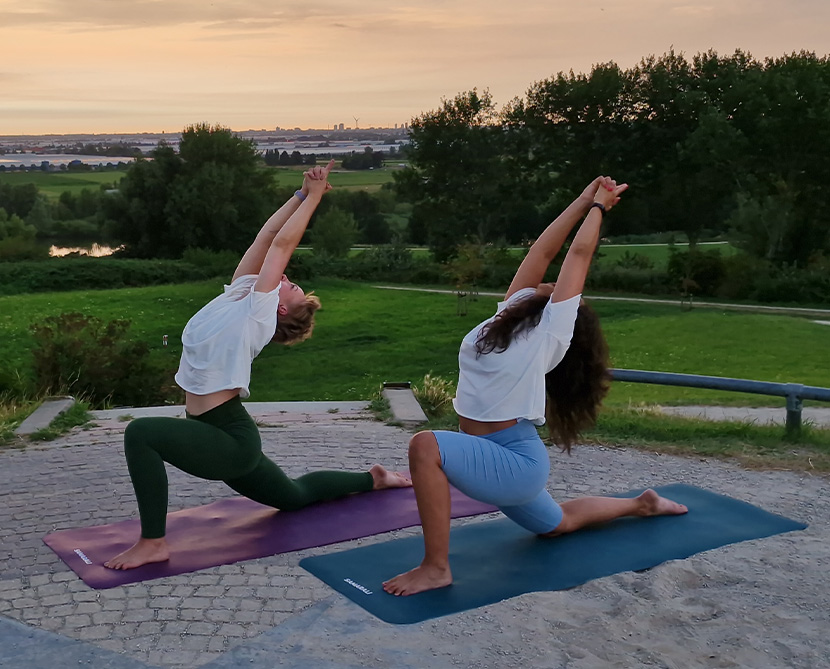
What yoga mat thickness provides the best knee protection?
The industry-standard yoga mat is approximately 3mm thick, which suits experienced practitioners in dynamic styles like vinyasa or power yoga who prioritize ground connection. For practitioners with knee sensitivity, the standard thickness falls short. Most knee-comfort-focused recommendations begin at 6mm — double the industry standard — where cushioning meaningfully reduces joint pressure without sacrificing too much floor connection.
A 6mm to 8mm thick yoga mat delivers the best knee protection for most people, cushioning your knees during poses like low lunge, camel, and child’s pose while maintaining enough stability for standing postures and balancing sequences. Here is how different thicknesses affect your knees:
- 4mm mats – Minimal cushioning; best for practitioners with healthy knees who prioritize stability and floor connection
- 6mm mats – A strong balance between comfort and stability; adequate knee protection with proper alignment in standing poses
- 8mm mats – Enhanced cushioning for sensitive knees or practitioners who spend significant time in kneeling positions
- 10mm+ mats – Maximum cushioning, but can compromise stability; best suited to restorative yoga or chronic knee issues
One critical factor that thickness comparisons alone do not capture is material density. A low-density 8mm foam mat can collapse completely under your knee, leaving you feeling the hard floor beneath. A high-density 6mm mat, by contrast, maintains its structure under pressure and delivers consistent cushioning throughout your entire practice. Your body weight also plays a role: heavier practitioners often benefit from 8mm mats since their weight compresses the material more, while lighter individuals may find 6mm sufficient.
Practitioners who switch from a 4mm mat to a 6mm natural rubber mat or cork mats often notice immediate relief during kneeling sequences — the cushioning holds up throughout the class rather than compressing away within the first few poses. That is the density difference making itself felt in real time.
For practitioners managing a more significant knee concern, an 8mm high-density mat — combined with folding the mat’s edge under the knee during kneeling poses — can allow you to rebuild a consistent practice without aggravating your recovery. This combination of mat thickness and simple technique adjustments is often what makes the difference between sitting out a pose and participating fully.
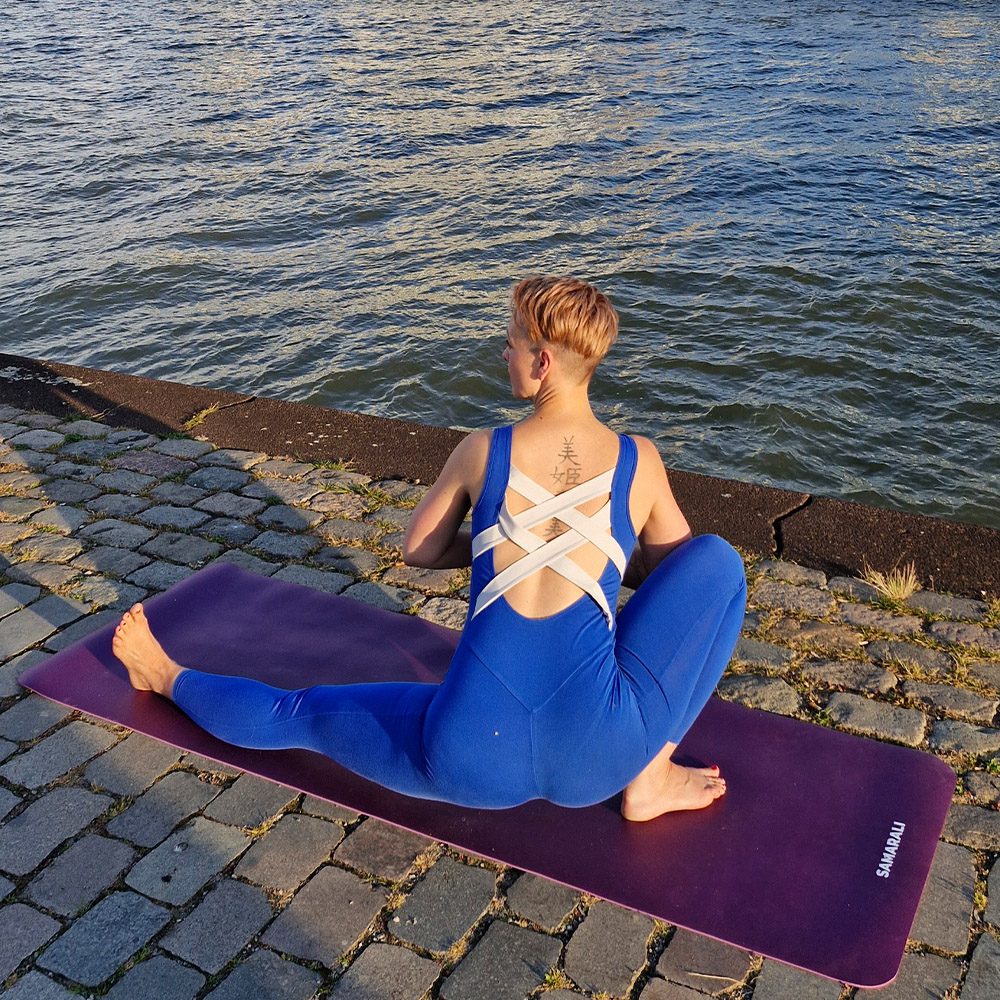
How does yoga mat thickness affect your practice beyond knee comfort?
Thicker mats reduce your connection to the ground, which impacts balance, proprioception, and energy transfer during poses. This trade-off between comfort and stability influences your entire practice, not just knee-heavy sequences. Here is how different aspects of your practice are affected:
- Balance poses – Tree pose, warrior III, and arm balances become more challenging on thicker surfaces, which create a “sinking” sensation that makes micro-adjustments difficult
- Yoga style compatibility – Vinyasa and power yoga benefit from thinner mats (4–6mm) for quick transitions; yin and restorative practices work well with thicker mats (8–10mm) for longer holds
- Portability – Thicker mats weigh considerably more and roll larger, affecting daily transport to classes or travel convenience
- Standing pose stability – Thicker mats can make you feel less grounded in poses like warrior I and triangle, though they provide relief during seated positions
- Heat retention – Thicker mats insulate more from cold floors but may feel warmer during vigorous practices, which is worth considering for hot yoga
Your practice style plays a defining role in the right choice. Vinyasa and power yoga practitioners typically benefit from a 4–6mm mat for quick transitions and ground connection. Yin, restorative, and therapeutic yoga practitioners are better served by 8mm or more, where long holds demand maximum joint cushioning. Consider your full practice needs, not just cushioning, to find your ideal match.
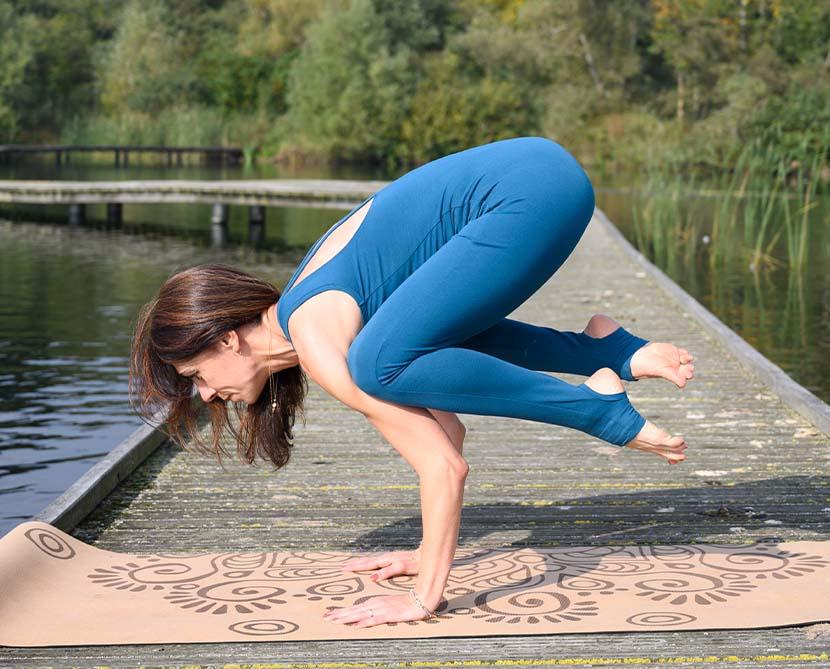
How to protect your knees during specific yoga poses
Knowing your ideal mat thickness is one step — understanding how to apply that cushioning across different pose categories is the next. Certain movements place far more pressure on the knees than others, and matching your mat choice and technique to those demands makes a meaningful difference in how your practice feels over time.
Kneeling poses (Low Lunge, Camel, Hero Pose)
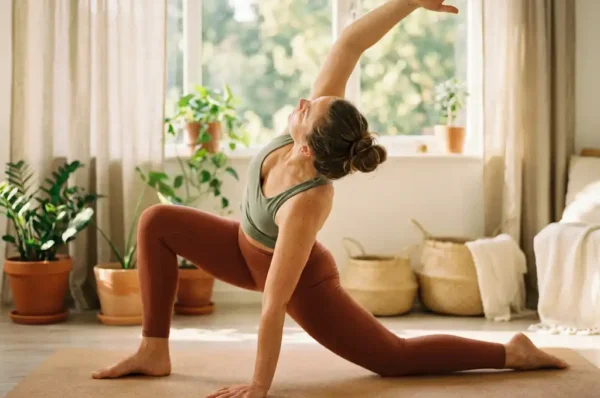
Kneeling poses concentrate your full body weight onto a small area of the knee, making them the most demanding category for joint cushioning. An 8mm high-density mat is ideal here, providing sustained support through longer holds without bottoming out. If you are using a 6mm mat, folding the mat’s edge under the knee adds a practical layer of extra padding without requiring a separate accessory — one of the most effective low-cost modifications for practitioners with knee sensitivity.
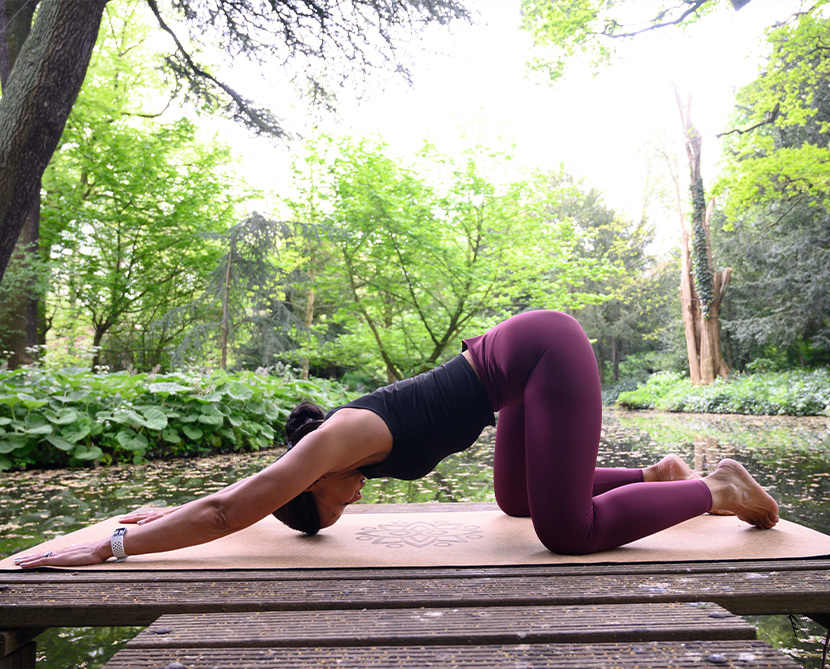
Tabletop and Cat-Cow poses
Tabletop-based movements distribute weight across both the wrists and the knees simultaneously, creating dual pressure points that a low-density mat handles poorly. A 6–8mm mat that passes the thumb-press density test is the right choice here — it needs to resist compression at the knee while still allowing a stable base for the hands. In this category, density rather than raw thickness is what determines comfort.
Floor-based and restorative poses (Child’s Pose, Pigeon)
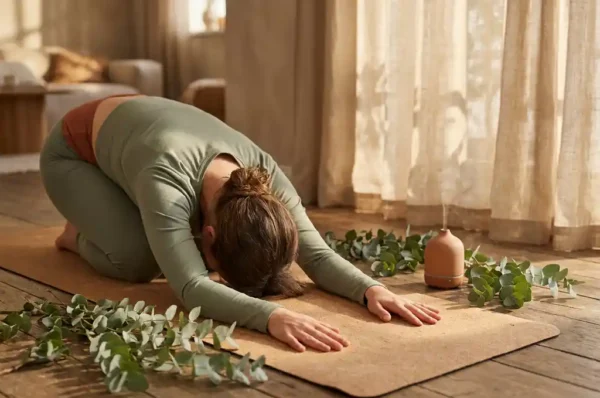
Restorative and floor-based poses involve extended holds — sometimes several minutes in a single position — which means sustained pressure on the knee rather than brief, dynamic contact. A high-density 8mm mat outperforms a thicker but softer alternative here because it maintains its structure throughout the hold, rather than fully compressing within the first minute. For practitioners managing knee pain, this is the pose category where material quality most directly determines comfort.
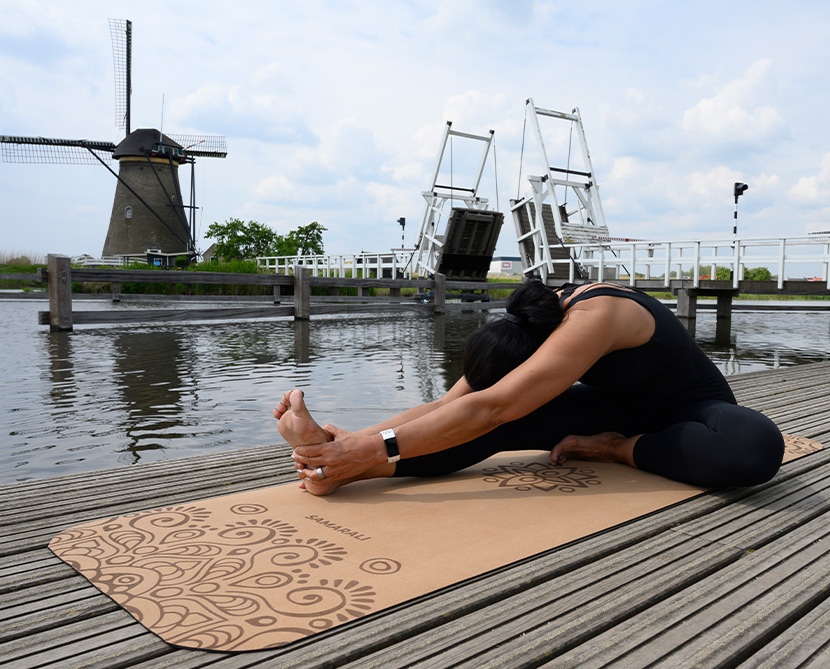
Standing and balance poses (Warrior I, Tree Pose)
Standing and balance poses present the opposite challenge: too much cushioning undermines the stability you need to hold alignment and make fine postural adjustments. A 6mm high-density mat typically strikes the right balance — enough cushioning for transitions into and out of standing poses, without the sinking sensation that a 10mm+ mat produces. If your practice includes a full mix of kneeling and standing work, a 6–7mm dense mat is usually the most versatile single solution.
What should you look for when choosing a yoga mat for sensitive knees?
Material density matters more than thickness alone for knee comfort and long-term joint protection. A dense 6mm natural rubber or TPE mat often provides better support than a soft 10mm foam version that compresses completely under pressure — a phenomenon known as the bottom-out effect. When a mat bottoms out, its cushioning benefit is entirely negated, and your knee absorbs the full impact of the floor.
Not all mat materials compress and rebound in the same way. Cheap PVC foam mats compress quickly and fully under body weight, offering little sustained cushioning — a 10mm PVC mat may, in practice, deliver less real joint protection than a 6mm natural rubber mat or cork yoga mat. TPE mats sit in the middle ground, offering better compression resistance than PVC, but with quality that varies significantly by brand. Natural rubber mats provide the highest density-to-thickness ratio: they maintain their structure under body weight and rebound quickly, making them the most reliable choice for practitioners with knee sensitivity. If you are managing knee discomfort, avoiding low-density PVC foam mats — regardless of their advertised thickness — is one of the most practical decisions you can make before purchasing.
Key factors to evaluate when selecting your mat:
- Material quality – Natural rubber or cork yoga mat offers the best density-to-comfort ratio for sensitive knees; approach low-density PVC foam mats with caution, as thickness alone does not compensate for poor compression resistance
- Compression testing – Quality mats maintain cushioning even under full body weight; inferior options compress completely
- Practice frequency – Daily practitioners often prefer 6–7mm for durability and versatility; occasional yogis might choose 8mm for maximum comfort
- Floor surface – Concrete or hardwood floors require more cushioning than carpeted studios, which influences your thickness needs
- Storage practicalities – Thicker mats require more storage room and may not fit standard yoga mat bags or studio cubbies
- Budget and longevity – Thicker mats often last longer as they can wear down more before becoming uncomfortable, though premium thin mats may outlast cheap thick alternatives
A quick way to test density in person: press your thumb firmly into the mat surface. A high-density mat resists full compression and springs back quickly. A low-density mat will compress all the way to the floor. Testing potential mats this way helps ensure your choice meets both your knee protection requirements and your overall practice goals. Finding the right yoga mat thickness balances comfort, stability, and the practical considerations unique to your practice.
When a thicker yoga mat is not enough for knee pain
For some practitioners, even the best mat is only part of the solution — and recognizing that is an important step toward protecting your long-term joint health.
There are three situations where mat thickness alone will not resolve knee discomfort:
- Recent injury or surgery – Seek professional clearance before returning to any yoga practice, regardless of how well-cushioned your mat is.
- Chronic conditions – Practitioners managing osteoarthritis or patellar tendinitis may find that layering a dedicated yoga knee pad over their mat during high-pressure poses provides meaningful additional relief that no single mat thickness can replicate.
- Persistent pain despite a quality mat – If you have already switched to a high-density mat in the 6–8mm range and your knee pain continues, treat that as a signal worth taking seriously. A physiotherapist or orthopedic specialist can identify whether the issue is structural, technique-related, or requires a modified approach to practice.
The following accessories can supplement mat cushioning when thickness alone falls short:
- A dedicated yoga knee pad placed under the knee in kneeling poses
- A folded blanket positioned beneath the knee for targeted support
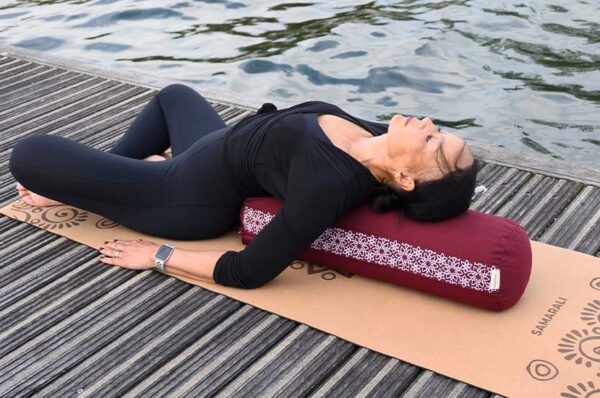
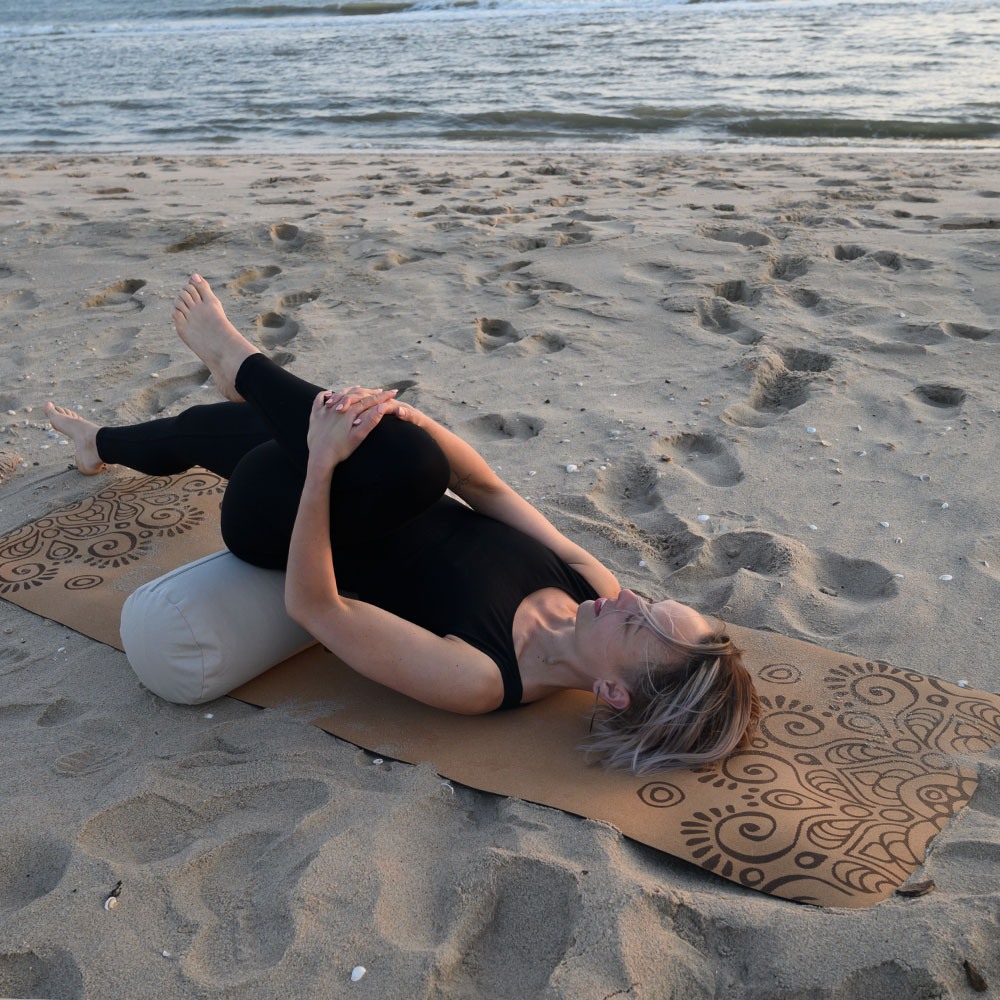
- A bolster used to support the body in restorative poses, reducing direct knee contact with the mat
These tools work best alongside a high-quality, high-density mat rather than as a substitute for one. Used together, they give practitioners with significant knee sensitivity the best possible foundation for a safe and sustainable practice.
Frequently asked questions about yoga mat thickness and knee comfort
Is a 6mm yoga mat good for knees?
Yes, a 6mm yoga mat is a strong choice for most practitioners with knee sensitivity. It strikes the right balance between cushioning and stability — providing sufficient joint protection during kneeling poses without introducing the instability that thicker mats can create during standing and balance work. The key is to ensure the mat is made from a high-density material, such as natural rubber, so it maintains its cushioning under body weight rather than fully compressing.
What thickness yoga mat do I need for bad knees?
For bad knees, the 6–8mm range is the most widely recommended starting point. A 6mm high-density mat suits most practitioners, while those with more significant sensitivity — or who spend extended time in kneeling positions — may benefit from an 8mm option. Density matters as much as thickness: a high-density 6mm mat will outperform a low-density 10mm mat for genuine knee protection.
Can a yoga mat be too thick for yoga?
Yes. Mats of 10mm or more create a sinking sensation that makes balance poses such as tree pose and warrior III noticeably harder to hold, as the unstable surface interferes with fine postural adjustments. If your sessions include a mix of kneeling and standing work, a 6–8mm dense mat is typically a more practical all-round solution than a very thick but less stable alternative.
Can yoga help relieve knee discomfort?
Yes, yoga can be genuinely beneficial for knee discomfort when approached thoughtfully. With the right mat, appropriate pose modifications, and attention to alignment, regular practice can strengthen the muscles surrounding the knee — including the quadriceps, hamstrings, and hip stabilizers — which reduces the load placed directly on the joint. If your discomfort is acute or linked to a diagnosed condition, consult a healthcare professional before beginning or resuming practice.
Is a thicker yoga mat always better for knee pain?
No, and this is one of the most common misunderstandings when choosing a mat for knee pain. A thicker mat made from low-density foam can bottom out completely under body weight, leaving your knee in contact with the floor and negating any cushioning benefit. A thinner but denser mat maintains its structure throughout your practice and delivers more consistent joint protection. Focus on density alongside thickness, and use the thumb-press test to verify that any mat you are considering genuinely resists compression before you buy.
Our recommendation: what to look for in a yoga mat for knee comfort
Based on everything covered in this guide, the ideal mat specification for knee comfort is consistent: 6–8mm of thickness, constructed from high-density natural rubber or organic cotton, with a firm, quick rebound on the thumb-press test. This combination ensures your mat cushions meaningfully during kneeling and floor-based poses while remaining stable enough for standing sequences and transitions.
Our sustainable yoga mats are built from high-density natural rubber and organic cotton — so your choice supports both your joint health and your environmental values. When you browse our collection, you will find thickness options constructed from materials selected for their density and durability rather than their advertised thickness alone.
Browse our sustainable yoga mats designed for joint comfort — thoughtfully crafted for mindful movement, built to protect your joints, and made with respect for the planet.