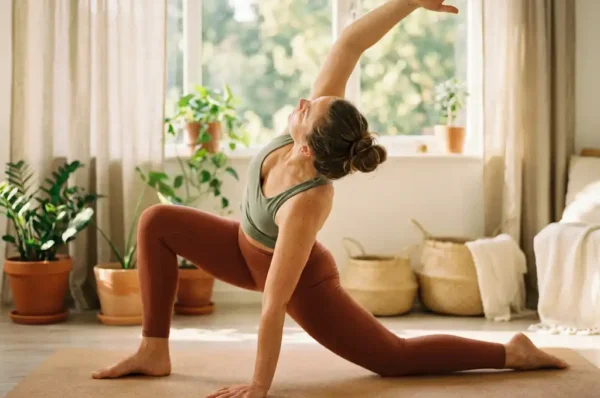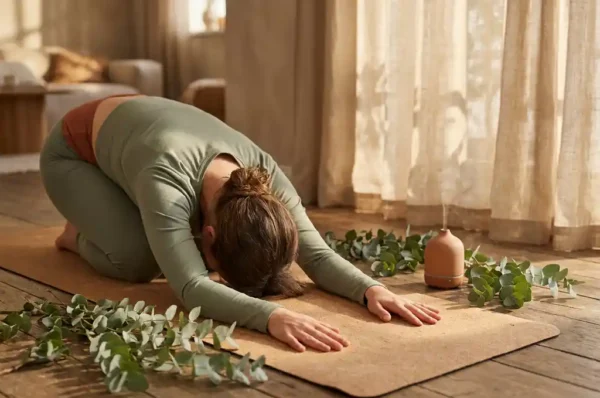



Transitioning from beginner to intermediate yoga is a gradual process that typically unfolds over 6 to 18 months of consistent, intentional practice. You are ready to advance when you can hold foundational poses for 5 to 8 full breaths without strain, apply alignment cues independently, and sustain steady breathing throughout the session. The transition is not a single moment but a progressive shift in strength, body awareness, and mental focus. Building this foundation carefully — rather than rushing toward crow pose or warrior III before your body is prepared — is what separates practitioners who advance sustainably from those who face injury-related setbacks.
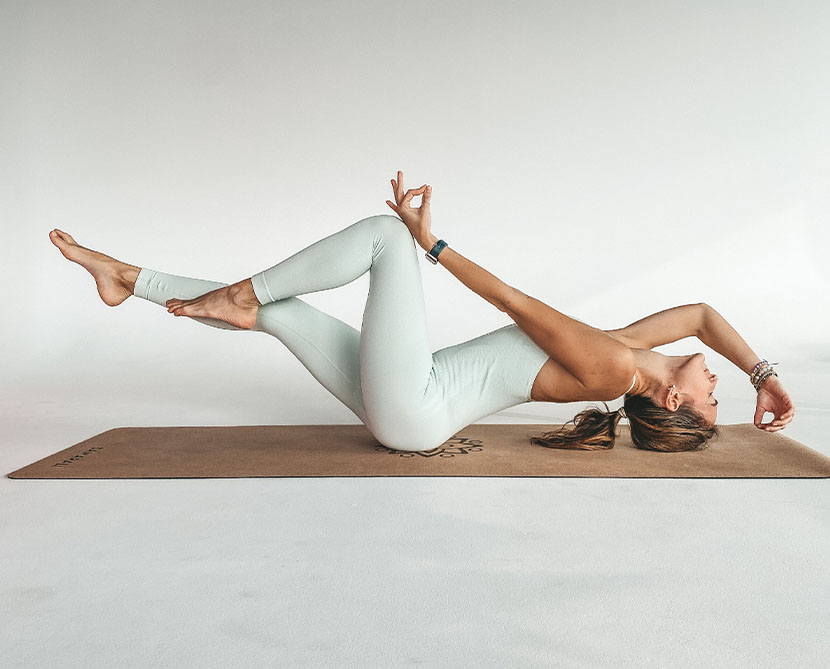
How long does it actually take to progress from beginner to intermediate yoga?
Most practitioners transition from beginner to intermediate yoga within 6 to 18 months of regular practice. This timeline assumes you are practicing 2 to 3 times per week with qualified instruction and genuine consistency across sessions. Practicing three times weekly with focused attention produces significantly faster neuromuscular adaptation than sporadic longer sessions, which is why frequency matters more than total hours on the mat.
Several key factors influence how quickly you move from beginner to intermediate yoga:
- Starting fitness level: Your existing strength, flexibility, and cardiovascular health determine how quickly your body adapts to yoga’s physical demands
- Previous movement experience: Background in dance, sports, or martial arts often accelerates learning due to established body awareness and coordination
- Age and natural flexibility: While these play a role, they’re less important than consistency and proper technique in determining advancement
- Practice frequency: Three 30-minute sessions weekly typically produce better results than one 90-minute weekly class due to regular reinforcement
- Quality instruction: Proper guidance helps develop correct alignment and prevents habits that can slow progress significantly
These factors combine to shape your individual progression timeline, which is why two practitioners who start on the same day can reach intermediate readiness months apart. Yoga prioritizes sustainable development over speed: your body needs adequate time to build the core strength, joint stability, and neuromuscular coordination that intermediate poses demand. Practitioners who respect this process are far less likely to experience the overuse injuries or burnout that derail long-term practice.
What are the signs you’re ready to move beyond beginner yoga?
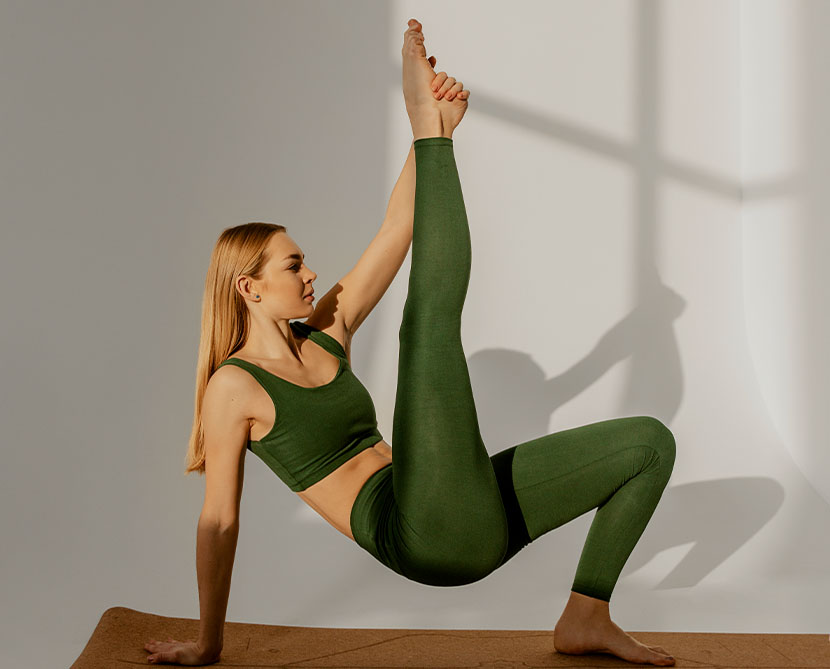
Use the benchmarks below as a self-assessment framework — checking each indicator to see whether you can demonstrate consistency across multiple sessions, not just on a strong day. You are likely ready for intermediate yoga when you can comfortably hold foundational poses for 5 to 8 breaths, apply alignment cues without instructor prompting, and sustain controlled breathing even during challenging transitions. Both physical and mental readiness need to align before you advance safely.
Physical benchmarks
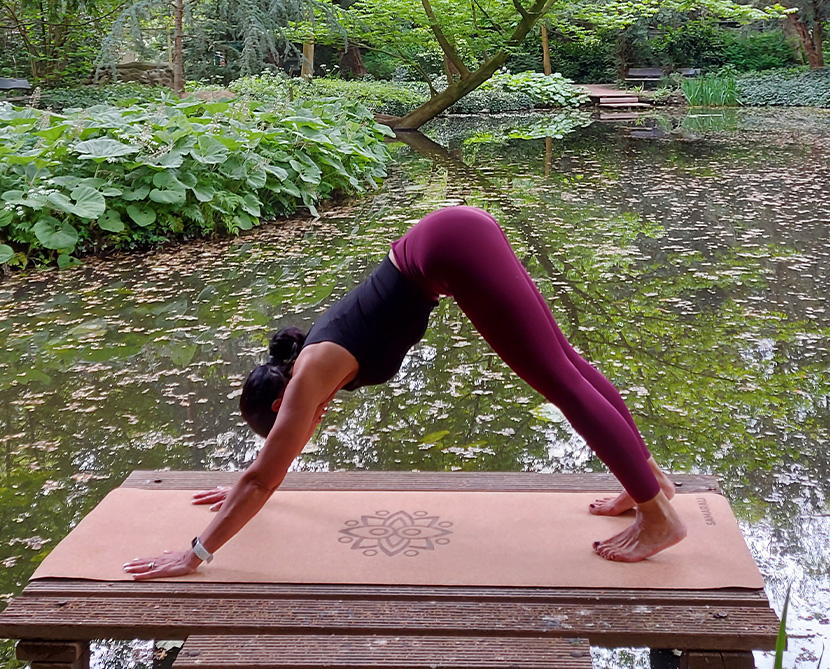
- Sustained holds: Maintaining downward dog for one minute without strain or trembling
- Fluid sequences: Completing sun salutations smoothly with coordinated breath and movement
- Basic balance: Holding tree pose for at least 30 seconds on each side
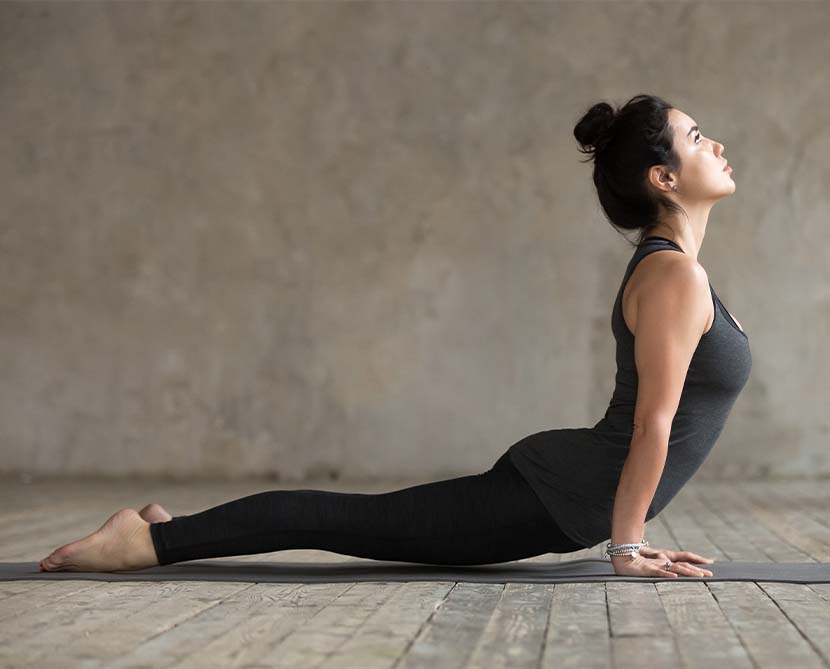
- Adequate flexibility: Achieving comfortable forward folds and gentle backbends without forcing or bouncing
- Core strength: Supporting your spine effectively in various positions without collapsing or overarching
Mental and awareness markers
- Alignment understanding: Knowing how to engage your core and position your spine correctly across different poses
- Breath control: Maintaining steady, rhythmic breathing during challenging sequences rather than holding your breath or gasping
- Modification skills: Recognizing when to adjust poses and distinguishing between productive challenge and harmful strain
- Body awareness: Feeling proper alignment and recognizing your physical limits from the inside
- Practice confidence: Feeling comfortable in beginner classes and having established a personal routine outside formal instruction
When your physical benchmarks and mental awareness markers consistently align, you have built the foundational strength, flexibility, and proprioceptive awareness that intermediate yoga requires. This dual readiness — physical and psychological — is what makes the transition both safe and sustainable, rather than a source of frustration or injury.
What mindset do you need to transition from beginner to intermediate yoga?
If every pose in your current class feels effortless, that is a signal — not of mastery, but of readiness to be challenged. One of the most overlooked barriers to advancing in yoga is not a lack of physical ability but comfortable complacency: showing up to the same beginner class, moving through familiar sequences on autopilot, and mistaking ease for expertise. Mental readiness for intermediate yoga begins the moment you recognize this pattern and choose to step beyond it. Coasting through poses you mastered months ago is repetition, not practice.
Self-doubt is the other side of this equation, and it is just as common. Many practitioners who are physically ready hold themselves back because of imposter syndrome — a quiet fear that they are not “good enough” for an intermediate class, that everyone else will be stronger or more experienced. Overcoming this often has less to do with your body and more to do with your willingness to be a beginner again in a new context. Arriving at your first intermediate class without knowing every pose is not failure; it is exactly where growth happens. Introducing yourself to the instructor beforehand and explaining that you are transitioning from beginner practice is a simple step that immediately reduces that anxiety.
Yoga confidence is also built through an honest relationship with patience. Some poses will take longer than expected — not because you are doing something wrong, but because individual anatomy varies enormously. Hip socket depth, shoulder mobility, and limb proportions all influence how certain poses feel and look in your body, and no amount of effort will override structural reality. Non-linear progress and temporary plateaus are a normal part of the journey, not signs of failure. A week where crow pose feels impossible after a week where it felt close is not regression — it is your nervous system integrating new patterns.
Ultimately, the practitioners who transition most successfully approach the intermediate stage with curiosity rather than urgency. They are willing to be challenged, willing to look uncertain, and willing to trust that steady effort compounds over time. With that mindset established, the question becomes practical: which poses should you actually start working on first?
Does the type of yoga you practice affect when you reach the intermediate level?
Yoga is not a single discipline, and what counts as “intermediate” depends significantly on the tradition you practice. The readiness benchmarks and pose progressions covered in this article apply most directly to active-style yoga, but understanding how your specific style defines intermediate practice helps you set more accurate expectations and choose the right benchmarks to prioritize.
Vinyasa and Flow yoga
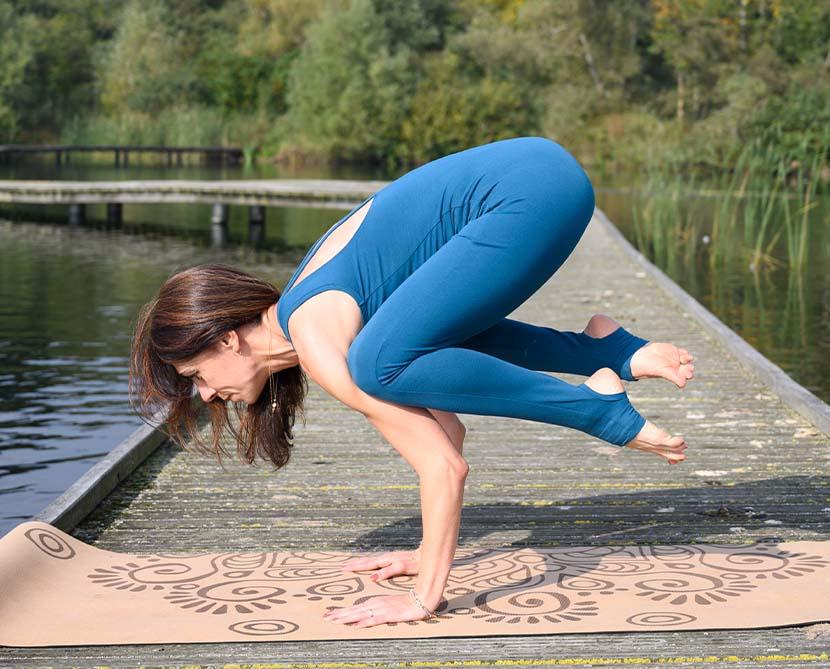
In Vinyasa and Flow yoga, intermediate practice means linking breath and movement fluidly through more complex sequences at a faster pace. You are expected to know your sun salutations, standing poses, and basic transitions well enough to follow a class without individual pose explanations. Arm balances like crow pose, and transitions such as flying pigeon begin to appear regularly, and the emphasis shifts from learning individual poses to sustaining presence and breath continuity across a full sequence.
Hatha yoga
Intermediate Hatha yoga centers on refined alignment, deeper breath awareness, and longer pose holds rather than speed or complexity. At this stage, you move beyond simply achieving a pose shape and begin exploring the subtler actions within it — how to root through the feet in warrior I, how to create length through the spine in seated forward folds. The physical benchmarks in this article translate directly to Hatha practice, with particular emphasis on breath control and alignment independence.
Ashtanga yoga
Ashtanga has one of the most clearly defined intermediate thresholds among yoga styles. Intermediate practice begins when you progress from the Primary Series (Yoga Chikitsa) to the Second Series (Nadi Shodhana). This transition is typically assessed by a teacher and requires consistent, independent practice of the full Primary Series with stable breath, bandha engagement, and drishti. The strength and breath benchmarks in this article are directly applicable to Ashtanga progression.
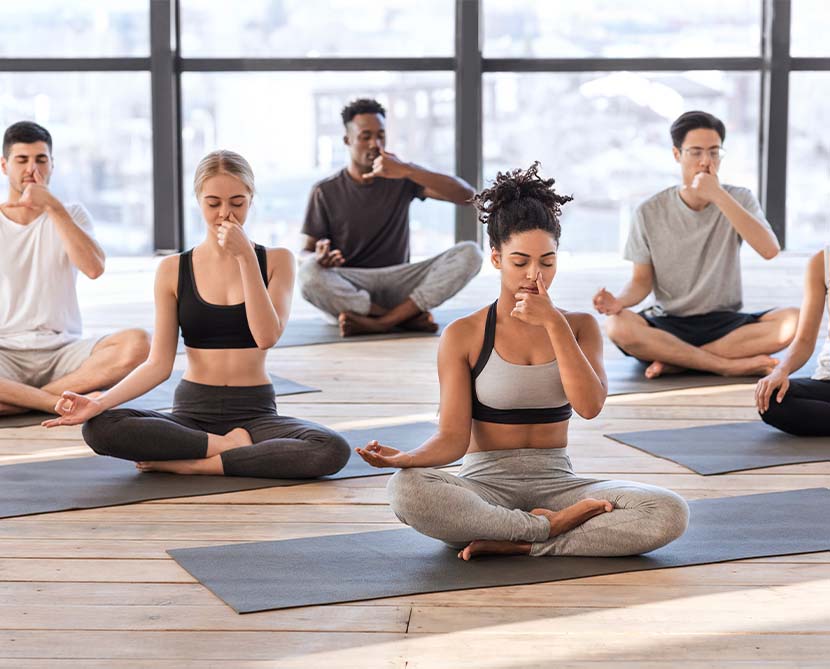
Yin and Restorative yoga
For Yin and Restorative practitioners, intermediate practice is less about physical poses and more about deepening anatomical understanding, tolerating longer passive holds of three to five minutes, and beginning to incorporate pranayama and meditation as structured parts of the practice. Strength-based benchmarks like crow pose are largely irrelevant here. If you practice Yin or Restorative yoga, weight the mental readiness and breath awareness benchmarks from the readiness checklist above far more heavily than the strength-based ones when assessing your own progression.
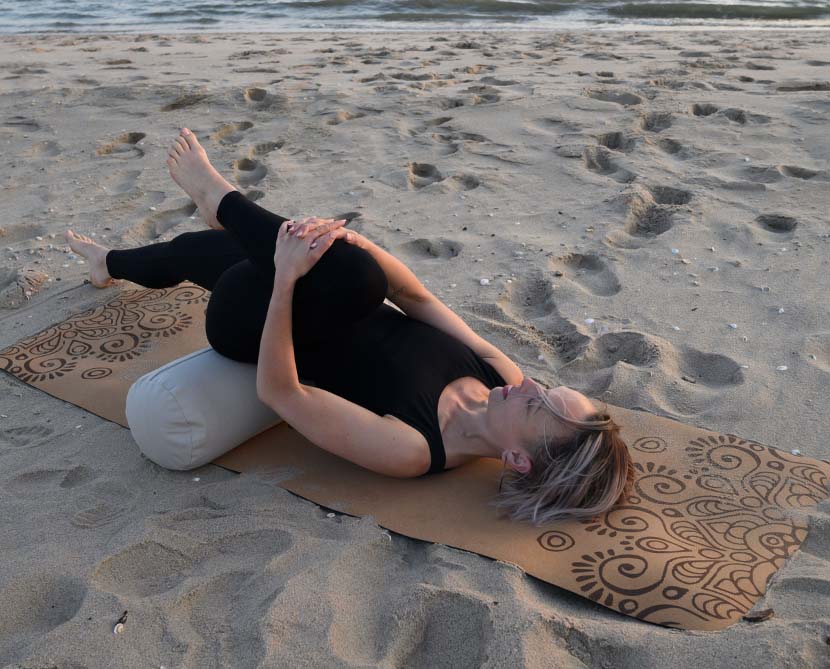
Which intermediate yoga poses should you learn first when transitioning from beginner practice?
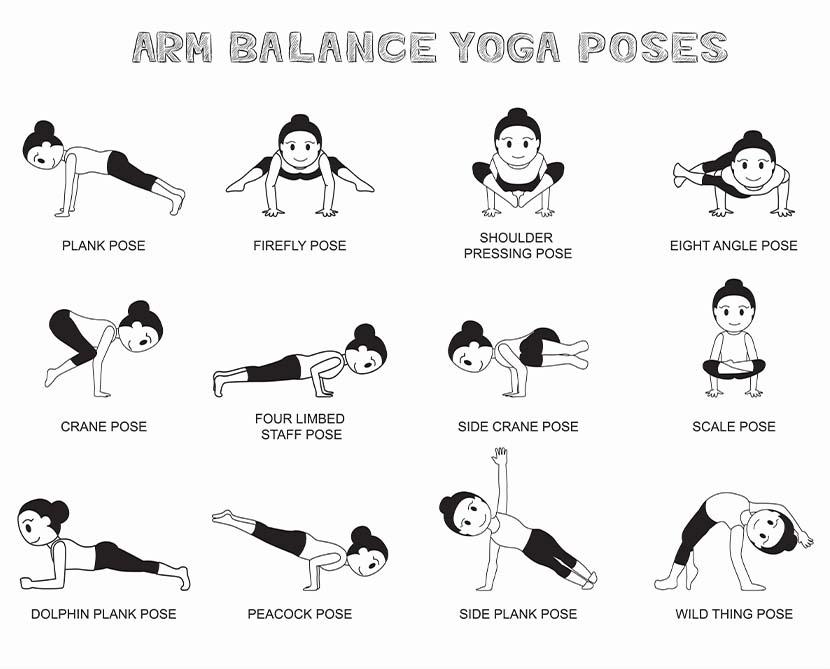
Start your intermediate yoga journey with crow pose (Bakasana), side plank (Vasisthasana), and warrior III (Virabhadrasana III) as your foundational transitional poses. These three build directly on beginner skills while introducing the arm strength, core stability, and single-leg balance that define intermediate practice. Each also serves as a gateway to more advanced variations once your alignment and breath control are consistent.
Essential first intermediate yoga poses to add to your practice:
- Crow pose (Bakasana): Develops arm and core strength while teaching weight distribution and balance — start by squatting with hands planted firmly, then gradually shift weight forward until toes lift
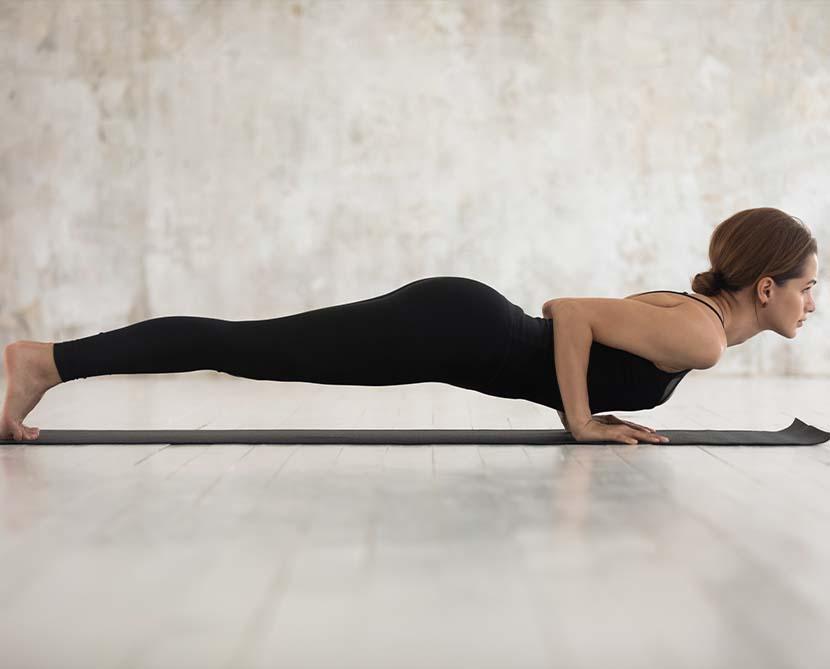
- Side plank (Vasisthasana): Progresses from standard plank by adding rotational stability challenges — begin with knees down if needed, building toward full side plank to strengthen the obliques
- Warrior III (Virabhadrasana III): Challenges single-leg balance while strengthening the entire posterior chain — use wall or chair support initially, reducing assistance as stability improves
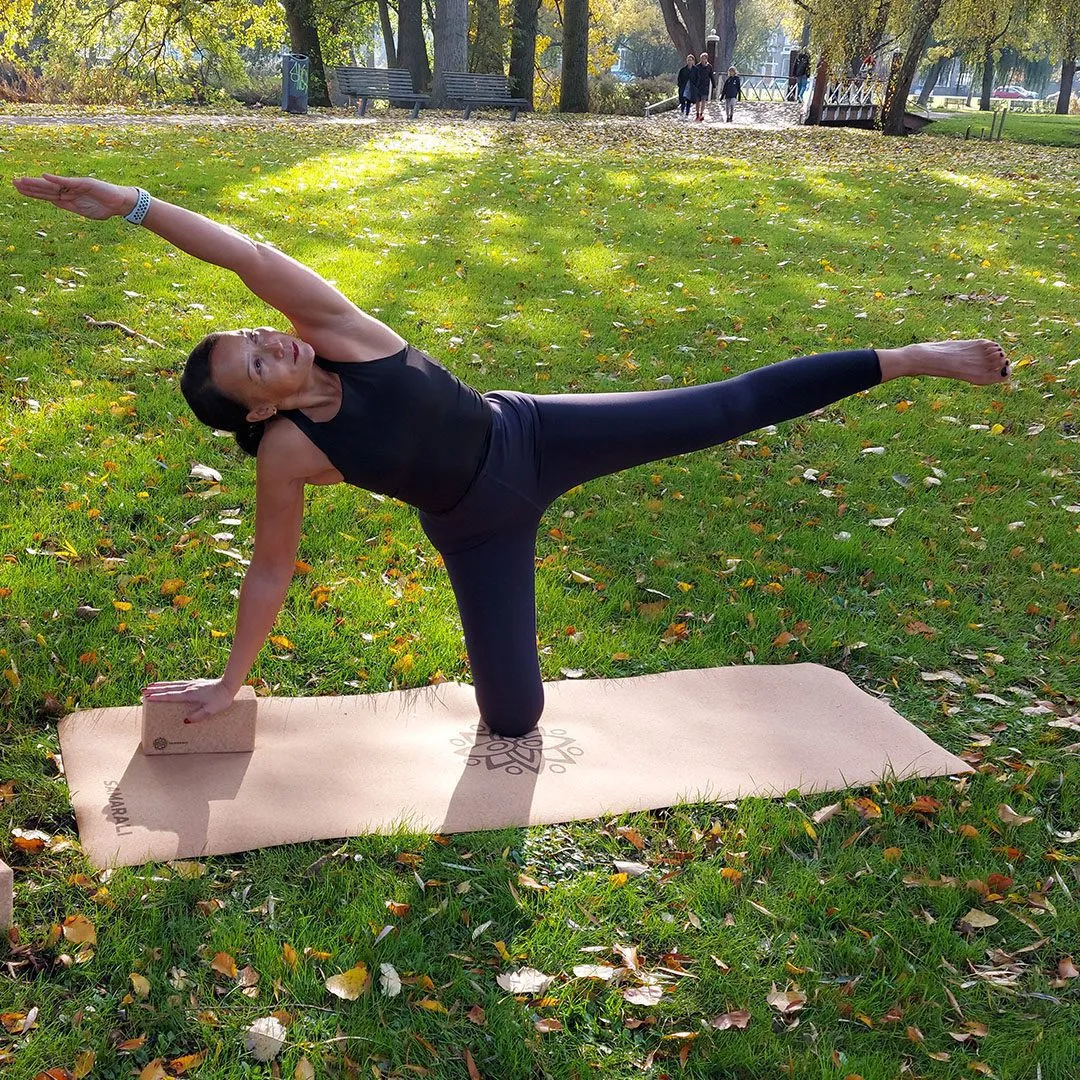
- Revolved triangle (Parivrtta Trikonasana): Introduces spinal rotation and deep balance while building on basic triangle pose foundations
- Forearm stand prep: Builds shoulder strength and teaches inversion basics through wall-supported practice before attempting the full pose
Together, these poses address the five physical pillars of intermediate yoga: arm balance, core stability, single-leg balance, spinal rotation, and inversion preparation. Introduce each pose individually over several weeks, prioritizing correct alignment and breath control before attempting variations or progressions. A high-grip yoga mat is especially valuable during this stage, providing the traction needed for wrist-bearing poses like crow pose and the cushioning that supports safe forearm and knee contact during arm balance practice.
Breathwork and pranayama: the non-physical skills of intermediate yoga
Breathwork is the invisible skill of intermediate yoga — the one that separates practitioners who merely perform poses from those who practice yoga as an integrated mind-body discipline. At the beginner stage, the goal is simply to keep breathing. At the intermediate stage, the breath becomes a tool you actively shape and direct. Incorporating specific pranayama techniques into your practice is one of the clearest markers that you have genuinely crossed into intermediate territory.
Four pranayama techniques that intermediate practitioners typically begin to incorporate:
- Ujjayi pranayama (Victorious Breath): Already introduced as a readiness benchmark, this technique is now deepened and refined — focus on maintaining it consistently not just in static holds but through transitions and more demanding sequences
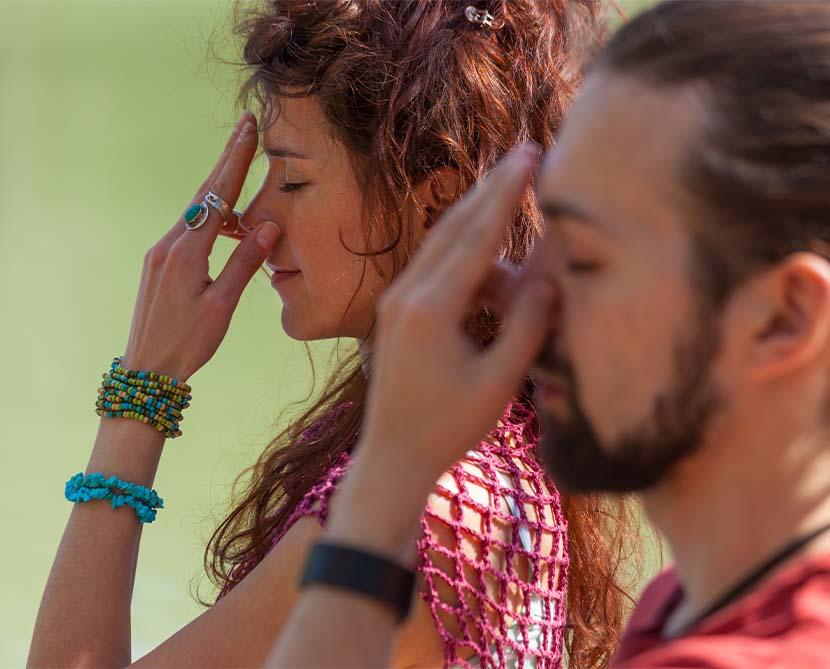
- Nadi Shodhana (Alternate Nostril Breathing): A balancing technique that calms the nervous system and prepares the mind for practice — try five minutes at the start of your session before moving into asana
- Kapalabhati (Skull-Shining Breath): An energizing technique that builds breath capacity and internal heat — practice in short rounds at the beginning of a session to activate the body and sharpen focus
- Dirga pranayama (Three-Part Breath): A foundational awareness practice that deepens breath volume and body awareness — use it during restorative poses or at the close of practice to integrate the session
You do not need to master all four techniques at once. Begin with Ujjayi refinement and Nadi Shodhana, and introduce the others gradually as your breath awareness develops. A qualified instructor can guide you through the correct mechanics of each technique — this is especially important for Kapalabhati, where incorrect practice can cause dizziness.
A sample practice plan for your beginner-to-intermediate yoga transition
General advice about progression is useful, but a concrete structure makes it actionable. The eight-week plan below is designed as a template to help you organize your practice during the transition period. Adjust it based on your individual progress, how your body responds, and any guidance from a qualified instructor — this is a starting framework, not a rigid prescription.
Phase 1: Consolidating your beginner foundation (Weeks 1–4)
The first four weeks are about building the physical and mental platform that intermediate poses require. Rather than introducing new poses immediately, focus on raising the quality and consistency of what you already know.
- Session 1 (Strength focus): Sun salutations A and B, plank holds building to 60 seconds, boat pose for core engagement, low lunge with hip flexor awareness
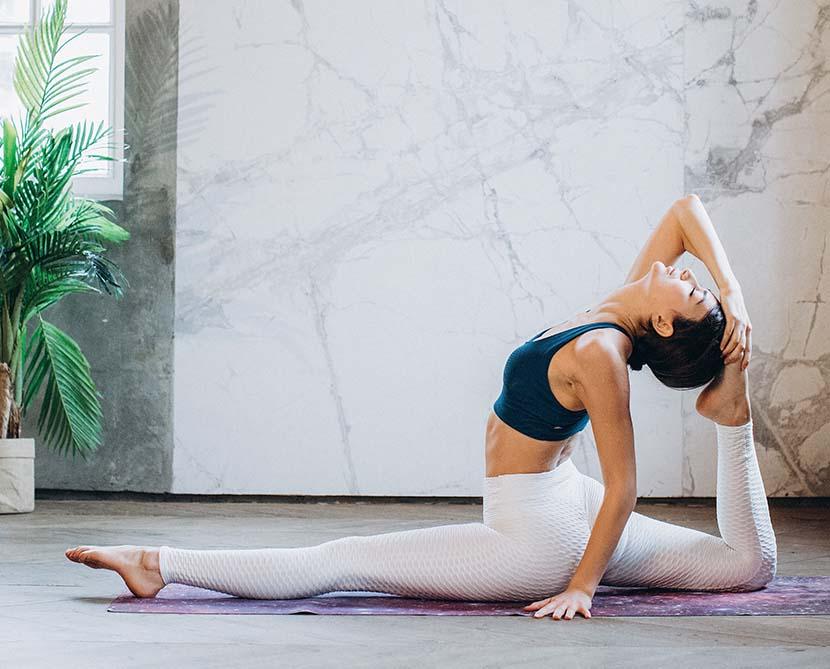
- Session 2 (Balance and single-leg work): Tree pose (30-second holds each side), warrior I and II with alignment refinement, extended hand-to-big-toe pose with strap support
- Session 3 (Flexibility and recovery): Seated forward folds, reclined pigeon, supine twists, 10 minutes of restorative poses with supported savasana
- Crow pose preparation (all sessions): At the end of each strength session, spend five minutes in a deep squat with hands planted on the mat, practicing shifting your weight forward without lifting your feet — this builds the wrist loading and hip positioning crow pose requires
Phase 2: Introducing intermediate poses (Weeks 5–8)
With your foundation consolidated, weeks five through eight introduce the five intermediate poses covered above. Approach each one incrementally — attempt a modified version first and only progress when alignment and breath control are stable.
- Session 1 (Arm balance and core): Crow pose with toes briefly lifting (three attempts), side plank with knees down progressing toward full side plank, forearm stand prep against the wall
- Session 2 (Balance and rotation): Warrior III with wall support, revolved triangle with a block under the lower hand, extended side angle with bind preparation
- Session 3 (Integration and recovery): Full sun salutation flow incorporating warrior III, a short pranayama practice (five minutes of Nadi Shodhana), restorative closing sequence
- Weekly structure: Aim for three 45-minute sessions per week, spaced across the week to allow adequate recovery between strength-focused sessions
By the end of week eight, you should have attempted all five foundational intermediate poses in modified form and have a clearer sense of which areas — arm strength, hip flexibility, single-leg balance — need the most continued attention. That self-knowledge is itself a marker of intermediate practice.
How do you avoid injury when advancing your yoga practice from beginner to intermediate?
The most effective way to prevent injury during your beginner-to-intermediate transition is to warm up deliberately, progress in small increments, and treat discomfort as information rather than weakness.
This stage carries a higher injury risk than beginner practice because intermediate poses place new demands on the wrists, shoulders, and hip flexors that beginner poses do not. Most injuries at this point result from attempting arm balances and inversions before the supporting stabilizer muscles — particularly the rotator cuff, core, and hip stabilizers — are adequately conditioned. Consistent, gradual progression protects both your body and your long-term motivation to practice.
Essential injury prevention strategies for transitioning yoga practitioners:
- Proper warm-up: Always begin with gentle movements like sun salutations and basic stretches to prepare muscles and joints for deeper work
- Pain recognition: Distinguish between productive challenge (muscle engagement, gentle stretching, mild trembling) and harmful pain (sharp sensations, joint discomfort, shooting pains)
- Balanced strength and flexibility: Build muscular endurance alongside flexibility to protect joints when they’re in extended ranges of motion
- Progressive loading: Increase pose difficulty and duration gradually over weeks rather than attempting advanced variations immediately
- Recovery integration: Include rest days and vary your routine to prevent repetitive stress injuries from identical daily sequences
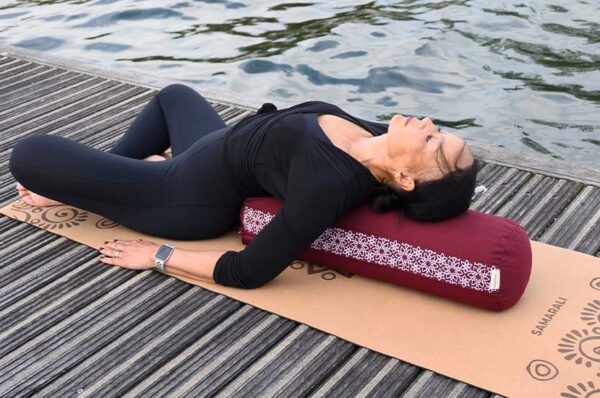
- Prop use: Use blocks, straps, and yoga bolsters to achieve proper alignment while building toward full expressions safely.
Warning signs to stop and rest
Knowing when to back off is as important as knowing how to progress. If you notice any of the following during or after practice, stop the pose immediately and rest:
- Sharp or shooting pain — especially in the wrists, shoulders, or lower back during weight-bearing poses
- Joint pain — localized discomfort in a specific joint, distinct from general muscle fatigue
- Soreness that persists beyond 24 to 48 hours after the session ends, particularly in joints
- Dizziness or nausea during inversions — come out of the pose slowly and rest in child’s pose
- Numbness or tingling in the hands or feet during arm balances — often a sign of nerve compression or excessive wrist loading
If any of these signs occur consistently across multiple sessions, consult a qualified yoga instructor or healthcare professional before continuing to practice the pose in question.
These strategies work together to create a practice environment where your body can adapt progressively without the overuse injuries or forced advancement that cause the most common setbacks at the intermediate level. Practitioners who treat injury prevention as a skill — rather than a restriction — consistently reach and sustain intermediate yoga practice longer than those who prioritize speed. Building this mindset early is itself a defining characteristic of a true intermediate practitioner.
Frequently asked questions about transitioning from beginner to intermediate yoga
Can I attend intermediate yoga classes before I can do the crow pose?
Yes — crow pose is one benchmark of intermediate readiness, not a prerequisite for attending an intermediate class. Many intermediate classes include practitioners at varying stages, and a good instructor will offer modifications. What matters more than any single pose is whether you have the foundational strength, breath control, and alignment awareness to follow the class safely. If you meet most of the physical and mental benchmarks outlined above, you are ready to try an intermediate class, regardless of whether the crow pose is in your practice yet.
What if I have been practicing for 18 months but still feel like a beginner?
Practice duration alone does not determine readiness — quality and consistency matter far more. If you have been attending class infrequently, practicing without focused attention, or staying in your comfort zone rather than working toward the benchmarks above, 18 months may not translate to intermediate readiness. Honestly assess your practice against the physical and mental markers in this article. If gaps remain, use the eight-week plan above to address them directly rather than waiting for time to do the work for you.
Does the style of yoga I practice affect how quickly I reach the intermediate level?
Yes, significantly. Each yoga style defines intermediate practice differently, which means the timeline and benchmarks vary. Vinyasa and Ashtanga intermediate benchmarks emphasize flow, strength, and sequencing complexity, while Yin and Restorative intermediate practice centers on longer holds, breathwork, and anatomical understanding. The readiness benchmarks and pose progressions in this article apply most directly to active-style yoga. If you practice Yin or Restorative yoga, prioritize the breath awareness and mental readiness markers over the strength-based ones.
Is intermediate yoga safe for older adults or people returning after injury?
Intermediate yoga can be practiced safely by older adults and those returning from injury, provided the transition is gradual and guided by an appropriate professional. If you are returning after an injury, consult a physiotherapist or sports medicine professional before attempting arm balances or inversions, as these poses place significant load on the wrists, shoulders, and spine. Older adults may find that the timeline to intermediate readiness is longer, which is entirely normal — the benchmarks remain the same, but the body may require more recovery time between sessions.
Can I transition to intermediate yoga through self-practice, or do I need a teacher?
Self-practice can support your transition, but it is not a substitute for qualified instruction — particularly when learning arm balances and inversions. A teacher can identify alignment errors you may not notice yourself, and incorrect technique in poses like the crow pose or forearm stand prep poses a meaningful risk of injury. If regular in-person instruction is not available, consider occasional private sessions or online classes with a qualified instructor who can provide feedback on your specific practice rather than generic guidance.
How do I know if I am pushing too hard during the transition?
The clearest signal that you are pushing too hard is pain that persists beyond the session itself — particularly joint pain in the wrists, shoulders, or knees. Within a session, sharp or shooting pain, numbness, tingling, or dizziness are immediate signals to stop. More subtly, if you are consistently exhausted after practice rather than energized, or if your enthusiasm for practice is declining, you may be progressing too aggressively. Sustainable progression should feel challenging but not depleting.
What should I expect when I walk into an intermediate yoga class for the first time?
Expect a faster pace, fewer individual pose explanations, and an assumed familiarity with sun salutations, standing poses, and basic transitions. The instructor will likely cue poses by name without demonstrating them from scratch, so knowing your Sanskrit pose names is genuinely useful. Arrive a few minutes early and introduce yourself to the instructor as a practitioner transitioning from beginner classes — most instructors will appreciate the context and keep an eye on your form. You will not know every pose, and that is expected. Focus on breath, stay within your range, and use modifications freely.
How is intermediate Vinyasa different from intermediate Hatha or Yin yoga?
Intermediate Vinyasa is defined by the ability to link breath and movement fluidly through complex sequences at pace, with arm balances and dynamic transitions appearing regularly. Intermediate Hatha focuses on longer holds, refined alignment, and deepened breath awareness within individual poses rather than sequencing speed. Intermediate Yin practice is almost entirely distinct from both — it centers on passive holds of three to five minutes, anatomical understanding of connective tissue, and the integration of pranayama and meditation. The physical benchmarks in this article are most relevant to Vinyasa and Hatha practitioners; Yin practitioners should weight the breath and mindfulness markers far more heavily.
Your journey from beginner to intermediate yoga represents months of dedicated practice, honest self-assessment, and trust in a gradual process that compounds over time. The physical milestones — holding crow pose, flowing through warrior III, sustaining a one-minute downward dog — are meaningful, but they result from the consistency and mindfulness you bring to every session. To support each stage of this progression, consider exploring our complete yoga sets, which include the essential props for safe intermediate practice and are crafted from eco-friendly materials, plastic-free packaging, reflecting the same values of mindful living and environmental responsibility that draw so many practitioners to yoga in the first place.
Browse our full collection of sustainable yoga essentials, thoughtfully designed for mindful movement and crafted with respect for both the practitioner and the planet.