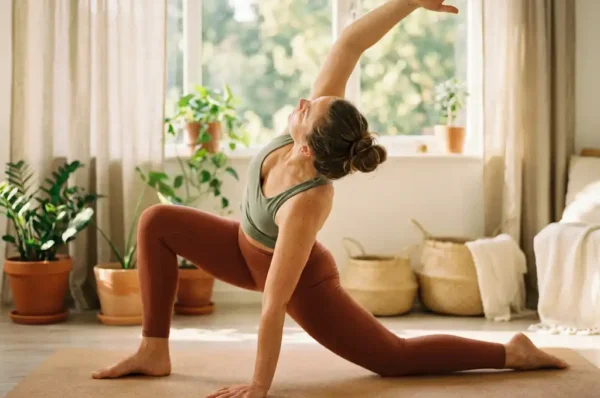



Vinyasa yoga is a dynamic, flowing style of yoga that links breath with movement, transitioning smoothly from one pose to the next in a continuous sequence. Unlike static yoga styles, Vinyasa keeps you moving throughout the entire practice, creating a rhythm that feels almost like a moving meditation. Below, we cover the most common questions people have before stepping onto the mat for the first time.
How is Vinyasa yoga different from other yoga styles?
Vinyasa yoga stands apart from other styles through its emphasis on fluid, breath-linked transitions between poses rather than holding static postures for extended periods. Each inhale and exhale guides you into or out of a movement, creating a continuous flow that distinguishes it from more structured or slower-paced practices.
Compare it to Hatha yoga, for example, where poses are held individually with clear pauses between them. Hatha is deliberate and measured, making it ideal for learning alignment in isolation. Vinyasa, by contrast, strings those same poses together into sequences that build heat and momentum. Yin yoga sits at the opposite end of the spectrum entirely, asking you to hold deep, passive stretches for several minutes at a time.
Ashtanga yoga is perhaps the closest relative to Vinyasa. Both use breath-synchronized movement and share many of the same poses. The key difference is that Ashtanga follows a fixed, repeating sequence in every class, while Vinyasa sequences vary from teacher to teacher and session to session. This makes Vinyasa one of the most creative and adaptable yoga styles available, which is a big part of why it has become so popular worldwide.
What are the main benefits of Vinyasa yoga?
Vinyasa yoga builds strength, flexibility, and cardiovascular fitness simultaneously, while the breath-focused nature of the practice supports stress reduction and mental clarity. Because the practice is continuous and moderately intense, it offers physical benefits similar to aerobic exercise alongside the mindfulness qualities of traditional yoga.
Here are the core benefits practitioners commonly experience:
- Improved cardiovascular health: The flowing, uninterrupted movement elevates your heart rate in a sustained way, supporting heart health and endurance over time.
- Full-body strength: Vinyasa sequences typically include weight-bearing poses like plank, chaturanga, and warrior variations that build functional muscle strength throughout the body.
- Greater flexibility: Moving through a wide range of poses in each session gradually increases mobility in the hips, spine, hamstrings, and shoulders.
- Stress relief and mental focus: The requirement to stay present with your breath and movement leaves little room for mental chatter, making each session a genuine reset for the nervous system.
- Consistency in practice: Because no two Vinyasa classes are identical, the variety keeps the practice engaging, which makes it easier to stay motivated long term.
Many practitioners also find that the meditative quality of Vinyasa carries over into daily life, making it easier to stay calm and focused outside the studio as well.
Is Vinyasa yoga good for beginners?
Vinyasa yoga is accessible to beginners, though it does require a little more body awareness than slower styles like Hatha or Yin. Most beginner-friendly Vinyasa classes introduce foundational poses and transitions gradually, so you do not need prior experience to start. The key is choosing a class that is clearly labelled as beginner or all-levels.
If you are brand new to yoga, a few sessions of Hatha or a dedicated beginners’ Vinyasa course can help you learn the names and shapes of common poses before you encounter them in a flowing sequence. That said, many people begin their yoga journey directly with Vinyasa and find the movement-based format easier to follow than they expected.
The most important thing for beginners is to listen to your body and resist the urge to keep up with more experienced practitioners around you. Modifications are always available for every pose, and a good teacher will offer them throughout class. Over time, the sequences become familiar, and what once felt like a lot to coordinate quickly becomes second nature.
What should you bring to a Vinyasa yoga class?
For a Vinyasa yoga class, the essentials are a good yoga mat, comfortable, breathable clothing, and a water bottle. Because Vinyasa generates heat and involves continuous movement, having the right mat and attire makes a meaningful difference to your comfort and safety during practice.
Here is what to prepare before your first class:
- A supportive yoga mat: Vinyasa involves a lot of transitions and weight-bearing poses, so grip and cushioning matter. A natural rubber yoga mat offers excellent traction and is a durable, eco-conscious choice.
- Breathable clothing: Choose fitted or semi-fitted activewear that moves with you without getting in the way during poses like downward dog or forward folds.
- A water bottle: Vinyasa is physically demanding, and staying hydrated before and after class supports your recovery.
- A yoga mat bag: If you are travelling to a studio, a yoga mat bag keeps everything tidy and makes carrying your mat straightforward.
- An open mind: Especially for your first few classes, the willingness to try, rest when needed, and not take the practice too seriously is genuinely the most useful thing you can bring.
Some studios provide props like blocks and straps, but it is worth checking in advance. As your practice deepens, you may want to explore additional yoga accessories that support your specific needs, but for day one, a solid mat and comfortable clothes are all you really need.
Frequently Asked Questions
How long should a typical Vinyasa yoga session be for someone just starting out?
For beginners, starting with 30 to 45-minute sessions is a practical and sustainable approach. This length gives you enough time to warm up, move through a meaningful sequence, and cool down without overwhelming your body or attention span. As your strength, flexibility, and familiarity with the flow improve, you can gradually work up to the standard 60 or 75-minute classes commonly offered at studios.
How often should I practice Vinyasa yoga to start seeing results?
Practicing 2 to 3 times per week is generally enough for beginners to notice improvements in strength, flexibility, and stress levels within the first few weeks. Consistency matters more than frequency, so a regular twice-weekly practice will serve you better than sporadic daily sessions followed by long gaps. As your body adapts, you can increase frequency, but always factor in at least one or two rest days to allow for recovery.
What if I can't keep up with the pace of the class — is that normal?
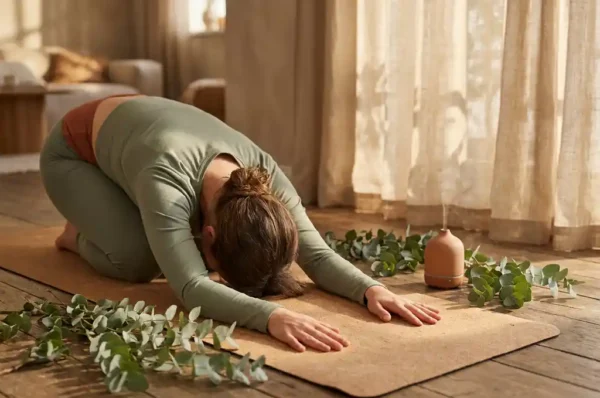
Absolutely, and it is far more common than most beginners expect. Vinyasa flows can move quickly, and it is completely fine to pause in Child’s Pose, skip a transition, or hold a pose longer while the class moves on. A good Vinyasa teacher will always encourage you to honour your own pace rather than force yourself to match the group. Over time, the sequences become more familiar and the pace will feel much more manageable.
Are there any common mistakes beginners should try to avoid in Vinyasa yoga?
One of the most common mistakes is holding the breath or forgetting to breathe altogether during challenging transitions — the breath is the foundation of Vinyasa, so if you lose it, slow down until you reconnect with it. Another frequent pitfall is skipping the warm-up or pushing too hard too soon, which increases the risk of strain, particularly in the wrists, shoulders, and lower back. Finally, avoid comparing your practice to others in the room; Vinyasa is deeply personal, and progress looks different for everyone.
Can Vinyasa yoga help with weight loss?
Vinyasa yoga can contribute to weight management as part of a balanced lifestyle, since its continuous, heat-building movement elevates the heart rate in a way that supports calorie burning and metabolic health. However, it works best as a complement to a nutritious diet and overall active lifestyle rather than a standalone weight-loss solution. The stress-reducing benefits of Vinyasa are also worth noting, as lower cortisol levels can indirectly support healthier body composition over time.
Is Vinyasa yoga suitable if I have an injury or a physical limitation?
In many cases, yes — but it is important to inform your teacher about any injuries or limitations before class so they can offer appropriate modifications. Common adjustments include using blocks for support, dropping the knees in plank, or avoiding certain poses entirely while an area heals. If you are managing a significant injury, it is worth consulting a physiotherapist or doctor before starting, and you may want to begin with a gentler style like Hatha or Yin until you have been cleared for more dynamic movement.
What is the difference between a Vinyasa class and a 'Flow' class listed at my local studio?
In most studios, ‘Flow’ and ‘Vinyasa Flow’ are used interchangeably and refer to the same breath-linked, movement-based style of yoga. Some studios use ‘Flow’ as a broader umbrella term that may include slight variations in approach or influence, but the core format — continuous sequences synchronized with the breath — remains the same. If you are unsure, it is always worth checking the class description or asking the studio directly, as class naming conventions can vary from one studio to another.