


The best yoga mat for breathwork provides firm, stable support so your body stays grounded and comfortable during extended stillness. Unlike dynamic yoga styles, breathwork sessions — whether Pranayama, Holotropic, somatic breathing, or Wim Hof — involve long periods of lying or sitting in one position. That means cushioning, grip, and surface texture all matter more than you might expect. Below, we break down the key features to look for so you can make a confident choice.
What features should a yoga mat have for breathwork?
A yoga mat for breathwork should prioritize comfort during stillness, a non-slip grip, and a surface that feels pleasant against bare skin. Since breathwork often involves lying on your back or sitting cross-legged for extended periods, you need a mat that supports your spine, keeps you warm off the floor, and does not cause distractions from discomfort or sliding.
From seated Pranayama to supine Holotropic breathwork sessions lasting 60 to 90 minutes, the physical demands on your mat differ substantially from a flowing Vinyasa class. The most important features to look for are:
- Adequate cushioning: Enough thickness to protect your spine and hips when lying still for several minutes at a time
- Non-slip surface: A textured or naturally grippy material that stays in place even when you are not actively pressing into it
- Thermal insulation: A mat that creates a barrier between your body and a cold floor — especially important during longer sessions when your body temperature drops
- Soft, skin-friendly texture: Rough or abrasive surfaces become noticeable quickly when you are lying still and focused on your breath
- Low odor: Strong chemical smells from synthetic materials can genuinely interfere with breathwork practice, so material choice matters here more than in any other yoga style
| Feature | Breathwork Recommendation |
|---|---|
| Thickness | 4mm–6mm; lean toward 6mm on hard floors |
| Density | High-density preferred; avoid soft foam |
| Material | Natural rubber or cork mat is the first choice; TPE for latex allergy |
| Surface | Smooth to medium texture; soft against bare skin |
| Width | 66cm–76cm recommended |
| Length | 183cm minimum; 200cm+ for practitioners over 175cm |
| Thermal insulation | High; natural rubber outperforms TPE and PVC |
| Odor | Low; avoid PVC and new synthetic mats |
Matching your mat to your breathwork style and session length
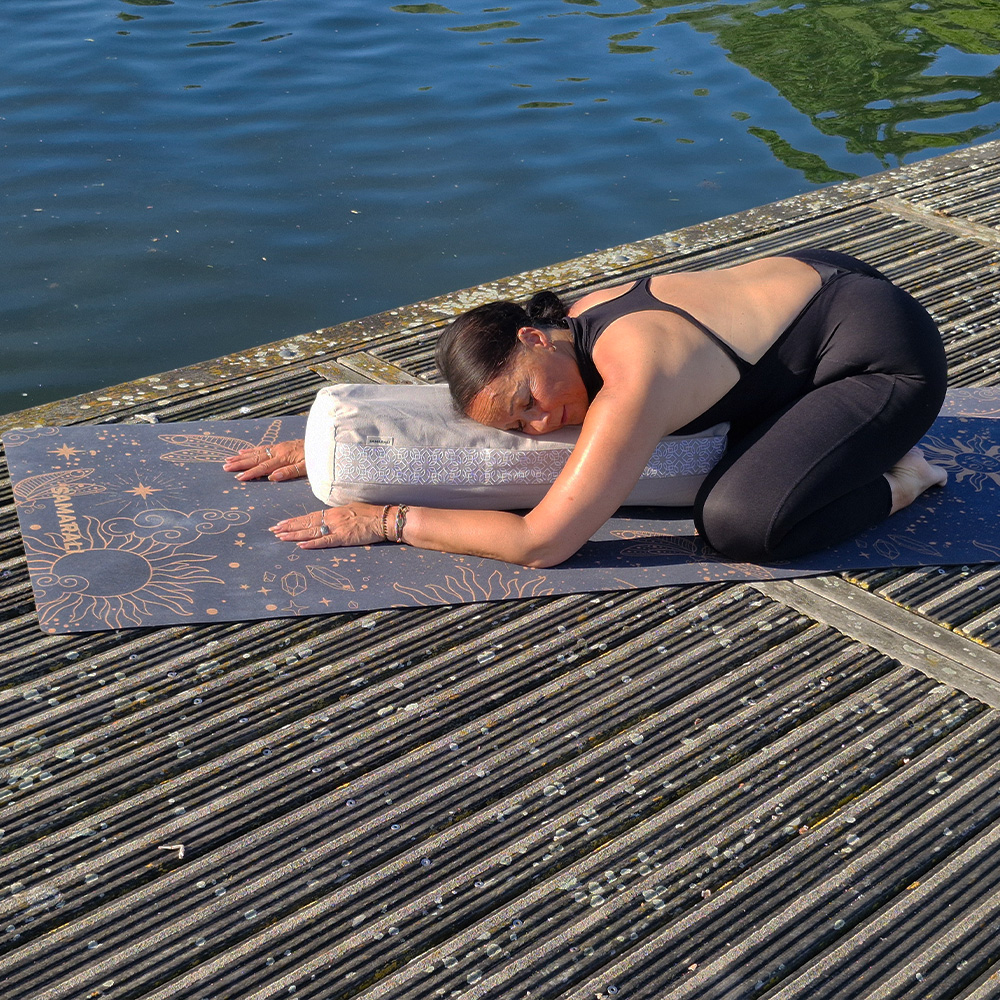
The right mat depends significantly on how you practice. For daily short Pranayama sessions of 10 to 20 minutes, a 4mm natural rubber mat is usually sufficient. Sessions are shorter, body temperature drop is less pronounced, and the lighter weight makes it easy to roll out as part of a daily routine.
For longer Holotropic or somatic breathwork sessions lasting 60 to 90 minutes, prioritize the 6mm end of the thickness range, maximum width, and strong thermal insulation. When the body lies still for an extended period, temperature regulation becomes critical and pressure points become much more noticeable. A mat for shorter Pranayama sessions can afford to be leaner; a mat for Holotropic breathwork needs to work harder to keep you comfortable throughout.
For practitioners attending group breathwork workshops or retreats, portability becomes an additional factor. A mid-weight natural rubber mat of around 2kg strikes a practical balance between thermal insulation and transportability — dense enough to perform well as a breathwork workshop mat, but not so heavy that carrying it to a venue becomes a burden.
If you also use your mat for seated meditation, pairing it with a meditation cushion can further improve your sitting posture and overall comfort during longer sessions.
Does mat thickness matter for breathwork sessions?
Yes — significantly. A mat between 4mm and 6mm thick is the sweet spot for breathwork. Thinner mats under 4mm do not provide enough cushioning for extended lying positions. Mats thicker than 6mm can feel too spongy and may reduce your sense of groundedness and body awareness. Breathwork teachers and somatic practitioners consistently recommend this range because it balances pressure point relief with the proprioceptive feedback that helps you stay body-aware during deep breathing cycles.
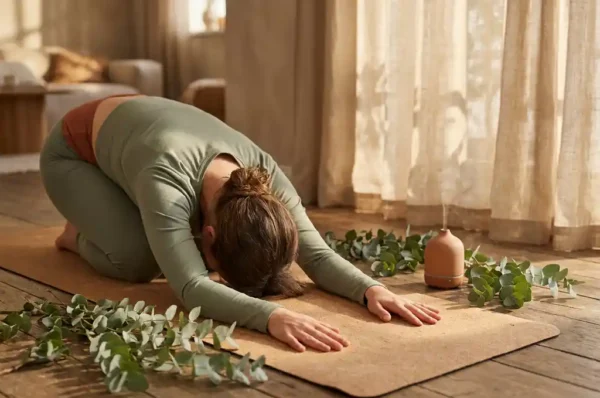
During breathwork, your body is often in savasana or a reclined position for 10 to 40 minutes. At that duration, even a slightly thin mat will leave you aware of pressure points at the base of your skull, shoulder blades, sacrum, and heels. A 4mm to 6mm mat absorbs enough of that pressure to let you fully relax without feeling disconnected from the floor.
If you practice on harder surfaces like wooden floors or tiles, lean toward the 6mm end of that range. On carpet or softer surfaces, 4mm is usually sufficient. Avoid travel mats or ultra-thin mats designed for portability — they prioritize packability over the comfort that breathwork demands.
Are natural rubber or TPE mats better for breathwork?
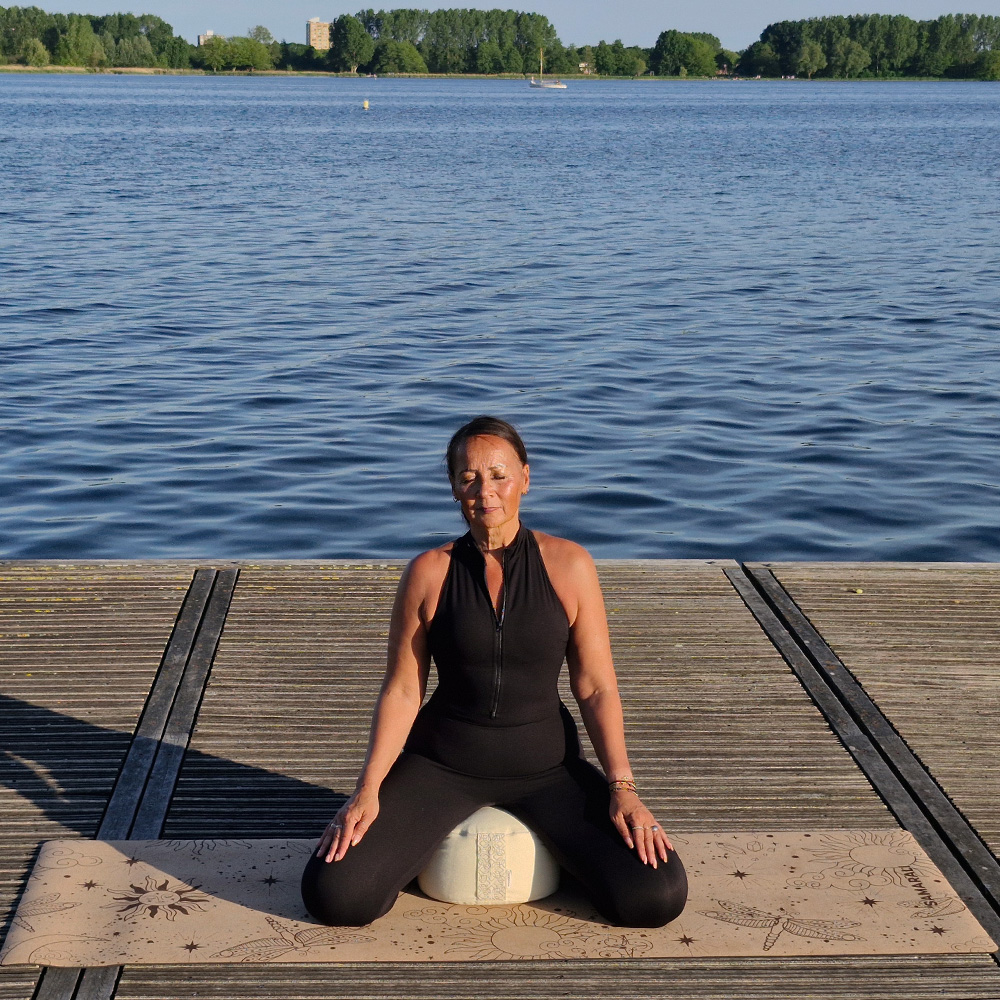
Natural rubber mats are generally the better choice for breathwork. Natural rubber offers superior grip, better thermal insulation, and a more grounded feel that supports the deep stillness breathwork requires. TPE mats are a decent eco-conscious alternative, but they tend to be lighter and slightly less insulating, which can become noticeable during longer sessions.
Why natural rubber stands out for breathwork
Natural rubber has a dense, slightly textured surface that grips the floor without any effort on your part. This matters in breathwork because you are not actively pressing through your hands and feet to create traction — the mat simply stays where it is. Rubber also retains warmth better than synthetic materials, which helps when your body cools down during extended stillness.
When TPE is a reasonable choice
TPE mats are lightweight, latex-free, and a solid option for people with rubber allergies. For breathwork specifically, a thicker TPE mat in the 5mm to 6mm range can compensate for the slightly lower insulation and density. If you travel frequently and want a mat that doubles for both breathwork and lighter yoga sessions on the road, TPE is worth considering.
What size yoga mat works best for breathwork?
For breathwork, a mat that is at least 183cm (72 inches) long and 61cm (24 inches) wide is the minimum. Many practitioners benefit from a wider mat — around 66cm to 76cm (26 to 30 inches) — because breathwork positions like savasana and reclined butterfly allow your arms and legs to spread naturally beyond the edges of a standard-width mat.
Length matters equally. If you are taller than 175cm, a standard 183cm mat may leave your head or feet hanging off the edge during reclined exercises. In that case, look for an extended mat of 200cm or longer. Nothing breaks focus during a breathwork session quite like realizing part of your body is resting on a cold, hard floor instead of your mat.
Width is often overlooked when choosing a yoga mat, but for breathwork, it is arguably more important than for a standing practice. When your arms fall out to your sides in a relaxed position, a wider mat keeps your whole body supported and warm. If you are choosing between two sizes, always go larger for a breathwork-focused practice — the extra surface area is never a disadvantage, and here it makes a genuine difference to how deeply you can relax and settle into your breath.
How to set up your breathwork space for the best experience
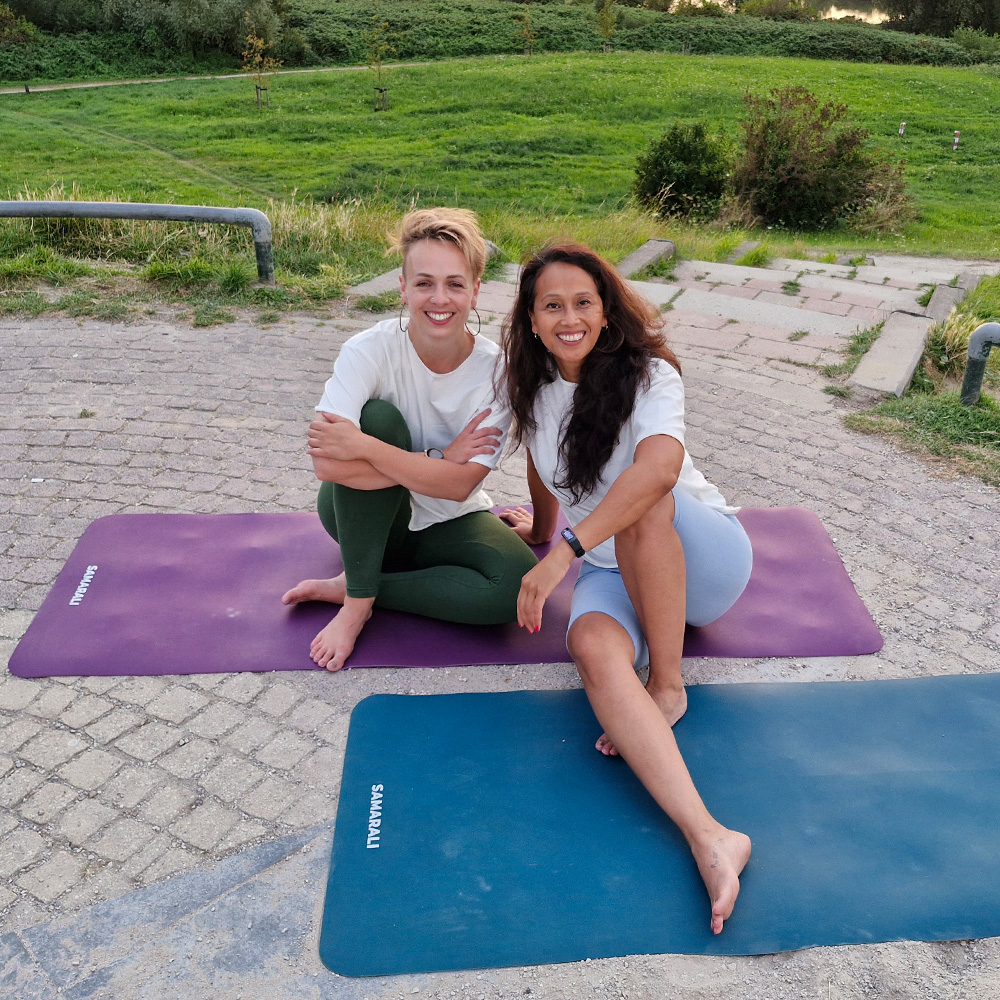
Choosing the right mat is only one part of creating a breathwork space that supports deep, undisturbed sessions. The environment around your mat has a meaningful influence on how settled and comfortable you feel, and a few simple adjustments can make the difference between a session that feels effortful and one that unfolds naturally.
Consider these elements when preparing your breathwork setup:
- Floor surface: Your mat behaves differently depending on what is underneath it. On hardwood or tile floors, the full thermal insulation of a natural rubber or cork mat is especially valuable — reinforcing the 6mm thickness recommendation for hard surfaces. On carpet, a 4mm mat is often sufficient and will also grip more securely without sliding.
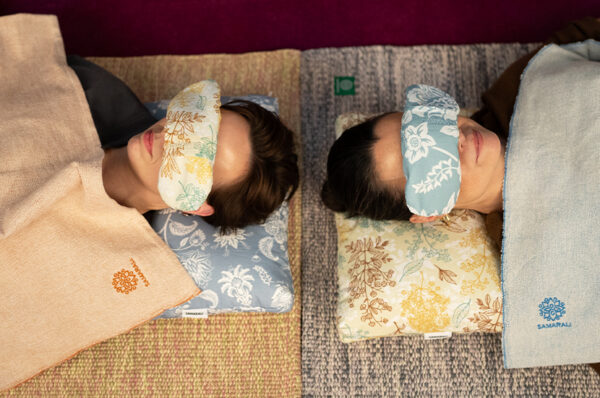
- Room temperature: Breathwork causes body temperature to drop, sometimes noticeably so during longer sessions. Keep the room slightly warmer than you would for an active yoga class, and have an organic cotton yoga blanket within easy reach to drape over yourself once you settle in.
- Space dimensions: You need enough clear floor space not just for your mat, but for your arms to extend comfortably to your sides. A wider mat works best when the surrounding space allows it to be used fully, without furniture or walls crowding your practice area.
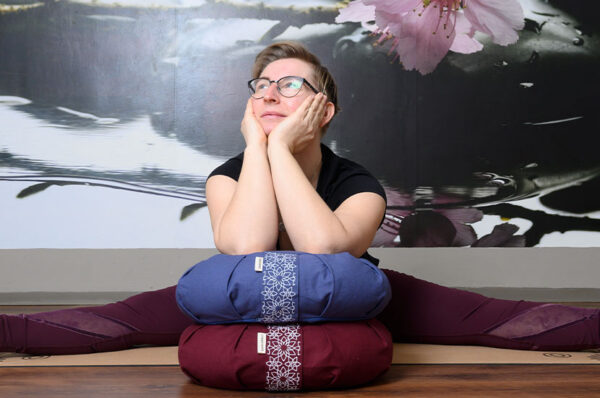
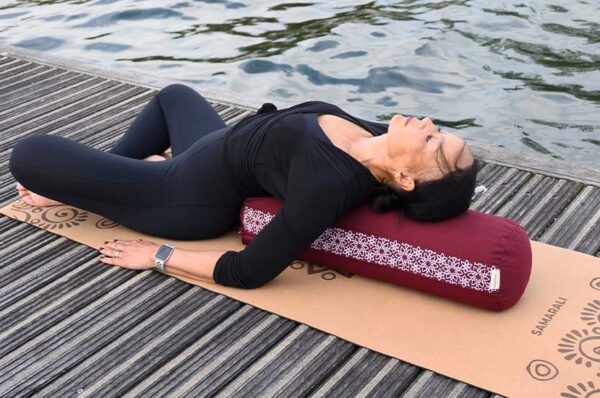
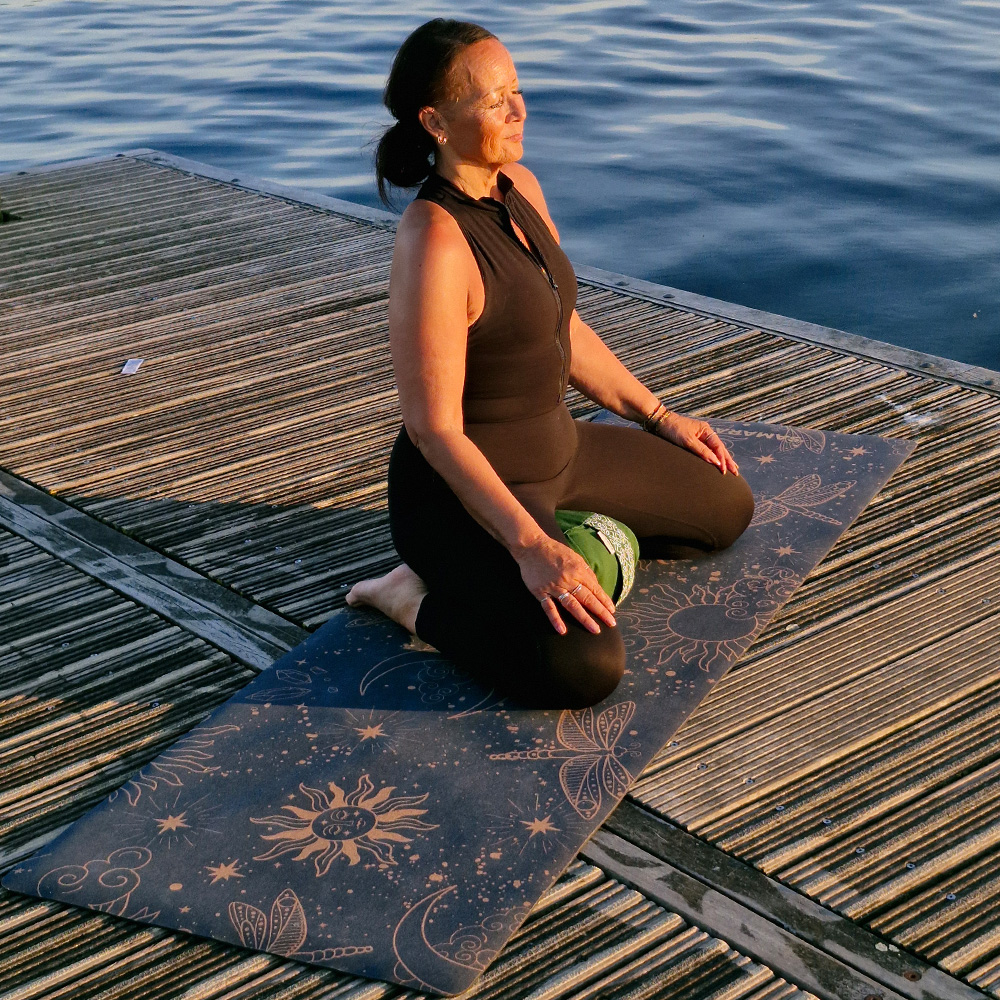
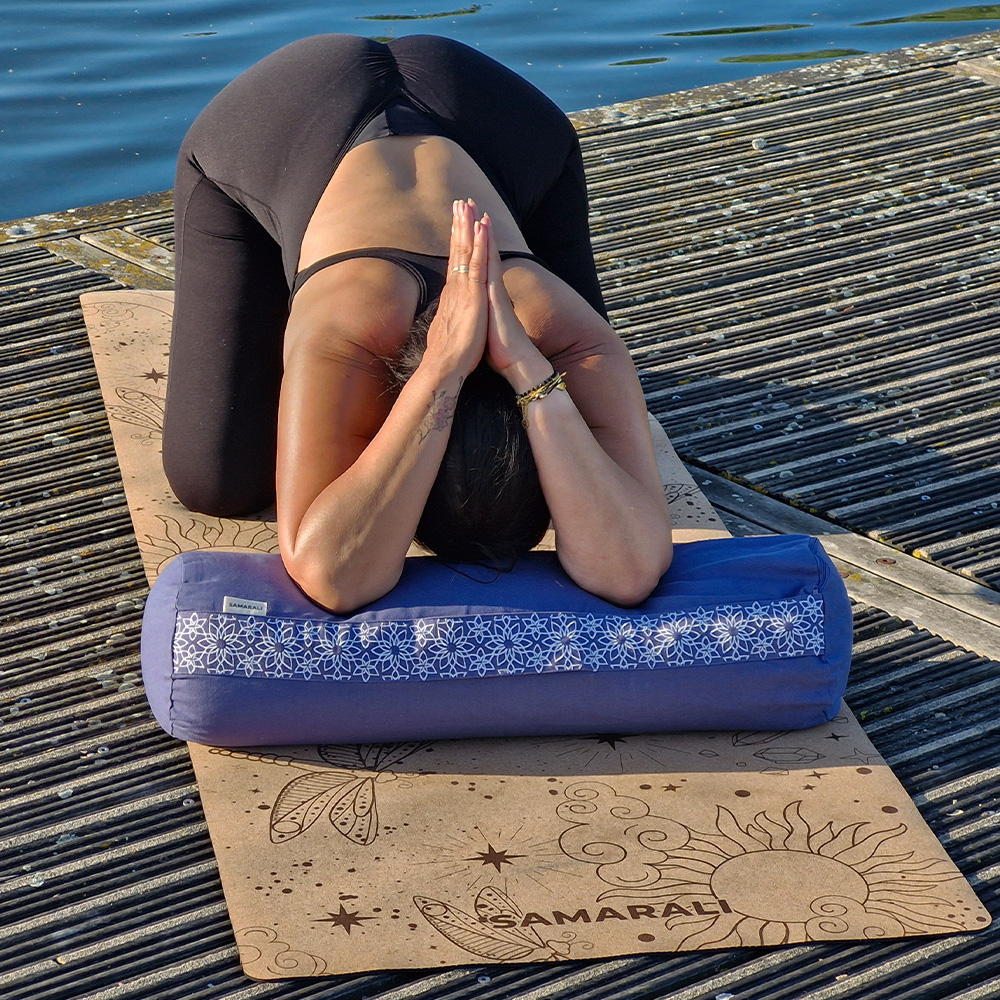
- Props: A yoga bolster placed under your knees in savasana relieves lower back tension and helps your body fully surrender. A folded blanket under your head supports natural spinal alignment. For seated Pranayama, a meditation cushion raises your hips above your knees, making it far easier to maintain an upright posture without muscular effort. Together, these props and your mat function as a complete, integrated system for breathwork practice.
Thinking of your breathwork setup as a whole — rather than just the mat in isolation — helps you create the conditions for genuine stillness and focus from the moment you lie down.
Frequently Asked Questions
Can I use a regular yoga mat for breathwork, or do I need a dedicated one?
You can use a regular yoga mat for breathwork, but not all yoga mats are equally suited to it. Mats designed for dynamic practices like Vinyasa are often thinner and more textured for grip during movement, which may not provide the cushioning and comfort you need for extended stillness. If your current mat is at least 4mm thick, has a skin-friendly surface, and keeps you warm from the floor, it may work well enough. If you find yourself distracted by discomfort, pressure points, or cold creeping up from the floor, it is worth investing in a mat optimized for stillness-based practice.
How do I keep my body warm on a yoga mat during long breathwork sessions?
Body temperature drops noticeably during extended stillness, so preparation matters. Start by choosing a mat with good thermal insulation — a natural rubber or cork rubber mat creates a meaningful barrier between you and a cold floor. Beyond your mat, keep a light blanket nearby to drape over yourself once you settle into your reclined position, and wear comfortable, layered clothing you can easily adjust. Some practitioners also place a bolster or folded blanket under their knees to reduce lower back strain and help the body stay relaxed and warm throughout the session.
What is the best way to clean a yoga mat used for breathwork?
Because breathwork involves prolonged skin contact with the mat surface, regular cleaning is especially important. For natural rubber or cork mats, wipe the surface down after each session using a mild, diluted solution of water and gentle soap or a purpose-made yoga mat cleaner, then allow it to air dry completely before rolling it up. Avoid soaking rubber mats or exposing them to direct sunlight for extended periods, as this can degrade the material over time. For TPE mats, the same gentle wipe-down approach applies, and most can tolerate slightly more moisture without damage.
Should I use any props alongside my yoga mat for breathwork practice?
Yes, props can significantly enhance your breathwork experience and are highly recommended, especially for longer sessions. A bolster placed under your knees in savasana relieves lower back tension and allows your body to fully surrender to the mat. A folded blanket under your head supports natural spinal alignment and prevents neck strain during reclined exercises. For seated breathwork techniques, a meditation cushion raises your hips above your knees, which makes it much easier to maintain an upright posture without muscular effort, freeing your attention entirely for your breath.
How do I choose between a wider mat and using a blanket to extend my surface area?
A blanket can add softness, but it is not a reliable substitute for a wider or longer mat. Blankets tend to shift and bunch during a session, which can become a subtle but persistent distraction when you are trying to maintain deep focus on your breath. A wider mat keeps your entire body on a single, stable, non-slip surface without any adjustments needed mid-session. If budget is a concern, a blanket can serve as a short-term solution, but for a consistent breathwork practice, investing in the right mat size from the start will support a more undisturbed and grounded experience.
Can I use my breathwork mat for other types of yoga, or will that wear it out faster?
A quality breathwork mat — particularly a natural rubber one in the 4mm to 6mm range — is versatile enough for most yoga styles including Hatha, Yin, and restorative yoga. Using it for more dynamic practices like Vinyasa or Ashtanga is also possible, though the increased sweat and friction from standing sequences will cause more wear over time. To extend your mat’s lifespan, clean it regularly, rotate which side faces up, and store it rolled loosely rather than folded. If you practice a high-intensity style several times a week alongside breathwork, consider having two mats so each is used for its intended purpose.
Are there any mat materials I should avoid specifically for breathwork?
Yes. PVC (vinyl) mats are generally the least suitable choice for breathwork. While PVC mats are durable and affordable, they are known for off-gassing chemical odors — particularly when new — which can be genuinely disruptive during a practice that centers entirely on conscious breathing. PVC also tends to feel cold and plastic-like against bare skin, which becomes uncomfortable during extended stillness, and it offers poor thermal insulation. If a natural rubber mat is outside your budget, a quality TPE mat is a much better alternative to PVC for breathwork-focused sessions.
Ready to build the perfect breathwork setup? At Samarali, we have everything you need to support a grounded, comfortable practice. From our sustainably sourced natural rubber yoga mat to a supportive yoga bolster for under your knees and a cosy organic cotton yoga blanket to keep you warm during extended stillness — every piece is chosen with mindful practice in mind. Pair your mat with one of our meditation cushions for seated breathwork sessions and experience the difference the right support makes. Shop the full yoga collection at Samarali and find your perfect match today.