


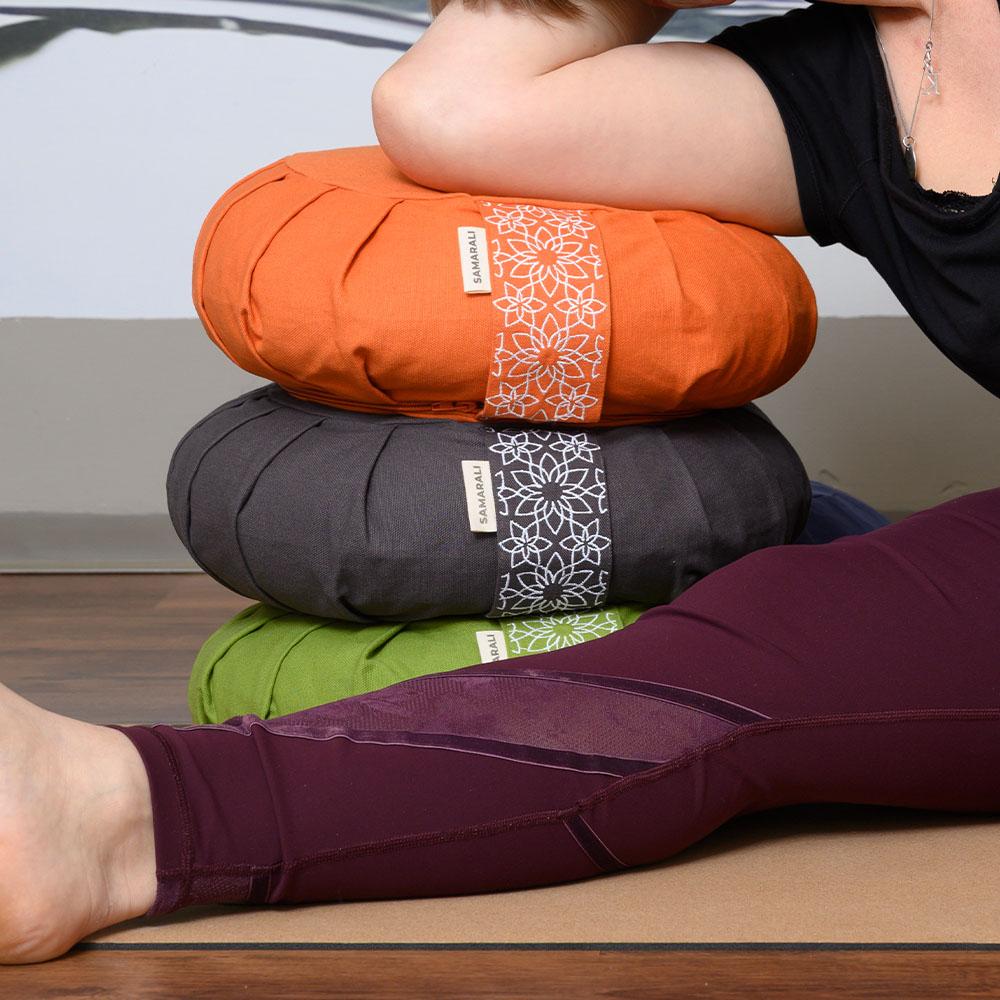
The best meditation cushion for beginners is a zafu, a round, firm cushion that elevates the hips, tilts the pelvis forward, and helps maintain a natural spinal curve during seated practice. It suits most beginners because it works across a range of sitting positions, including cross-legged, kneeling, and half-lotus. Below, we answer the most common questions beginners ask before choosing their first cushion.

What types of meditation cushions are there?
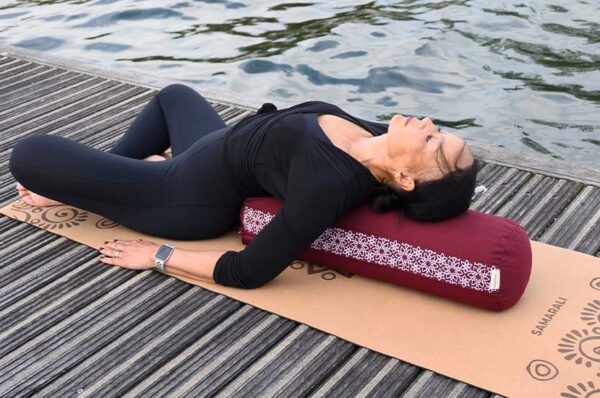
The main types of meditation cushions are the zafu (round, compact, and firm), the zabuton (a flat, padded mat placed underneath other cushions), the crescent cushion (a curved variation of the zafu that cradles the thighs), and the yoga bolster (a longer, cylindrical support used for reclined or restorative positions). Each type serves a different sitting style and body type.
Many practitioners combine a zabuton with a zafu to cushion both the ankles and the seat. You will also find folded blankets and meditation mats used as foundational layers. The variety exists because no single seated posture is correct in meditation—body proportions, flexibility, and personal comfort all influence which cushion supports a sustainable, upright position.
- Zafu: Round and compact, ideal for cross-legged and kneeling positions
- Zabuton: Flat floor mat that protects knees and ankles
- Crescent cushion: Curved shape that reduces pressure on the outer thighs
- Meditation bolster: Long cylindrical cushion for reclined or supported postures
- Meditation mat: Thin, portable base layer for seated practice
Use this table to quickly match your body and practice style to the right cushion type.
| Cushion Type | Filling Material | Ideal Sitting Position | Height Range | Best For | Portability |
|---|---|---|---|---|---|
| Zafu | Buckwheat or kapok | Cross-legged, kneeling, half-lotus | 5–8 in / 13–20 cm | Most beginners | Moderate |
| Zabuton | Cotton batting or foam | Used beneath other cushions | 2–3 in / 5–8 cm | Practitioners with ankle or shin discomfort | Low (bulky) |
| Crescent Cushion | Buckwheat or kapok | Cross-legged, wide-knee positions | 3–5 in / 8–13 cm | Practitioners with knee pain or tight hips | Moderate |
| Yoga Bolster | Kapok or foam | Kneeling, reclined, restorative | 6–10 in / 15–25 cm | Restorative practice or kneeling preference | Low (large) |
| Meditation Mat | Cotton or natural fiber | Any seated position | 0.5–1 in / 1–3 cm | Frequent travelers, minimalist practice | High |
What should beginners look for in a meditation cushion?
Beginners should prioritize height, firmness, and stability. A cushion that is too soft will compress quickly, allowing the pelvis to tilt backward, which rounds the lower back and creates discomfort within minutes. The cushion should lift the hips just high enough that the knees rest comfortably at or below hip level.
Portability and cover care are also worth thinking through early. A removable, washable cover makes maintenance straightforward, and a lighter cushion is easier to carry to classes or retreats. For eco-conscious practitioners, natural fillings and organic cotton covers align with a mindful approach to what you bring into your practice space.
Here is a simple checklist for beginners evaluating their first meditation cushion:
- Enough height to keep hips above knee level
- Firm filling that holds its shape under body weight
- A stable base that does not slip on the floor
- A removable, washable cover
- Sustainable or natural materials if environmental impact matters to you
- A size and weight that suits how and where you practice
Which meditation cushion is right for your body?
Understanding cushion types is only part of the decision. The other part is matching what you choose to your own body and how it moves. Flexibility, frame size, and any existing discomfort all influence which cushion will genuinely support your practice rather than simply look the part on the floor.
The profiles below cover the most common beginner situations. Find the one that sounds most like you and use it as your starting point.
If you have tight hips or limited flexibility
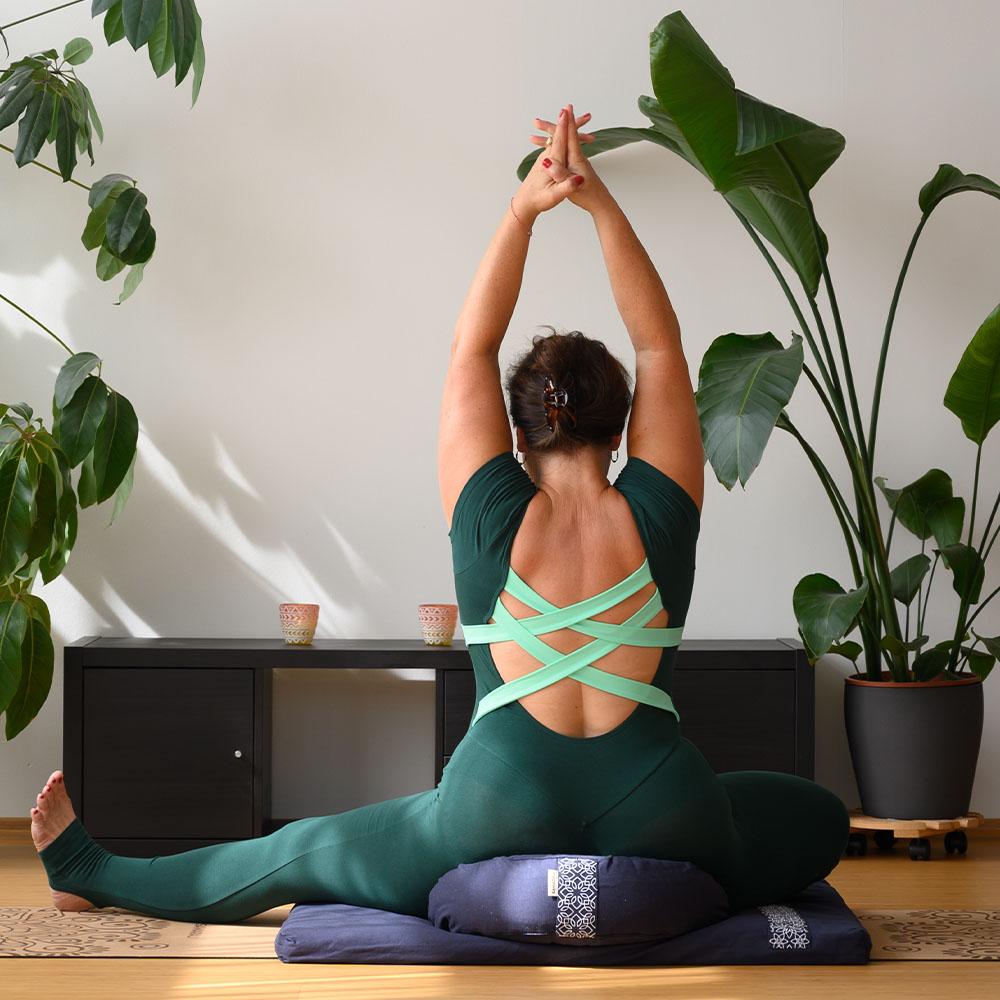
Tight hips make it difficult to sit close to the floor without the pelvis tucking under and rounding the lower back. A taller zafu in the 7–8 inch (18–20 cm) range gives your hips the extra lift they need to tilt forward naturally. A crescent cushion is another strong option here — its curved shape cradles the thighs and reduces the outward pressure that causes discomfort when hip flexors are less open.
If you experience knee or ankle pain
Joint sensitivity around the knees and ankles usually responds well to two adjustments: lower the sitting height and add a zabuton underneath. The zabuton cushions the shins and ankles against the hard floor, which is often where the real discomfort originates. If cross-legged sitting remains uncomfortable even with these adjustments, try kneeling with the zafu placed vertically between the thighs—this removes most of the load from the knee joints. A bolster in a similar orientation works just as well.
If you travel frequently
A heavy buckwheat-filled zafu is not the most practical travel companion. A kapok-filled zafu or a compact meditation mat offers a much lighter alternative without sacrificing meaningful support for shorter sessions. Kapok cushions pack down reasonably well and provide a firm, consistent surface across different floor types. A thin meditation mat used alone is the most portable option of all and works well for practitioners who are comfortable sitting closer to the floor.
If you are taller or larger-framed
Taller practitioners and those with a larger frame often find standard cushion heights insufficient — longer legs mean the knees sit higher relative to the hips. A zafu in the 8-inch (20 cm) range, or one with a generous fill volume, is the better starting point. It is also worth checking that the cushion’s diameter is wide enough to fully support the sit bones without feeling precarious. A meditation bolster used as a seat can provide a broader, more stable base for practitioners who find round zafus too narrow.
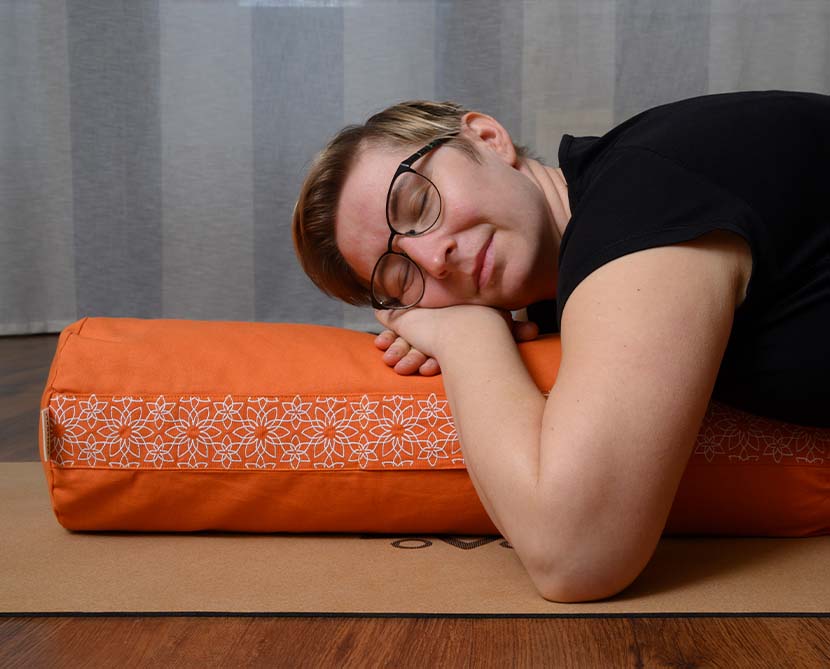
How is a zafu different from a meditation bolster?
A zafu is a small, round, firm cushion designed to elevate the hips during upright seated meditation. A meditation bolster is a longer, softer, cylindrical cushion primarily used to support the body in reclined, restorative, or supine positions. The key difference is function: a zafu supports active, upright sitting, while a bolster supports passive, resting positions.
In practical terms, a zafu keeps the spine tall and the body alert — exactly what most seated meditation styles require. A bolster reduces muscular effort entirely, making it better suited to restorative yoga, body scan practices, or savasana-style meditation where the goal is deep physical release rather than focused alertness.
That said, a bolster can double as a meditation seat for practitioners who prefer a lower, wider base or who find round zafus uncomfortable. Our yoga bolster works well in this context, particularly for practitioners with tighter hips who need a broader, more forgiving surface. For most beginners focused on breath awareness or mindfulness meditation, however, the zafu remains the more versatile starting point.
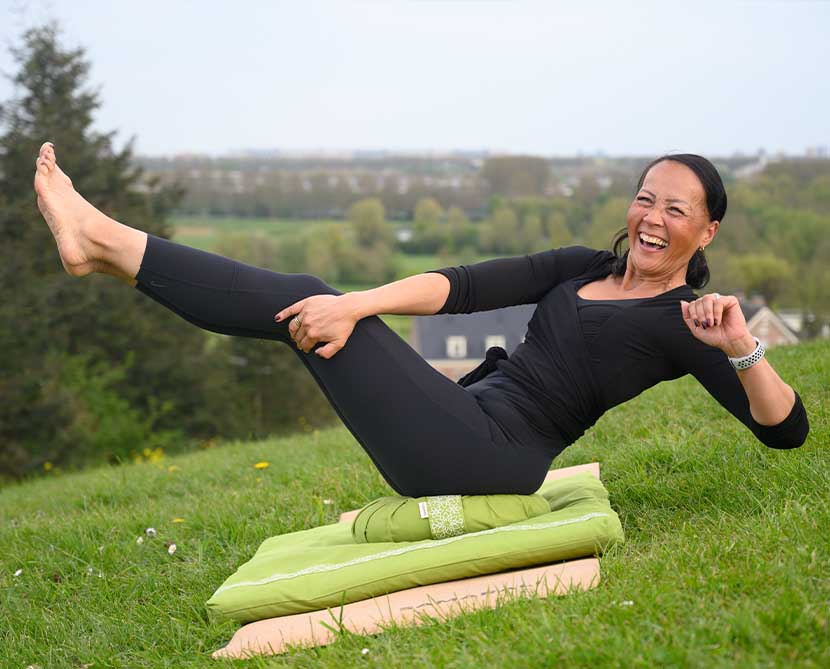
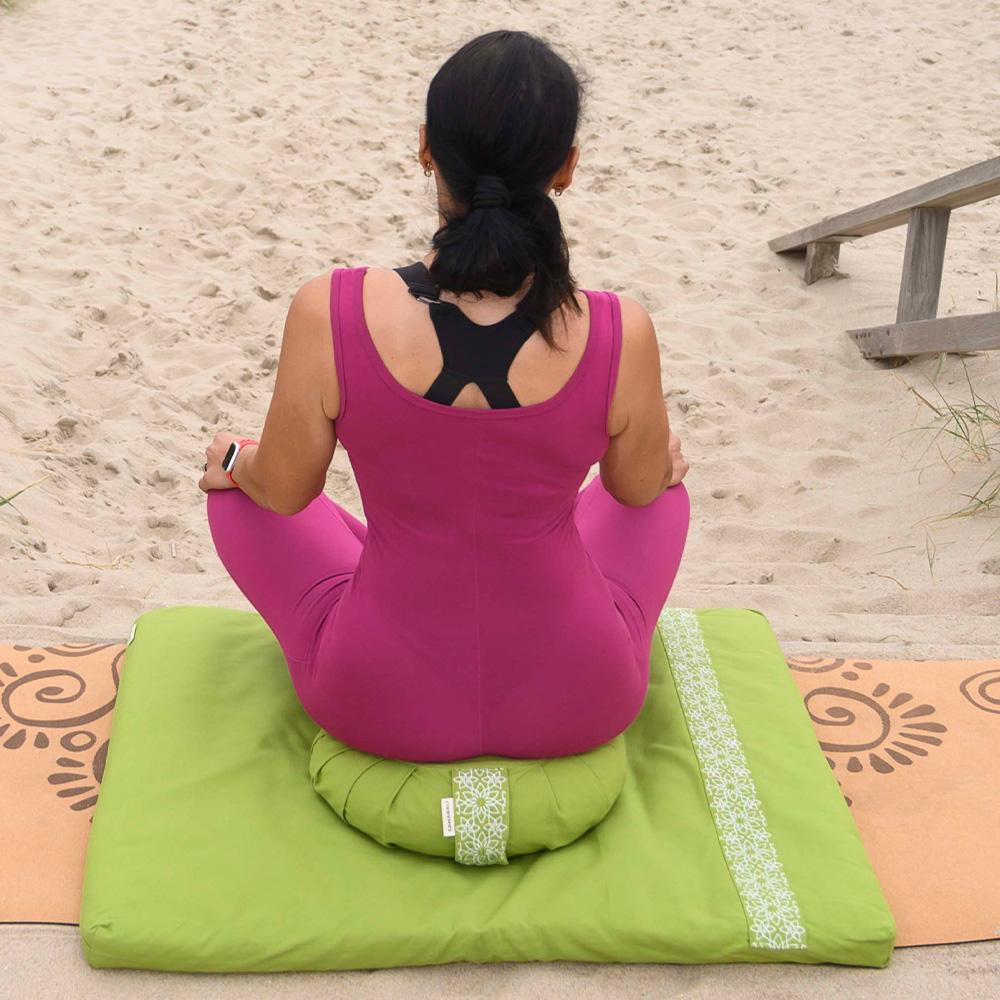
How to sit on a zafu correctly
Knowing how to position yourself on a zafu makes a significant difference, especially in the early weeks of practice when the body is still adapting to seated stillness. Follow these steps to find a stable, comfortable position from the very first session.
- Place the zafu on a flat, non-slip surface. If the floor is hard, set it on a zabuton or folded blanket to protect your ankles.
- Sit on the front third of the cushion so your sit bones are supported but your thighs slope gently downward toward the floor.
- Check that your knees are at or below hip level. If they are higher, try adding a folded blanket beneath the cushion for extra height.
- Let your pelvis tilt slightly forward. Think of it as a gentle pour of water from the bowl of your hips rather than a forced arch in the lower back.
- Stack your spine upward from the base, lengthening through the crown of your head without forcing a rigid or military posture.
- Rest your hands on your thighs and soften your shoulders away from your ears. Let your jaw and face relax.
This setup applies whether you are sitting cross-legged, in a wide-knee position, or kneeling with the zafu placed vertically between your thighs. The principle is the same in every case: hips above knees, pelvis gently forward, spine long and relaxed.
Does the filling material in a meditation cushion matter?
Yes — the filling material matters significantly. It determines how well the cushion holds its shape, how much support it provides over time, and how the cushion feels under your body weight. The two most common natural fillings are buckwheat hulls and kapok fiber, and they offer noticeably different experiences.
Buckwheat hulls are dense, heavy, and moldable. They shift slightly when you sit down, then hold the shape of your seat — many practitioners find this grounding and stable. They also allow some airflow, which keeps the cushion from retaining heat during longer sessions. The trade-off is weight: a buckwheat-filled zafu can be quite heavy to carry.
Kapok fiber is a natural, plant-based material that is much lighter than buckwheat. It provides a firmer, more uniform surface and compresses less over time than synthetic foam. For practitioners who travel frequently or prefer a lighter setup, kapok is a practical choice. It is also a natural, biodegradable material harvested without harming the tree, which aligns well with sustainable values.
Synthetic foam fillings are available and tend to cost less, but they compress faster and do not offer the same longevity as natural alternatives. For beginners investing in a cushion they intend to use consistently, a natural filling is generally the better long-term choice — both for durability and for the overall quality of the sitting experience.
How long does each filling last?
Lifespan and care requirements vary meaningfully between filling types. Understanding these differences helps you evaluate a cushion’s true cost over time, not just the upfront price.
- Buckwheat hulls: Estimated lifespan of 5–10 years. The hulls compact gradually with use, but you can extend the cushion’s life by topping up the filling as needed. Air out the inner filling every few months to keep it fresh.
- Kapok fiber: Estimated lifespan of 3–7 years. Kapok maintains consistent firmness well and requires very little day-to-day maintenance. It is not typically refillable, but its lightweight, low-maintenance nature makes it a practical long-term choice.
- Synthetic foam: Estimated lifespan of 1–3 years before noticeable compression affects support. It requires the least maintenance but has the shortest lifespan of the three options.
For practitioners who sit regularly, natural fillings represent the better long-term investment: they last longer, perform better under sustained use, and can be refreshed in ways that synthetic foam cannot.
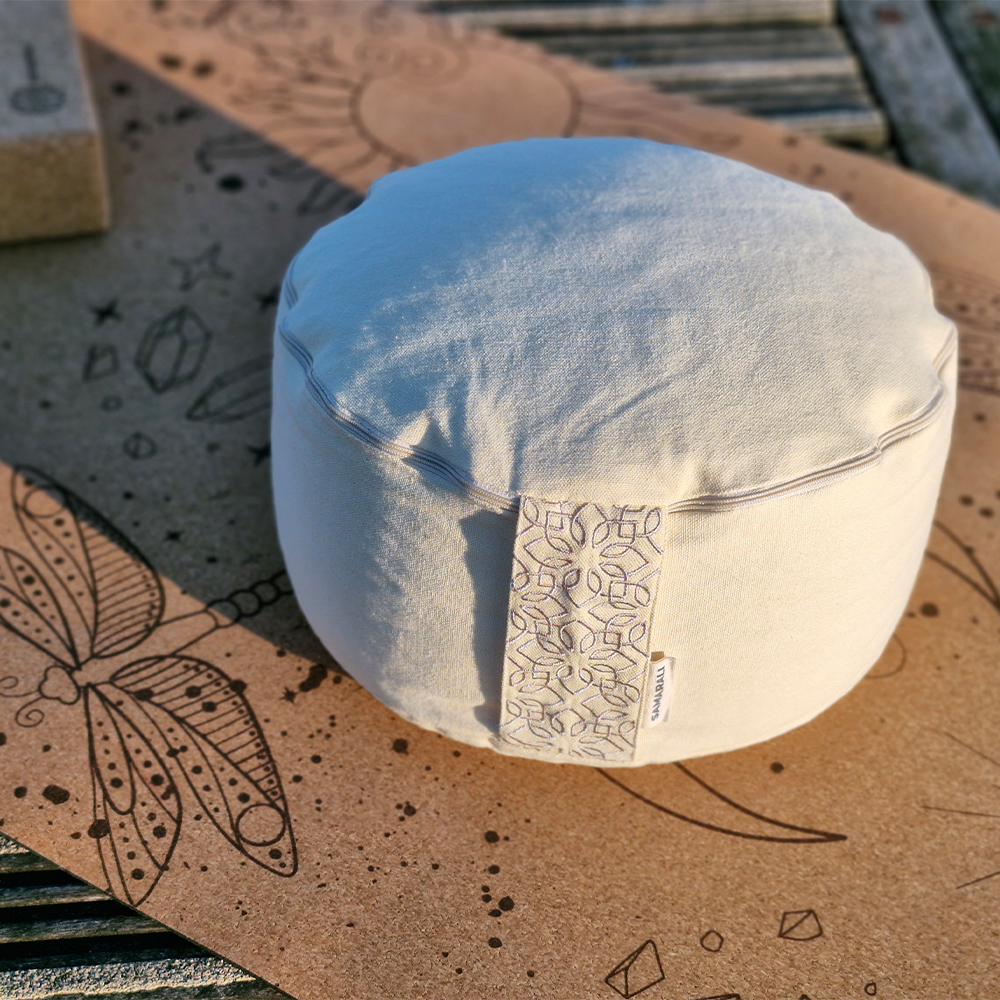
What to expect when buying your first meditation cushion
Once you know which cushion type suits your body, a few practical buying considerations will help you choose with confidence. Quality natural-fill meditation cushions range from accessible entry-level options to premium versions made with certified-organic materials. What drives the price difference is fill volume, organic certification, and cover material quality — a higher price generally reflects a denser fill that holds its shape longer and a cover fabric that withstands regular washing without degrading.
When reviewing a product listing, look for three quality signals: a removable, washable cover; a zipper that lets you adjust the fill volume; and a non-slip base. One pitfall to avoid before you buy: cushions described only as soft or plush. Softness feels appealing in your hands, but a cushion that compresses under body weight will cause more discomfort than a firm one within the first ten minutes of sitting. Firmness is not harshness — it is the quality that keeps your hips elevated and your spine supported throughout the session.
Ready to build a meditation practice that is genuinely comfortable from the very first sit? At Samarali, we offer a thoughtfully curated range of tools designed to support exactly that. Browse our meditation cushions to find the right height and filling for your body, explore our meditation mat as a grounding base layer, or add a yoga bolster for extra support in restorative positions. Every product is made with natural, sustainable materials that align with a mindful approach to practice. Shop the full meditation collection at Samarali and find everything you need to sit well, every day.
Frequently Asked Questions
How do I know if my meditation cushion is the right height for me?
A good test is to sit on the cushion in your preferred position and check whether your knees rest at or below hip level. If your knees are higher than your hips, the cushion is too low and your lower back will likely round under the strain. A simple way to fine-tune the fit is to add a folded blanket underneath the cushion until you find a height where your pelvis tilts naturally forward and your spine stacks comfortably without effort.
Can I use a regular pillow or throw cushion instead of a dedicated meditation cushion?
You can start with a regular pillow, but most household cushions compress too quickly under body weight and do not provide the consistent elevation your hips need to stay above knee level. A folded firm blanket or a tightly stuffed floor cushion is a better temporary substitute. If you plan to meditate regularly, investing in a dedicated cushion with firm, shape-retaining filling will noticeably improve your comfort and posture within a few sessions.
What is the best sitting position for a beginner using a zafu?
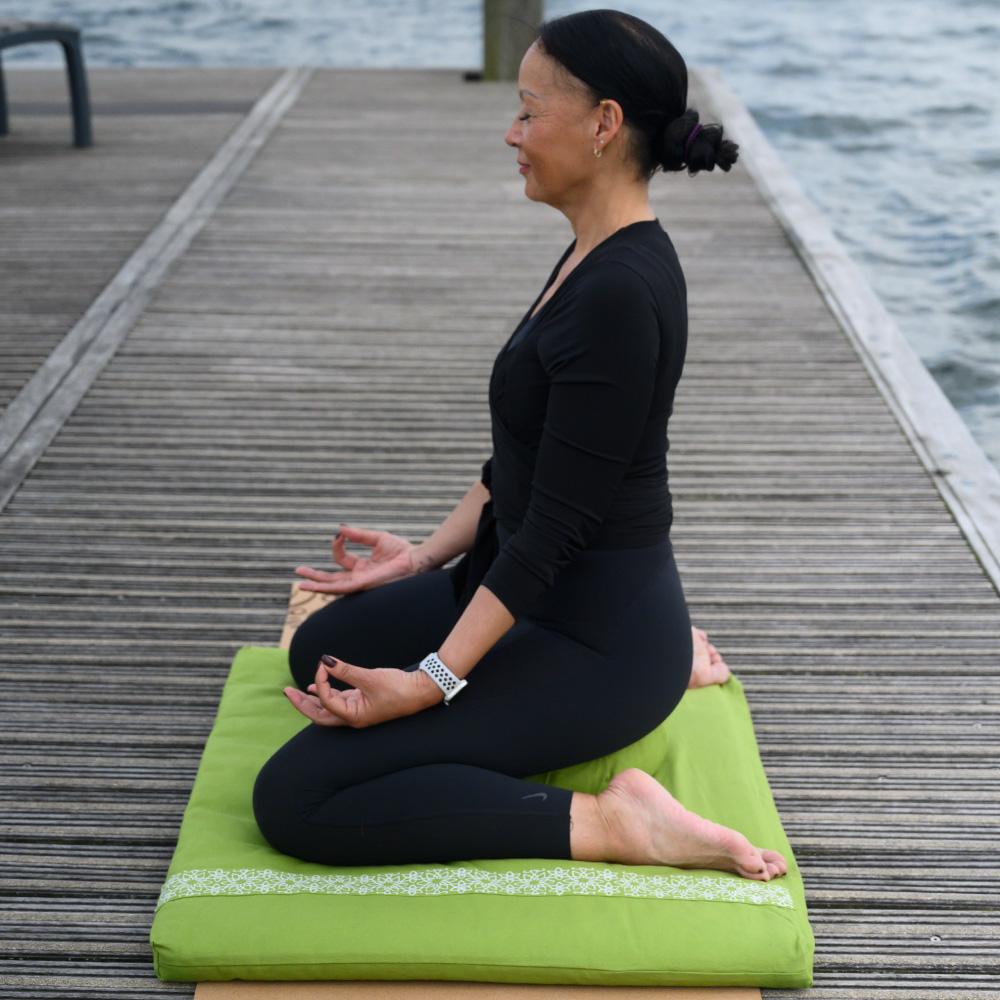
The most accessible starting position for most beginners is a simple cross-legged seat, also called Sukhasana, with the zafu placed beneath the sit bones to tilt the pelvis forward. If full cross-legged sitting is uncomfortable, a kneeling position with the zafu placed vertically between the thighs is an excellent alternative that reduces knee strain. The goal in any position is a tall, relaxed spine rather than a perfectly symmetrical posture, so choose whatever variation lets you sit upright with the least muscular tension.
How long does a meditation cushion typically last, and how do I maintain it?
A well-made cushion with a natural filling like buckwheat hulls or kapok can last several years with basic care. Buckwheat-filled cushions can be refreshed by adding more hulls as the filling compacts over time, which extends their lifespan considerably. For maintenance, unzip and air out the inner filling occasionally, spot-clean or machine-wash the removable cover according to its care instructions, and store the cushion away from direct sunlight to prevent the fabric from fading or weakening.
Should I also buy a zabuton, or is a zafu enough to get started?
A zafu alone is enough to begin a seated practice, and most beginners do not need a zabuton right away. A zabuton becomes genuinely useful once you are sitting for longer sessions, typically 20 minutes or more, because it cushions the ankles, shins, and knees against the hard floor. If your practice space has a carpeted or padded floor, you may not need a zabuton for quite some time. Start with the zafu and add a zabuton later if you notice discomfort in your lower legs during extended sits.
What if I have knee or hip pain — is a meditation cushion still the right solution?
A properly fitted cushion can relieve mild discomfort caused by poor posture or insufficient hip elevation, but it is not a substitute for medical advice if you have an existing knee or hip condition. If cross-legged sitting aggravates your joints even with cushion support, a kneeling position using a zafu or a seiza bench is often a more joint-friendly alternative. It is also worth consulting a physiotherapist or yoga teacher who can assess your specific range of motion and recommend a seated setup that supports your practice without worsening any underlying issues.
Is there a break-in period for a new meditation cushion, and will it feel different after a few uses?
Yes, especially with buckwheat-filled cushions, there is a short settling period during which the hulls shift and redistribute to conform to your body shape. This usually stabilizes after a few sessions and results in a more personalized, stable seat. Kapok-filled cushions tend to feel consistent from the first use but may compress very slightly over the first few weeks before holding their final firmness. Either way, give yourself at least one to two weeks of regular use before deciding whether a cushion is the right fit for your body and practice style.