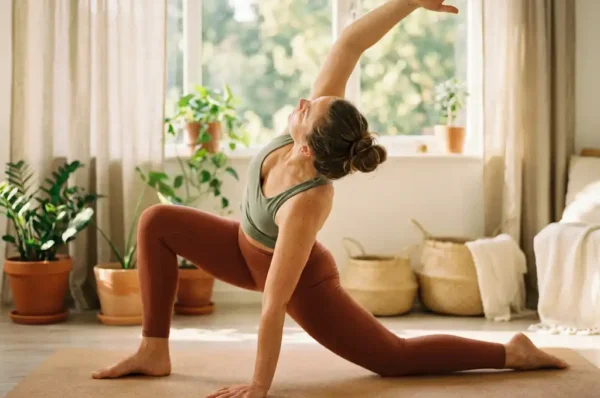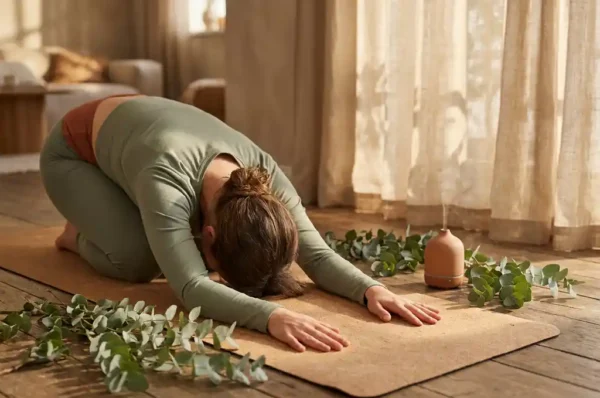



Yes, Vinyasa yoga can absolutely strengthen your core. The flowing, movement-based nature of Vinyasa requires your core muscles to engage continuously to stabilize your spine, transfer energy between poses, and maintain balance throughout each transition. This makes it a genuinely effective method for building functional core strength, not just flexibility.
Unlike isolated abdominal exercises, Vinyasa yoga trains your core as part of whole-body movement patterns, which means the strength you build translates directly into better posture, injury resilience, and everyday physical performance. Below, we break down exactly how it works and how to get the most out of your practice.
Which muscles does Vinyasa yoga actually work?
Vinyasa yoga works a broad network of muscles simultaneously, with the core at the center of nearly every movement. The primary core muscles engaged include the transverse abdominis, rectus abdominis, obliques, and the deep spinal stabilizers known as the multifidus. Beyond the core, Vinyasa also actively works the shoulders, glutes, hip flexors, hamstrings, and chest.
What makes Vinyasa particularly effective is that it does not isolate muscles in the way machines or weighted exercises do. Instead, it demands coordination between muscle groups. When you move from Downward Dog into a lunge, for example, your core must brace to protect your lower back while your legs and arms simultaneously manage the load of the transition. This integrated demand is what makes Vinyasa so efficient for building functional strength.
The deep stabilizing muscles of the core, which are often underactivated in conventional gym training, get consistent work in Vinyasa because every balance pose and every flowing transition requires them to fire. Over time, this builds the kind of deep, supportive core strength that protects joints and improves overall movement quality.
How does Vinyasa yoga build core strength differently than gym workouts?
Vinyasa yoga builds core strength through dynamic stabilization rather than repetitive isolated contractions. Where a gym workout might target the abs with crunches or leg raises, Vinyasa trains the core to work as a stabilizing unit across complex, multi-directional movements. This develops functional strength that supports real-world activities and athletic performance in ways that isolated exercises often do not.
In a typical gym session, you might perform a set number of reps with rest periods in between. In a Vinyasa class, your core is engaged almost continuously for the entire duration of the practice. The breath plays a central role here too. Vinyasa links movement to breath, and conscious breathing activates the deep core muscles, particularly the transverse abdominis, with every inhale and exhale. This breath-driven activation is something gym workouts rarely replicate.
Another key difference is the role of balance and proprioception. Many Vinyasa poses require you to balance on one leg, support your weight on your hands, or hold an asymmetrical position. Each of these scenarios forces the core to respond dynamically rather than simply contract against a fixed resistance. The result is a more adaptable, responsive core that performs well under varied physical demands.
What Vinyasa poses are most effective for core strengthening?
The most effective Vinyasa poses for core strengthening are those that demand sustained stabilization, resist rotation, or require you to support your body weight. Plank pose, Chaturanga, Boat pose, Side Plank, and Warrior III consistently rank among the highest-demand core exercises within a Vinyasa flow.
Poses that build deep core stability
Plank pose is the foundation of core work in Vinyasa. Holding a strong Plank requires every layer of the core to engage simultaneously to prevent the hips from sagging or rising. Chaturanga, the low push-up transition used throughout Vinyasa flows, intensifies this demand by adding shoulder and tricep load while keeping the core fully braced. Practicing these transitions mindfully rather than rushing through them delivers far greater core benefit.
Poses that challenge balance and anti-rotation
Warrior III and Half Moon pose are exceptional for core training because they require the body to resist rotation and maintain a long, stable spine while balancing on one leg. Boat pose targets the hip flexors and rectus abdominis directly and is one of the few Vinyasa poses that deliberately loads the front of the core in a way similar to traditional abdominal exercises. Side Plank adds oblique and lateral core strength, which is often underdeveloped in people who focus only on front-facing core work.
Pairing a natural rubber yoga mat with your practice provides the grip and cushioning needed to hold these demanding poses with proper alignment, which directly supports the quality of your core engagement.
How often should you practice Vinyasa yoga to see core results?
Practicing Vinyasa yoga three to four times per week is generally sufficient to see meaningful core strengthening results within four to eight weeks. Consistency matters more than session length. A focused 45-minute practice three times a week will produce better core results than one long session on the weekend.
For beginners, starting with two to three sessions per week allows the body to adapt to the demands of the practice without overtraining. As strength and stamina build, increasing frequency or session intensity will continue to drive progress. Rest days remain important because muscles, including the deep core stabilizers, need recovery time to grow stronger.
The quality of each session also determines how quickly you see results. Moving intentionally through transitions, maintaining conscious breath engagement, and holding challenging poses for their full duration rather than rushing through them will accelerate core development significantly. Treating each Vinyasa flow as a deliberate core training session, rather than simply a flexibility practice, shifts both your mindset and your outcomes.
Ready to take your Vinyasa practice to the next level? At Samarali, you will find everything you need to build a consistent, high-quality home practice. Whether you are looking for a natural rubber yoga mat for superior grip during core-intensive flows, a supportive yoga bolster for recovery and restorative work, or a cosy organic cotton yoga blanket to wind down after practice, Samarali has you covered. Explore the full yoga mat collection and complete yoga sets — and shop now to set yourself up for a stronger, more grounded practice.
Frequently Asked Questions
Can beginners do Vinyasa yoga for core strengthening, or is it too advanced?
Vinyasa yoga is accessible to beginners, but it helps to start with a beginner-friendly class that breaks down the foundational poses like Plank, Chaturanga, and Downward Dog before flowing through them at speed. Many studios and online platforms offer beginner Vinyasa sequences that move at a slower pace, giving you time to focus on proper alignment and core engagement rather than just keeping up. Starting slow is actually more beneficial for core development because it forces you to hold poses with intention rather than momentum. As your strength and body awareness grow, you can progress to faster, more dynamic flows.
How do I know if I'm actually engaging my core during a Vinyasa flow?
A well-engaged core during Vinyasa feels like a subtle but firm drawing-in of the lower belly, as if you are gently pulling your navel toward your spine without holding your breath. If your lower back aches after practice or your hips sag in Plank, those are signs your core is not fully activating and other muscles are compensating. A useful cue is to synchronize your core engagement with your exhale — as you breathe out, consciously draw the deep abdominal muscles in and up. Practicing in front of a mirror or recording yourself occasionally can also help you spot alignment breakdowns that signal core disengagement.
Should I combine Vinyasa yoga with other core exercises, or is it enough on its own?
For most people focused on general fitness, posture, and injury prevention, a consistent Vinyasa practice provides sufficient core training on its own. However, if you are an athlete, recovering from a core-related injury, or have specific performance goals, supplementing Vinyasa with targeted exercises like dead bugs, Pallof presses, or physical therapy-guided movements can address any remaining gaps. The two approaches complement each other well — Vinyasa builds dynamic, functional core stability while targeted exercises can isolate and correct specific weaknesses. The key is to avoid doubling up in a way that leads to overtraining or fatigue that compromises your form in either practice.
Why does my lower back hurt after Vinyasa yoga, and how can I fix it?
Lower back discomfort after Vinyasa is most commonly caused by insufficient core engagement during transitions, which places excessive load on the lumbar spine. It can also result from collapsing into the lower back during poses like Upward Dog or Cobra instead of distributing the backbend evenly across the entire spine. To address this, focus on actively bracing your core before and during every transition, and avoid letting your hips drop below shoulder level in Plank or Chaturanga. If the discomfort persists, working with a qualified yoga teacher for a session or two to assess your alignment can make a significant difference and prevent longer-term issues.
What is the best time of day to practice Vinyasa yoga for core strengthening?
The best time to practice Vinyasa for core strengthening is whenever you can be most consistent and most mentally present — consistency will always outweigh the minor physiological differences between morning and evening sessions. That said, morning practice tends to be effective for building discipline and starting the day with activated, body-aware muscles, while afternoon or early evening sessions benefit from a body that is already warmed up and more physically pliable. Avoid practicing on a full stomach, as deep core engagement and twisting poses can be uncomfortable and less effective after a large meal. Aim for at least a two-hour gap after eating before your session.
Can Vinyasa yoga help with core recovery after pregnancy or abdominal surgery?
Vinyasa yoga can be part of a postpartum or post-surgical core recovery journey, but it should only be introduced after receiving medical clearance from your doctor or physiotherapist. In the early stages of recovery, particularly for those with diastasis recti (abdominal separation) after pregnancy, certain poses like full Boat pose or deep twists may need to be modified or avoided entirely. A restorative or gentle yoga class focused on deep core reconnection is typically a better starting point before progressing to the demands of a full Vinyasa flow. Working with a yoga teacher who has specific training in prenatal or post-surgical rehabilitation is strongly recommended to ensure your recovery is safe and effective.
How long does it realistically take to notice visible core strengthening results from Vinyasa yoga?
Most practitioners begin to notice functional improvements — such as better posture, reduced lower back fatigue, and greater stability in balance poses — within four to six weeks of consistent practice at three or more sessions per week. Visible physical changes to the abdominal muscles typically take longer, often eight to twelve weeks or more, and depend significantly on overall body composition and nutrition alongside your yoga practice. It is worth noting that Vinyasa yoga tends to develop a leaner, more toned appearance rather than the bulky muscle definition associated with heavy weightlifting. Tracking progress through how poses feel and how your body moves, rather than purely by appearance, gives a more accurate and motivating picture of your development.