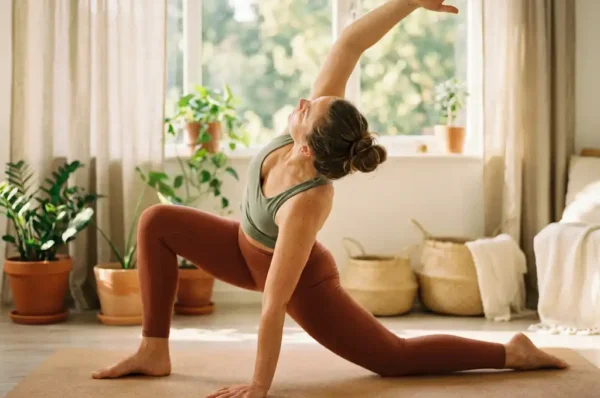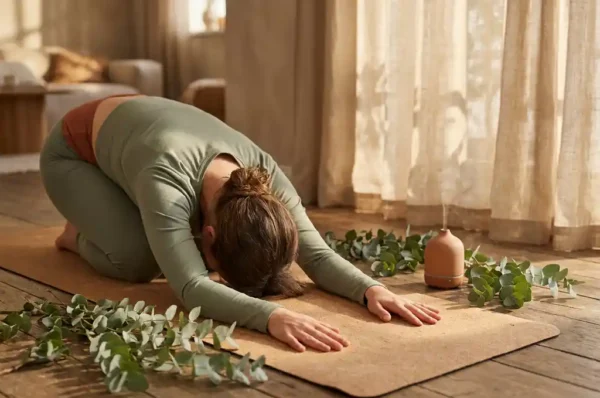



Vinyasa yoga and Hatha yoga are two distinct styles that differ primarily in pace and structure. Vinyasa yoga links breath to continuous, flowing movement through sequences of poses, while Hatha yoga moves at a slower, more deliberate pace with static holds. Both styles are rooted in the same foundational postures, but the experience they create feels quite different on the mat.
Understanding these differences helps you choose the right practice for your goals, fitness level, and lifestyle. Below, we break down the key questions most people have when comparing these two popular styles.
Which yoga style is better for beginners?
Hatha yoga is generally better for beginners. Its slower pace gives new practitioners time to learn proper alignment, understand individual poses, and build body awareness without feeling rushed. Because each posture is held for several breaths, beginners can settle into the shape, ask questions, and develop confidence before moving on.
That said, Vinyasa yoga is not off-limits for beginners. Many studios offer beginner-friendly Vinyasa classes that break down the transitions and keep the sequences simple. The key is finding a class level that matches where you are right now.
If you are brand new to yoga and have never practiced before, starting with Hatha gives you a solid foundation. Once you feel comfortable with sun salutations, warrior poses, and basic standing postures, stepping into a beginner Vinyasa class becomes much more accessible. Having the right equipment also helps ease the learning curve. A supportive yoga mat gives you the grip and cushioning you need to focus on your practice rather than slipping.
How does the pace and structure differ between Vinyasa and Hatha?
Vinyasa yoga is fast-paced and fluid, linking each movement directly to an inhale or exhale so the practice feels like a moving meditation. Hatha yoga is slow and structured, holding each pose for several breaths before transitioning. This fundamental difference in tempo shapes the entire feel of each class.
In a typical Hatha class, a teacher will guide you into a pose, help you refine your alignment, and hold that position for anywhere from three to ten breaths. The class follows a logical sequence but does not feel rushed. There is space to breathe, adjust, and reflect between postures.
Vinyasa classes, by contrast, build sequences called flows where one pose transitions directly into the next. The rhythm is set by the breath, and the energy in the room tends to be more dynamic. A Vinyasa class might move through dozens of postures in a single session, creating variety and cardiovascular challenge that a slower Hatha class does not typically provide.
Structurally, Hatha classes often follow a predictable arc: warm-up, standing poses, floor work, and a final relaxation. Vinyasa classes are more creative and can vary significantly from teacher to teacher, which keeps the practice fresh but can also feel less predictable for newer students.
What are the main health and fitness benefits of each style?
Hatha yoga builds flexibility, posture, and mindful body awareness, while Vinyasa yoga adds cardiovascular conditioning, muscular endurance, and calorie burning to those same foundational benefits. Both styles improve strength, reduce stress, and support joint health, but the intensity and emphasis differ meaningfully.
Benefits of Hatha yoga
- Improved flexibility: Longer holds give muscles time to release and lengthen gradually.
- Better posture and alignment: The focus on precise positioning trains postural awareness over time.
- Stress reduction: The slower pace activates the parasympathetic nervous system, calming the mind.
- Accessible recovery: Hatha is gentle enough to use on rest days or during periods of physical fatigue.
- Mind-body connection: Holding poses encourages internal focus and breath awareness.
Benefits of Vinyasa yoga
- Cardiovascular fitness: Continuous movement elevates the heart rate, supporting heart health.
- Muscular strength and endurance: Flowing through sequences repeatedly builds functional strength.
- Calorie expenditure: The higher intensity makes Vinyasa an effective option for those with weight management goals.
- Mental focus: Keeping up with the breath-movement connection demands concentration, which trains presence.
- Variety and creativity: Changing sequences prevents plateaus and keeps motivation high.
For those managing stress, anxiety, or recovering from injury, Hatha yoga tends to be the more therapeutic choice. For those looking to build fitness, improve stamina, or add an energetic physical challenge to their routine, Vinyasa yoga delivers more in that direction.
Can you practice Vinyasa and Hatha yoga together?
Yes, practicing both Vinyasa and Hatha yoga together is not only possible but genuinely beneficial. Many experienced practitioners combine both styles throughout the week, using Vinyasa for energizing, fitness-focused sessions and Hatha for slower, restorative practices. The two styles complement each other well and address different aspects of overall wellness.
A practical approach might look like this: two or three Vinyasa sessions per week to build strength and cardiovascular fitness, balanced with one or two Hatha classes to deepen flexibility, refine alignment, and give the body time to recover. This combination prevents overtraining while keeping the practice varied and engaging.
Mixing both styles also accelerates overall progress. The alignment awareness you develop in Hatha directly improves the quality of your Vinyasa transitions. The strength and endurance you build in Vinyasa makes longer Hatha holds more sustainable. They are not competing styles but rather complementary tools in a well-rounded yoga practice.
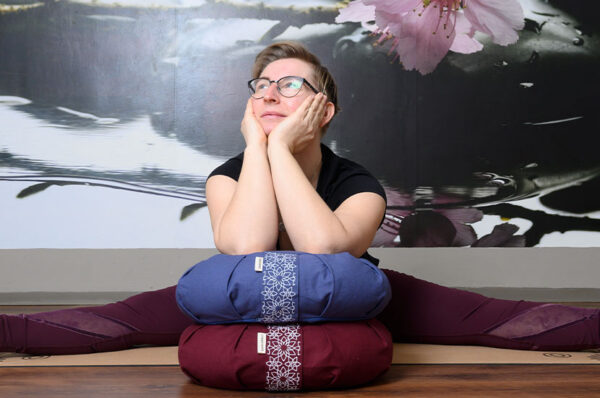
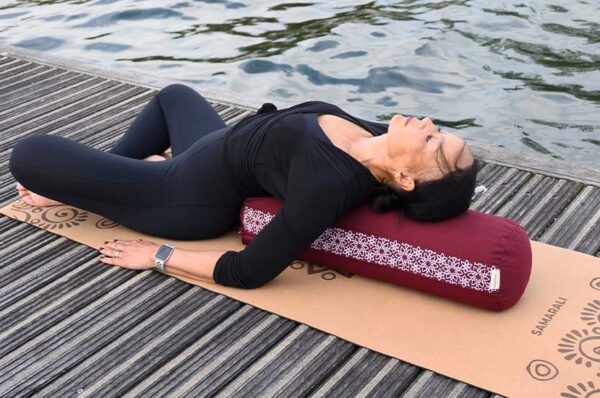
If you are building a home practice, having the right props makes both styles more accessible. A yoga bolster supports restorative Hatha postures, while a grippy, durable mat handles the demands of dynamic Vinyasa flows. We design our yoga sets with exactly this kind of versatile, everyday practice in mind.
Frequently Asked Questions
How do I know when I'm ready to transition from Hatha to Vinyasa yoga?
You’re likely ready to try Vinyasa when you can move through a sun salutation smoothly, hold basic standing poses like Warrior I and II with confidence, and coordinate your breath with movement without having to think too hard about it. A good benchmark is feeling comfortable in a Hatha class without needing to frequently pause for alignment corrections. Start with a beginner or slow-flow Vinyasa class rather than jumping into an intermediate session, and give yourself permission to rest in Child’s Pose whenever the pace feels overwhelming.
How long should a Hatha or Vinyasa session be to see real results?
For noticeable results, aim for sessions of at least 45 to 60 minutes, practiced consistently three to five times per week. Shorter 20 to 30-minute sessions can still be valuable, especially for beginners or on busy days, but longer sessions allow more time for warm-up, peak poses, and proper cool-down. Consistency matters far more than session length — three 45-minute practices per week will deliver better results over time than one occasional two-hour class.
Is Vinyasa yoga suitable if I have joint pain or a previous injury?
It depends on the type and severity of your injury. Vinyasa’s continuous, fast-paced movement can place repetitive stress on the wrists, knees, and shoulders, which may aggravate certain conditions. If you have an active injury or chronic joint pain, starting with Hatha yoga and working with a qualified teacher who can offer modifications is generally the safer approach. Always consult your healthcare provider before beginning any new physical practice, and inform your yoga instructor of any injuries before class so they can offer appropriate adjustments.
What's the most common mistake people make when starting either style?
In Hatha yoga, the most common mistake is passively sitting in poses without actively engaging the muscles, which reduces the effectiveness of the practice and can even lead to overstretching. In Vinyasa, the most frequent error is sacrificing alignment to keep up with the pace — rushing through poses to match the class tempo rather than honoring your body’s limits. In both styles, prioritizing breath over perfection is the key principle to keep in mind: if you’ve lost your breath, you’ve pushed too far.
Can Vinyasa yoga replace cardio workouts like running or cycling?
A vigorous Vinyasa class can absolutely function as a cardio workout, elevating your heart rate into aerobic training zones and burning a comparable number of calories to a moderate-intensity cycling session. However, whether it fully replaces traditional cardio depends on your specific fitness goals. For general health and cardiovascular maintenance, a consistent Vinyasa practice can be sufficient. If you’re training for endurance sports or have specific heart-health targets, combining Vinyasa with dedicated cardio activities will likely yield better results.
Do I need different equipment or clothing for Vinyasa versus Hatha yoga?
The core equipment — a quality yoga mat, comfortable breathable clothing, and optional props like blocks and a strap — works well for both styles. That said, Vinyasa’s dynamic movement makes grip and sweat-wicking fabric more important, so a mat with strong traction and moisture-managing activewear are worth prioritizing. For Hatha, supportive props like a bolster, blanket, or blocks become more valuable since you’ll be holding poses longer and may want additional comfort or depth in certain postures.
Are there any online resources or apps that can help me practice both styles at home?
Yes, there are several well-regarded platforms that offer structured classes in both styles. Yoga with Adriene on YouTube is a widely trusted free resource with extensive Hatha and Vinyasa playlists suited to all levels. Paid platforms like Glo, Alo Moves, and Down Dog offer curated libraries with filters for style, duration, and difficulty, making it easy to build a balanced weekly schedule. When practicing at home, ensure you have enough space to move freely and invest in quality props so you can replicate the studio experience as closely as possible.