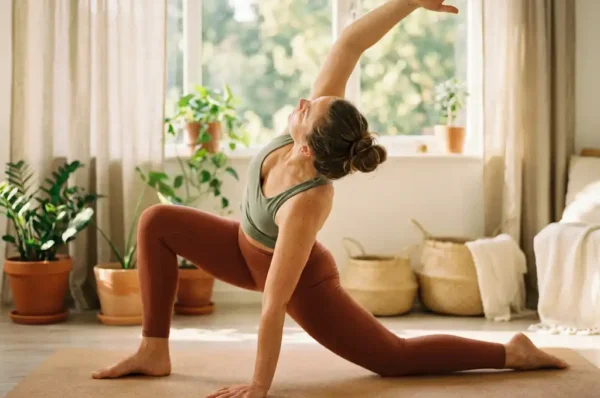



Vinyasa and Ashtanga are both dynamic, movement-based yoga styles that link breath to movement, but they differ significantly in structure, predictability, and intensity. Vinyasa yoga offers a creative, free-flowing sequence that changes from class to class, while Ashtanga follows a fixed series of postures practiced in the same order every time. Understanding these differences helps you choose the style that best fits your personality, fitness level, and goals.
Which yoga style is more structured — Vinyasa or Ashtanga?
Ashtanga yoga is significantly more structured than Vinyasa. Ashtanga follows a set sequence of postures — the Primary Series, Second Series, and so on — that never changes. Every session looks the same, and students are expected to master each pose before moving on to the next. Vinyasa yoga, by contrast, has no fixed sequence and varies widely depending on the teacher and studio.
In an Ashtanga class, you always know what is coming next. The practice is traditionally self-led, meaning students memorize the sequence and move through it independently, sometimes with a teacher offering adjustments. This consistency makes it a highly disciplined, almost meditative system where progress is measured by depth and mastery rather than variety.
Vinyasa yoga is far more fluid and creative. Teachers design their own sequences, often building toward a peak pose or theme for the class. No two Vinyasa classes are exactly alike, which keeps the practice fresh and accessible to a wide range of practitioners. If you enjoy variety and spontaneity on the mat, Vinyasa is likely the better fit. If you thrive on routine and measurable progression, Ashtanga will resonate more deeply.
How does the pace and intensity compare between the two styles?
Both Vinyasa and Ashtanga are physically demanding, but Ashtanga tends to be more consistently intense due to its fixed, challenging sequence. Vinyasa intensity varies greatly depending on the teacher — some classes are vigorous and fast-paced, while others are slower and more restorative. Ashtanga maintains a steady, demanding pace throughout every session with little room for modification.
Ashtanga’s Primary Series is a full-body workout that includes a strong emphasis on forward folds, hip openers, and arm balances. Because the sequence never changes, your body gradually builds strength and flexibility in a very targeted way over months and years of practice. The physical demands are high from the start, and the practice is often described as a moving meditation due to its rhythmic, repetitive nature.
Vinyasa classes can range from a gentle flow suitable for beginners to a power Vinyasa session that rivals any high-intensity workout. The pace is typically set by the teacher and the music, and transitions between poses are often quicker than in Ashtanga. Both styles will build strength, flexibility, and endurance, but Ashtanga delivers this through consistency, while Vinyasa yoga delivers it through variety and adaptability.
What breathing technique does each style use?
Both Vinyasa and Ashtanga yoga use Ujjayi breathing, a technique where you breathe in and out through the nose with a slight constriction at the back of the throat, creating a soft, ocean-like sound. This controlled breath regulates pace, builds internal heat, and keeps the mind focused. The key difference is how central this breath is to the overall system in each style.
In Ashtanga yoga, Ujjayi breath is one of three foundational elements — alongside bandhas (energy locks) and drishti (focused gaze) — that together form the Tristhana method. These three components are practiced simultaneously in every posture, making the breath not just a tool for pacing but a core pillar of the entire system. Skipping or neglecting the breath in Ashtanga is considered a fundamental error.
In Vinyasa yoga, Ujjayi breath is also encouraged and widely taught, but it is applied with more flexibility. Some Vinyasa teachers emphasize it heavily, while others focus more on the physical flow. The breath still guides the movement — each inhale and exhale corresponds to a specific action or transition — but the strict integration of breath, bandha, and gaze seen in Ashtanga is less universally applied. For practitioners who want to deepen their breathwork alongside their movement practice, a good natural rubber yoga mat with grip and cushioning supports the stillness needed to focus inward.
Should beginners start with Vinyasa or Ashtanga yoga?
Most beginners will find Vinyasa yoga more accessible than Ashtanga. Vinyasa classes are widely available at all levels, offer more modifications, and allow teachers to adapt the sequence to the group. Ashtanga’s fixed series can feel overwhelming for newcomers because it assumes a degree of physical conditioning and body awareness that takes time to develop.
That said, some beginners are drawn to Ashtanga precisely because of its structure. Knowing exactly what to expect each session removes the guesswork and allows you to focus entirely on learning the postures and breath. Many Ashtanga studios offer Mysore-style classes where students work at their own pace with one-on-one guidance from a teacher, which can actually be very beginner-friendly despite the style’s reputation for intensity.
Here are a few questions to help you decide which style suits you as a beginner:
- Do you prefer variety or routine? Vinyasa offers something new each class; Ashtanga repeats the same sequence.
- What is your current fitness level? Ashtanga’s Primary Series is physically demanding from day one, while Vinyasa classes can be tailored to gentler levels.
- Do you want teacher-led or self-led practice? Vinyasa is typically guided throughout; Ashtanga encourages independence over time.
- Are you drawn to discipline or creativity? Ashtanga is a system; Vinyasa is an expression.
Whichever style you choose, having the right foundation matters. Exploring our yoga mats is a great starting point — a supportive, eco-conscious mat makes a real difference when you are learning new movements and building body awareness. Both Vinyasa and Ashtanga are rewarding paths, and many practitioners eventually explore both to deepen their overall practice.
Ready to take your practice further? At Samarali, you will find everything you need to support both styles — from our natural rubber yoga mat, designed for the grip and durability that vigorous Ashtanga and flowing Vinyasa sessions demand, to the organic cotton yoga rug for added cushioning and comfort. If you are building out your home practice, our yoga sets offer a thoughtfully curated selection of essentials in one place. Browse the full yoga collection at Samarali and find the tools that help you show up fully — on and off the mat. Shop now.
Frequently Asked Questions
Can I switch between Vinyasa and Ashtanga, or should I stick to one style?
Absolutely — many practitioners cross-train in both styles, and doing so can actually accelerate your overall growth. Ashtanga builds discipline, body awareness, and breath control that translates beautifully into Vinyasa practice, while Vinyasa’s variety helps you explore a wider range of postures and movement patterns. There is no rule that says you must commit to one exclusively, and experimenting with both gives you a much richer understanding of yoga as a whole.
How many times per week should I practice Vinyasa or Ashtanga as a beginner?
For beginners, 2–3 sessions per week is a solid starting point for either style, giving your body adequate time to recover and adapt. Traditional Ashtanga is practiced six days a week (with rest on Saturdays and moon days), but this level of commitment is typically built up gradually over months or years — not expected from day one. With Vinyasa, frequency is more flexible and can be adjusted based on how your body feels, making it easier to scale up or down as your schedule and fitness evolve.
What should I do if I cannot keep up with the pace of a Vinyasa or Ashtanga class?
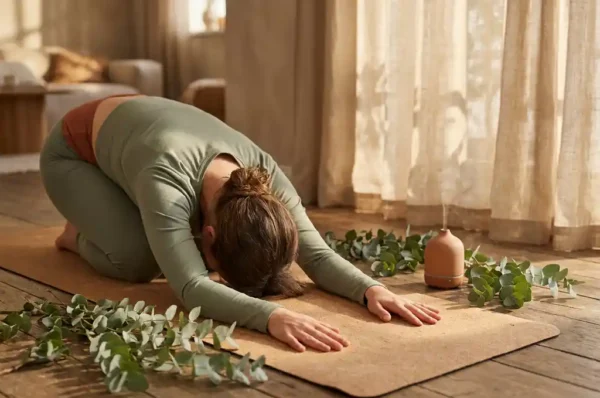
The most important thing is to slow down and prioritize your breath over keeping up with the group — this is true in both styles. In Vinyasa, do not hesitate to take Child’s Pose whenever you need a break; most teachers will explicitly encourage this. In Ashtanga, particularly in Mysore-style classes, you can simply pause and rest in a comfortable position before continuing, since the self-led format means you are never truly u0022behind.u0022 Pushing through fatigue with poor form is one of the most common mistakes in both styles and the leading cause of early injury.
Is Ashtanga yoga suitable for people with injuries or physical limitations?
Ashtanga’s fixed sequence can be challenging to adapt around injuries because the series is designed as a progressive, interdependent system — skipping or modifying poses may affect the overall flow and intent of the practice. If you have an injury or physical limitation, Vinyasa yoga is generally the more accommodating choice, since a skilled teacher can modify or substitute poses freely within a single class. That said, working one-on-one with an experienced Ashtanga teacher in a Mysore setting can still be highly beneficial, as they can provide personalized modifications while keeping the core structure intact. Always consult a healthcare professional before beginning either practice if you have a pre-existing condition.
How long does it take to complete the Ashtanga Primary Series, and what does a typical Vinyasa class last?
A full, uninterrupted Ashtanga Primary Series typically takes 90 minutes for an experienced practitioner, though beginners working through a partial sequence may finish in 60 minutes or less. Vinyasa classes are more flexible in duration and commonly run in 45-minute, 60-minute, or 75-minute formats depending on the studio or platform. Neither style requires a specific time commitment to be effective — even a consistent 45-minute Vinyasa flow or a shortened Ashtanga sequence practiced regularly will produce meaningful results over time.
Do I need any special equipment beyond a yoga mat for either style?
Both Vinyasa and Ashtanga are intentionally minimalist practices — a high-quality, non-slip yoga mat is genuinely the most important piece of equipment you need. Ashtanga traditionalists often prefer a natural rubber mat for its superior grip during sweaty, vigorous practice, while Vinyasa practitioners may also benefit from yoga blocks and a strap to support modifications and deepen stretches safely. Comfortable, form-fitting clothing that allows a full range of motion is also recommended, as both styles involve a wide variety of positions where loose fabric can become a distraction.
Which style is better for weight loss or building strength — Vinyasa or Ashtanga?
Both styles are effective for building functional strength and supporting weight management, but they achieve this in slightly different ways. Ashtanga’s consistent, full-body sequence builds progressive, targeted strength over time as you repeatedly work through the same demanding postures — think of it like a structured strength program applied to yoga. Vinyasa’s variety exposes your muscles to a broader range of movements and challenges, which can prevent plateaus and keep workouts metabolically engaging. Ultimately, the best style for physical transformation is the one you will practice consistently — adherence matters far more than which style burns slightly more calories per session.