


Natural rubber is the most sustainable yoga mat material for Hatha Yoga. It combines renewable sourcing, biodegradability, and the grip and cushioning that Hatha practice specifically demands. Cork is a close second, offering its own impressive eco credentials. The sections below break down exactly how these materials compare and what to look for when choosing a mat.
Which yoga mat materials are considered eco-friendly?
The most eco-friendly yoga mat materials are natural rubber, cork, organic cotton, and jute. These materials are either renewable, biodegradable, or both, and they are produced without the toxic chemicals associated with conventional synthetic mats. Each has a meaningfully lower environmental footprint than PVC, which remains the most widely used but least sustainable option on the market.
Here is a quick overview of the main sustainable options and what makes each one stand out:
- Natural rubber: Tapped from rubber trees without harming them, natural rubber is renewable and fully biodegradable. It requires no synthetic chemical processing to achieve its grip and density.
- Cork: Harvested by stripping the bark of cork oak trees, a process that does not kill the tree. Cork is naturally antimicrobial, lightweight, and compostable at end of life.
- Organic cotton: Grown without synthetic pesticides or fertilisers, organic cotton is soft, breathable, and biodegradable. It works especially well as a yoga rug layered over another mat.
- Jute: A fast-growing plant fibre that requires minimal water and no pesticides. Jute mats are rough-textured but highly durable and fully compostable.
What unites these materials is that their production does not rely on petrochemicals, and they return to the earth naturally once their useful life is over. PVC, by contrast, cannot be recycled through standard channels and releases harmful compounds during both manufacturing and disposal. If sustainability is a priority in your yoga practice, any of the materials above is a responsible starting point.
What makes a yoga mat material suitable for Hatha Yoga specifically?
A yoga mat material is suitable for Hatha Yoga when it provides stable grip, adequate cushioning for held poses, and a non-slip surface that stays reliable as body heat builds. Hatha practice involves slow, deliberate transitions and postures held for several breaths, which places different demands on a mat than fast-flow styles do.
In dynamic styles like Vinyasa, a mat primarily needs to handle continuous movement and sweat. Hatha Yoga asks for something slightly different:
- Cushioning: Seated and kneeling poses, forward folds, and supine work mean your joints are in contact with the mat for extended periods. A mat that is too thin becomes uncomfortable quickly.
- Grip without stickiness: You need enough traction to hold standing poses securely, but the surface should not feel tacky or resist natural foot and hand adjustments.
- Stability: The mat should not bunch, slide, or compress unevenly under static weight.
- Temperature response: Some materials, like cork, actually improve their grip slightly as they warm with use, which suits the slower pace of Hatha well.
Thickness matters too. Most Hatha practitioners find that a mat between four and six millimetres offers the right balance between joint support and ground feel. Thicker mats can reduce proprioceptive feedback, making it harder to sense subtle alignment shifts in standing poses.
How does natural rubber compare to cork for a Hatha Yoga mat?
Natural rubber offers superior cushioning and consistent grip across all conditions, making it the stronger all-round choice for Hatha Yoga. Cork excels in humid or sweaty conditions because its grip improves with moisture, but it is firmer and thinner than rubber, which can be less comfortable for longer floor-based sessions.
Natural rubber: strengths and considerations
Natural rubber mats are dense and springy, providing reliable joint support throughout a full Hatha session. The surface grip is strong from the very first pose and does not require any break-in period. Our natural rubber yoga mat is a good example of how this material translates into a mat that feels grounded and responsive under both bare feet and hands.
The main consideration with natural rubber is weight. These mats tend to be heavier than cork alternatives, which matters if you carry your mat to a studio regularly. Natural rubber is also not suitable for anyone with a latex allergy.
Cork: strengths and considerations
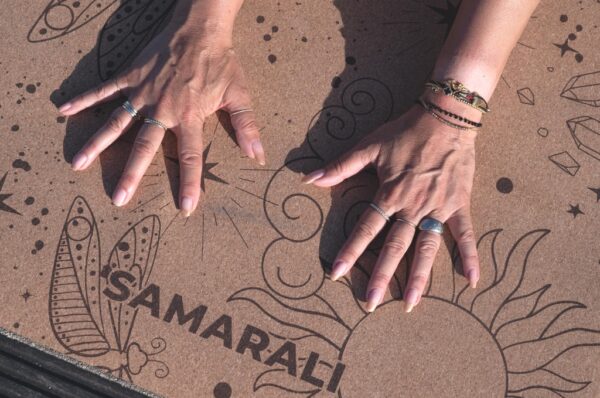
Cork mats have a naturally textured surface that becomes more grippy as moisture increases, which is the opposite of what happens with many synthetic materials. This makes cork a particularly smart choice for practitioners who run warm or practise in heated rooms. Cork is also naturally antimicrobial, so the surface resists bacteria and odour without any chemical treatment.
The trade-off is that cork mats are typically firmer and offer less cushioning than rubber. Many cork mats are backed with a thin layer of natural rubber or TPE to compensate, which improves both grip on the floor and a degree of padding. For a Hatha practice that includes significant floor work, a cork-rubber combination mat tends to perform better than a pure cork option.
For most Hatha practitioners, natural rubber wins on overall comfort and reliability. Cork is the better pick if you prioritise antimicrobial properties or practise in warm conditions.
How long do sustainable yoga mats last compared to PVC mats?
High-quality sustainable yoga mats made from natural rubber or cork typically last between two and five years with regular use, which is comparable to a good-quality PVC mat. The key difference is not lifespan but what happens at the end of it: sustainable mats biodegrade or compost, while PVC mats persist in landfill indefinitely.
Longevity depends heavily on how a mat is cared for. Natural rubber degrades faster when exposed to direct sunlight for extended periods, so storing it away from UV light significantly extends its life. Cork surfaces can crack if they dry out completely, so occasional light cleaning with a damp cloth rather than soaking is the right approach.
PVC mats are often perceived as more durable because they resist moisture and UV damage more readily, and cheaper versions are widely available. But the durability argument for PVC weakens when you account for the fact that it cannot be meaningfully recycled. A PVC mat that lasts six years still ends up in landfill, whereas a natural rubber mat that lasts four years returns to the earth.
Investing in a well-made sustainable mat and caring for it properly is the approach that makes the most sense both practically and environmentally. If you are building out a fuller practice space, pairing your mat with supportive props like a yoga bolster can also reduce the physical stress placed on the mat during restorative or floor-based Hatha work, which indirectly helps it last longer.
Ready to bring a more sustainable foundation to your Hatha practice? At Samarali you will find a carefully curated selection of eco-friendly yoga mats, including our natural rubber yoga mat and organic cotton yoga rug. Complement your mat with a yoga bolster or organic cotton yoga blanket for full support through every held pose and floor-based sequence. Shop the full yoga collection at Samarali and find everything you need to practise with intention.
Frequently Asked Questions
Are there any eco-friendly yoga mat options for people with a latex allergy?
Yes — cork is the most practical eco-friendly alternative for anyone who cannot use natural rubber due to a latex allergy. A pure cork mat or a cork mat backed with TPE (thermoplastic elastomer) rather than rubber gives you a sustainable option without any latex contact. Organic cotton yoga rugs are another allergy-safe choice, though they work best layered over a non-slip base mat.
How do I clean and care for a natural rubber or cork yoga mat without damaging it?
For natural rubber mats, wipe the surface after each session with a damp cloth and a mild, natural soap solution, then air-dry flat away from direct sunlight — UV exposure is the fastest way to degrade rubber. Cork mats should be cleaned with a lightly damp cloth rather than soaked, as excessive moisture can cause the cork surface to swell or crack over time. Avoid alcohol-based sprays on both materials, as these strip the natural oils that keep the surfaces performing well.
What thickness of eco-friendly mat is best if I have sensitive knees or wrists?
If you have sensitive joints, look for a natural rubber mat in the five to six millimetre range, which provides enough cushioning for kneeling poses and wrist-bearing postures without sacrificing ground feel. Pairing a four-millimetre mat with a dedicated folded blanket or bolster under your knees during floor work is another effective strategy that keeps your main mat versatile. Avoid going beyond six millimetres unless you have a specific injury, as very thick mats can compromise balance and alignment feedback in standing poses.
Can I use an eco-friendly yoga mat outdoors for Hatha practice?
You can, but with some precautions — natural rubber mats should be kept out of prolonged direct sunlight, as UV exposure accelerates material breakdown, so outdoor sessions should be kept reasonably short or done in shaded areas. Cork mats handle outdoor use slightly better in dry conditions thanks to their natural durability, but both materials perform best on smooth, clean surfaces rather than rough ground that can abrade the base. If outdoor practice is a regular part of your routine, a jute mat is worth considering, as its coarser fibre construction makes it more resilient to rougher surfaces.
How do I know when it is time to replace my sustainable yoga mat?
The clearest signs are visible surface degradation — flaking, crumbling, or a noticeably uneven texture — and a loss of grip that does not improve after a thorough clean. For natural rubber mats, small tears or a sticky, tacky residue on the surface also indicate the material has reached the end of its useful life. Because sustainable mats are biodegradable, you can compost natural rubber and cork materials rather than sending them to landfill — check with your local composting facility for guidance on accepted materials.
Is a more expensive eco-friendly mat always better than a budget sustainable option?
Not always, but price does tend to reflect material quality and ethical sourcing standards in the sustainable mat market. Budget eco-friendly mats may use lower-grade rubber with more filler content, or cork that is thinner and more prone to cracking, meaning they wear out faster and ultimately offer less value. A mid-to-high-range mat from a brand that is transparent about its sourcing and manufacturing will generally outperform a cheap alternative in both performance and longevity — making it the more cost-effective and environmentally sound choice over time.
Do eco-friendly yoga mats require a break-in period before they perform well?
Natural rubber mats occasionally have a slight natural rubber smell when first unrolled, which fades within a few days of airing out — performance-wise, they grip well from the very first use with no break-in needed. Cork mats may feel slightly smooth on the surface initially, but the grip improves noticeably after the first few sessions as the surface texture opens up with use and light moisture. If either mat feels slippery straight out of the packaging, a quick wipe-down with a damp cloth and a short air-dry is usually all it takes to activate the surface.