


A daily Yin Yoga practice offers deep, cumulative benefits for your body, mind, and nervous system that occasional practice simply cannot match. By holding passive poses for extended periods, Yin Yoga targets the connective tissues, fascia, and joints that more active styles of movement rarely reach. Below, we unpack the most common questions people ask about what a regular Yin Yoga practice actually does for you.
How does a daily Yin Yoga practice change your body over time?
A daily Yin Yoga practice gradually increases flexibility and joint mobility by applying gentle, sustained stress to the connective tissues, ligaments, and fascia surrounding your joints. Unlike muscle stretching, this process works slowly — the changes become most noticeable after several weeks of consistent practice. Over time, your range of motion widens, chronic areas of stiffness soften, and your posture often improves noticeably.
The key mechanism is connective tissue hydration. When you hold a Yin pose for three to five minutes, you encourage synovial fluid to move through your joints and allow fresh hydration to reach the fascia. This is why people who practice Yin Yoga daily often describe feeling less “stuck” in their bodies, particularly in the hips, lower back, and spine.
Daily practice also builds body awareness in a quieter, more introspective way than yang-style movement. You begin to notice subtle tension patterns, asymmetries, and holding habits that you might otherwise carry unconsciously. This awareness itself becomes a form of preventative care, helping you catch and address tension before it becomes pain.
Benefits for desk workers
For people who spend most of their day seated, a daily Yin practice targets the exact areas most affected by prolonged sitting: the hip flexors, lower back, and thoracic spine. The sustained holds in poses like Dragon and Caterpillar gently reverse the compression and shortening that builds up across a working day, making Yin one of the most practical movement tools for a desk-based lifestyle.
Benefits for active training
For runners, cyclists, and those with active training schedules, daily Yin Yoga addresses the connective tissue and fascial layers that dynamic stretching and foam rolling rarely reach. Practicing Yin after a training session helps reduce residual tension in the hips, IT band, and hamstrings, supporting faster recovery and reducing the cumulative stiffness that often builds over a training cycle.
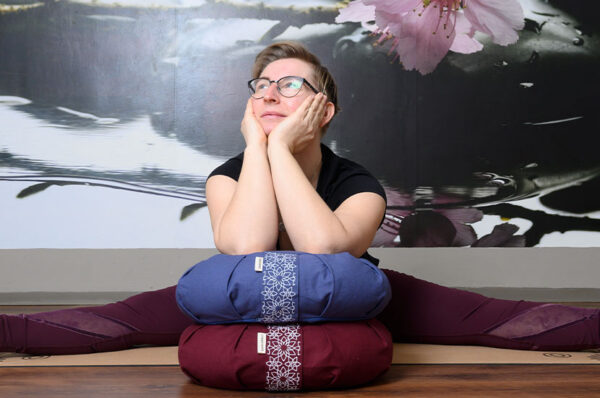
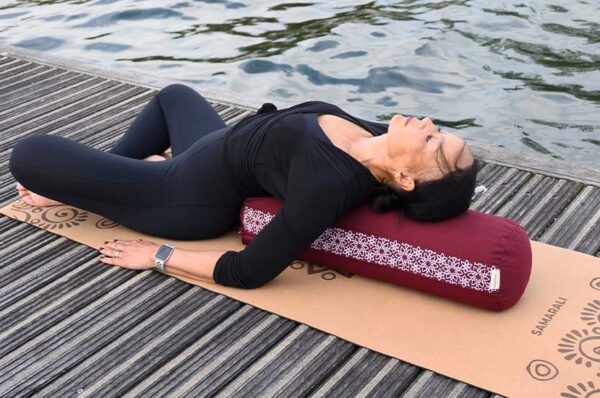
A supportive prop setup makes a real difference in daily Yin practice. Using a yoga bolster under the hips or chest allows you to fully release into poses without muscular effort, which is exactly what Yin requires.
What does Yin Yoga do for the nervous system?
Yin Yoga directly activates the parasympathetic nervous system, shifting your body out of the stress-driven “fight or flight” state and into the restorative “rest and digest” mode. Long, still holds combined with slow breathing signal safety to the brain, reducing cortisol levels and lowering heart rate. Research into yoga-based interventions consistently points to measurable reductions in cortisol and heart rate variability improvements following sustained, slow-paced practice — mechanisms that Yin Yoga is particularly well positioned to activate. The result is a measurable sense of calm that extends well beyond the mat.
This parasympathetic activation is one of the most significant reasons people turn to Yin Yoga in the first place. Modern life keeps many of us in a low-grade state of sympathetic arousal — meaning the nervous system is chronically, slightly on edge. A daily Yin practice gives the nervous system a reliable reset, training it over time to return to calm more easily even outside of practice.
The meditative quality of Yin also plays a role. Sitting with discomfort, resisting the urge to fidget, and learning to breathe through sensation builds what practitioners often call nervous system resilience — you become less reactive to stress not just on the mat but in everyday situations. This is one of the reasons Yin Yoga is frequently recommended alongside meditation practices for people managing anxiety or burnout. Yin Yoga also draws from Traditional Chinese Medicine, which maps the long holds to specific meridian lines running through the connective tissue — a framework that, while distinct from Western physiology, reflects centuries of observation about how sustained stillness affects the body’s energy and emotional state.
How does daily Yin Yoga support emotional wellbeing?
Yin Yoga’s long, still holds create conditions for emotional release that faster-paced movement rarely reaches. Sustained passive pressure on areas like the hips and chest — where the body commonly stores tension — can surface feelings that more dynamic practice bypasses entirely. Practitioners often notice unexpected waves of emotion during or after practice. This is a recognized response to releasing deeply held physical tension, and treating these moments with curiosity rather than alarm is part of what makes the practice so restorative.
There is also a quieter, ongoing benefit around mood regulation and self-compassion. The practice of staying present with discomfort without forcing change mirrors the core skill of self-compassion: meeting difficulty with patience rather than resistance. Over time, this translates into a gentler, less reactive relationship with difficult emotions off the mat, making daily Yin a form of emotional training as much as a physical one.
For people navigating burnout or chronic stress, Yin Yoga is particularly well suited because it works with the parasympathetic nervous system and requires no performance or effort. Where most exercise asks something of you, Yin simply asks you to arrive and be still — which is often exactly what a depleted nervous system needs most.
Can Yin Yoga improve sleep quality?
Yes. Yin Yoga can meaningfully improve sleep quality, particularly when practiced in the evening. Its ability to activate the parasympathetic nervous system and lower physiological arousal makes it one of the most effective movement-based tools for preparing the body and mind for rest. Many practitioners report falling asleep faster and waking less frequently after establishing a regular evening Yin routine.
The connection between Yin Yoga and better sleep comes down to three overlapping factors:
- Physical tension release. Releasing tension in the hips, spine, and shoulders removes the low-level physical discomfort that can disrupt sleep onset.
- Lower physiological arousal. The slow breathing patterns practiced during Yin naturally lower heart rate and blood pressure, both of which support the transition into sleep.
- Mental stillness. Holding a pose for several minutes while focusing on breath and sensation is, in practice, a form of mindfulness training. Over time, this trains the mind to disengage from the day’s mental chatter more efficiently.
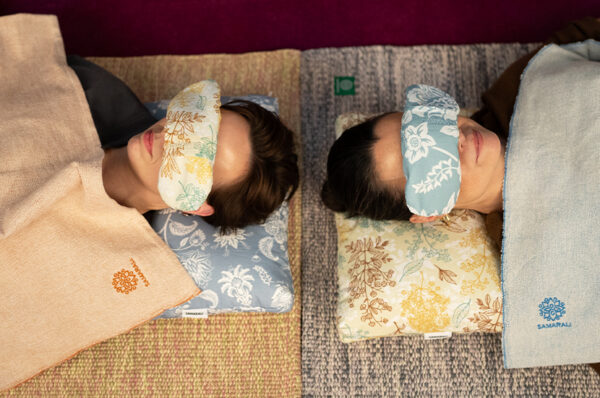
If you practice Yin before bed, keeping the environment calm and the lighting low helps reinforce the parasympathetic signal. An organic cotton yoga blanket draped over you during long holds can also deepen the sense of warmth and safety that supports this wind-down effect.
How is a daily Yin Yoga practice different from doing it a few times a week?
| Dimension | Daily practice | 2-3 times per week |
|---|---|---|
| Connective tissue change | Continuous stimulus, faster cumulative progress | More recovery time between sessions, slower adaptation |
| Nervous system regulation | Reliable daily reset, trains baseline calm over time | Meaningful but less consistent regulation |
| Mindfulness habit | Becomes part of daily identity and routine | Beneficial but more easily disrupted |
| Noticeable results | Often within 2-4 weeks | Typically 6-8 weeks for comparable changes |
Practicing Yin Yoga daily creates compounding benefits that a few sessions per week cannot fully replicate. The connective tissue changes that Yin targets are gradual and cumulative, meaning more frequent exposure accelerates progress in flexibility, joint health, and nervous system regulation. Daily practice also builds a consistent mindfulness habit, making the mental benefits more stable and accessible throughout your day.
When you practice two or three times a week, you still gain real benefits — but the body has more time between sessions to return to its habitual holding patterns. Daily practice maintains a more continuous conversation with your connective tissue and nervous system, reinforcing change rather than starting from a partial reset each time.
There is also a psychological dimension to daily practice. Showing up every day, even for just twenty or thirty minutes, builds discipline and self-trust in a way that occasional sessions do not. The practice becomes part of your identity rather than something you fit in when life allows.
That said, daily Yin does not mean pushing harder every day. Because Yin is gentle and restorative by nature, the risk of overuse injury is low compared to more active styles. The key is to listen to your body, vary the areas you target across sessions, and use props generously so you are truly releasing rather than efforting. Whether you are brand new or deepening an existing routine, our yoga collection is designed to support exactly this kind of sustainable, everyday practice.
Which poses should you include in a daily Yin Yoga practice?
A well-rounded daily Yin practice does not require dozens of poses. Returning to five foundational poses that cover the hips, spine, and shoulders is enough to form a complete 20–25 minute session. The poses below are a reliable starting point for any level of experience.
Dragon
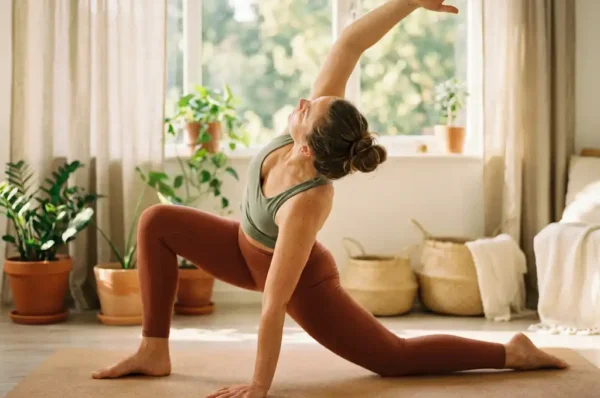
Dragon is a deep hip flexor and groin opener that targets the front of the hip and the psoas — one of the muscles most shortened by prolonged sitting. Hold each side for 3–5 minutes, working up gradually if the sensation feels intense. Placing a folded yoga blanket under the back knee adds cushioning and makes longer holds far more comfortable.
Butterfly
Butterfly targets the inner thighs and lower back by bringing the soles of the feet together and allowing the spine to round forward passively. Hold for 4–5 minutes, letting gravity do the work rather than pulling yourself deeper. If the lower back rounds uncomfortably, sit on the edge of a folded blanket to tilt the pelvis slightly forward.
Sleeping Swan
Sleeping Swan is one of the most effective poses for reaching the deep hip rotators, particularly the piriformis, which contributes to sciatic discomfort when chronically tight. Hold each side for 3–4 minutes. Placing a yoga bolster under the hip of the bent leg allows for full passive release without the front hip gripping to hold the position.
Sphinx
Sphinx gently compresses the lumbar spine and sacrum, counteracting the forward flexion that dominates most daily movement. Hold for 4–5 minutes, keeping the elbows under the shoulders and the legs relaxed. If the lower back sensation feels too strong, walk the elbows slightly forward to reduce the depth of the backbend.
Caterpillar
Caterpillar is a seated forward fold that targets the entire back body, from the hamstrings through the thoracic spine and into the neck. Hold for 4–5 minutes with the spine allowed to round naturally rather than kept straight. A bolster across the thighs gives the torso somewhere to rest, making it easier to release fully into the pose.
Sample 20-30 minute daily session
- Dragon, left side: 3-5 minutes
- Dragon, right side: 3-5 minutes
- Butterfly: 4-5 minutes
- Sphinx: 4-5 minutes
- Sleeping Swan, left side: 3-4 minutes
- Sleeping Swan, right side: 3-4 minutes
- Caterpillar: 4-5 minutes
- Savasana: 3-5 minutes
Ready to support your daily Yin practice with the right tools? At Samarali, you will find everything you need to show up consistently and practice with ease. From a yoga bolster that allows full passive release in long holds, to an organic cotton yoga blanket that adds warmth and grounding during evening sessions, each piece is chosen with intentional, everyday practice in mind. Explore our full yoga collection and our meditation range to build a home practice space that truly supports you — body, mind, and nervous system.
Frequently Asked Questions
Can you do Yin Yoga every day?
Yes, for most healthy adults, practicing Yin Yoga every day is not only safe but actively beneficial. Because Yin targets connective tissue and the parasympathetic nervous system rather than the muscles, it does not create the same recovery demand as more active exercise styles, making daily practice sustainable without the risk of overtraining. The main considerations are to vary the areas of the body you focus on across sessions, use props generously to avoid muscular effort, and stay within a range of mild, tolerable sensation rather than pushing for intensity. If you have a hypermobility condition, a recent joint injury, or are pregnant, see the contraindications question below for specific guidance.
How long should I hold each pose in a daily Yin Yoga practice?
For a daily practice, most Yin poses are held for three to five minutes, though beginners may want to start with two to three minutes and gradually build up over time. The goal is to find a place of mild, tolerable sensation — not sharp or intense discomfort — and stay there long enough for the connective tissue to respond. As your practice matures, some poses can be extended to seven or even ten minutes, particularly for deeply held areas like the hips and lower back.
What is the best time of day to practice Yin Yoga daily?
Yin Yoga is highly adaptable and can be practiced at any time of day, but the timing does influence the experience. Morning Yin tends to feel more intense because the body is stiffer after sleep, making it excellent for waking up the joints and setting a mindful tone for the day. Evening practice, on the other hand, takes advantage of the body’s natural warmth and is especially effective for winding down and improving sleep quality, as discussed in the post.
Can I do Yin Yoga every day if I'm also doing other forms of exercise?
Yes, and in fact Yin Yoga pairs exceptionally well with more active or yang-style training such as running, weightlifting, or vinyasa yoga. Because Yin targets connective tissue and the parasympathetic nervous system rather than the muscles themselves, it complements rather than competes with other forms of exercise. Practicing Yin on the same day as intense training — ideally afterward — can even accelerate recovery by encouraging circulation and reducing residual tension in the fascia.
What are the most common mistakes beginners make when starting a daily Yin Yoga practice?
The most frequent mistake is going too deep too soon — pushing into a pose until it feels like a strong stretch, when Yin actually calls for a moderate, sustainable sensation you can stay with for several minutes. Another common error is skipping props, which forces the muscles to engage in order to hold a position rather than allowing the connective tissue to receive the intended stress. Finally, many beginners underestimate the mental challenge and give up during the stillness; starting with shorter hold times and building gradually helps make the practice feel accessible rather than overwhelming.
Are there any situations where practicing Yin Yoga daily is not recommended?
While Yin Yoga is gentle, there are a few situations where caution or modification is needed. People with hypermobility conditions, such as Ehlers-Danlos syndrome, should be careful not to overstretch already lax connective tissue and may benefit from working with a qualified teacher. Those recovering from a recent joint injury, surgery, or acute inflammation should consult a healthcare provider before practicing, as sustained passive pressure on vulnerable tissue may not be appropriate. Pregnant practitioners should also modify or avoid certain poses, particularly deep hip openers and supine twists, especially in the later trimesters.
How soon can I expect to notice results from a daily Yin Yoga practice?
Most practitioners begin to notice a difference in how their body feels — particularly a sense of reduced stiffness and greater ease in movement — within two to four weeks of daily practice. Nervous system benefits, such as improved sleep and a calmer baseline mood, are often reported even sooner, sometimes within the first week. Structural changes in flexibility and joint mobility are more gradual and typically become clearly noticeable after six to twelve weeks of consistent practice, which is why daily commitment accelerates results compared to occasional sessions.
Do I need a lot of equipment to start a daily Yin Yoga practice at home?
You can begin a Yin Yoga practice with very minimal equipment — a mat and a couple of household items like folded blankets or firm pillows can substitute for props in a pinch. That said, investing in a few dedicated props makes a meaningful difference in practice quality. A yoga bolster supports full passive release in poses like Supported Fish or Butterfly, while a yoga blanket adds warmth during long holds and can be folded for targeted support. Having the right props on hand also removes friction from showing up daily, making it easier to maintain the habit consistently.