


A Yoga Nidra session typically lasts between 20 and 45 minutes, though sessions can range from as short as 10 minutes to as long as 60 minutes or more. The right length depends on your experience, your goals for the practice, and how much time you have available. Below, we unpack the key questions that shape how long your Yoga Nidra practice should actually be.
What’s the ideal length for a Yoga Nidra session?
The ideal length for a Yoga Nidra session is 30 to 45 minutes for most practitioners. This window gives the practice enough time to guide you through the full sequence of stages, from body scan and breath awareness to visualization and the return to waking consciousness, without staying in the deeply relaxed state for too long.
Yoga Nidra works by systematically withdrawing your attention from the external world and moving through progressively deeper layers of awareness. This process takes time to unfold properly. A session that is too rushed will not allow the nervous system to fully settle, while one that extends well beyond 45 minutes can leave some people feeling groggy or disoriented rather than refreshed.
That said, 30 to 45 minutes is a guideline rather than a rule. Many teachers and guided recordings offer sessions in the 20 to 35 minute range that are still highly effective, particularly when the pacing is intentional and the structure is complete. What matters most is that the session includes all the essential stages rather than hitting a specific time on the clock.
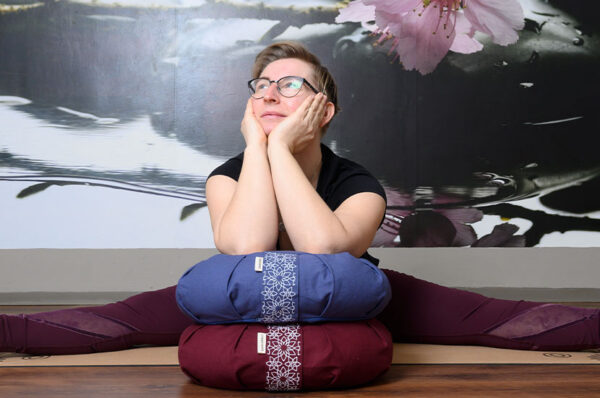
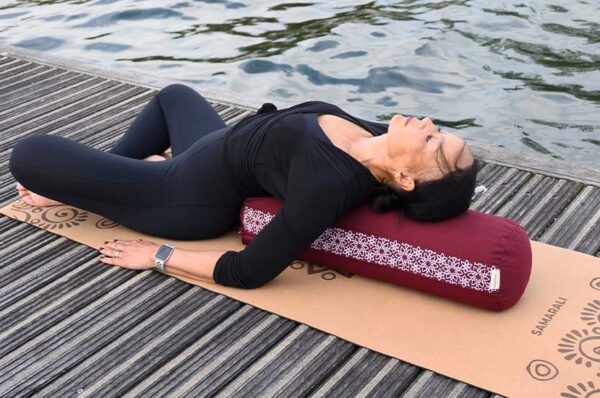
If you practice at home, setting up a comfortable, supported environment makes a real difference to how well any session lands. A yoga bolster placed under your knees and a folded blanket beneath your head can help your body stay completely still and relaxed for the full duration.
Does session length change depending on your experience level?
Yes, session length does shift with experience. Beginners generally benefit from shorter sessions of 20 to 30 minutes, while more experienced practitioners often find that 40 to 60 minute sessions allow for deeper exploration of the practice.
For those new to Yoga Nidra, the challenge is not the duration itself but the mental effort of staying in the hypnagogic state, that threshold between waking and sleep, without fully drifting off. Shorter sessions reduce the likelihood of falling asleep before the practice is complete, which helps beginners build the awareness and mental stamina the practice requires.
As your experience grows, your ability to remain in conscious relaxation deepens. You become more familiar with the stages of the practice and are less likely to lose awareness partway through. This makes longer sessions not only sustainable but genuinely rewarding, as the deeper stages of Yoga Nidra become more accessible over time.
Experienced practitioners sometimes engage in extended sessions of 60 minutes or more, particularly in retreat settings or when using Yoga Nidra as a dedicated meditation practice rather than a recovery tool. For everyday use, however, 30 to 45 minutes remains a practical and effective target regardless of experience level.
How does the purpose of a session affect how long it should be?
The purpose of your Yoga Nidra session is one of the strongest factors in determining how long it should last. A session aimed at stress relief or sleep preparation can be effective in 20 to 30 minutes, while sessions focused on deep healing, intention setting, or extended meditation benefit from 40 to 60 minutes.
Short sessions for rest and recovery
When the goal is to decompress after a demanding day, reset the nervous system between activities, or ease the body into sleep, a shorter session works well. These sessions prioritize the body scan and breath awareness stages, which are highly effective for activating the parasympathetic nervous system. Even 20 minutes of Yoga Nidra is widely regarded as deeply restorative, with many teachers describing it as equivalent to several hours of ordinary sleep in terms of how rested the body feels afterward.
Longer sessions for deeper practice
When Yoga Nidra is used as a formal meditation practice, for working with a specific Sankalpa (a heartfelt intention), or for emotional processing and inner exploration, a longer session of 45 to 60 minutes gives the practice room to reach its full depth. These extended sessions move through all the stages more slowly and deliberately, spending more time in the visualization and awareness phases where profound shifts in perspective can occur.
If you use Yoga Nidra alongside other meditation practices, it is worth thinking of session length as a tool you adjust based on what you need that day rather than a fixed commitment.
Can a Yoga Nidra session be too short or too long?
A Yoga Nidra session can be too short if it does not allow enough time to move through the key stages of the practice. Sessions under 10 minutes rarely provide the depth needed for the nervous system to genuinely settle. A session can also be too long if it extends past the point of conscious awareness, effectively becoming ordinary sleep rather than guided Yoga Nidra.
The lower boundary is about structural completeness. A Yoga Nidra session needs time to transition through rotation of consciousness, breath awareness, and the deeper stages of visualization and stillness. Compressing this into five or eight minutes tends to produce a surface-level relaxation response rather than the distinctive state Yoga Nidra is known for. If you only have 10 to 15 minutes, a simple body scan or breathing practice may serve you better.
On the upper end, sessions that stretch beyond 60 to 75 minutes without a specific reason can lead to diminishing returns. The body may move fully into sleep, the mind may wander without the anchor of guidance, or the transition back to waking awareness may feel disorienting. This is not harmful, but it does mean the session has moved away from Yoga Nidra as a conscious practice.
The sweet spot for most people is somewhere between 20 and 45 minutes, adjusted for purpose and experience as described above. Consistency matters more than duration. A regular 25 minute practice three or four times a week will build far more benefit over time than an occasional 60 minute session. Creating a dedicated space for your practice, with a comfortable meditation mat and supportive props, makes it easier to show up regularly and get the most from whatever length of session fits your day.
Ready to deepen your Yoga Nidra practice with the right support? At Samarali, you will find everything you need to create a truly restorative setup — from a dedicated meditation mat to a supportive yoga bolster that keeps your body comfortable throughout even the longest sessions. Pair them with an organic cotton yoga blanket to stay warm as your body settles into stillness. Explore the full meditation sets collection and find the combination that supports your practice best — shop now.
Frequently Asked Questions
What's the best time of day to practice Yoga Nidra?
Yoga Nidra can be practiced at any time of day, but the most popular windows are early morning before the demands of the day begin, during an afternoon rest period, or in the evening as a wind-down before sleep. Avoid practicing immediately after a heavy meal, as digestion can make it harder to stay in conscious awareness. The most important factor is choosing a time when you can be consistently undisturbed for the full duration of your session.
Is it okay if I fall asleep during a Yoga Nidra session?
Falling asleep occasionally is common, especially for beginners or when you are practicing while sleep-deprived, and it is not something to worry about. However, the goal of Yoga Nidra is to remain in a state of conscious awareness while the body is deeply relaxed, so consistently falling asleep means you are missing the core benefit of the practice. To stay more alert, try practicing at a time when you are not overly tired, keep the room slightly cool, and consider sitting semi-reclined rather than lying completely flat.
How do I know which guided Yoga Nidra recording to choose for my session length?
Look for recordings that clearly state their duration and confirm they include all the core stages: initial settling, body scan or rotation of consciousness, breath awareness, visualization, and a return to waking consciousness. Reputable teachers such as Swami Satyananda Saraswati, Richard Miller, and Uma Dinsmore-Tuli have recordings across a range of lengths. If you are a beginner, start with a 20 to 30 minute guided session rather than attempting a self-directed practice, as the guidance helps keep your awareness anchored throughout.
Can I practice Yoga Nidra every day, and does daily practice change how long sessions should be?
Yes, Yoga Nidra is safe and beneficial to practice daily, and many teachers actively encourage it as a daily routine. Daily practitioners often find that shorter sessions of 20 to 30 minutes are perfectly sufficient for maintaining the benefits, reserving longer 45 to 60 minute sessions for weekends or rest days when more time is available. The cumulative effect of consistent shorter sessions tends to outweigh the occasional longer one, so prioritizing regularity over duration is a sound approach.
What should I do if I only have 10 to 15 minutes but still want some of the benefits of Yoga Nidra?
While a full Yoga Nidra session requires more time to unfold properly, you can still access a meaningful state of rest in a shorter window by focusing on the body scan and slow diaphragmatic breathing alone. Some teachers offer abbreviated 10 to 15 minute sessions that prioritize the parasympathetic activation stages without the deeper visualization phases, and these can be genuinely restorative. Think of these shorter sessions as a complement to your regular practice rather than a replacement, and return to a full-length session when your schedule allows.
Do I need any special equipment or setup to get the most out of a Yoga Nidra session?
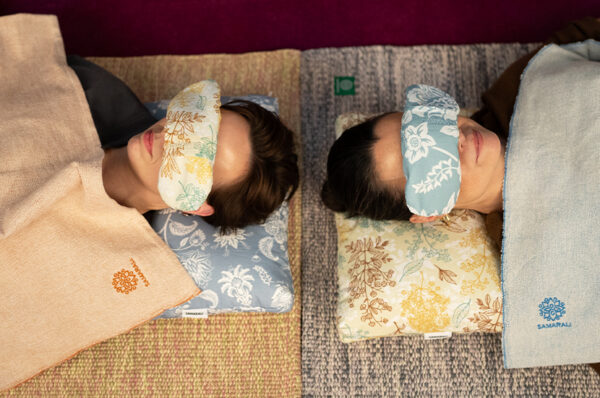
Yoga Nidra requires no equipment beyond a comfortable surface to lie on, but a few simple props can significantly improve the quality of your experience. Placing a bolster or rolled blanket under your knees relieves lower back tension, an eye pillow blocks out light and encourages deeper relaxation, and a light blanket helps maintain body temperature as it tends to drop during extended stillness. A consistent, dedicated space, even a small corner of a room with a meditation mat and your preferred props, also signals to the nervous system that it is time to settle, which can deepen the practice over time.
How long does it take to start noticing the benefits of a regular Yoga Nidra practice?
Many people report feeling noticeably calmer, more rested, or mentally clearer after just one or two sessions, particularly in terms of stress relief and sleep quality. Deeper benefits, such as improved emotional regulation, greater self-awareness, or progress with a Sankalpa, typically become apparent after two to four weeks of consistent practice. As with most contemplative practices, the depth of benefit tends to grow proportionally with the regularity and intentionality you bring to each session.