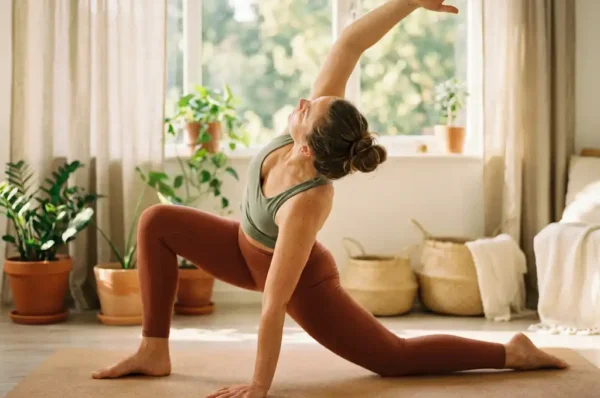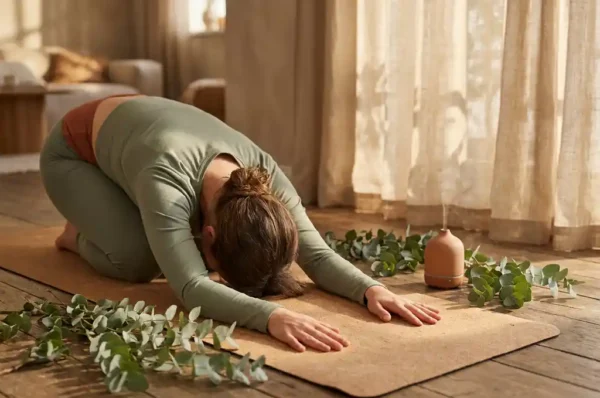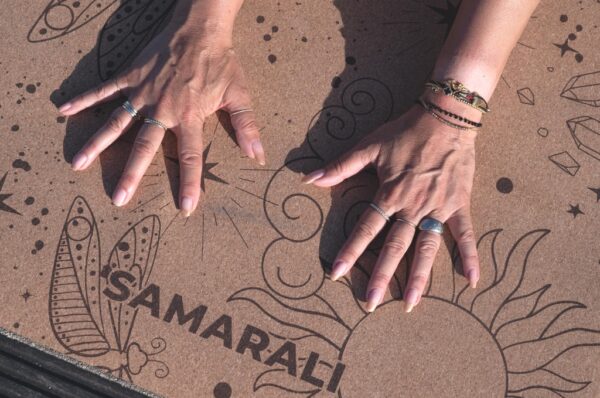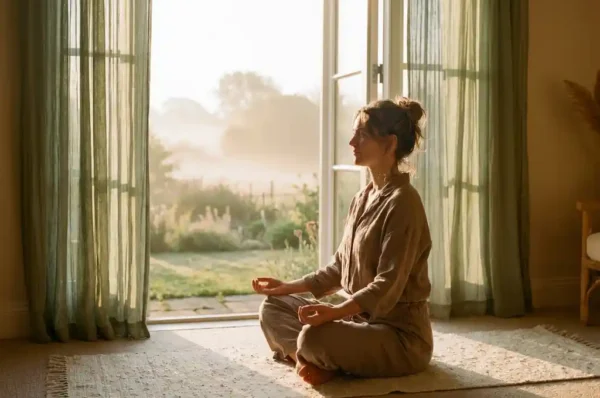



For Yoga Nidra, the most essential props are a yoga bolster, a blanket, and an eye pillow. These three items support the body in complete stillness during the practice, which is typically done lying down in Savasana for anywhere from 20 minutes to an hour. The longer the session, the more important each prop becomes: a 20-minute practice can tolerate a folded blanket as a knee support, but a 60-minute session demands a bolster that holds its shape throughout. While you can technically practice with nothing at all, the right props make a significant difference in how deeply you can relax. Below, we break down exactly what to use, how to choose it, and how to set up your space.
What equipment do you need for Yoga Nidra?
The essential Yoga Nidra equipment consists of five items: a mat, a bolster, a blanket, an eye pillow, and a neck pillow. Together, these props form a complete support system that allows the body to remain still and comfortable for the full duration of a session. Unlike active yoga styles that prioritize grip, flexibility, and movement, Yoga Nidra equipment is built around one principle: passive, sustained comfort.
Because the practice keeps you completely motionless, every point of contact between your body and the floor matters. A mat provides the foundational layer, insulating you from the cold and hard surface beneath. Each additional prop then addresses a specific physical need — from lower back tension to body temperature to light sensitivity. Getting this foundation right is what allows the mind to move inward without distraction.
The sections below break down each prop in detail, covering what to look for, how to use it, and when a household substitute is good enough versus when a purpose-built item is worth the investment.
What props are most commonly used in Yoga Nidra?
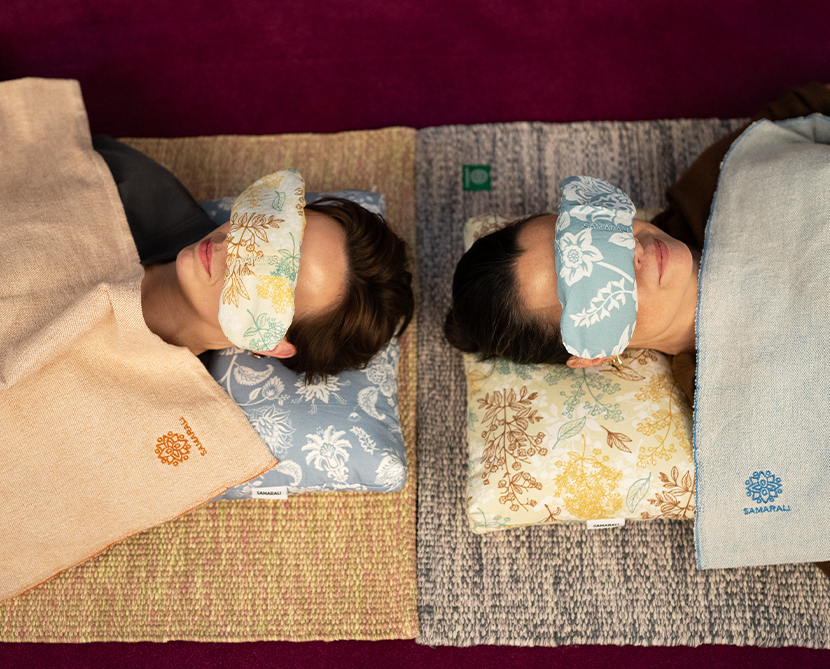
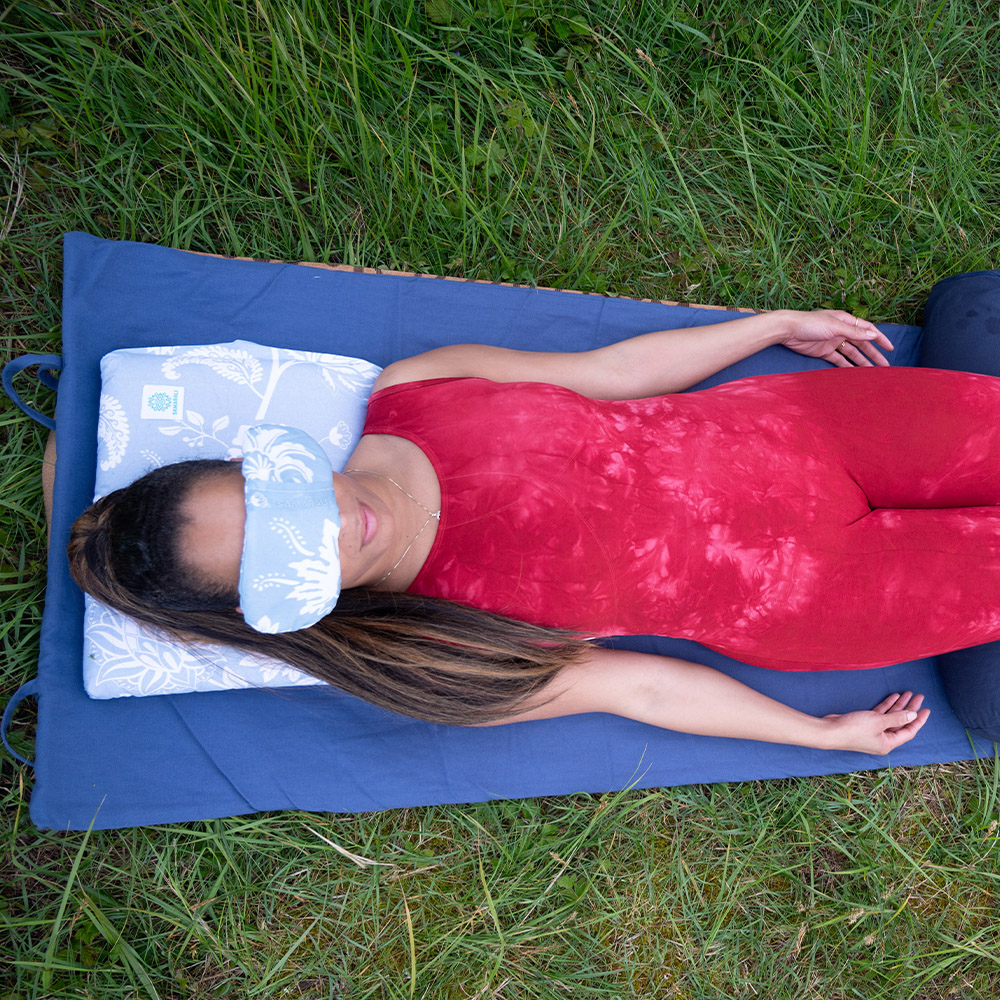
The most commonly used props in Yoga Nidra are a bolster placed under the knees, a blanket for warmth, and an eye pillow to block out light. A yoga mat or meditation mat provides a firm, comfortable base. Some practitioners also add a neck pillow or rolled blanket under the head for extra support.
Because Yoga Nidra is a guided relaxation and meditation practice, your body stays completely still for an extended period. Comfort is not optional. Unlike active yoga styles where you move through discomfort, Yoga Nidra requires your body to feel fully at ease so your mind can settle into the deeper states of awareness the practice is designed to reach.
Here is a quick overview of the most useful props and what they do:
- Bolster under the knees: Releases tension in the lower back and allows the legs to rest naturally without effort
- Blanket: Body temperature drops during stillness, so a light blanket keeps you warm without disrupting the session
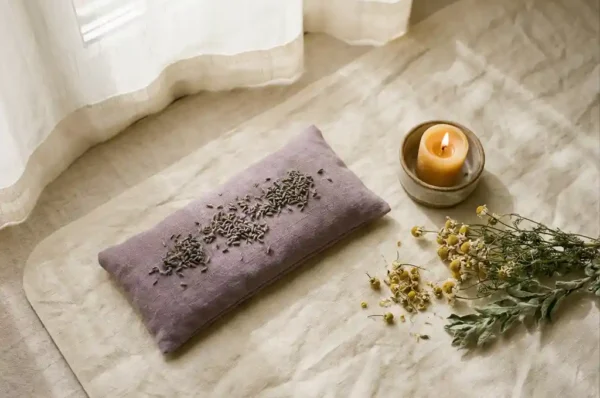
- Eye pillow: Blocks light and provides gentle pressure on the eyelids, which encourages the nervous system to calm down
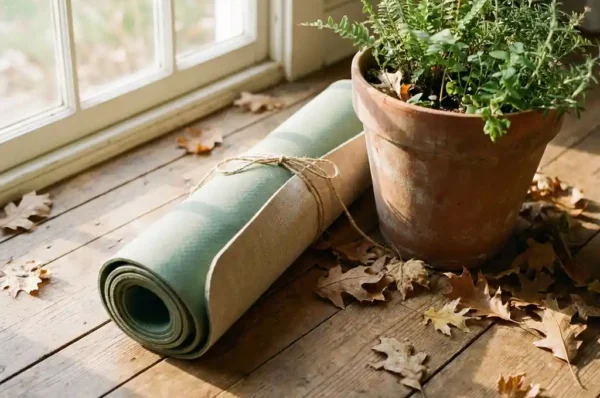
- Yoga mat or meditation mat: Provides cushioning and insulation from the floor
- Neck pillow or folded blanket: Supports the natural curve of the cervical spine when lying flat
| Prop | Role | Priority | Best For |
|---|---|---|---|
| Yoga mat | Cushioning and insulation from the floor | Essential | Both |
| Bolster | Knee and lower back support | Essential | Home (can be substituted at events) |
| Blanket | Warmth and temperature regulation | Essential | Both |
| Eye pillow | Light-blocking and nervous system calming | Recommended | Both |
| Neck pillow | Cervical spine support | Optional | Home |
For a first session, the mat, blanket, and eye pillow are the most portable and impactful starting point.
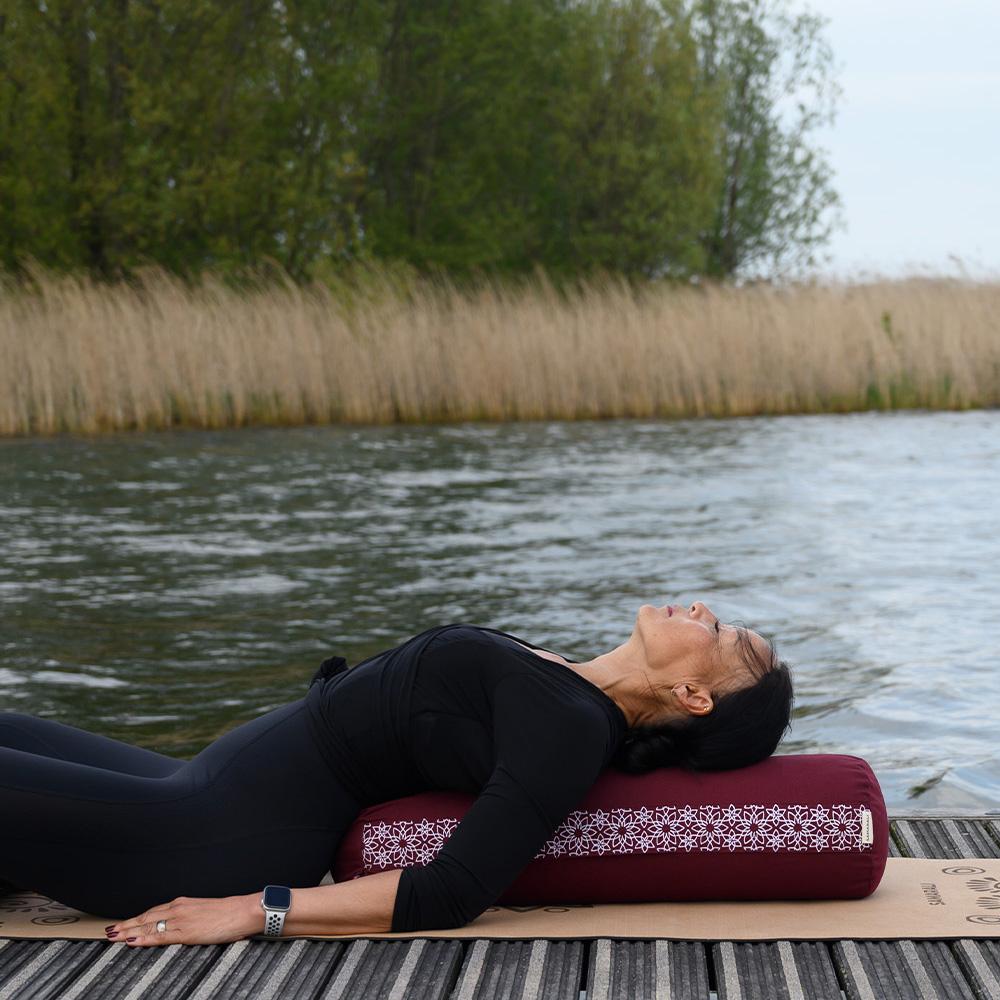
Our yoga bolster is specifically designed for this kind of sustained, passive support, making it one of the most versatile props you can own for both Yoga Nidra and restorative yoga.
Do you really need props to practice Yoga Nidra?
No, you do not strictly need props to practice Yoga Nidra. The practice itself is entirely internal and can be done lying on a firm floor with nothing more than the clothes on your back. That said, props meaningfully improve the experience by eliminating physical discomfort — one of the main obstacles to reaching the deeper states the practice is known for.
If your lower back is aching or you are shivering from the cold, part of your awareness stays anchored to those physical sensations. Yoga Nidra asks you to move your attention inward and through different layers of consciousness. Physical discomfort works against that process.
Session length also matters. For sessions under 20 minutes, household substitutes are usually sufficient — a rolled hoodie under the knees and a coat draped over you will serve the purpose well enough. However, sessions over 30 minutes benefit significantly from purpose-built props. Improvised substitutes tend to shift, compress, or lose their shape over time, pulling your attention back to your body at exactly the moment the practice is designed to carry you deeper.
If you practice Yoga Nidra regularly, investing in a few dedicated props is worth it. Over time, a consistent setup also becomes part of a ritual that signals to your nervous system that it is time to shift gears.
What is the minimum setup you need to start Yoga Nidra?
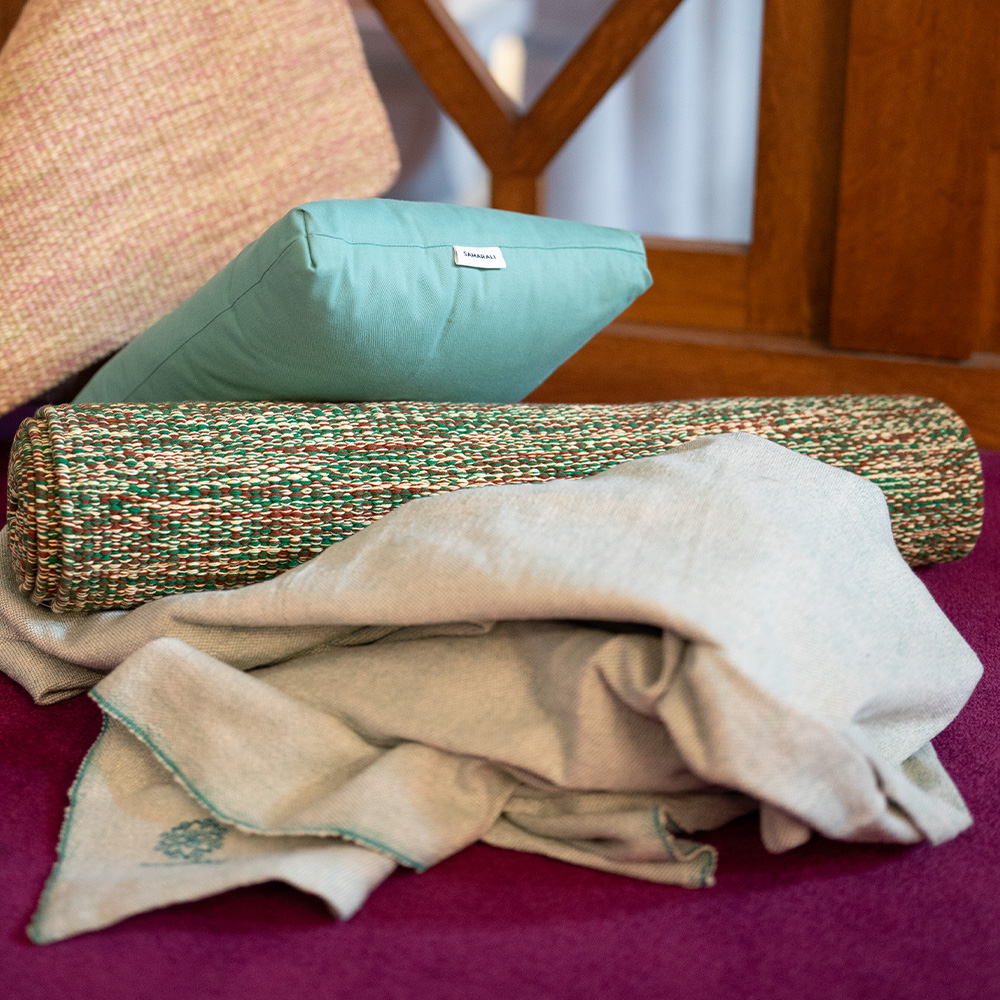
If you are new to Yoga Nidra, start with two items: a mat and a blanket. These cover the two most disruptive physical obstacles — an uncomfortable floor and a dropping body temperature. Everything else improves the experience, but these two items make the practice workable from day one.
As your practice develops and sessions get longer, adding a bolster and an eye pillow makes a noticeable difference. Here is a simple two-tier breakdown to help you decide where to start:
- Tier 1: Minimum (get started today)
- Mat: Insulates you from the floor and defines your practice space. A yoga mat, meditation mat, or even a folded blanket on a firm surface works.
- Blanket: Keeps you warm as body temperature drops during stillness. Any light blanket or large throw will do.
- Tier 2: Recommended starter kit (for sessions of 20 minutes or more)
- Mat: A dedicated yoga mat or meditation mat provides consistent cushioning and grip.
- Blanket: A purpose-built yoga blanket offers better temperature regulation and durability with regular use.
- Bolster: Placed under the knees, it removes lower back tension for the full session. A firm sofa cushion works short-term, but compresses quickly.
- Eye pillow: Blocks light and applies gentle pressure to the eyelids, deepening the relaxation response. A folded t-shirt is a workable substitute.
For a full breakdown of what each prop does and how to choose the right version, continue reading the sections below.
What’s the difference between a Yoga Nidra bolster and a regular pillow?
A yoga bolster is firmer, denser, and more structurally supportive than a regular pillow. Where a standard pillow compresses under weight and loses its shape, a bolster holds its form throughout the practice. This matters in Yoga Nidra because your body needs to be held in a stable, neutral position for an extended period without readjusting.
A regular bed pillow placed under the knees will flatten within minutes, causing the legs to gradually sink and the lower back to tighten. A yoga bolster maintains its height and shape, keeping the hips, pelvis, and lumbar spine in comfortable, supported alignment for the entire session.
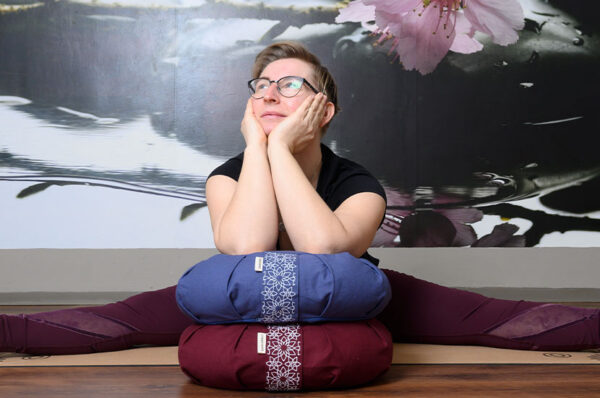
There are also practical differences in size and material. Yoga bolsters are typically cylindrical or rectangular, sized to fit under the knees, along the spine, or under the ankles depending on the pose. Many are made with natural or organic fillings and removable, washable covers — which matters if you practice frequently. Our organic cotton yoga blanket pairs well with a bolster, offering a soft, warm layer without the bulk of a duvet.
If you only have a regular pillow available, it will work for a single session. But for a consistent Yoga Nidra practice, a proper bolster is one of the most impactful upgrades you can make.
What materials work best for Yoga Nidra props?
Material choice affects both the functional quality of each prop and its long-term durability. For a practice that prioritizes stillness and sensory comfort, what your props are made of matters more than it may seem.
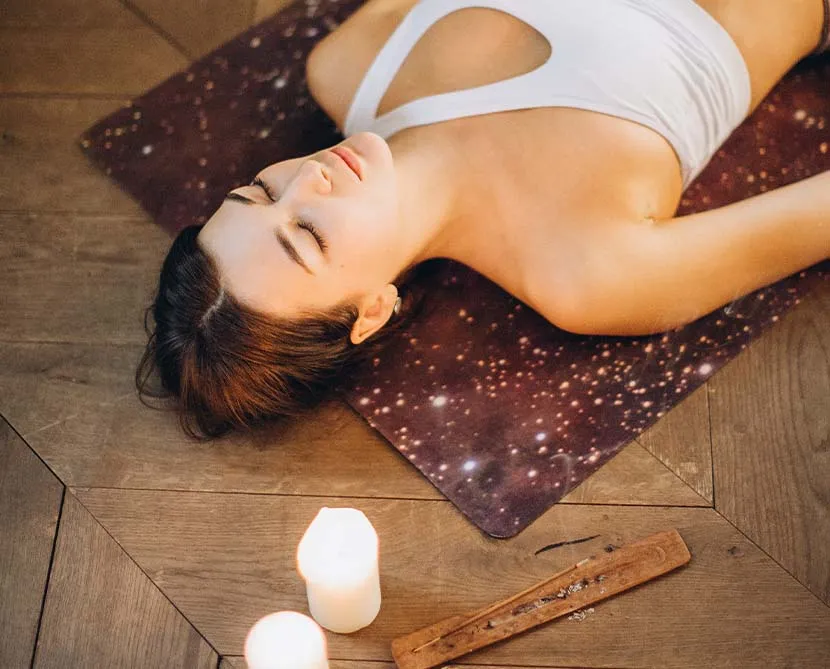
Bolsters: Natural fillings such as buckwheat or kapok hold their shape significantly longer than foam alternatives. Foam bolsters tend to compress over time, gradually losing the supportive height that makes them effective during longer sessions. Cotton covers are breathable and temperature-regulating — important when your body is in contact with the surface for 45 minutes or more. If sustainability matters to you, look for bolsters with GOTS-certified organic cotton covers; this certification confirms the cotton was grown and processed without harmful chemicals.
Blankets: Organic cotton blankets are breathable and gentle against the skin, making them well-suited as the warmth layer in Yoga Nidra. They regulate temperature more effectively than synthetic fleece, which can trap heat unevenly and feel clammy during longer sessions. Cotton blankets also wash well over time without losing their texture or shape.
Mats: For Yoga Nidra specifically, cushioning and insulation take priority over grip. A thicker mat or a dedicated meditation mat provides better comfort during extended stillness than a standard thin practice mat. Natural rubber mats are a durable, eco-conscious option. If you are sensitive to materials or scents, look for a natural or certified low-VOC mat.

How should you set up your space for Yoga Nidra?
To set up your space for Yoga Nidra, lay your mat on a flat, quiet surface, place a bolster under your knees, have a blanket within reach, and dim or block out light. The room should be warm enough that you will not get cold once you stop moving. Remove distractions, silence your phone, and let anyone nearby know you need uninterrupted time.
The setup process itself can become part of the practice. Taking a few minutes to arrange your props mindfully helps signal to your body and mind that this time is intentional. Here is a simple step-by-step approach:
- Choose your surface: A yoga mat or meditation mat on the floor is ideal. Avoid practicing on a soft mattress, which can make it harder to stay in the hypnagogic state — the threshold between sleep and wakefulness that Yoga Nidra is designed to access.
- Position your bolster: Place it horizontally under your knees so your legs rest at a slight angle. This takes pressure off the lower back immediately. For sessions of 45 minutes or longer, firmness becomes especially important: a bolster that compresses midway through will cause the lower back to tighten and may pull you out of the hypnagogic state.
- Prepare your blanket: Drape it loosely over your body before you begin. Once you are lying still, you will not want to reach for it.
- Use an eye pillow: Place it gently over your eyes to block light and encourage the relaxation response.
- Support your neck: Use a thin folded blanket or a dedicated neck pillow to keep your head level with your spine.
- Set the atmosphere: Dim the lights, close the curtains, and if helpful, use light ambient sound — or simply embrace the quiet.
One often-overlooked detail is room temperature. Your body temperature drops noticeably during deep relaxation, so the room should feel slightly warmer than you would normally prefer. If you wake up cold during a session, that is usually what interrupted it — not the practice ending naturally.
A consistent space and a consistent set of props also build a conditioned response over time. The more you practice in the same setup, the faster your nervous system learns to relax when you lie down in that position — which deepens the quality of every session.
Practicing Yoga Nidra outside the home: retreats, classes, and gong baths
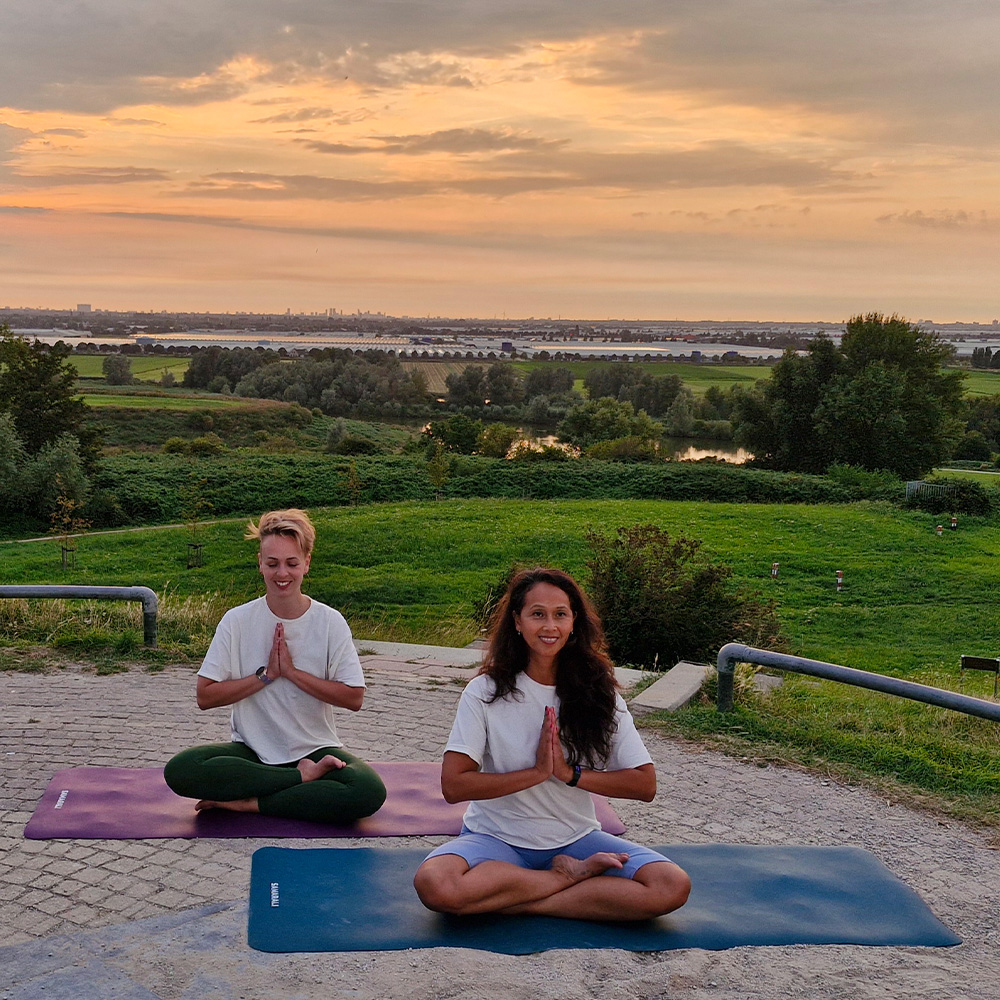
Yoga Nidra is increasingly practiced in group settings, including studio classes, wellness retreats, and sound healing events such as gong baths. These contexts introduce a different set of considerations for your equipment. The good news is that most of the core props travel well, and with a little preparation, you can arrive at any session with everything you need.
The most portable combination is a rollable mat, a compact blanket, and an eye pillow. These three items fit easily into a standard tote or yoga bag and cover the most critical needs: a clean, cushioned surface, warmth, and light-blocking. A bolster is bulkier to transport, and many retreat venues and studios provide them — so it is worth contacting the organizer in advance to confirm what will be available on-site. Ask specifically about floor surface type as well, since some venues use cold or hard floors that make a thicker personal mat worthwhile even if bolsters are provided.
When choosing a mat for travel, look for one that rolls tightly, is lightweight enough to carry without strain, and offers enough thickness to cushion the spine and hips during a full-length session. A mat that excels in active practice is not always the right choice for Yoga Nidra, where sustained comfort matters more than grip and responsiveness.
Gong baths and sound healing sessions are a particularly common setting for guided Yoga Nidra, and the acoustic environment makes your own eye pillow and blanket especially valuable. The eye pillow deepens the inward focus sound healing encourages, while your own blanket keeps you warm no matter how the room is heated. Bringing your own props to these events also means you practice on familiar, clean equipment — which supports the sense of ritual and safety that makes the practice most effective.
Ready to build your ideal Yoga Nidra setup? At Samarali, we offer everything you need to support a deep, consistent practice. From our yoga bolster and organic cotton yoga blanket to our meditation mat and yoga neck pillow, we choose every product with quality and intentional practice in mind. Browse the full meditation collection and find the props that will make your next session your most restful yet. Shop now.
Frequently Asked Questions
Can I use props I already have at home, or do I need to buy specific yoga props?
You can absolutely start with household items — a rolled-up towel or firm cushion under the knees, a light throw blanket over your body, and a folded T-shirt over your eyes will all work. The key is that each item serves its functional purpose: knee support, warmth, and light-blocking. As your practice becomes more regular, upgrading to purpose-built props like a yoga bolster and an eye pillow will noticeably improve the depth and consistency of your sessions.
What should I do if I keep falling asleep during Yoga Nidra?
Falling asleep occasionally is normal and not a failure — it often means your body needed the rest. However, if it happens every session, a few adjustments can help: try practicing in the morning or early afternoon rather than late at night, keep the room slightly cooler, and avoid lying on a soft mattress. Some practitioners also find that keeping one forearm raised vertically with the elbow on the floor helps — if you start drifting into sleep, the arm falls and gently brings awareness back.
Is there a recommended bolster size or firmness for Yoga Nidra specifically?
For Yoga Nidra, a cylindrical bolster is generally preferred over a rectangular one because it creates a more natural, rounded lift under the knees that mirrors the body’s own curves. Firmness matters more than size — you want a bolster that holds its shape for the full duration of your session without compressing flat. Medium-to-firm density is the sweet spot for most people; too soft and it stops providing support, too hard and it can create pressure points over a long session.
How do I practice Yoga Nidra if I have lower back pain or can't lie flat comfortably?
If lying flat is uncomfortable, elevating the knees higher with a bolster or even a rolled blanket can significantly reduce lower back strain. Some practitioners with chronic back issues find that placing a second folded blanket under the hips helps tilt the pelvis into a more neutral position. In cases of significant discomfort, you can also practice in a semi-reclined position using a bolster propped at an angle along the spine — this keeps the benefits of deep relaxation accessible without requiring a fully flat position.
Do children or beginners need different props than experienced practitioners?
Beginners and children generally benefit from lighter, softer props since they are still learning to stay still and may find heavy blankets or firm bolsters overstimulating. A thin blanket and a small, lightly weighted eye pillow are good starting points. As practice deepens and sessions get longer, firmer and more structured support becomes more valuable. Children also tend to have shorter Yoga Nidra sessions — typically 10 to 15 minutes — so the sustained structural support that a full-sized bolster provides matters less at that stage.
How do I clean and care for my Yoga Nidra props to keep them in good condition?
Most quality yoga bolsters come with removable, machine-washable covers, which should be washed regularly — especially if you practice daily. The inner insert can be aired out in sunlight periodically to keep it fresh and to prevent moisture buildup. Eye pillows filled with flaxseed or lavender should be spot-cleaned or have their covers removed and washed separately. Blankets can typically be machine washed on a gentle cycle; organic cotton blankets in particular hold up well over time with cool-water washing and air drying.
Can the same props be used for both Yoga Nidra and restorative yoga, or do I need separate sets?
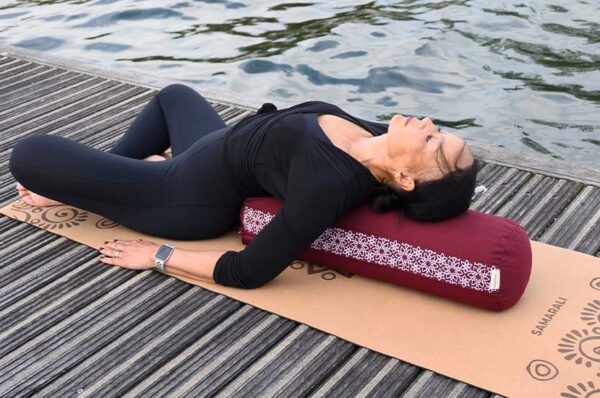
The same props work beautifully for both practices, which is one of the best arguments for investing in quality items. A cylindrical bolster, for example, is used under the knees in Yoga Nidra and along the spine in restorative poses like Supported Fish or Reclined Butterfly. Blankets serve as both warmth layers and folded supports depending on the pose. The overlap between Yoga Nidra and restorative yoga is significant enough that a single well-chosen set of props covers both practices completely.