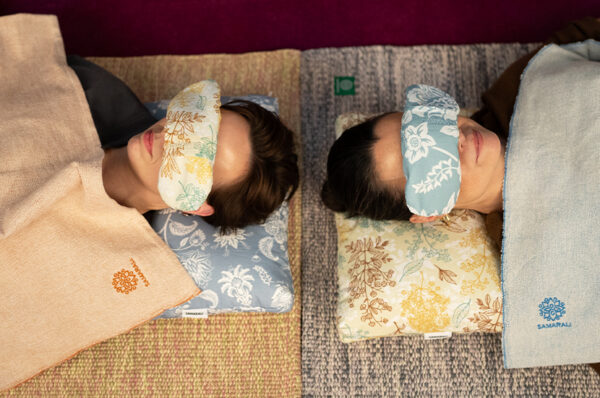



The best eye pillow for Yoga Nidra applies gentle, even pressure across your eyes and brow, blocks out light completely, and stays comfortably in place as your body fully relaxes. A weighted filling, soft natural fabric, and a calm, neutral scent — or no scent at all — are the key qualities to look for. Below, we break down each factor so you can choose with confidence.
What makes an eye pillow suitable for Yoga Nidra?
A Yoga Nidra eye pillow needs to do three things well: block light, apply gentle pressure, and stay put without slipping. Unlike a brief Savasana at the end of a regular class, Yoga Nidra is a guided practice that can last 30 to 45 minutes or longer, so comfort and stability matter far more than they might in a shorter session.
The light-blocking quality is essential because Yoga Nidra works with the nervous system at a very deep level. Even subtle visual input through closed eyelids can keep the brain in a lighter, more alert state. A well-fitted eye pillow creates a dark, contained environment that signals to the brain that it is safe to let go.
Gentle weight is equally important. A small amount of pressure on the eyes activates the oculocardiac reflex — a natural mechanism that slows the heart rate and encourages the parasympathetic nervous system to take over. This is the same physiological response that makes Yoga Nidra so effective for deep rest and stress relief. An eye pillow that is too light will not trigger this response; one that is too heavy will feel uncomfortable over a long session.
Finally, the pillow should contour naturally to the shape of your face without needing to be held in place. If you are constantly aware of the pillow shifting, your mind stays active rather than sinking into the practice. A slightly curved or flexible pillow filled with a moldable material tends to work best for this.
What filling is best in a Yoga Nidra eye pillow?
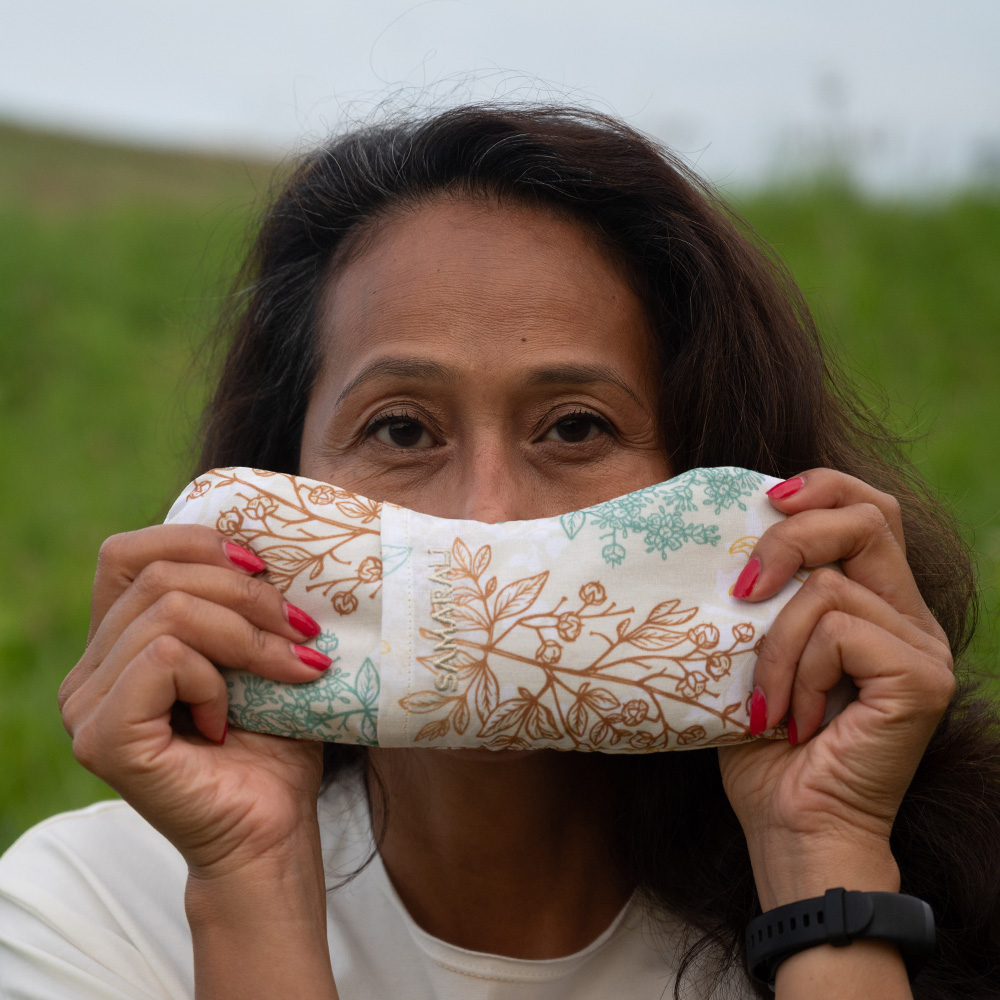
Flaxseed is widely considered the best filling for a Yoga Nidra eye pillow. Flaxseeds are small and dense enough to create a satisfying weight, yet they conform gently to the contours of the face. They also retain a slight coolness that many practitioners find soothing during extended relaxation.
Lavender buds are frequently blended with flaxseed to add an aromatic element, but the flaxseed itself does most of the functional work. Other common fillings include:
- Buckwheat hulls: Slightly firmer and more structured than flaxseed, good for those who prefer a more defined shape
- Rice: A budget-friendly alternative, though it tends to be less moldable and can feel bulkier
- Organic cotton or wool batting: Very lightweight, suitable for those who want minimal pressure but still need light blocking
| Filling Type | Weight / Feel | Best For | Key Benefit |
|---|---|---|---|
| Flaxseed | Medium weight, moldable | Long Yoga Nidra sessions | Ideal weight-to-softness ratio; retains gentle coolness |
| Buckwheat hulls | Medium-firm, structured | Those preferring a firmer, more defined shape | Holds its shape well; good airflow between hulls |
| Rice | Moderate, less moldable | Budget-conscious beginners | Widely available and affordable |
| Organic cotton / wool batting | Very light, soft | Practitioners with pressure sensitivity | Gentle on the eye area; still provides light blocking |
| Fabric Type | Feel | Best For | Key Benefit |
|---|---|---|---|
| Organic cotton | Soft, breathable | Everyday use, easy care | Durable, washable, and widely available in certified organic options |
| Silk | Exceptionally smooth | Extended sessions, sensitive skin | Natural temperature regulation; low friction against periorbital skin |
| Bamboo | Soft, moisture-wicking | Practitioners seeking sustainable options | Naturally antibacterial and breathable |
| Satin | Smooth, synthetic sheen | Short-term or occasional use | Low cost, but synthetic fibers can trap heat and cause irritation during extended skin contact; natural alternatives are preferable for Yoga Nidra |
For Yoga Nidra specifically, flaxseed remains the top choice because the weight-to-softness ratio is ideal for long holds. The filling should feel substantial when you pick it up but should not press uncomfortably on your eye sockets when you lie down. If you are exploring meditation accessories more broadly, the same filling principles apply to other relaxation tools.
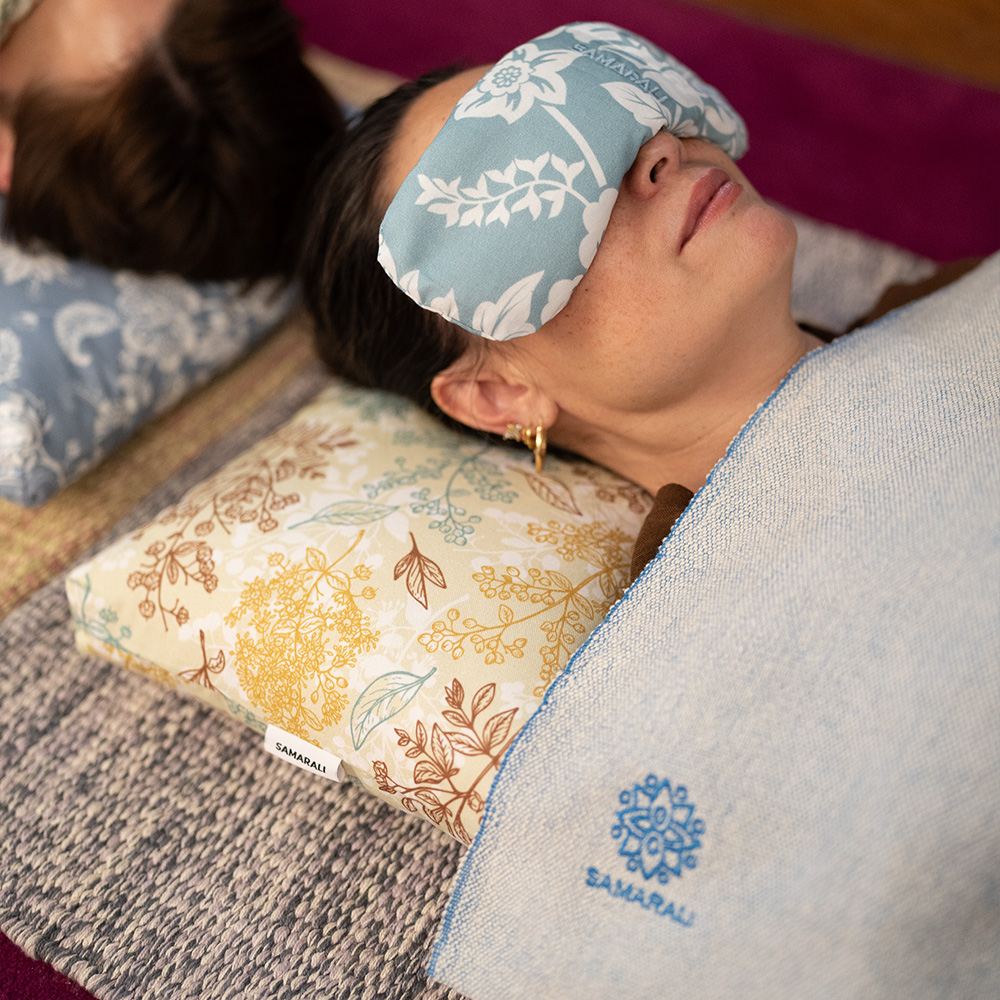
Does the fabric of an eye pillow matter for deep relaxation?
Yes — significantly. Because Yoga Nidra involves lying still for an extended period, any texture that feels rough, synthetic, or scratchy against the skin creates a persistent, low-level distraction that interrupts the descent into deep rest.
Natural fabrics are consistently the better choice. Organic cotton, silk, and bamboo are the most popular options, and each has distinct qualities.
Organic cotton eye pillows
Organic cotton is soft, breathable, and durable, making it the most practical choice for regular use. It is easy to wash, holds its shape well over time, and is widely available in certified organic versions that align with a conscious, intentional practice. For yoga teachers or practitioners who use their eye pillow daily, organic cotton strikes the best balance between comfort and longevity.
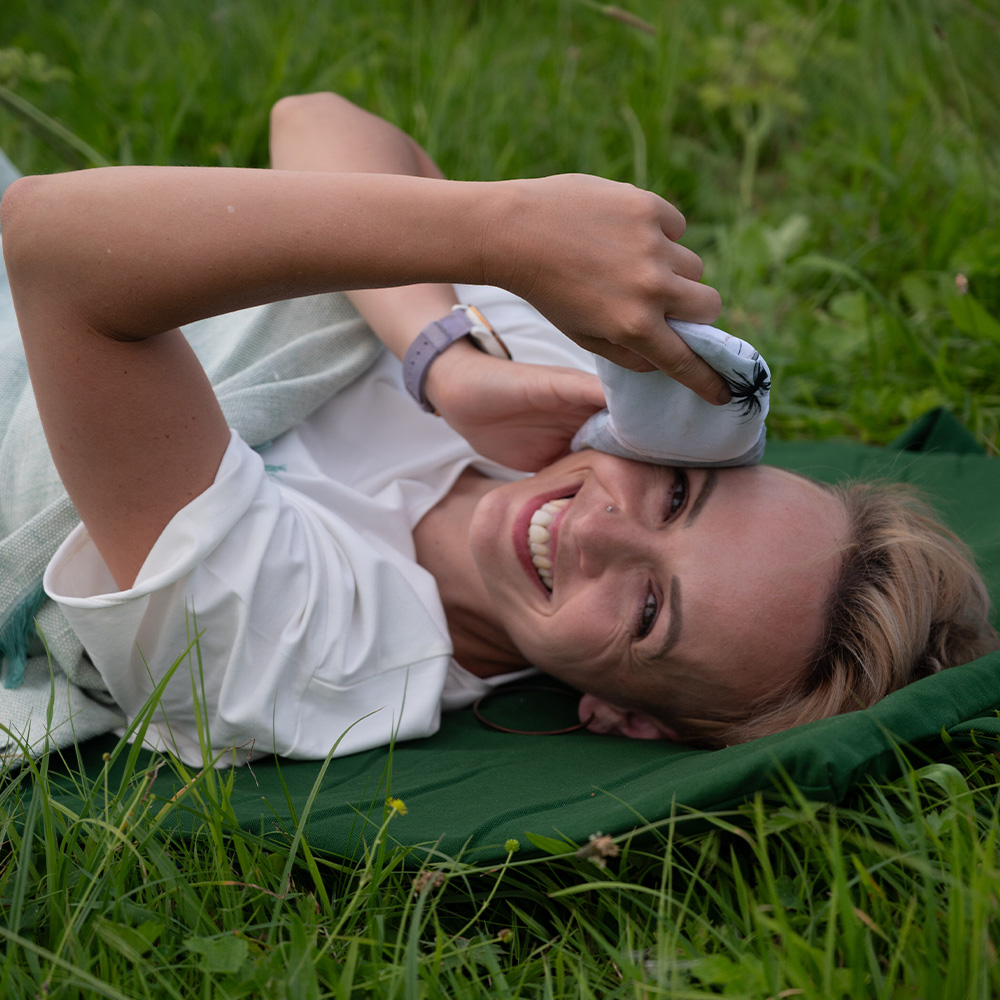
Why silk eye pillows excel for extended Yoga Nidra sessions
A silk eye pillow offers an exceptionally smooth surface against the periorbital skin — the delicate area around the eyes — which becomes especially important during 30 to 45 minute sessions where even minor irritation can pull your attention away from the practice. Silk’s natural temperature-regulating properties prevent heat buildup beneath the pillow, keeping the eye area cool and comfortable throughout. Its natural protein structure also makes it hypoallergenic and gentle for practitioners with reactive or sensitive skin. If you choose a silk yoga eye bag, care for it by hand washing or using a delicate machine cycle, then air drying flat to preserve the fabric.
Bamboo eye pillows
Bamboo fabric is naturally antibacterial and moisture-wicking, making it a strong sustainable option for practitioners who tend to run warm or who practice in humid environments. Its softness is comparable to cotton, and its environmental credentials appeal to those who prioritize eco-conscious choices throughout their wellness toolkit.
Synthetic fabrics like polyester can trap heat and feel slightly abrasive over time, which works against the complete physical surrender that Yoga Nidra requires. At Samarali, we believe what touches your body during a wellness ritual should reflect the same care and consciousness you bring to the practice itself — which is why we consistently recommend certified organic or natural materials.
The weight of the fabric also plays a small role. A thicker weave blocks more light, while a thinner fabric may allow some ambient brightness through. For Yoga Nidra, a tightly woven, opaque fabric is preferable to ensure complete darkness.
Choosing an eye pillow for yoga classes and group settings
For yoga teachers who offer eye pillows to students during Yoga Nidra or Savasana, a few additional considerations apply.
- Removable, machine-washable covers are essential for hygiene when the same pillow is placed on multiple students across classes. Look for a design with a separate inner pillow and an outer cover that launders easily.
- Organic cotton is preferable over silk for placing on students’ faces. Its natural texture provides a light grip that keeps the pillow in position, whereas silk’s smooth surface can slide more readily.
- Having several pillows available ensures every student benefits equally, and purchasing a small set is often more economical than buying individual pillows over time.
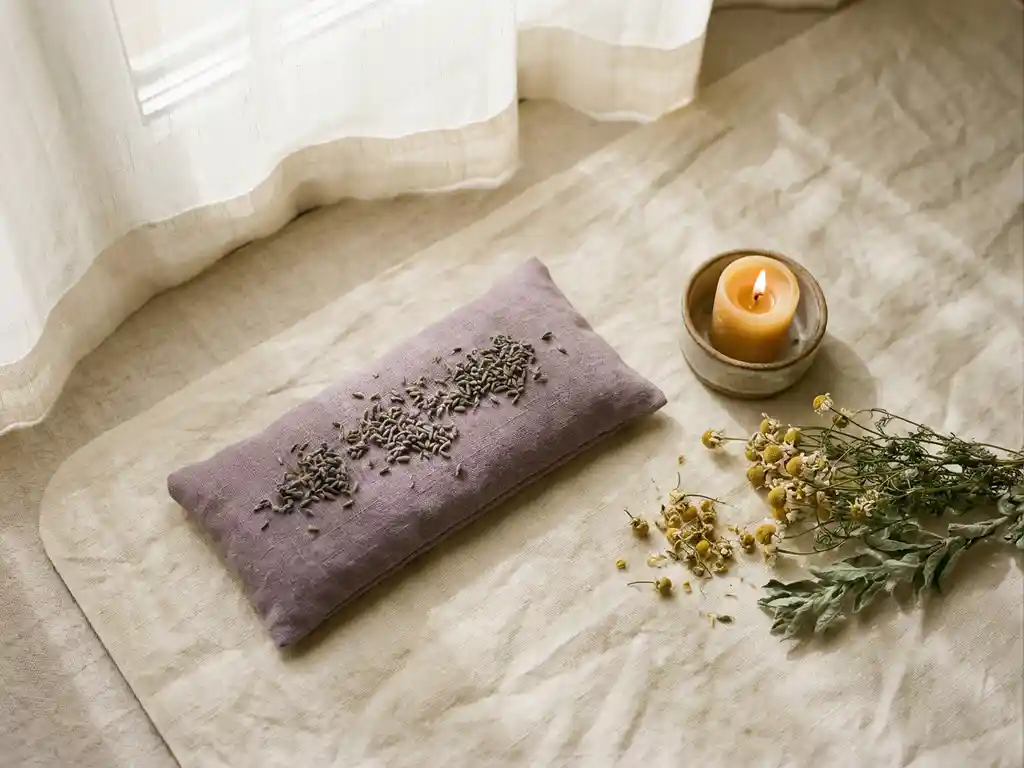
Should a Yoga Nidra eye pillow be scented or unscented?
This depends on your personal sensitivity and the setting of your practice. For most practitioners, a lightly scented pillow with lavender or another calming herb can deepen relaxation. For those with scent sensitivities or allergies, an unscented pillow is the safer choice.
Lavender is the most common scent used in eye pillows, and for good reason. It has well-established calming properties and is widely associated with sleep and relaxation. During Yoga Nidra, the gentle aroma can act as a sensory anchor, helping the mind settle more quickly into the practice.
An unscented pillow is the smarter option when:
- You practice in a shared or group setting where others may be affected by scent
- You have fragrance sensitivities, hay fever, or asthma
- You are pregnant, as certain essential oils and botanicals are not recommended during pregnancy
- You find strong aromas stimulating rather than calming
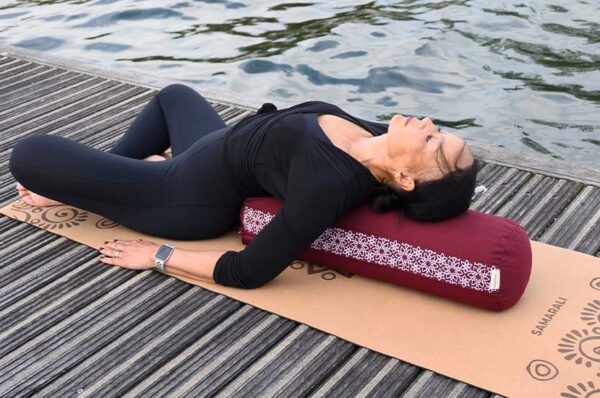
If you do choose a scented pillow, look for one that uses dried botanicals rather than synthetic fragrance oils. Natural botanicals release a subtle, fading scent that tends to be gentler and more grounding than artificial alternatives. You can also pair a plain eye pillow with a separate aromatherapy practice — such as diffusing essential oils in the room — to keep your options flexible. Pairing your eye pillow with a supportive yoga bolster under your knees can further enhance the full-body comfort that Yoga Nidra calls for.
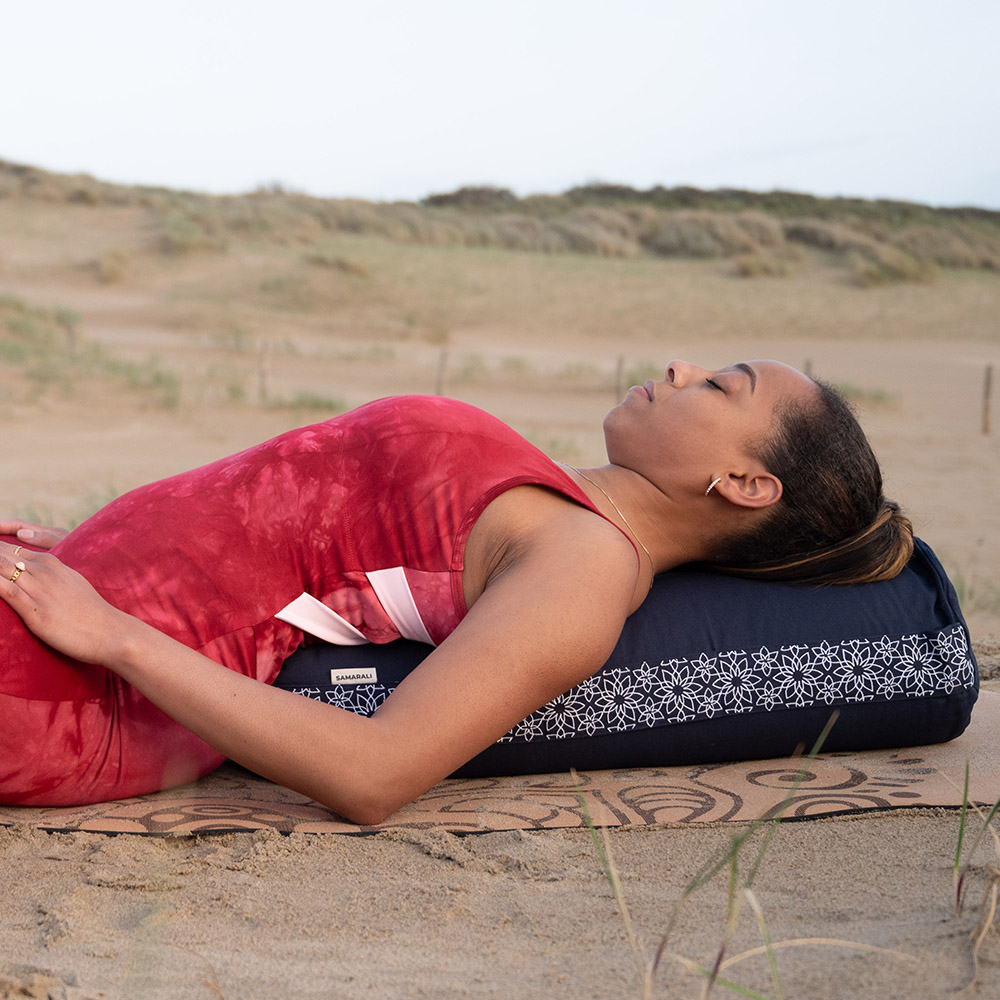
Beyond Yoga Nidra: other ways to use your eye pillow
While a weighted eye pillow is especially transformative for Yoga Nidra, the same qualities that make it effective for deep practice translate naturally to other moments of rest and recovery. The combination of gentle weight, complete light-blocking, and soft natural fabric supports relaxation wherever you need it most.
Here are five contexts where your yoga eye pillow earns its place beyond the Yoga Nidra mat:
- Savasana at the end of a regular yoga class: The weighted pressure and darkness help the nervous system shift out of effort mode and absorb the benefits of your practice more fully.
- Restorative yoga poses: An eye pillow deepens surrender in long-held poses like Supta Baddha Konasana or supported forward folds, where the goal is complete muscular release.
- Meditation sessions: Blocking visual input during seated or lying meditation reduces sensory distraction, making it easier to sustain inward focus for longer periods.
- Travel and in-flight relaxation: The light-blocking and calming weight of a travel-sized eye pillow makes it a practical companion on long flights or train journeys, where rest is difficult to find.
- Stress-relief naps: A weighted eye pillow signals the body to downregulate quickly, making it useful for anyone who struggles to switch off during the day.
Investing in a well-made eye pillow means it serves you across your entire wellness routine, not just during dedicated Yoga Nidra sessions.
Ready to build a Yoga Nidra practice that truly supports deep rest? At Samarali, you will find everything you need to create a grounded, intentional space. Complement your eye pillow with a yoga bolster for full-body support, a meditation mat to anchor your practice, or an organic cotton yoga blanket for warmth during long Savasana holds. Browse the complete meditation sets collection to find everything in one place. Shop now and give your practice the foundation it deserves.
Frequently Asked Questions
How heavy should a Yoga Nidra eye pillow be?
Most practitioners find that an eye pillow weighing between 100g and 200g (roughly 3.5 to 7 oz) strikes the ideal balance between therapeutic pressure and long-session comfort. Anything lighter than 100g may not activate the oculocardiac reflex effectively, while anything heavier than 200g can create discomfort or strain around the eye sockets during a 30–45 minute session. If you are new to weighted eye pillows, start on the lighter end of that range and adjust based on how your body responds.
What size should a Yoga Nidra eye pillow be?
Most eye pillows designed for yoga and meditation measure between 8 and 10 inches in length and 3.5 to 4.5 inches in width. A wider pillow, closer to 4.5 inches, tends to provide more complete light-blocking and distributes weight more evenly across the brow and eye area, which is particularly important during a 30 to 45 minute Yoga Nidra session. If you have a narrower face, a standard-width pillow will still work well, but pay attention to whether light enters at the edges when you lie down. A pillow that is too narrow allows light in at the sides and undermines the sensory withdrawal that Yoga Nidra depends on, so choosing a slightly wider option is the safer starting point for most practitioners.
Can I use a regular sleep mask instead of an eye pillow for Yoga Nidra?
A sleep mask can block light, but it lacks the gentle weighted pressure that makes an eye pillow specifically effective for Yoga Nidra. The weight of a filled eye pillow is what triggers the oculocardiac reflex and encourages the parasympathetic nervous system to activate — a sleep mask simply cannot replicate this. If you are just getting started and want a low-cost option, a sleep mask is better than nothing, but upgrading to a properly weighted eye pillow will noticeably deepen your practice.
How do I clean and care for a flaxseed eye pillow?
Most flaxseed eye pillows come with a removable outer cover that can be machine washed on a gentle, cool cycle — always check the care label first. The inner pillow itself should never be submerged in water, as moisture can cause the flaxseed filling to swell, clump, or even mold. To freshen the inner pillow between washes, place it in a sealed bag and leave it in the freezer overnight, which neutralizes odors and keeps the filling dry and clean.
What is the best way to position an eye pillow during Yoga Nidra?
Simply place the eye pillow gently across your closed eyes and brow bone while lying in Savasana — no adjustment or pressing is needed. The pillow’s weight should do all the work, so resist the urge to press it down or reposition it once you settle in. If the pillow slides off your face as you relax, it may be too narrow or too light for your face shape, and choosing a slightly wider or more contoured option will solve the problem without interrupting your practice.
Can I heat or cool my eye pillow for Yoga Nidra, and does it make a difference?
Yes — flaxseed and buckwheat eye pillows can be gently warmed in a microwave for 15–20 seconds or cooled in the freezer for 10–15 minutes before use. A lightly chilled pillow is particularly popular for Yoga Nidra because the coolness enhances the calming, inward-drawing quality of the practice and can feel especially soothing during warm weather or when stress levels are high. If you choose to heat your pillow, always test the temperature on your wrist first and avoid overheating, as the delicate skin around the eyes is sensitive.
How do I choose between a scented and unscented eye pillow if I have never tried either?
If you have no known scent sensitivities, starting with a lightly lavender-scented flaxseed pillow is a safe and popular choice, as lavender is one of the most well-tolerated and broadly calming botanicals available. Use it for a few sessions and pay attention to whether the scent feels grounding or subtly distracting — both responses are valid and personal. If you find the scent fades too quickly or you want more control, switching to an unscented pillow and using a room diffuser gives you the flexibility to adjust the aromatic intensity of your practice independently.
Are there any situations where I should avoid using an eye pillow during Yoga Nidra?
You should avoid using an eye pillow if you have a recent eye injury, eye surgery, or an active infection such as conjunctivitis, as even gentle pressure can aggravate these conditions. People with glaucoma should consult their eye doctor before using a weighted eye pillow, since increased ocular pressure may be a concern. Practitioners who are prone to migraines, sinus pressure, or dizziness should also use caution — the gentle weight of an eye pillow can sometimes intensify pressure sensations in the sinus area or around the temples. If you experience any discomfort, headache, or dizziness during use, remove the pillow immediately and consult your healthcare provider before continuing. Outside of these specific cases, eye pillows are safe and beneficial for most adults, but when in doubt, opting for an unscented, very lightly weighted option and checking with a healthcare provider is always the sensible approach.