


Yes, Vinyasa yoga is genuinely good for stress relief. The flowing, breath-linked movement style activates your parasympathetic nervous system, helping your body shift out of fight-or-flight mode and into a calmer, more regulated state. This makes it one of the more effective yoga styles for people carrying physical tension or mental fatigue. Below, we unpack exactly how it works and how to get the most from your practice.
How does vinyasa yoga reduce stress in the body?
Vinyasa yoga reduces stress by synchronizing breath with movement, which directly calms the nervous system. Each inhale and exhale is tied to a specific pose or transition, creating a rhythmic pattern that slows the heart rate, lowers cortisol levels, and brings the mind into a focused, present state. The result is both physical and mental decompression.
The physical side of stress often shows up as tight shoulders, a clenched jaw, or a stiff lower back. Vinyasa sequences move through a wide range of motion, releasing that held tension in a way that static stretching alone rarely achieves. Because you are constantly transitioning, your muscles warm up quickly and soften more deeply than in slower styles.
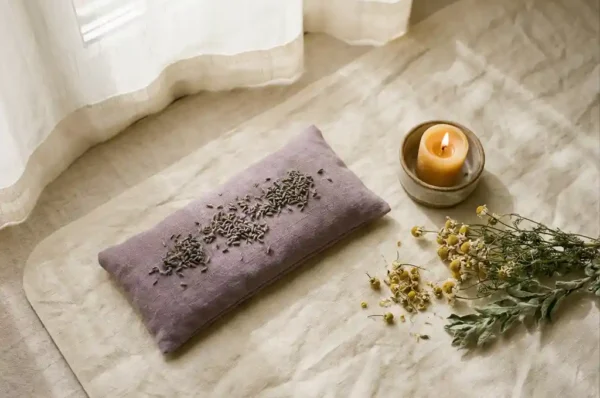
On the mental side, the continuous flow demands enough attention that your mind cannot easily wander back to whatever is stressing you out. You have to stay present to keep up with the sequence. This is sometimes called a moving meditation, and it is exactly that quality that makes Vinyasa yoga so useful for people whose minds are too busy to sit still in traditional meditation. If you are curious about pairing your practice with stillness, exploring meditation tools can deepen that effect after class.
What makes vinyasa yoga different from other stress-relief yoga styles?
Vinyasa yoga stands apart from other stress-relief styles because of its dynamic, flowing nature. Unlike Yin or Restorative yoga, which rely on long holds and passive release, Vinyasa uses movement itself as the therapeutic tool. The continuous flow builds heat, burns off nervous energy, and creates a meditative focus that more passive styles achieve differently.
Restorative yoga is excellent for deep rest and recovery, but some people find it hard to switch off when lying still, especially at high stress levels. Vinyasa gives the body something to do, which can make it easier to eventually arrive at calm. Think of it as burning through the agitation before settling into peace.
Compared to Hatha yoga, Vinyasa moves at a faster pace with fewer static holds. Hatha is wonderful for beginners and for building precise alignment awareness, but Vinyasa tends to produce a stronger cardiovascular effect and a more pronounced release of mood-lifting endorphins. Both are valuable, and many practitioners use them at different times depending on what they need that day.
Compared to Hot yoga or Power yoga, Vinyasa is generally more accessible and less intense, making it easier to sustain as a regular stress-management practice rather than an occasional physical challenge.
How often should you practice vinyasa yoga to feel less stressed?
Practicing Vinyasa yoga two to three times per week is enough for most people to notice a meaningful reduction in stress. Consistency matters more than frequency. A regular twice-weekly practice will outperform sporadic daily sessions when it comes to building nervous system resilience that keeps stress levels manageable over time.
That said, even a single session can produce immediate relief. If you are going through a particularly demanding period, adding a fourth session or shortening sessions to 20 to 30 minutes on busier days keeps the benefits flowing without adding another obligation to your schedule.
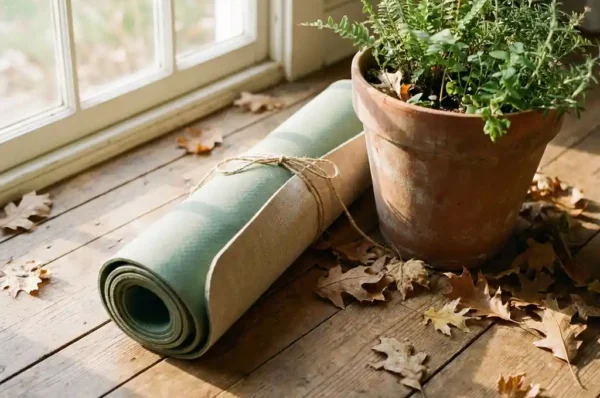
For beginners, starting with two sessions per week allows the body to adapt to the physical demands while building familiarity with common sequences. As you become more comfortable, three sessions per week tends to be the sweet spot where the cumulative mental health benefits really become noticeable. Having a supportive setup at home helps too. A quality surface makes a real difference in how grounded and focused you feel, and our natural rubber yoga mat is a great place to start building that home practice.
Are there vinyasa poses that are especially good for stress relief?
Yes, several poses within a Vinyasa flow are particularly effective for stress relief. Forward folds, hip openers, and gentle inversions are the standout categories. These shapes target the areas of the body where stress accumulates most commonly and activate the calming branch of the nervous system through their specific physiological effects.
Forward folds
Standing forward fold and seated forward fold both encourage the nervous system to downregulate. When the head drops below the heart, blood flow shifts, the neck releases, and the spine decompresses. In a Vinyasa context, folding on an exhale deepens this effect. Uttanasana, the standing forward fold, is one of the most accessible stress-relieving shapes and appears in almost every Vinyasa sequence.
Hip openers
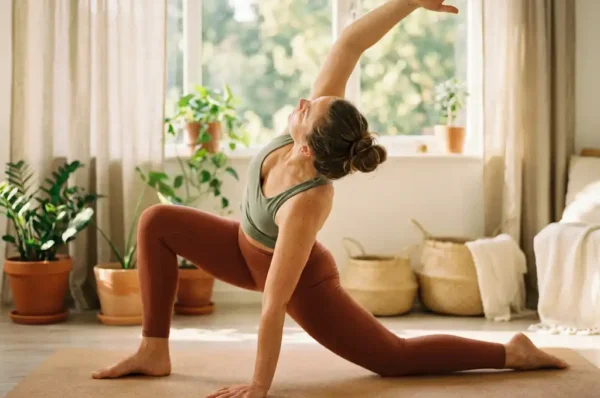
Poses like Pigeon and Low Lunge target the hip flexors and outer hips, which are notorious for storing chronic tension, especially in people who sit for long periods or carry stress in their lower body. These shapes can feel emotionally as well as physically releasing, which is why they are a staple in sequences designed around mental well-being.
Child’s pose and gentle inversions
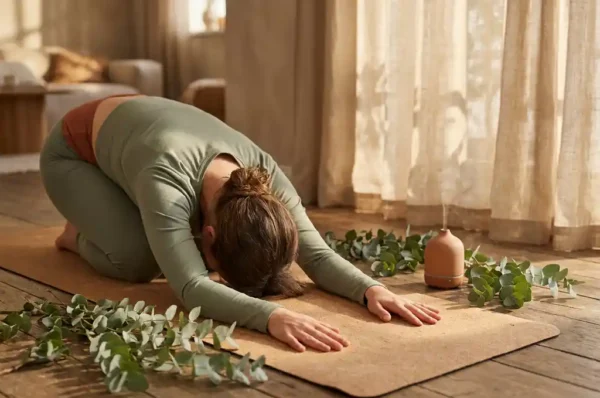
Child’s pose is used throughout Vinyasa as a resting shape and a reset. It gently compresses the belly, which stimulates the vagus nerve and encourages a parasympathetic response. Legs-up-the-wall and mild inversions like Downward Dog serve a similar function, reversing the blood flow and giving the nervous system a noticeable signal to slow down.
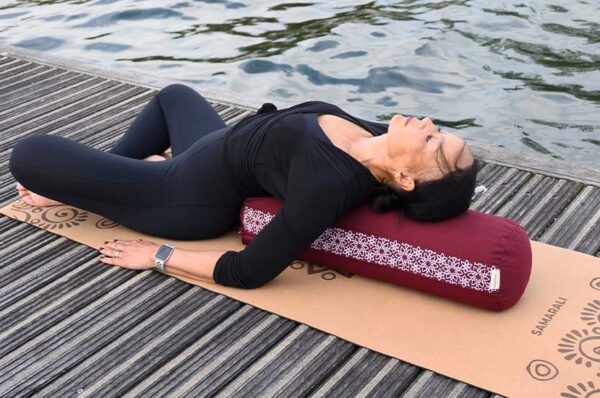
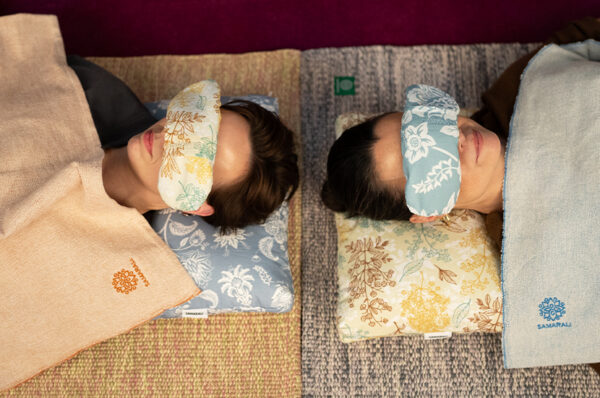
Ending a Vinyasa session with a supported Savasana, ideally with a yoga bolster under the knees, allows the body to fully absorb the work and transition into genuine rest. That final few minutes of stillness is where much of the stress-relief magic actually lands.
Frequently Asked Questions
Can complete beginners use Vinyasa yoga for stress relief, or is it too physically demanding to start with?
Vinyasa yoga is absolutely accessible to beginners, especially when you start with a beginner-labeled class or a slower-paced flow. The key is to prioritize breath over perfect form in the early stages — the stress-relief benefits come from the breath-movement connection, not from nailing every pose. Many studios and online platforms offer beginner Vinyasa specifically designed to introduce common sequences gradually, so you build confidence without feeling overwhelmed.
What is the best time of day to practice Vinyasa yoga for stress relief?
The best time depends on your stress patterns and schedule. Morning practice helps set a calm, focused tone for the day and can prevent stress from building up in the first place. Evening practice, on the other hand, is ideal for releasing tension that has accumulated throughout the day, though you may want to opt for a gentler, slower flow close to bedtime to avoid being too energized to sleep. Ultimately, the best time is whichever slot you can stick to consistently.
What should I do if I feel more anxious or overwhelmed during a Vinyasa class rather than calmer?
This is more common than people realize, and it usually signals that the pace or intensity of the class is too high for your current state. If you feel overwhelmed, slow down, return to Child’s Pose, and focus entirely on lengthening your exhale — a longer exhale than inhale is one of the fastest ways to activate the parasympathetic nervous system. If it happens repeatedly, try a slower or more restorative class until your baseline stress levels come down, then gradually reintroduce a more dynamic flow.
How long does a Vinyasa session need to be to actually reduce stress?
Even a 20-minute session can produce a measurable reduction in stress if the breath-movement connection is maintained throughout. Research on exercise and cortisol suggests that moderate movement for as little as 15–20 minutes begins to shift hormonal and nervous system responses. A 45–60 minute class gives more time for a full warm-up, deeper poses, and a proper Savasana, which tends to deepen the effect, but shorter sessions practiced consistently are far more valuable than long sessions done rarely.
Can I practice Vinyasa yoga for stress relief at home, or do I need to go to a studio?
Home practice works very well for stress relief, and many people find the convenience actually helps them stay consistent, which is the most important factor. A few things make a big difference at home: a dedicated, clutter-free space, a quality mat that keeps you stable, and a reliable online resource or app to guide you through sequences. Guided classes are especially helpful at home because they keep your mind engaged with the instruction rather than drifting back to your to-do list.
Are there any common mistakes that reduce the stress-relief benefits of a Vinyasa practice?
The most common mistake is disconnecting breath from movement — rushing through poses without syncing the inhale and exhale removes the primary mechanism through which Vinyasa calms the nervous system. Another frequent error is skipping Savasana at the end, which is actually when the body consolidates the parasympathetic shift built up during the session. Finally, practicing at an intensity level that feels more like a workout than a mindful flow can spike cortisol rather than lower it, so choosing the right class level for your current stress state really matters.
Should I combine Vinyasa yoga with other stress-management tools for better results?
Yes, Vinyasa yoga works exceptionally well as part of a broader stress-management routine rather than as a standalone solution. Pairing it with consistent sleep, breathwork or meditation between sessions, and time outdoors creates a compounding effect on nervous system regulation. If you already practice Vinyasa and feel you have plateaued in terms of stress relief, adding even five minutes of post-practice seated meditation or breathwork is often enough to deepen the results significantly.