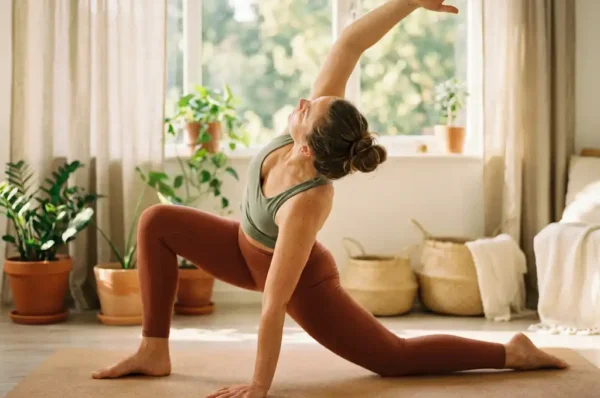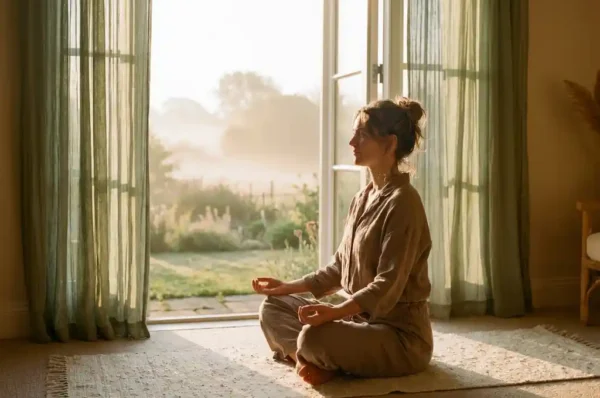



Yes, Vinyasa yoga is suitable for older adults, and many people over 60 — including beginners and active adults in their 70s — find it both enjoyable and beneficial. The key is approaching the practice with appropriate modifications, choosing beginner-friendly class formats, and listening to your body throughout. Below, we cover the most common questions older adults have about starting or continuing a Vinyasa practice.
Can older adults safely practice Vinyasa yoga, including those over 70?
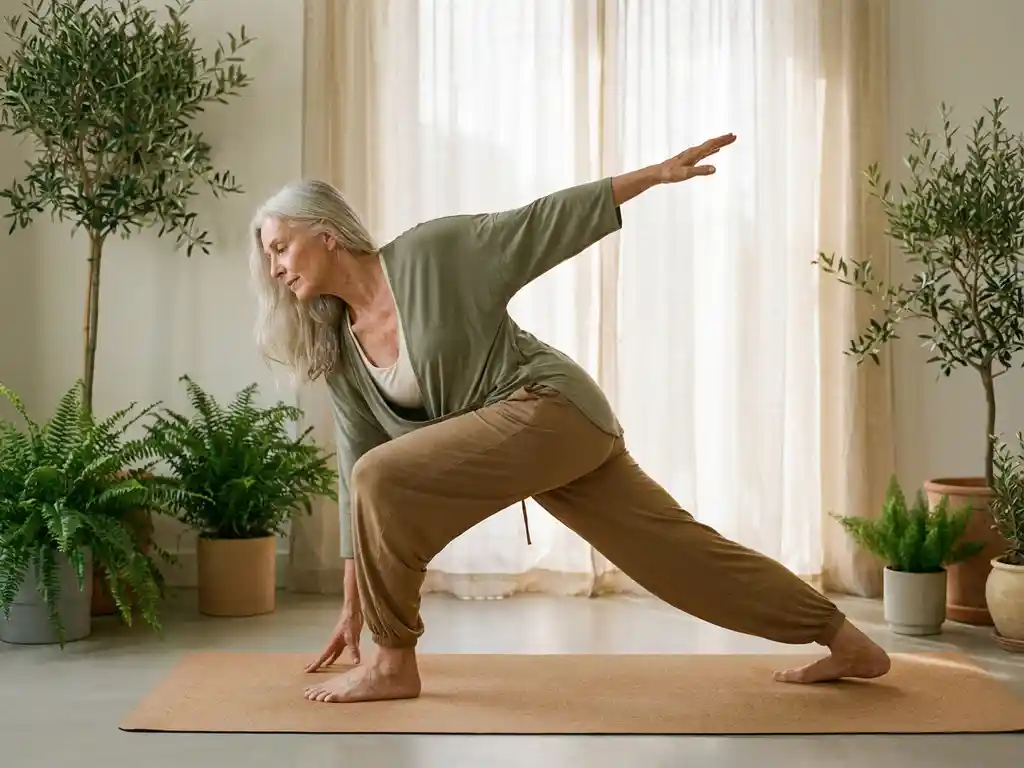
Older adults can safely practice Vinyasa yoga when they approach it thoughtfully and with appropriate guidance. Unlike static yoga styles, Vinyasa links breath to movement in a flowing sequence, which can support joint mobility and cardiovascular health. Safety comes down to selecting the right class level, communicating with the instructor, and respecting your body’s current range of motion.
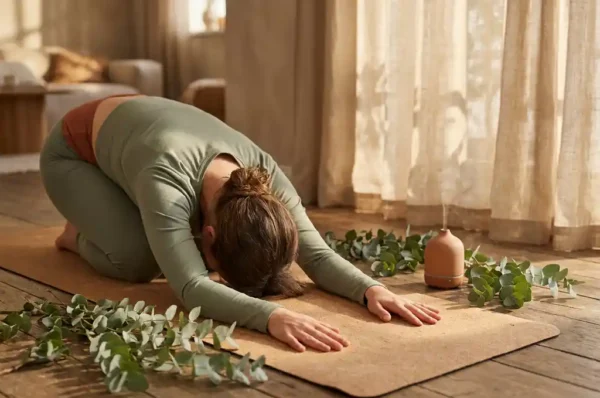
One common concern is pace. Vinyasa classes can move quickly, but a good teacher will always offer modifications and encourage students to pause in child’s pose whenever needed. There is no rule that says you must keep up with the fastest person in the room. Slowing down and focusing on breath alignment often produces better results than rushing through transitions.
Pre-existing conditions such as osteoporosis, arthritis, or recent joint replacements do require extra care. If you have any of these, a brief conversation with your doctor before starting is a sensible step. That said, many older adults with these conditions practice Vinyasa yoga regularly under the guidance of an experienced teacher without issue.
How does Vinyasa compare to other yoga styles for older adults?
Older adults exploring yoga for the first time often face a genuinely useful question: which style is the right fit? Understanding where Vinyasa sits within the broader landscape of yoga options makes it much easier to choose with confidence. The best choice depends on your current mobility, fitness goals, and how energizing you want your practice to feel.
Here is a brief overview of the most common yoga styles for seniors and what each does best:
- Chair Yoga: Best for older adults with significant mobility limitations, balance challenges, or those recovering from surgery. All poses are performed seated or using a chair for support, making it the most accessible entry point for those not yet ready for mat-based practice.
- Gentle and Restorative Yoga: Best for recovery, deep relaxation, and minimal exertion. These styles use long-held, passive poses supported by props, focusing on releasing tension rather than building strength or cardiovascular fitness.
- Hatha Yoga: Best for slow, pose-by-pose learning. Hatha classes typically hold each posture for several breaths before moving on, making it an excellent foundation for older adults who want to build body awareness before exploring a flowing practice.
- Vinyasa Yoga: Best for older adults who want an active, energizing practice that builds strength, flexibility, and cardiovascular health. The breath-linked flow creates a moving meditation that is both physically engaging and mentally stimulating.
For motivated older adults seeking both physical and mental engagement, Vinyasa offers a uniquely rewarding combination that gentler yoga styles simply do not replicate. It is not the right starting point for everyone, but with the right class and teacher, it is accessible to far more people than many assume. If you are unsure, starting with a Hatha or gentle yoga class and transitioning to a slow-flow Vinyasa class after a few weeks is a perfectly sensible path.
What are the benefits of Vinyasa yoga for older adults?
Vinyasa yoga offers older adults a wide range of physical and mental benefits, including improved flexibility, better balance, stronger muscles, and reduced stress. The continuous, breath-led movement also supports cardiovascular health in a low-impact way, making it an excellent complement to other forms of exercise for people in their 50s, 60s, and beyond.
Balance and fall prevention are particularly meaningful benefits for older practitioners. The standing poses and transitions common in Vinyasa sequences challenge proprioception — your body’s awareness of its position in space. Regular practice can meaningfully improve stability in daily life.
Functional strength and muscle health
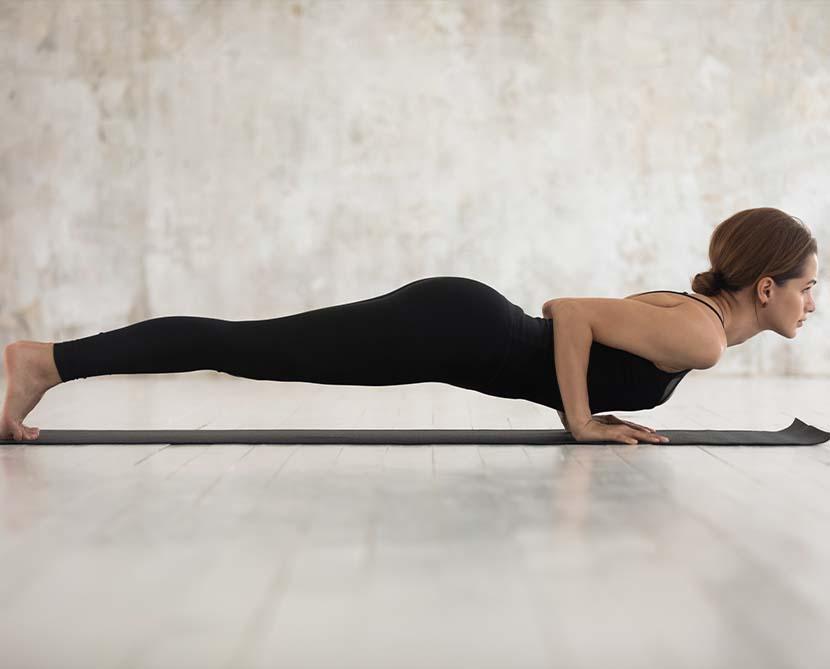
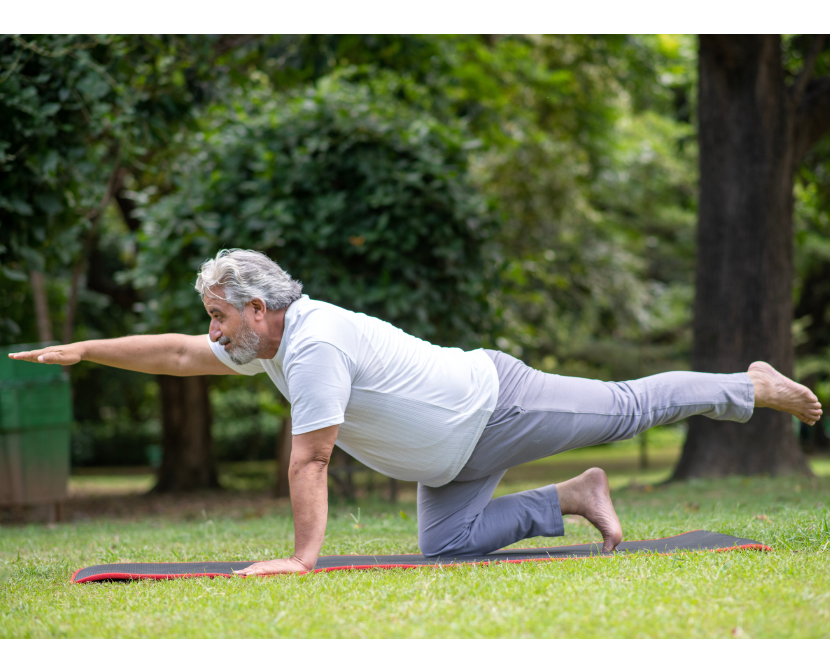
Vinyasa yoga is one of the few low-impact activities that builds muscular endurance and functional strength at the same time, making it especially valuable for adults over 60. Core stability developed through plank and boat pose variations supports better posture and reduces the risk of lower back pain. Leg strength built through warrior sequences supports knee stability and fall prevention, while arm and shoulder engagement in downward dog builds the upper body endurance needed for everyday tasks like lifting and reaching.
This matters because age-related muscle loss — sometimes called sarcopenia — begins gradually in the 50s and accelerates without regular resistance-based activity. Vinyasa yoga addresses this directly: the practice loads muscles through bodyweight movement in a way that is sustainable, joint-friendly, and accessible. Building functional fitness over 60 does not require a gym; a consistent Vinyasa practice delivers genuine strength gains without strain.
Mental well-being and stress relief
The mental benefits are equally compelling. Vinyasa yoga requires sustained focus on breath and movement, which naturally quiets mental chatter and reduces cortisol levels. Many older adults report better sleep quality, improved mood, and a stronger sense of calm after establishing a regular practice. The social dimension of attending a class also supports emotional well-being, which becomes increasingly important as people age.
Vinyasa also offers meaningful cognitive benefits that are often overlooked. Coordinating breath, movement, and spatial awareness simultaneously is a genuine dual-task challenge — one that engages the brain in a way passive exercise does not. The focused attention required to move through flowing sequences supports concentration and mental clarity. Research into mind-body practices increasingly recognizes yoga’s potential role in supporting cognitive function and reducing age-related mental decline, making it one of the most compelling reasons for older adults to maintain a regular practice.
Joint health and bone density
The flowing nature of Vinyasa gently warms and lubricates the joints, which can ease the stiffness many older adults experience — especially in the morning. Consistent practice also helps maintain bone density and muscle mass, both of which naturally decline with age.
How should older adults modify Vinyasa yoga poses, including those with arthritis or joint stiffness?
Older adults should modify Vinyasa yoga poses by using props, reducing range of motion, and choosing gentler variations of challenging transitions. Common modifications include bending the knees in forward folds, using blocks under the hands in low lunge, and replacing full chaturanga with a knees-down version. These adjustments protect the joints while preserving the flow of the practice. For those managing arthritis or joint stiffness, modifications focus on reducing load through affected joints while keeping the body warm and mobile throughout the session.
Prop support for key poses
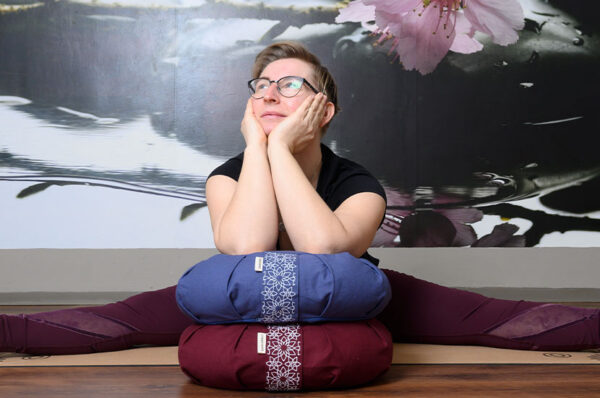
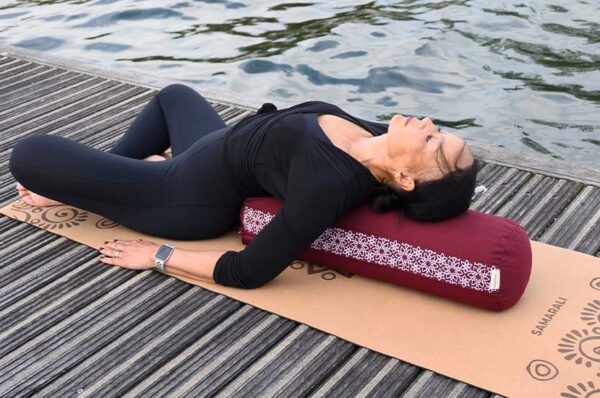
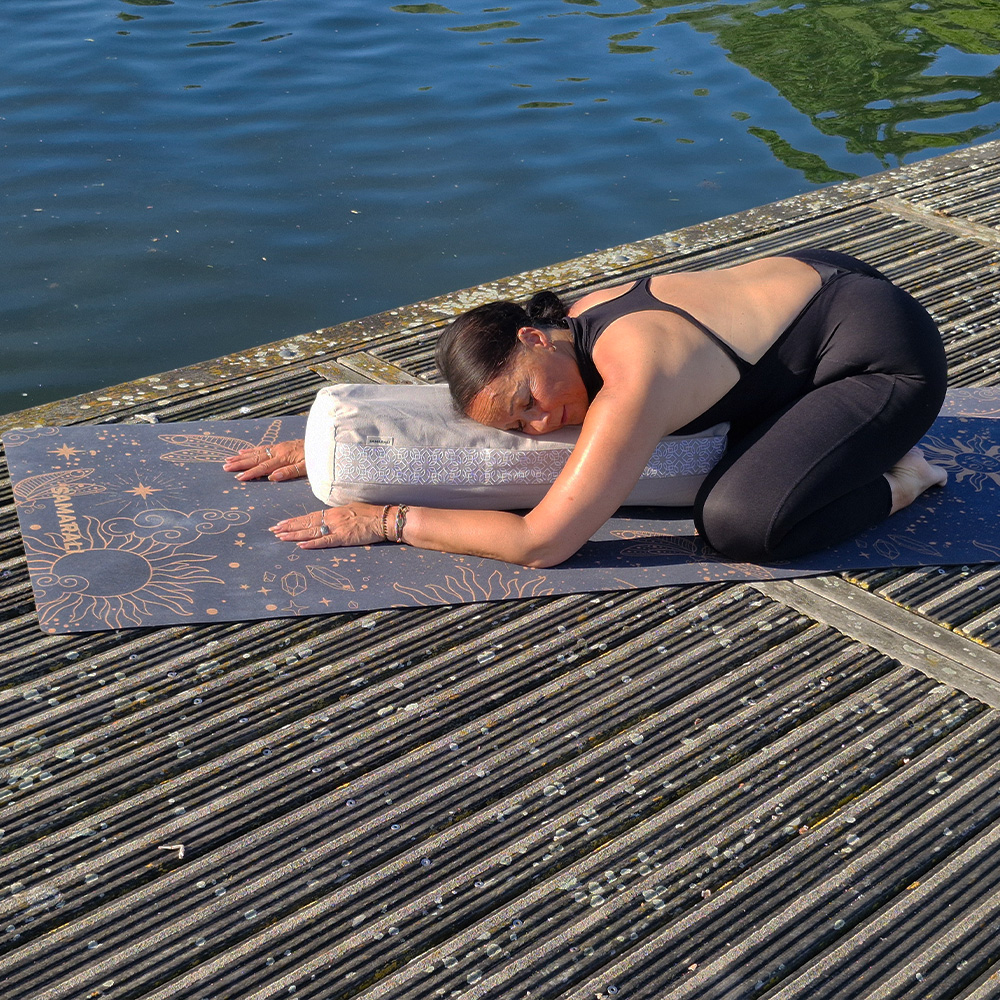
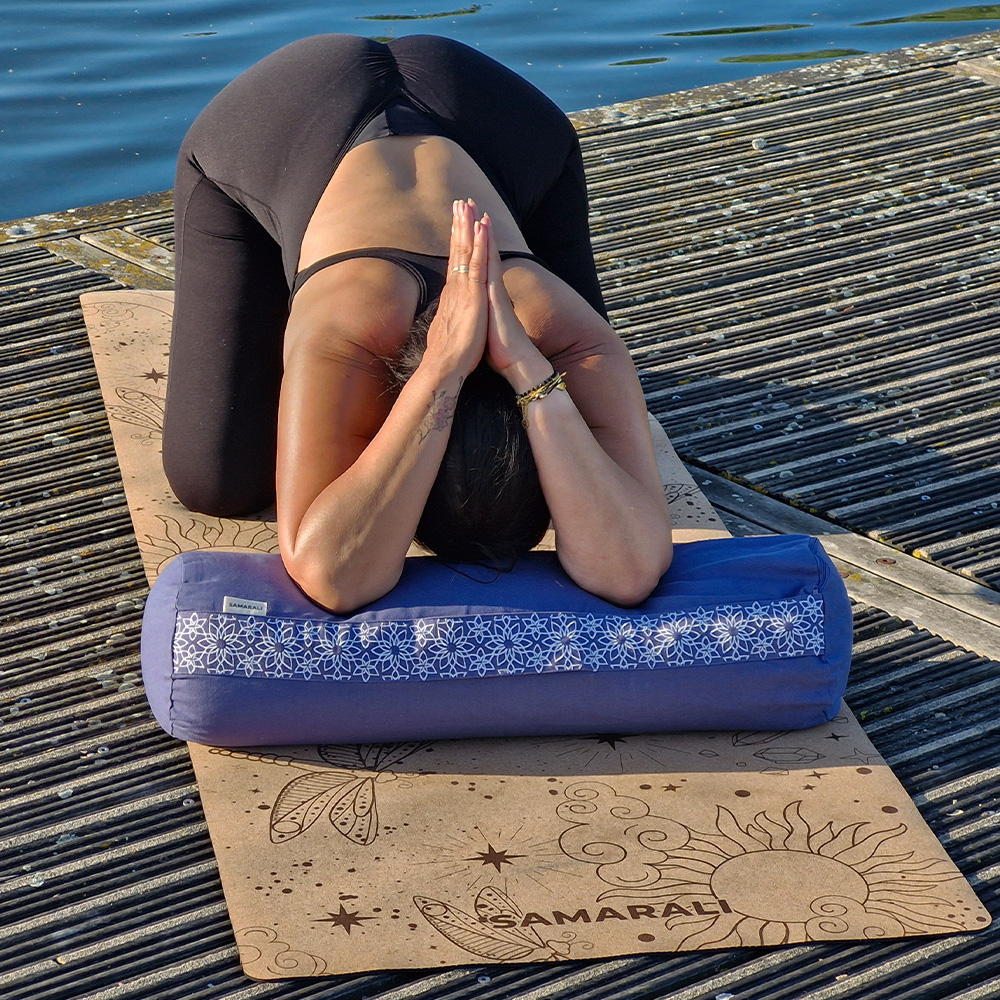
Props are your best friends in a modified Vinyasa practice. Blocks bring the floor closer to you in standing poses, reducing strain on the hamstrings and lower back. A yoga bolster works well for supported backbends and restorative transitions between more active sequences. Placing a folded blanket under the knees during low lunges or kneeling poses adds cushioning that makes a real difference over the course of a full class.
Transitional adjustments
Transitions are where most injuries happen, so this is where modifications matter most. Moving from downward dog to a forward fold can be done by walking the feet forward in small steps rather than jumping. Skipping jump-backs entirely and stepping back one foot at a time is completely acceptable and still maintains the sequence’s rhythm. Over time, as strength and flexibility improve, you can gradually reintroduce more dynamic transitions if you choose.
Chair-based Vinyasa modifications for limited mobility
For older adults with significant joint limitations, balance challenges, or those recovering from surgery, chair Vinyasa yoga offers a genuinely empowering starting point. Using a sturdy, non-wheeled chair placed on a non-slip mat, the core breath-movement connection of Vinyasa remains fully intact. Chair modifications are not a lesser version of the practice — they are a smart adaptation that allows full participation in the rhythm and intention of Vinyasa yoga.
Here are four seated modifications that work especially well:
- Seated cat-cow: Sit upright with hands resting on thighs. Inhale to arch the spine and lift the chest, then exhale to round the back and drop the chin. This mirrors the mat-based version and delivers the same spinal mobility benefits.
- Standing warrior I and II with chair support: Stand behind the chair and hold the back for balance while moving through warrior stance. The chair provides the stability needed to focus on hip alignment and leg strength without fear of falling.
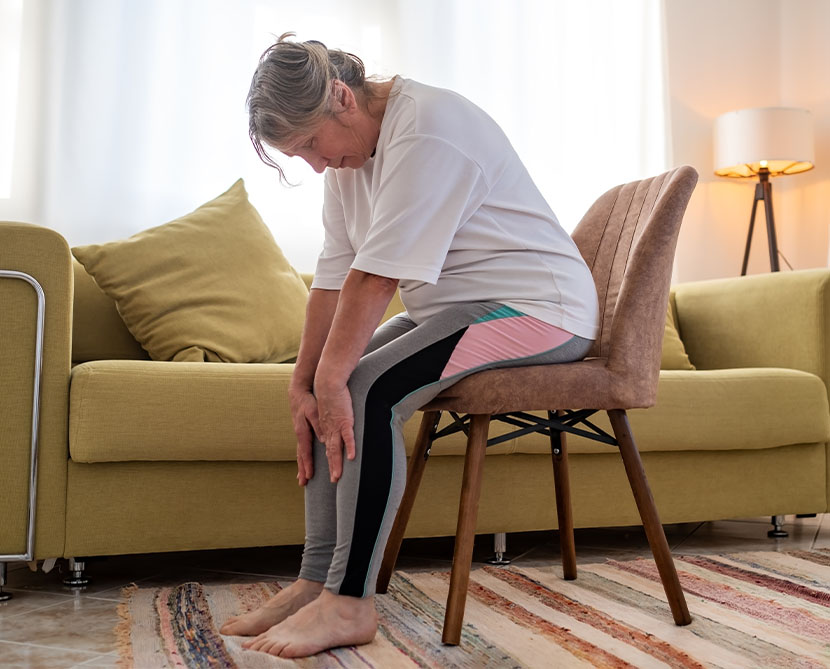
- Seated forward fold: From a seated position, hinge forward at the hips with a long spine, reaching toward the feet or shins. This replaces a standing forward fold and gently stretches the hamstrings and lower back without compressing the joints.
- Chair-supported downward dog: Place both hands on the seat of the chair and step back until the body forms an inverted V shape. This gentler alternative delivers the shoulder opening and spinal lengthening of the full pose without the wrist and shoulder load of the mat version.
What type of Vinyasa class is best for older beginners?
The best Vinyasa class for older beginners is a slow-flow or beginner Vinyasa class with an experienced teacher who actively offers modifications. These classes move at a pace that allows time to understand each pose, focus on alignment, and breathe fully between transitions. Avoid advanced or heated Vinyasa classes until you have built a solid foundation in the basics.
When searching for a class, look for descriptions that include words like “gentle,” “slow flow,” “all levels,” or “foundations.” Many studios now offer Vinyasa classes specifically designed for adults over 50, which can be a wonderful starting point. Online platforms also offer a strong selection of beginner Vinyasa videos that allow you to practice at home and pause whenever you need to.
The quality of the teacher matters enormously. A skilled instructor will walk the room, offer hands-on or verbal adjustments, and make sure everyone feels included regardless of their physical starting point. Before joining a class, it is worth asking the studio whether the teacher has experience working with older adults or students with physical limitations.
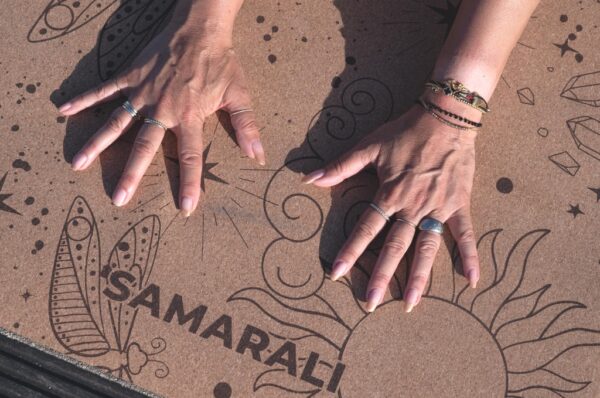
Having the right equipment also sets you up for success from day one. A supportive, non-slip surface is essential for safe transitions. We recommend exploring our range of yoga mats designed to provide the grip and cushioning that make flowing sequences comfortable, as well as our broader yoga accessories to support your practice as it grows. Starting with the right foundation makes every session safer and more enjoyable.
Ready to take the next step in your Vinyasa journey? At Samarali, you will find everything you need to practice with confidence and comfort. Whether you are looking for a natural rubber yoga mat that offers superior grip through every transition, a supportive yoga bolster for restorative moments in your flow, or a soft organic cotton yoga blanket to cushion your knees and keep you warm during cool-downs, our collection is thoughtfully curated for practitioners of all ages and levels. Shop our yoga sets and find the perfect combination of props to support your practice from the very first class.
Frequently Asked Questions
How often should older adults practice Vinyasa yoga to see real results?
For older adults, practicing Vinyasa yoga 2–3 times per week is generally enough to notice meaningful improvements in flexibility, balance, and overall well-being. Consistency matters more than frequency, so starting with two sessions per week and gradually adding a third as your body adapts is a smart approach. On rest days, gentle stretching or restorative yoga can complement your practice without overloading your joints.
What should I do if I feel pain during a Vinyasa class?
Sharp or sudden pain is always a signal to stop immediately and come out of the pose — it is never something to push through. A distinction worth knowing is the difference between mild muscular discomfort, which is normal as your body adjusts, and joint or sharp pain, which is a warning sign. Let your teacher know after class, and if the pain persists, consult a healthcare professional before your next session. Never hesitate to rest in child’s pose for as long as you need.
Can I start Vinyasa yoga if I have never done any yoga before?
Absolutely — many older adults begin their yoga journey with Vinyasa and thrive. If you are exploring beginner vinyasa yoga over 60, the key is to choose a true beginner or slow-flow class rather than a general or intermediate one, so you have time to learn the foundational poses and breathing techniques without feeling rushed. Arriving a few minutes early to introduce yourself to the teacher and mention that you are new gives them the chance to keep a closer eye on your alignment from the start.
Are there specific poses older adults should avoid in a Vinyasa class?
Rather than avoiding poses outright, the better approach is to modify them to suit your body’s current capacity. That said, deep unsupported backbends, full inversions like headstands, and high-impact jump transitions are worth skipping until you have built sufficient strength and body awareness. A good teacher will always provide safer alternatives, and using props like blocks and bolsters allows you to access the benefits of most poses without unnecessary risk.
How is Vinyasa yoga different from other yoga styles that might also suit older adults?
Vinyasa is characterized by its flowing, breath-linked sequences, which distinguishes it from slower styles like Hatha, Yin, or Restorative yoga. While Yin and Restorative yoga focus on deep, passive stretching and relaxation, Vinyasa adds a cardiovascular and strength-building dimension that those styles do not. For older adults who want both the meditative benefits of yoga and an active, energizing workout, Vinyasa offers a unique and rewarding middle ground.
What is the best way to warm up before a Vinyasa class as an older adult?
Arriving 5–10 minutes early and spending time in gentle joint circles — wrists, ankles, hips, and shoulders — is an excellent way to prepare your body for a flowing practice. A few rounds of cat-cow and seated spinal twists can also help lubricate the spine and signal to your nervous system that movement is coming. Many older adults find that their body needs slightly more warm-up time than younger practitioners, so honoring that need rather than rushing straight into the class sequence makes a real difference in how the session feels.
Can Vinyasa yoga replace other forms of exercise for older adults, or should it be combined with them?
Vinyasa yoga is a powerful practice, but it works best as part of a balanced fitness routine rather than a complete replacement for all other exercise. It excels at building flexibility, balance, core strength, and mental focus, but it does not fully replicate the bone-density benefits of weight-bearing resistance training or the cardiovascular intensity of brisk walking or cycling. Combining Vinyasa with light strength training and regular walking gives older adults a well-rounded approach that supports long-term health across all dimensions.