


Hatha yoga is well-suited for older adults and is widely considered one of the most accessible yoga styles for people in their 50s, 60s, 70s, and beyond. Its slower pace, emphasis on breath, and adaptable postures make it a practical and rewarding practice for aging bodies. Below, we answer the most common questions older adults have before starting Hatha yoga.
What makes Hatha yoga gentle enough for older bodies?
Hatha yoga is gentle for older bodies because it moves at a slow, deliberate pace that prioritizes alignment and breath over speed or intensity. Unlike more vigorous styles such as Vinyasa or Ashtanga, Hatha holds each pose long enough for practitioners to settle in mindfully, making it far easier to work within individual physical limits without strain.
The structure of a typical Hatha class gives older adults the time they need to transition between postures safely. There is no rushing from one pose to the next, which reduces the risk of losing balance or overextending joints. Instructors generally encourage the use of props such as blocks, straps, and bolsters to modify poses, meaning the practice meets the body where it is rather than demanding the body conform to a rigid shape.
Hatha yoga also places significant emphasis on conscious breathing, known as pranayama. For older practitioners, this breathwork component is especially valuable because it activates the parasympathetic nervous system, easing tension in the muscles before and during movement. The result is a practice that feels supportive rather than demanding, which is precisely what makes it such a good fit for mature bodies.
What are the specific benefits of Hatha yoga for older adults?
Hatha yoga offers older adults a wide range of physical and mental benefits, including improved flexibility, better balance, reduced joint stiffness, stronger core muscles, and lower stress levels. These benefits compound over time, making consistent practice one of the more effective tools for maintaining functional independence as the body ages.
From a physical standpoint, the gentle stretching involved in Hatha yoga helps counteract the natural loss of flexibility that comes with age. Poses that open the hips, lengthen the spine, and mobilize the shoulders can meaningfully reduce everyday discomfort, particularly for those who spend long hours sitting. Balance-focused postures, even when performed with the support of a wall or chair, strengthen the stabilizing muscles around the ankles and knees, which directly lowers the risk of falls.
The mental health benefits are equally significant. Regular Hatha practice encourages present-moment awareness, which research consistently links to reduced anxiety and improved mood. For older adults navigating life transitions such as retirement, changing family dynamics, or health concerns, having a structured mindfulness practice can provide a meaningful sense of calm and routine.
Practicing on a supportive, non-slip surface makes a real difference in comfort and confidence. Our natural rubber yoga mat provides the cushioning and grip older practitioners need to feel stable throughout their session.
Are there any poses or practices older adults should avoid?
Older adults should approach inversions, deep backbends, and poses that place significant pressure on the neck or wrists with caution, and in some cases avoid them altogether. These postures carry a higher risk of strain or injury for people with common age-related conditions such as osteoporosis, high blood pressure, or reduced spinal flexibility.
Specifically, full inversions like headstands and shoulder stands can be problematic for older adults with neck sensitivity, glaucoma, or cardiovascular concerns. Deep backbends such as wheel pose place considerable demand on the lumbar spine, which may already be compressed or arthritic. Poses requiring full weight-bearing on the wrists, like plank or downward dog held for extended periods, can aggravate wrist joint issues.
That said, avoidance is rarely absolute. Most of these postures have accessible modifications. A supported bridge pose, for example, delivers many of the benefits of a backbend without the intensity. Legs-up-the-wall is a gentle, restorative alternative to full inversions. The key principle is to work with a qualified instructor who understands the needs of older bodies and can guide appropriate substitutions. Anyone with specific medical conditions should consult their doctor before beginning any new physical practice.
How should an older adult get started with Hatha yoga?
The best way for an older adult to start Hatha yoga is to find a beginner-level class specifically designed for seniors or mature practitioners, either in person at a local studio or through a reputable online platform. Starting with a structured class rather than self-guided videos ensures proper alignment guidance from the beginning, which reduces the risk of developing habits that could lead to injury.
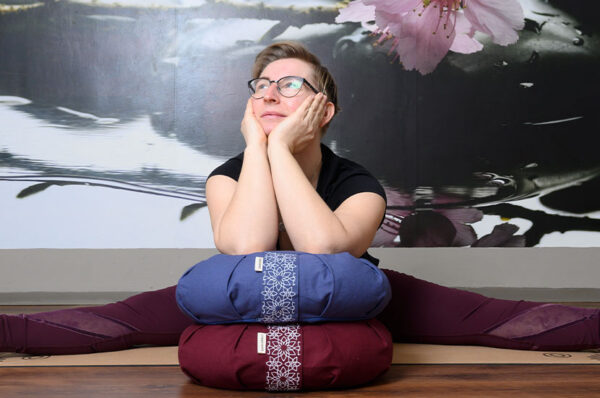
Before attending a first class, it helps to gather a few basic props. A quality yoga mat, a blanket, and a bolster cover the essentials for most beginner Hatha sessions. Our yoga bolster is particularly useful for older beginners, as it supports the body in restorative poses and makes seated postures more comfortable for those with tight hips or lower back stiffness.
Here are a few practical steps to get started confidently:
- Start with two sessions per week to allow the body time to adapt between practices.
- Inform your instructor about any injuries, surgeries, or health conditions before class begins.
- Arrive early to set up props and familiarise yourself with the space without feeling rushed.
- Listen to your body throughout every session and treat mild discomfort as information, not something to push through.
- Be patient with progress as flexibility and balance improvements in Hatha yoga tend to build gradually over weeks and months.
Beginning a Hatha yoga practice later in life is not a compromise. For many older adults, it turns out to be the most sustainable and genuinely enjoyable form of movement they have found, one that supports both the body and the mind for years to come. If you are ready to take the next step, Samarali has everything you need to get started with confidence. From our natural rubber yoga mat and organic cotton yoga blanket to our yoga bolster designed for restorative support, every product is chosen with mindful, sustainable practice in mind. Explore the full yoga collection at Samarali and find the props that will make your practice feel as good as it should. Shop now and start your Hatha journey well equipped.
Frequently Asked Questions
How long does it take to notice results from Hatha yoga as an older adult?
Most older adults begin noticing improvements in flexibility, sleep quality, and stress levels within 4 to 6 weeks of consistent practice, typically with two to three sessions per week. Balance and core strength tend to develop more gradually, often becoming noticeable after 8 to 12 weeks. The key is consistency rather than intensity — even shorter 30-minute sessions practiced regularly will produce more meaningful results than infrequent longer ones.
Can I do Hatha yoga if I have arthritis or osteoporosis?
Yes, Hatha yoga can be highly beneficial for people with arthritis or osteoporosis, but it requires thoughtful modifications and ideally the guidance of an instructor experienced with these conditions. Gentle movement helps lubricate the joints and maintain bone density, which is particularly valuable for both conditions. Always inform your instructor of your diagnosis before class so they can suggest appropriate pose variations, and consult your doctor or physiotherapist beforehand to establish any specific limitations.
Is chair yoga the same as Hatha yoga, and which is better for seniors?
Chair yoga is not the same as Hatha yoga, but it is often based on Hatha principles adapted for people who cannot comfortably get up and down from the floor. Hatha yoga is the broader practice and generally offers a wider range of physical and mental benefits, including floor-based postures and breathwork. For most older adults who can safely transition to and from the floor, beginner Hatha yoga is the better long-term choice, while chair yoga is an excellent starting point or alternative for those with significant mobility limitations.
What should I wear and bring to my first Hatha yoga class as an older adult?
Wear comfortable, stretchy clothing that allows a full range of movement without being too loose, as baggy fabric can get in the way during floor poses. Bring your own non-slip yoga mat if possible, since studio mats are shared and may not provide the grip and cushioning that older joints benefit from. A small blanket or towel and a water bottle are also worth packing for your first session, and arriving a few minutes early gives you time to speak with the instructor about any health concerns before class begins.
What is the difference between Hatha yoga and restorative yoga, and which is right for me?
Hatha yoga involves a sequence of active postures held with conscious breath, building strength, flexibility, and balance over time. Restorative yoga, by contrast, uses props to fully support the body in passive poses held for several minutes, focusing entirely on deep relaxation and nervous system recovery. Many older adults benefit from incorporating both into their routine — Hatha for functional fitness and restorative yoga on days when the body needs rest or recovery, particularly after illness, fatigue, or periods of high stress.
Are online Hatha yoga classes effective, or is in-person instruction better for beginners?
In-person instruction is generally preferable for older adult beginners because a qualified instructor can observe your alignment in real time and offer hands-on adjustments or prop suggestions tailored to your body. That said, high-quality online classes designed specifically for seniors can be a practical and effective alternative, especially for those with limited access to local studios or mobility challenges that make travel difficult. If you start online, look for classes taught by instructors with specific training in senior or therapeutic yoga, and consider booking at least a few in-person sessions early on to establish safe foundational habits.
How do I know if I am pushing too hard during a Hatha yoga session?
Sharp, stabbing, or joint pain is always a signal to stop immediately and is distinctly different from the mild muscular sensation of a gentle stretch, which is normal and safe. Other signs that you are working beyond your current capacity include holding your breath, feeling dizzy or lightheaded, or experiencing tension in the face and neck. A useful rule of thumb is that you should always be able to breathe slowly and comfortably throughout a pose — if you cannot, ease out of it slightly or ask your instructor for a modification.