


Setting up a home yoga practice requires thoughtful selection of yoga props that support your body and enhance your experience. The use of props in yoga was systematized by B.K.S. Iyengar, one of the most influential yoga teachers of the 20th century, who developed an entire methodology around using blocks, straps, bolsters, and blankets to make poses anatomically correct and accessible to every body — not as a shortcut, but as a path to deeper precision. The most important yoga accessories for beginners include a quality yoga mat, yoga blocks, and a yoga strap. These three items form the foundation of effective home practice, helping you maintain proper alignment and making poses more accessible regardless of your experience level.
What yoga props do you actually need for home practice?
The essential yoga props for home practice fall into two categories: must-have items and nice-to-have additions. Getting clear on which is which helps you build your home setup gradually and intentionally, without overspending before you know what your practice truly needs.
Essential props:
- Yoga mat (4–6mm thick) – Provides grip, cushioning, and defines your practice space while preventing slips during dynamic sequences
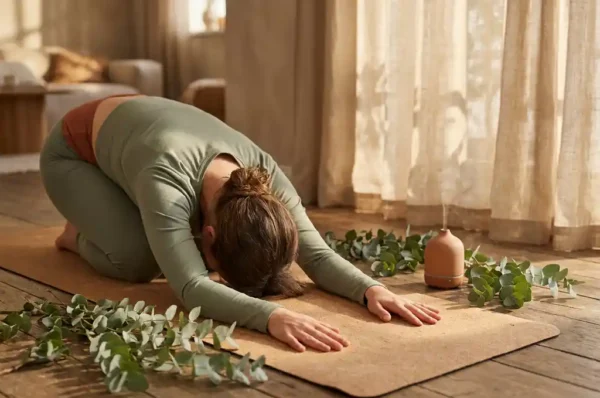
- Two yoga blocks – Bring the floor closer when flexibility is limited and offer symmetrical support in poses like child’s pose or seated meditation
- Yoga strap – Extends your reach in binding poses and helps maintain proper alignment in forward folds and shoulder stretches
Nice-to-have additions:
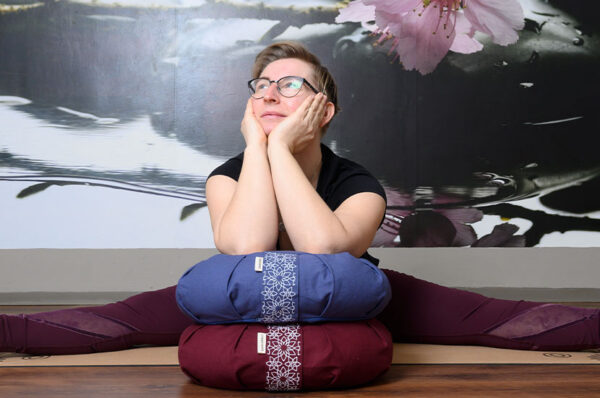
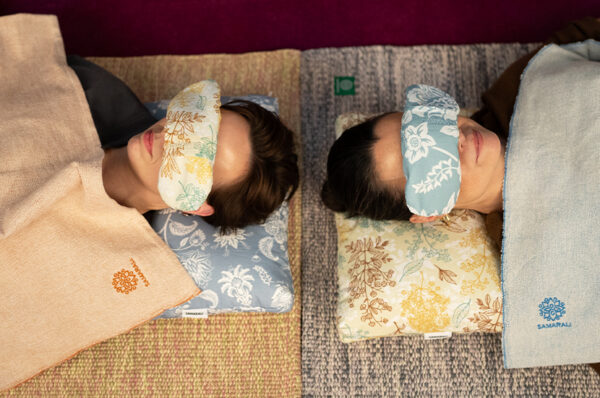
- Meditation cushion – Elevates your hips for comfortable seated practice and longer meditation sessions
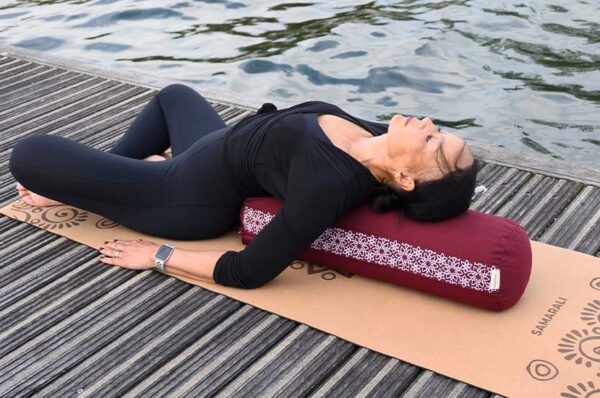
- Bolster – Provides deep support for restorative poses and helps you relax completely during longer holds
- Yoga blanket – Offers warmth during relaxation and can be folded for additional cushioning when needed
Yoga mat: your foundation for home practice
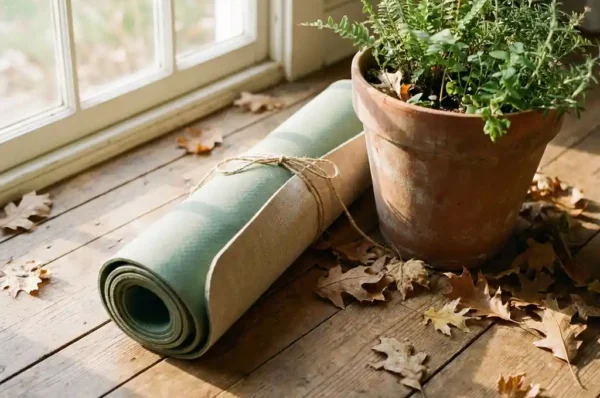
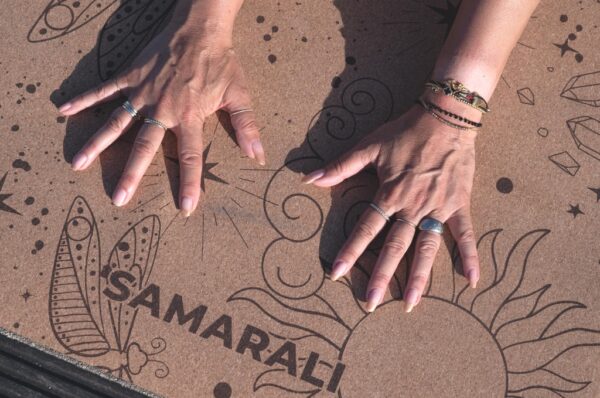
A yoga mat is the single non-negotiable prop for home practice — it defines your space, protects your joints, and gives you the grip you need to hold poses safely. For general practice, a thickness of 4–6mm strikes the right balance between cushioning and stability. If you have sensitive knees or wrists, look for a mat at 6mm or above to reduce pressure on bony contact points.
When buying a yoga mat, pay attention to the grip surface and material, not just thickness. Natural rubber mats tend to outperform PVC alternatives in both grip and durability — in poses like Downward Dog, where your hands and feet bear significant weight, a non-slip surface keeps your alignment intact as you build strength. Natural rubber also aligns with a sustainable practice from the ground up. A quality mat will last years of consistent daily use, making it the most important investment in your home yoga setup.
Yoga blocks: bringing the floor to you
Yoga blocks are arguably the most versatile prop in a home practice, and having two is strongly recommended so you can support both sides of your body simultaneously. In Triangle Pose, placing a block under your bottom hand allows you to keep your spine long and your chest open rather than rounding toward the floor. In a Seated Forward Fold, sitting on a block tilts your pelvis forward and releases tension in the lower back, making the pose far more effective for stretching the hamstrings.
When choosing between cork and foam, the material makes a meaningful difference. Cork blocks are firmer and more durable — they provide stable support in weight-bearing positions where foam would compress, making them the better choice for standing poses and balance work. Foam blocks are lighter and gentler on bony contact points, which can be more comfortable for seated or restorative practice. For most beginners, a pair of cork blocks offers the best long-term value and versatility.
Yoga strap: extending your reach safely
A yoga strap bridges the gap between where your body is today and where a pose asks it to go — without forcing range of motion or compromising alignment. An 8-foot adjustable strap suits most body types and gives you enough length for both lower-body and upper-body work. In Reclining Hand-to-Big-Toe Pose, looping a strap around the ball of your foot lets you straighten the leg and feel the full hamstring stretch, rather than bending the knee to compensate. For shoulder stretches, holding the strap behind your back with both hands helps you open the chest and work toward deeper binding poses progressively.
Yoga straps are not just for beginners — they are a tool for precision at every level of practice. Look for a smooth, non-abrasive material like organic cotton, which allows long holds without friction against the skin at the wrist or ankle. A metal D-ring or cinch buckle gives you reliable, adjustable tension so you can fine-tune the length for each pose.
How do yoga props help improve your practice at home?
Yoga props transform your home practice by addressing common challenges and enhancing the benefits of each pose. Rooted in the Iyengar tradition, prop use is not about making practice easier — it is about making it more precise, more sustainable, and more accessible to every body type and experience level.
- Support proper alignment – Blocks under your hands in forward folds prevent spine rounding, while straps help you sit tall without back strain
- Prevent injury – Allow you to work within your current range of motion rather than forcing positions, building flexibility safely over time
- Increase accessibility – Make poses available to all body types, so tight hamstrings don’t prevent forward folds and limited mobility doesn’t stop binding attempts
- Enable deeper relaxation – Provide comfort during longer holds in restorative poses, allowing your nervous system to shift into rest mode
- Enhance pose effectiveness – A block between thighs in bridge pose activates the inner legs, while straps encourage proper hip hinging in seated folds
Props fundamentally shift your practice from struggling with physical limitations to focusing on breath and mindfulness. A natural rubber mat’s superior grip lets you hold alignment-demanding poses like Warrior III without slipping. A cork block’s density provides stable support in weight-bearing positions where foam would compress. A smooth organic cotton strap allows long holds in hamstring stretches without cutting into the skin. Together, this support system helps you stay consistent — making each session more comfortable and accessible, regardless of how your body feels on any given day.
What should you look for when choosing sustainable yoga props?
Selecting eco-friendly yoga props means looking beyond surface-level claims. Here is what actually matters:
- Natural materials – Choose natural rubber mats, cork blocks, and organic cotton straps that decompose naturally and avoid synthetic chemicals
- Ethical manufacturing – Look for water-based dyes, chemical-free treatments, fair labour practices, and transparent supply chain information
- Durability – High-quality natural materials improve with use and last for years, reducing waste and providing better long-term value
- Minimal packaging – Select brands using recyclable materials with minimal plastic and clear care instructions to extend prop lifespan
- Verified certifications – Seek specific claims backed by recognised organisations rather than vague “eco-friendly” marketing language
- End-of-life consideration – Consider whether props can be recycled or composted, and whether they require chemical-laden care products
Choosing sustainable yoga props creates alignment between your environmental values and your personal practice — while often delivering superior performance and longevity. Quality natural materials offer better grip, comfort, and durability, and they support companies that prioritise both planetary health and personal wellness. This conscious approach to prop selection deepens the mindfulness that yoga cultivates, extending the positive impact of your practice into your everyday choices.
Frequently asked questions about yoga props for home practice
If you are new to setting up a home yoga practice, it is natural to have questions about what you actually need, how much to spend, and whether props are right for your level. Here are straightforward answers to the questions we hear most often.
Do I need yoga props as a beginner?
Yes — at minimum, a mat and one or two blocks make the biggest practical difference for beginners. Props help you maintain correct alignment from the very first session, which reduces the risk of injury and builds good movement habits early. Without studio guidance to correct your form in real time, having a block or strap to support your body is even more valuable at home than it might be in a class setting. Starting with essential yoga accessories does not slow your progress — it accelerates it by letting you focus on breath and awareness rather than compensating for physical limitations.
How many yoga blocks do I need?
Two blocks are recommended for most practitioners. Having a matching pair allows you to support both sides of your body symmetrically — for example, placing one block under each hand in a wide-legged forward fold, or using two blocks at different heights in a supported backbend. Starting with one block is workable, but you will quickly find that many poses benefit from bilateral support, making a second block a worthwhile early addition to your home yoga setup.
What size yoga strap should I get?
An 8-foot strap is the most versatile length for the majority of body types and works well for both lower-body stretches and shoulder openers. If you are taller than average or plan to use your strap for full-body poses, the extra length gives you room to adjust without running out of strap. Look for an adjustable buckle — either a D-ring or cinch style — so you can fine-tune the length for each pose rather than being locked into a fixed position.
Can I use household items instead of yoga props?
In a pinch, a thick hardcover book can substitute for a block and a belt or necktie can stand in for a strap. These alternatives are useful for trying out a pose before committing to a purchase, but they have real limitations. Purpose-built props offer better grip, consistent dimensions, and the durability to withstand daily use safely — a stack of books can shift mid-pose, and a belt buckle can dig into skin during held stretches. If you practice regularly, investing in proper yoga props quickly pays off in both safety and comfort.
Are yoga props only for beginners?
Not at all — props are used by advanced practitioners and are foundational to Iyengar Yoga, one of the most technically rigorous yoga traditions in the world. At advanced levels, props deepen poses and refine alignment in ways that simply are not possible without them. Many experienced teachers use blocks, straps, and bolsters daily to explore the full expression of a pose rather than to accommodate restrictions. Understanding how to use props well is a mark of a thoughtful, informed practice.
What is the first yoga prop I should buy?
A quality yoga mat is the first and most essential purchase — without it, every other prop has less value. Once you have a mat, two cork blocks are the next most impactful addition, as they are the most frequently used props across virtually every style of yoga. A strap rounds out the core three and is particularly valuable if you are working on hamstring flexibility or shoulder mobility. Starting with this trio gives you a complete, functional home yoga setup that supports safe and effective practice from day one.
Browse our selection of thoughtfully crafted sustainable yoga essentials — designed for mindful movement and made with respect for the planet.