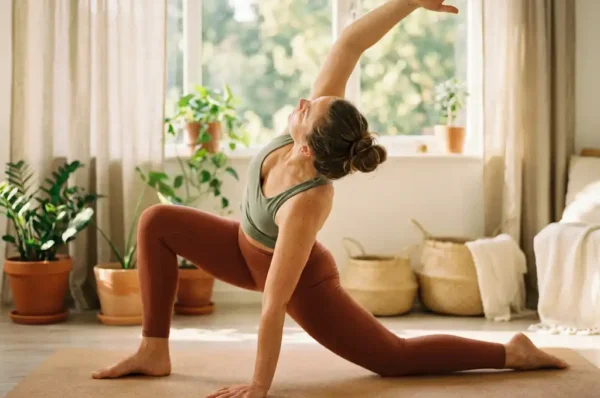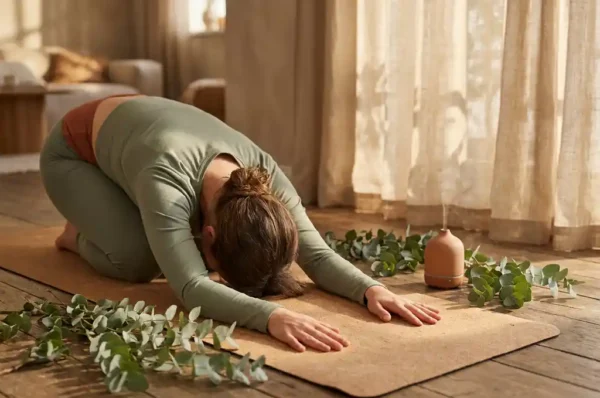



Building a consistent yoga practice without a teacher requires establishing your own routine, creating structure at home, and developing self-awareness for safe progression. Success comes from realistic expectations about frequency and duration rather than a perfect daily practice. You can maintain motivation and proper form through online resources, a dedicated practice space, and listening to your body’s feedback signals.
What does it actually mean to have a consistent yoga practice?
A consistent yoga practice means showing up regularly for yourself, whether that’s three times a week or daily sessions. Consistency focuses on regularity rather than perfection – missing a day doesn’t break your practice if you return to your mat with intention.
The key elements of consistent practice include:
- Flexible scheduling – Your practice might be 15 minutes on busy weekdays and longer sessions on weekends, adapting to your life’s rhythm
- Gradual building – Start with what feels manageable, perhaps 20 minutes three times a week, then expand naturally over time
- Quality over quantity – A focused 10-minute practice often provides more benefit than a distracted 60-minute session
- Sustainable expectations – Some days focus on gentle stretches or breathing exercises rather than demanding physical poses
This approach creates a practice that feels like a supportive ritual rather than another obligation. True consistency honors your commitment to yourself while adapting to life’s changing demands, building a foundation that can weather busy periods and maintain your connection to yoga’s benefits.
How do you create structure when practicing yoga alone at home?
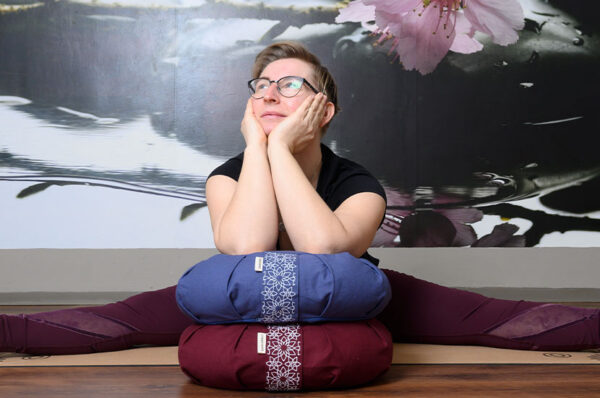
Creating structure starts with designating a specific space and time for practice. Set up a dedicated area with your yoga mats, props, and any sustainable yoga equipment you need, making it easy to begin without preparation barriers.
Essential structural elements include:
- Consistent timing – Choose specific practice times that work with your schedule, whether energizing morning sessions or unwinding evening flows
- Pre-planned sequences – Create three to four different routines for varying time commitments and energy levels, including gentle sequences for tired days
- Strategic online resources – Follow structured programs or specific teachers whose style resonates with you for guidance while maintaining independence
- Practice journaling – Track sequences you enjoy and note how different poses affect your body to build personal awareness
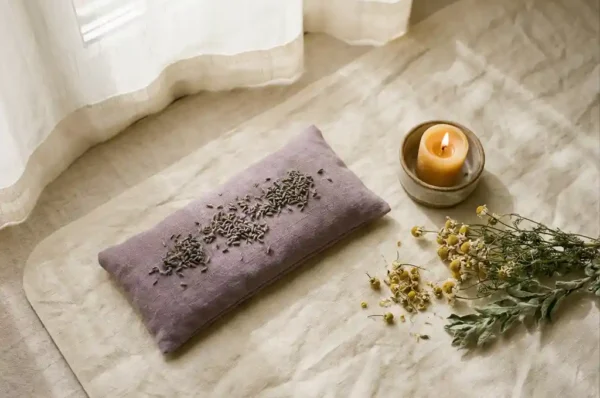
- Ritual elements – Light a candle, play specific music, or begin with the same breathing exercise to signal practice time
These structural elements work together to create a container for your practice that feels both organized and personally meaningful. The combination of physical setup, planned content, and ritual cues helps you transition smoothly from daily activities to focused movement, establishing the foundation for addressing the unique challenges of solo practice.
What are the biggest challenges of practicing yoga without a teacher and how do you overcome them?
The biggest challenges include maintaining motivation, ensuring proper alignment, and progressing safely without guidance. Motivation often drops when you’re accountable only to yourself, especially during busy periods or when enthusiasm wanes.
Common challenges and their solutions include:
- Motivation lapses – Connect with online yoga communities, find virtual practice buddies, and set small achievable goals rather than ambitious targets
- Alignment concerns – Practice in front of a mirror initially, focus on fundamental poses until natural, and take photos or videos for objective review
- Progression uncertainty – Research pose variations systematically and introduce one new element each week, whether a challenging pose or different breathing technique
- Practice isolation – Join occasional online classes, attend workshops when possible, or connect through social media groups focused on home practice
- Safety doubts – Learn to distinguish between productive challenge and potential harm through body awareness and breathing monitoring
Overcoming these challenges requires both practical strategies and mindset shifts. Rather than viewing solo practice as lacking compared to studio classes, recognize it as an opportunity to develop deeper self-awareness and personal responsibility for your yoga journey, skills that enhance any future teacher-led experiences.
How do you know if you’re progressing safely in your solo yoga practice?
Safe progression means listening to your body’s signals and distinguishing between productive challenge and potential harm. Healthy sensation feels like gentle stretching or muscle engagement, while sharp pain, joint discomfort, or tingling indicates you should back off immediately.
Key safety indicators include:
- Breathing patterns – Smooth, steady breathing indicates appropriate limits, while held breath or labored breathing suggests you’re pushing too hard
- Gradual improvement tracking – Notice changes in flexibility and strength over weeks and months rather than expecting daily advancement
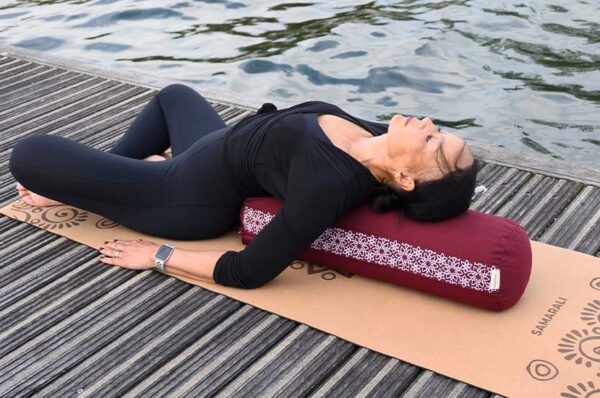
- Intelligent modifications – Use props liberally and adapt poses rather than forcing your body into positions beyond current capacity
- Body sensation awareness – Distinguish between productive muscle engagement and concerning joint or nerve discomfort
- Progress documentation – Take monthly photos in key poses to document subtle changes that daily practice makes difficult to perceive
Safe progression also means knowing when to seek guidance. If you experience persistent discomfort, want to learn advanced poses, or feel stuck in your development, occasional private sessions or workshops provide valuable feedback that supports your independent practice journey.
Building a consistent solo yoga practice takes patience and self-compassion. Start with realistic expectations, create supportive structure, and trust your body’s wisdom. Remember that every practitioner’s journey looks different – focus on your own progress rather than comparing yourself to others. Consider investing in complete yoga sets to support your independent practice journey with thoughtfully designed sustainable equipment made from organic cotton, packaged without plastic to align with your mindful living values.
Browse our selection of thoughtfully crafted collection of sustainable yoga essentials—designed for mindful movement and made with respect for the planet.