


The best meditation position for beginners with back pain is chair meditation, as it provides full spinal support without requiring flexibility or muscular effort. From there, five positions cover the full range of beginner needs:
- Chair meditation (most accessible)
- Wall-supported sitting
- Cushion-assisted floor sitting
- Supported kneeling
- Lying down in Savasana
The right position removes the physical barrier entirely so your attention can stay where meditation actually happens: inward.
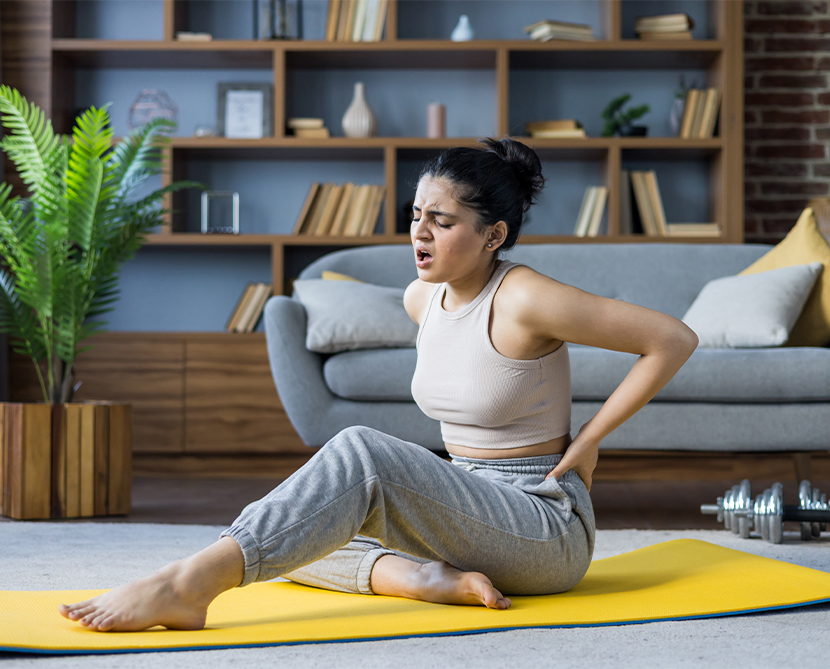
Why Your Meditation Position Matters for Back Pain
Your spine is not designed to be perfectly straight — it has three natural curves: the inward curve of the neck (cervical), the outward curve of the mid-back (thoracic), and the inward curve of the lower back (lumbar). A neutral spine simply means these curves are preserved in their natural relationship, neither flattened nor exaggerated. Correct spine alignment during meditation is not about sitting rigidly upright; it is about finding a position in which these curves are passively supported rather than actively held.
When spinal neutrality is lost — most commonly because the pelvis tilts backward during cross-legged sitting — the lumbar curve flattens or reverses entirely. This places sustained compressive load on the spinal discs and stretches the surrounding ligaments beyond their resting length, which is the direct source of that familiar dull ache that builds within minutes of sitting. The longer you hold a misaligned position, the more the surrounding muscles fatigue trying to compensate, compounding the discomfort.
The good news is that the right meditation posture for back pain does not require strength, flexibility, or years of practice to achieve. With the correct position and a well-chosen prop, your body can rest in spinal neutrality without any muscular effort. That is precisely why the positions and setups described below work: they restore neutral alignment passively, so your body stops fighting itself and your mind can actually settle.
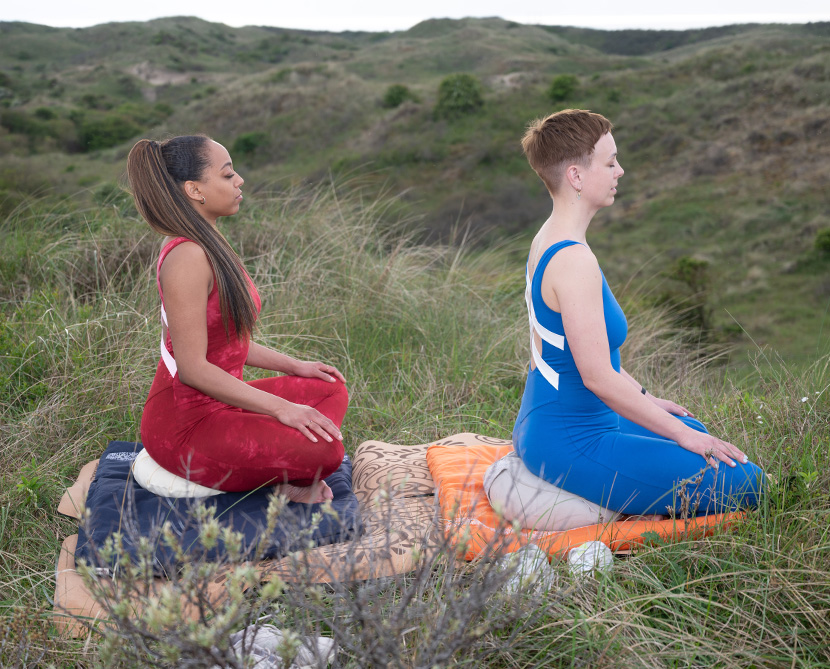
The 5 Best Meditation Positions for Beginners With Back Pain
Each of the following positions is chosen specifically because it reduces spinal load, supports natural lumbar alignment, and requires minimal flexibility from beginners. Whether you are dealing with lower back tension, hip tightness, or acute pain, at least one of these options will allow you to meditate comfortably from day one:
- Chair meditation – Sit with your feet flat on the floor, back straight against the chair, and hands resting comfortably on your thighs. This position maintains your spine’s natural curve while eliminating the strain of unsupported sitting.
- Wall-supported sitting – Sit with your back against a wall, legs extended or crossed comfortably in front of you. The wall acts as a natural backrest, preventing slouching while keeping your spine properly aligned throughout your practice.
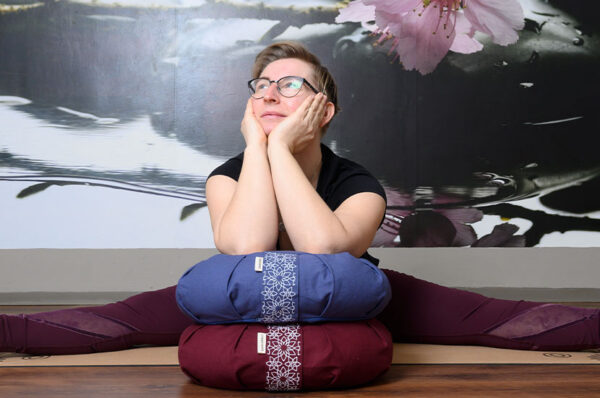
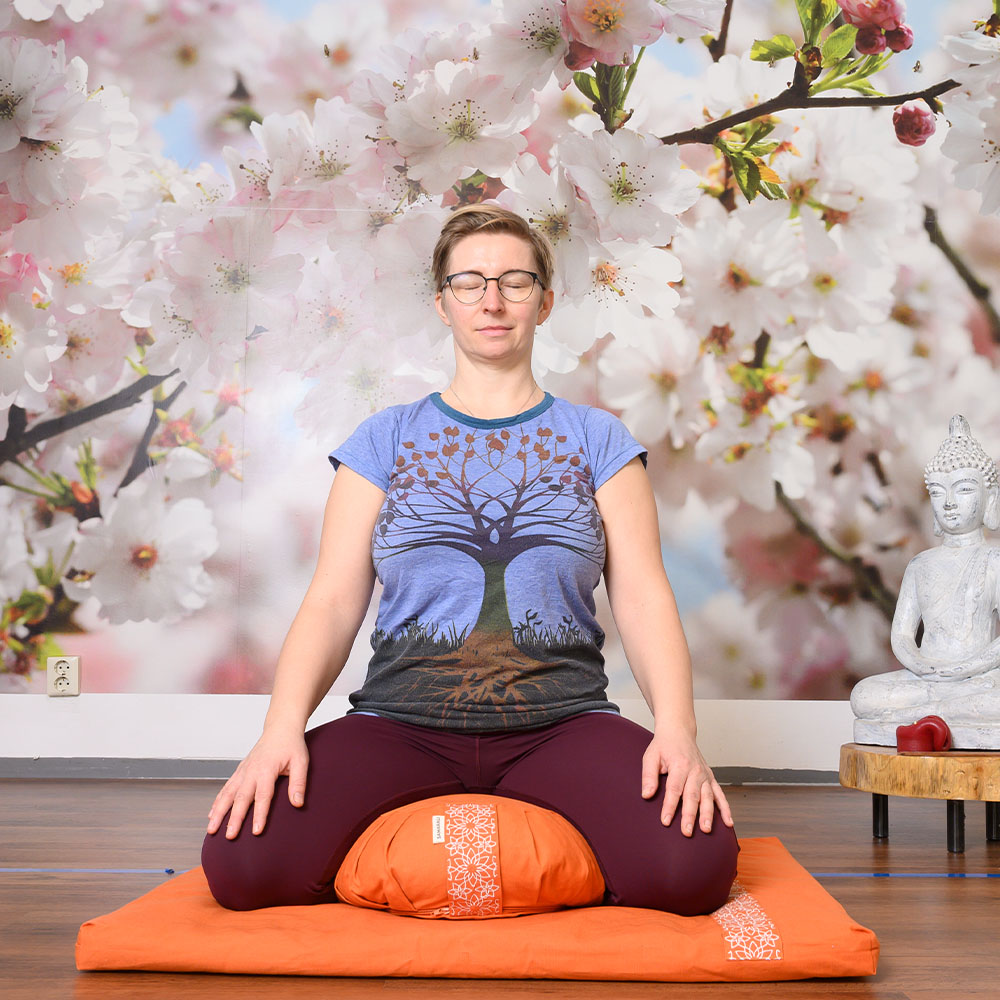
- Cushion-assisted floor sitting – Place a firm meditation cushion or folded blanket under your sitting bones to tilt your pelvis slightly forward. This elevation helps maintain your spine’s natural curve and reduces pressure on your lower back muscles.
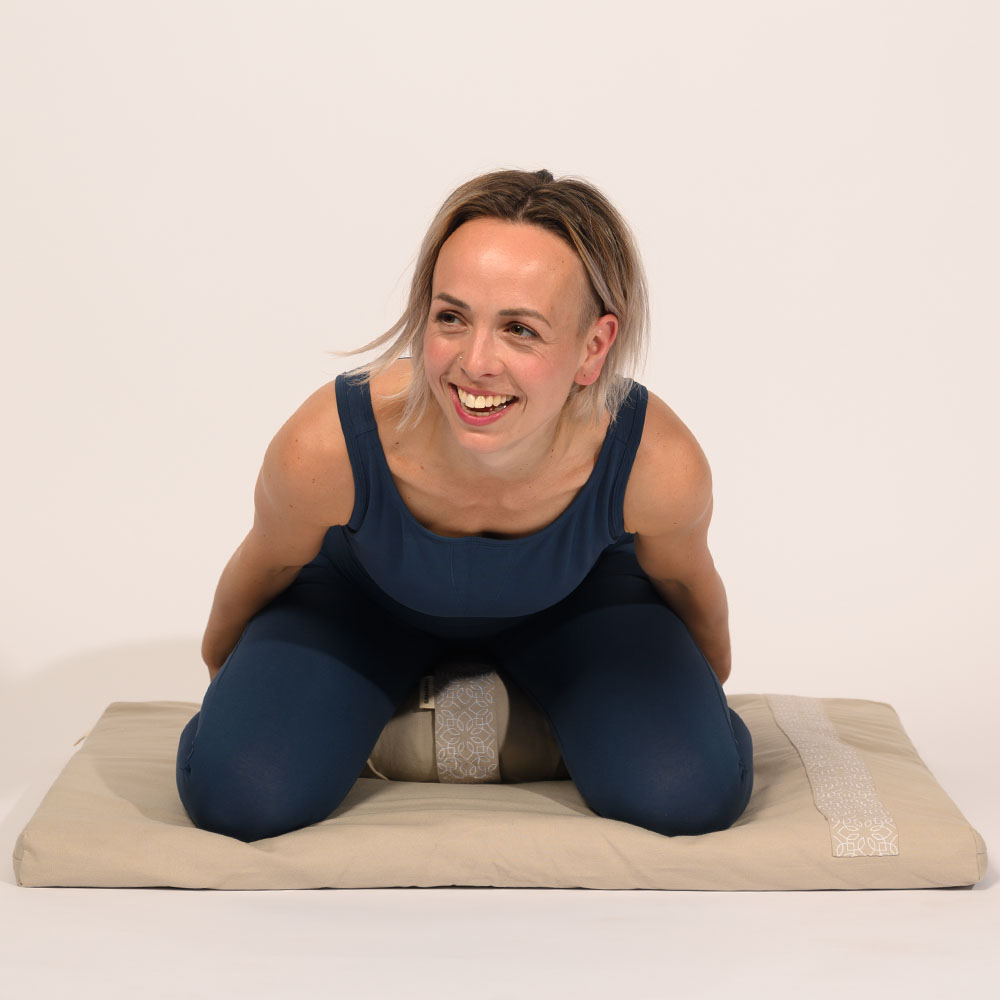
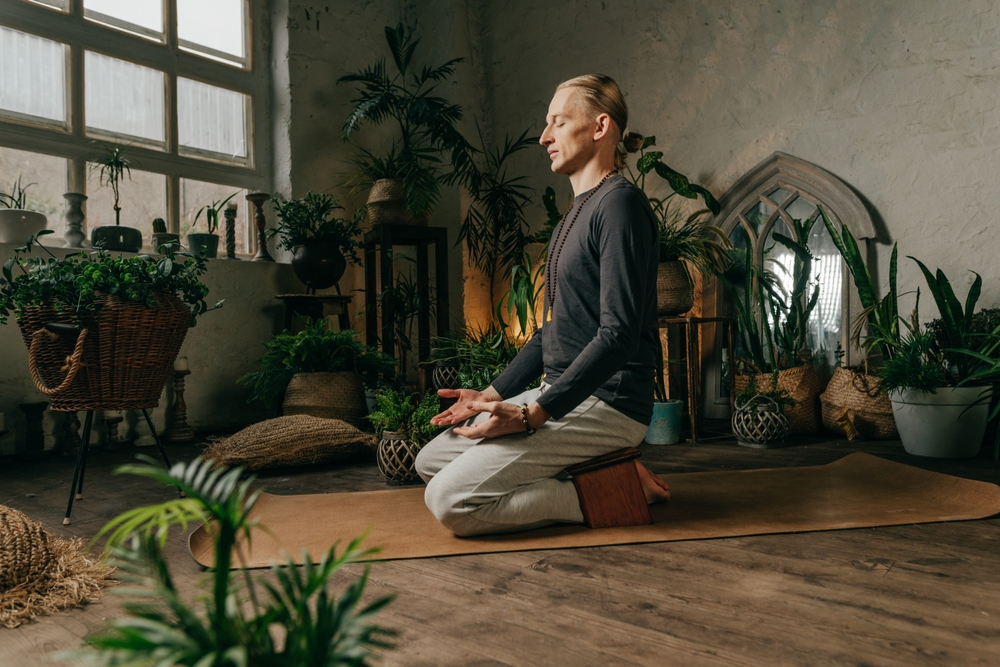
- Supported kneeling position – Use a meditation bench or cushion between your calves and thighs. This position naturally aligns your spine while taking pressure off your back muscles, making it particularly comfortable for longer sessions.
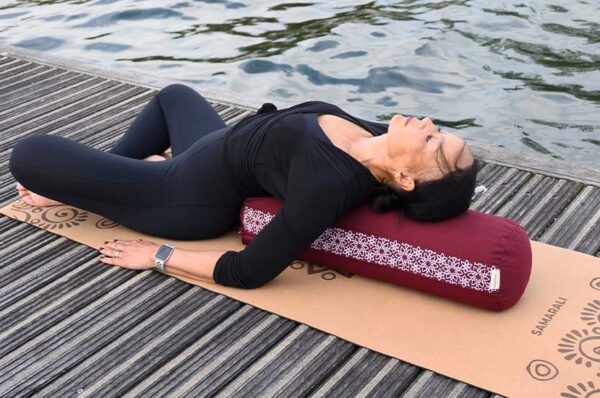
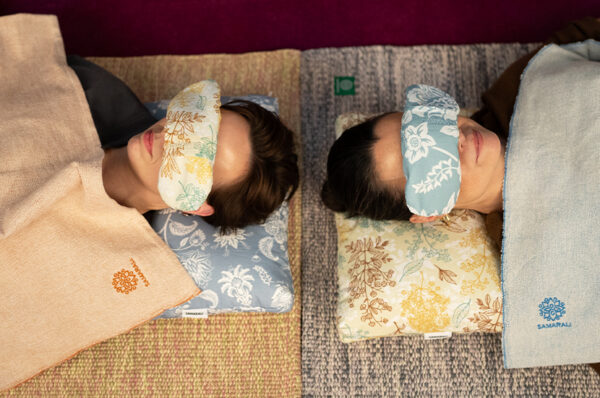
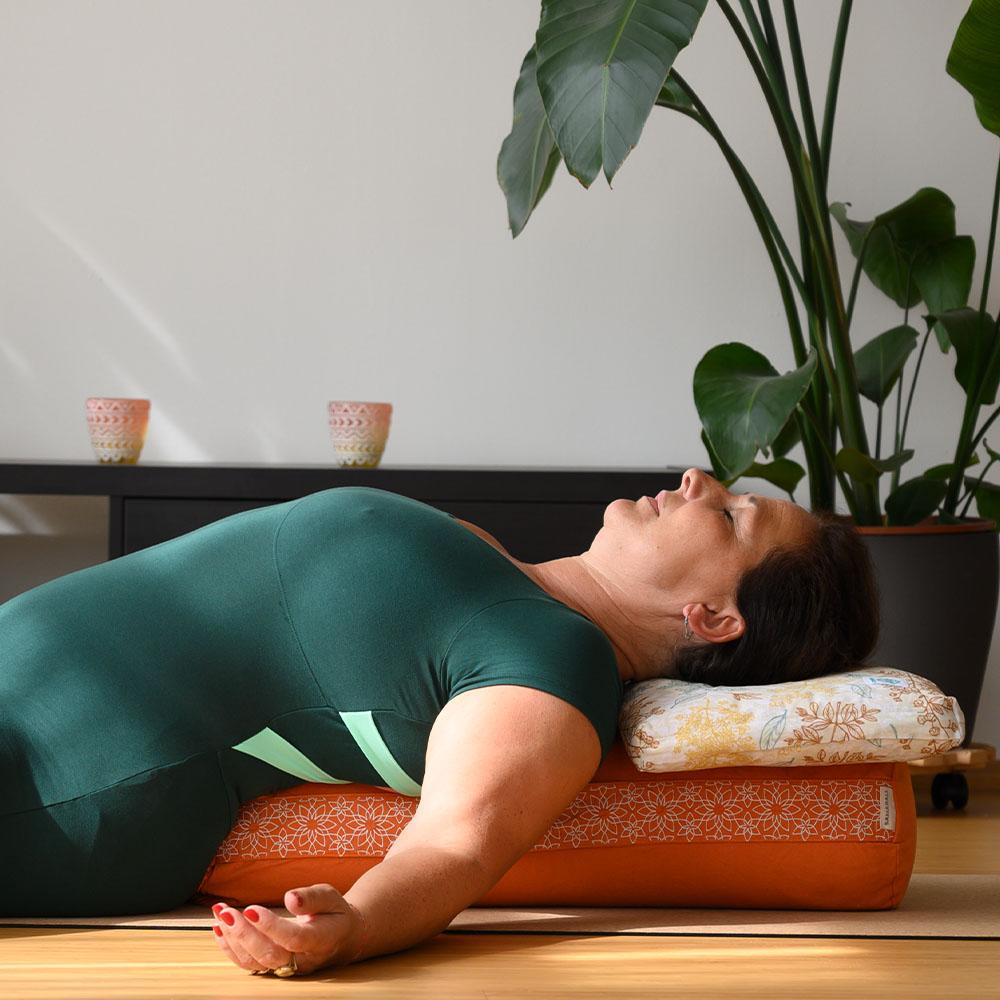
- Lying down in Savasana – For acute or severe back pain, lying flat on your back with a pillow under your knees and a rolled blanket under your lower back eliminates spinal compression entirely, making it the most accessible option when any form of sitting is uncomfortable.
Seated Position Variations by Hip Flexibility
If you choose cushion-assisted floor sitting, the specific cross-legged variation you use matters. Not all seated positions are equally accessible, and choosing one beyond your current hip flexibility is a common cause of lower back strain in beginners. Here is a simple spectrum from most to least accessible:
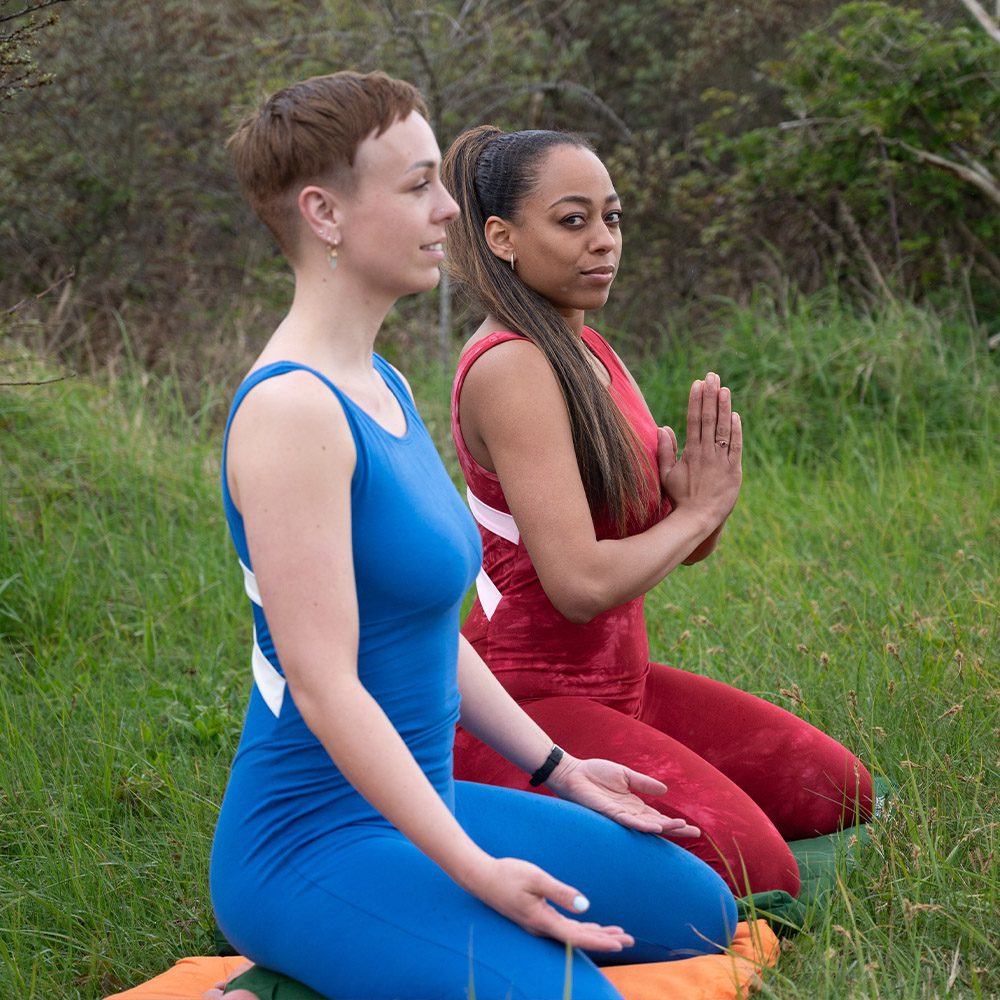
- Burmese position – Both feet rest on the floor in front of you rather than stacked on the legs. This is the most accessible and back-friendly option for beginners with tight hips, as it places the least rotational demand on the hip joints.
- Quarter lotus – One foot rests on the opposite calf. Suitable once basic hip flexibility has developed through regular practice.
- Half lotus – One foot rests on the opposite thigh. Only recommended once hip flexibility is well established, as forcing this position strains the lower back and knees.
- Full lotus – Both feet rest on opposite thighs. Not recommended for beginners with back pain.
For beginners with back pain, the Burmese position with a firm cushion under the sitting bones is almost always the most comfortable and sustainable starting point.
Supported Kneeling with a Meditation Bench
The supported kneeling position deserves more attention than it typically receives. A meditation bench — also called a seiza bench — is a low, angled wooden bench that you kneel beneath, resting your buttocks on the seat while your shins lie flat on the floor. Because the bench is angled slightly forward, it places your pelvis in a gently forward-tilted position that naturally encourages the lumbar curve, reducing disc pressure compared to sitting flat on your heels. The result is an upright, well-aligned spine that requires very little muscular effort to maintain.
- Who benefits most – People with lower back pain who find cross-legged sitting uncomfortable, and those who experience hip or knee discomfort in chair sitting.
- Shin comfort – Place a folded blanket under your shins to cushion the knee area, especially on hard floors.
- Duration – Many practitioners find this position comfortable for longer sessions than floor sitting, precisely because the spinal alignment is so naturally supported.
- Accessibility – No flexibility is required beyond a basic ability to kneel, making it genuinely beginner-friendly.
Alternative Positions for Severe or Acute Back Pain
When even short periods of sitting are painful, standing and walking meditation offer a way into practice that eliminates lumbar disc compression from prolonged seated postures entirely. These are not lesser alternatives — they are fully valid meditation forms used across many contemplative traditions.
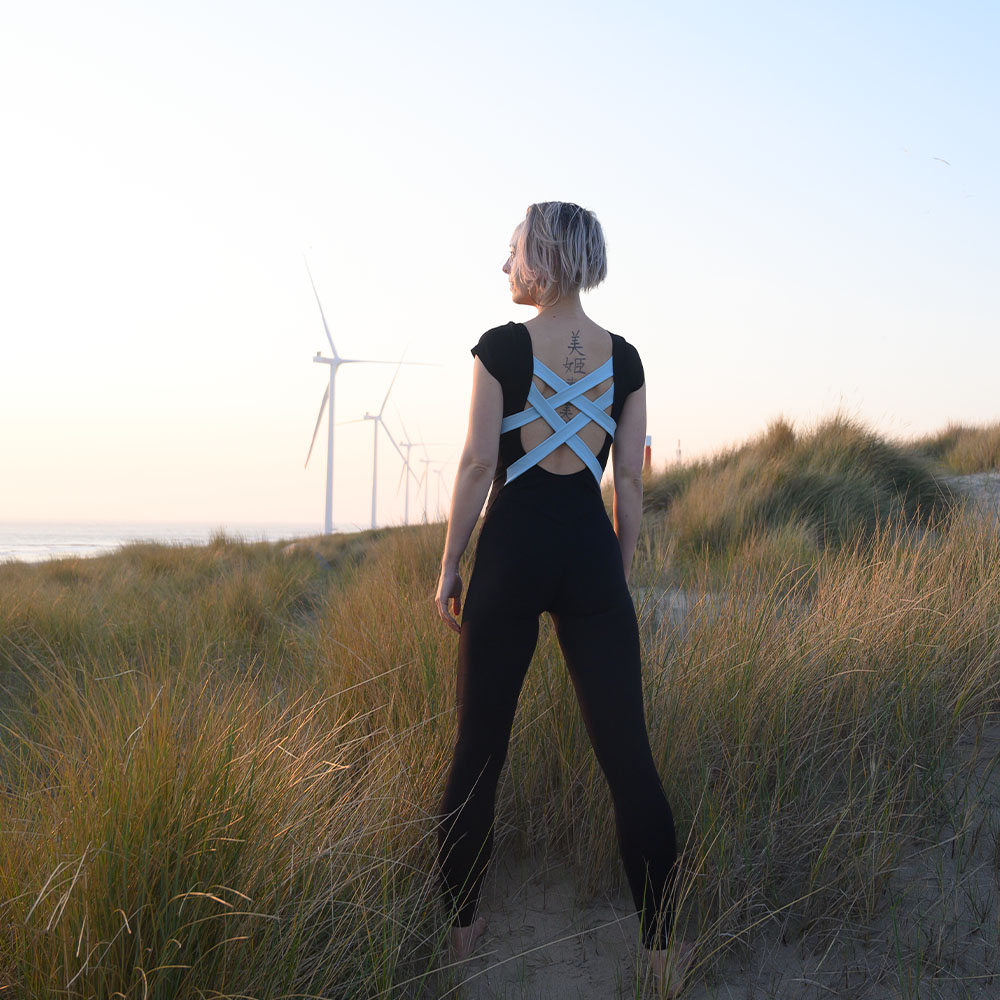
- Standing meditation – Stand with feet hip-width apart, knees slightly soft rather than locked, and arms hanging naturally at your sides or hands clasped gently in front. Distribute your weight evenly between both feet and focus on your breath or on a fixed point ahead of you. This position is ideal for users who experience pain within minutes of sitting. Suggested duration: 5–10 minutes.
- Walking meditation – Walk slowly and deliberately in a small loop or along a straight path, synchronizing each step with the breath. Keep your gaze soft and angled downward at roughly 45 degrees. The gentle movement warms the back muscles while maintaining meditative focus, making this particularly beneficial for users with stiffness or chronic muscle tension. Suggested duration: 10–15 minutes.
Choosing the Right Position for Your Type of Back Pain
Not all back pain is the same, and the position that works best for one person may be the wrong choice for another. The brief guide below maps each common pain type to the most suitable starting position. These are general comfort-based recommendations, not medical advice — if you have a diagnosed condition, consult a healthcare professional before beginning a new practice.
- Lower back muscle tension – Chair meditation or wall-supported sitting. Full back contact with a firm surface reduces the muscular holding effort that drives tension-based pain.
- Acute or severe back pain – Savasana (lying down). Eliminating spinal compression entirely is the most direct way to make practice accessible when pain is at its worst.
- Sciatica or disc-related pain – Cushion-elevated floor sitting or chair meditation. Elevating the hips above the knees reduces nerve compression at the lumbar level, which is the key mechanical factor in sciatic discomfort.
- Postural kyphosis or rounded upper back – Wall-supported sitting. The wall provides continuous tactile feedback that encourages spinal extension, gently counteracting the forward rounding pattern.
These recommendations are starting points rather than fixed rules. Experiment across a few short sessions before settling on one position, and stay open to revisiting your choice as your body and practice evolve.

How to Set Up Meditation Props for Back Pain Relief
The right prop setup can be the difference between a meditation session you endure and one you actually look forward to. Here is how to arrange cushions, blankets, and other accessories to actively support your back during practice:
- Strategic cushion placement – Place a firm cushion under your sitting bones to elevate your hips above your knees. This simple adjustment reduces strain on your lower back and helps maintain proper posture naturally.
- Lower back support – Use a rolled towel or small cushion behind your lower back when sitting against a wall or in a chair. Position it at the natural curve of your spine, just above your belt line to prevent rounding.
- Foundation support – Choose sustainable yoga mats with adequate thickness to cushion your sitting bones while providing stable support. The extra padding reduces pressure points that can cause discomfort and distraction.
- Multi-purpose blankets – Fold one to create additional cushioning, wrap another around your shoulders for warmth, or place one under your knees when sitting cross-legged for extra comfort.
- Pre-session adjustments – Test different cushion heights and support positions before beginning. Small adjustments during your session are perfectly acceptable when comfort is needed.
A well-arranged support setup does more than reduce discomfort: it signals to your nervous system that it is safe to settle. Beginners with back pain often abandon meditation because they assume the discomfort is unavoidable, when in most cases the issue is simply an unsupported position. Investing in one or two quality props, such as a firm meditation cushion or a folded blanket for lumbar support, often resolves the problem entirely. Reassess your setup every few weeks, as your body’s needs will shift as your practice and flexibility develop.
How to Meditate Lying Down: Savasana Position for Acute Back Pain
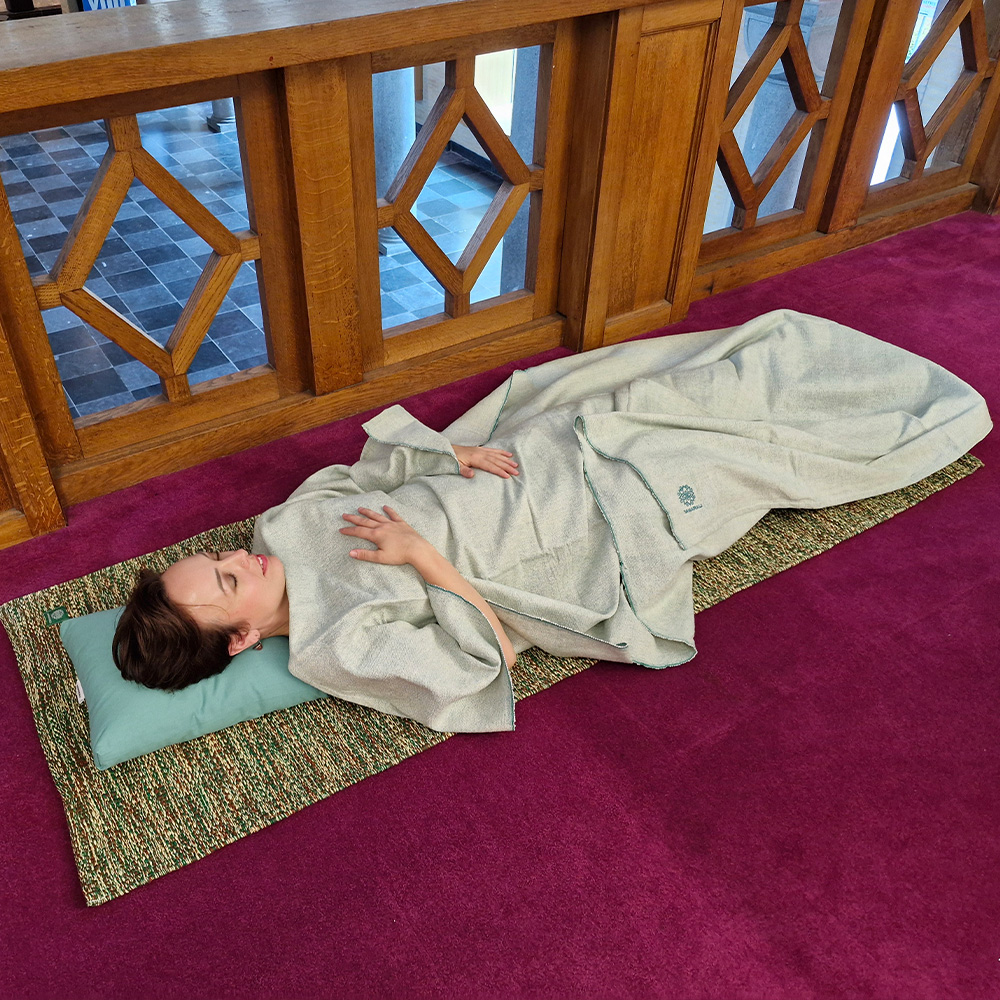
Savasana is a fully valid meditation position and often the most appropriate starting point for anyone experiencing acute or severe back pain. Lying flat removes all compressive load from the spine, allowing the back muscles to release completely rather than working to hold you upright. The main trade-off is an increased tendency toward drowsiness, so if alertness is a concern, keep sessions to 10–15 minutes and consider meditating earlier in the day rather than before sleep.
Follow these steps to set up the position correctly:
- Lie flat on a yoga mat or other firm, padded surface. A bed is generally too soft to provide neutral spinal support.
- Place a pillow or folded blanket under your knees to release tension in the lumbar spine. This is the single most important adjustment for lower back comfort in this position.
- Optionally, place a thin rolled blanket under the natural curve of your lower back for additional support if the lumbar area feels unsupported.
- Rest your arms slightly away from your body with palms facing upward, allowing the shoulders to relax fully back and down.
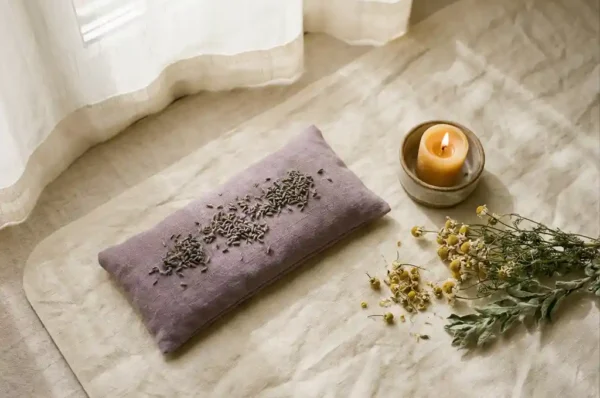
- Use an eye pillow to reduce visual distraction and encourage deeper relaxation.
If you find yourself falling asleep consistently, try shortening sessions to 5–10 minutes, focusing on a specific anchor such as the breath or body sensations, or transitioning to a seated position once your pain allows. Savasana meditation is a bridge, not a limitation — most practitioners find that as acute pain subsides, they naturally become comfortable moving into seated positions over time.
Pre-Meditation Warm-Up Routine to Prevent Back Pain
This routine takes under five minutes and significantly reduces the likelihood of discomfort developing during your session. Performing it before sitting — even in a fully supported position — prepares the muscles and joints that bear the most load during meditation, making the transition into stillness noticeably smoother.
- Seated cat-cow – Sit upright in a chair or on your cushion, place your hands on your knees, and alternate between arching your lower back forward on the inhale and rounding it on the exhale. Duration: 60 seconds. Loosens the lumbar and thoracic spine and restores fluid movement before stillness.
- Seated forward fold – From a seated position, hinge gently at the hips and reach your hands toward your feet or the floor, holding the stretch without forcing it. Duration: 30 seconds. Releases hamstring and lower back tension that would otherwise pull the pelvis into a backward tilt during sitting.
- Gentle neck rolls – Slowly drop your right ear toward your right shoulder, roll your chin gently toward your chest, and continue to the left side. Avoid rolling the head backward. Duration: 30 seconds. Releases cervical tension that can create compensatory tightness across the upper back and shoulders.
- Hip circles while seated – Sit on your cushion or chair and make slow, controlled circles with your hips, as if tracing a large circle with your sitting bones. Duration: 30 seconds each direction. Mobilizes the hip joints to make cross-legged or kneeling positions more comfortable from the outset.
- Shoulder rolls – Roll both shoulders slowly backward in large circles, then forward. Duration: 20 seconds. Releases upper trapezius tension and helps the shoulders settle back and down into their natural resting position.
Why Does Your Back Hurt During Meditation and How Can You Prevent It?
Back pain during meditation is almost always a posture and alignment issue rather than a sign that meditation itself is harmful. When you sit cross-legged without sufficient hip flexibility, the pelvis tends to tilt backward, flattening or reversing the lumbar spine’s natural inward curve into a rounded shape. This places sustained stress on spinal discs, ligaments, and surrounding muscles, which is what produces that familiar dull ache after just a few minutes. Understanding these root causes makes them far easier to address:
- Poor posture habits – Slouching or forcing an unnaturally straight spine creates muscle tension and strain. Your spine has natural curves that need support, not elimination through rigid positioning.
- Muscle fatigue – Back muscles work overtime to maintain unsupported positions for extended periods, leading to tension that often starts subtly and builds throughout your session.
- Inadequate setup – Hard surfaces, insufficient cushioning, or improper height relationships between your hips and knees all create strain on your spine and supporting muscles.
- Session length mismanagement – Attempting long sessions without proper conditioning can overwhelm your body’s capacity to maintain comfortable positioning.
- Lack of preparation – Beginning meditation with tight or unprepared muscles increases the likelihood of developing discomfort during practice.

Full-Body Alignment Checklist for Pain-Free Sitting
Before closing your eyes, run through this quick alignment check from the ground up:
- Feet – Flat on the floor or resting comfortably on your mat; neither dangling nor tucked tightly beneath you.
- Hips – Both sitting bones making even contact with your cushion or chair seat; pelvis in a neutral, very slightly forward-tilted position rather than rolled back.
- Lower back – Natural inward curve present and gently supported; not flattened against the chair or exaggerated into an arch.
- Spine – Tall and gently elongated, as if a thread is pulling the crown of your head upward toward the ceiling.
- Shoulders – Rolled back and down, away from the ears; no hunching forward or collapsing inward at the chest.
- Jaw – Slightly unclenched, teeth not touching, tongue resting gently on the roof of the mouth.
- Hands – Resting comfortably on the thighs or in the lap; fingers relaxed and not gripping.
- Eyes – Gently closed or softly downcast at a natural angle.
Prevention is built on two principles: starting small and staying aware. Begin with 5 to 10-minute sessions in a fully supported position, then gradually extend your practice as comfort allows. During meditation, small postural adjustments to relieve tension are not interruptions; they are part of learning to inhabit your body mindfully. Between sessions, regular movement and light stretching will prevent stiffness from accumulating and make each meditation session progressively more comfortable.

Frequently Asked Questions: Meditation and Back Pain
Is it okay to meditate lying down if my back pain is severe?
Yes, lying down in Savasana is a fully valid meditation position and often the most appropriate choice when pain is at its worst. Use a pillow under your knees to release lumbar tension and keep sessions to 10–15 minutes if you find yourself drifting toward sleep. As your pain eases, you can gradually transition toward a seated position.
How long should I meditate if I have back pain?
Start with 5-minute sessions in a fully supported position and extend gradually by 2–3 minutes per week as comfort allows. Duration should always be secondary to comfort and alignment — a well-supported 5-minute session is more beneficial than a painful 20-minute one.
Can I use a regular chair instead of a meditation chair?
Yes, any firm chair works well for meditation. Sit toward the front edge rather than leaning fully back, keep your feet flat on the floor, and add a small rolled towel behind your lower back if needed. The key is that the chair is firm enough to prevent your pelvis from sinking backward.
Will meditation make my back pain worse?
Meditation itself does not cause back pain — an unsupported or misaligned position does. With the right setup, most beginners find their back pain either stays neutral or improves as muscular tension releases during the session. If pain increases consistently across multiple sessions, treat it as a signal to adjust your position or props rather than to stop practicing.
What if all positions still hurt?
Try shortening your sessions to 3–5 minutes, switching to lying down, or completing the pre-meditation warm-up routine before sitting. If pain persists across all positions and setups, consult a physiotherapist before continuing — they can identify whether a specific structural issue needs to be addressed first.
Choosing the right meditation position for your back is not a luxury; it is the foundation of a practice you can actually sustain. When your body is supported and comfortable, your mind is free to do what meditation requires of it. At Samarali, we design our meditation cushions and sustainable yoga mats specifically with this in mind: organic cotton materials, ergonomic support, and plastic-free packaging so your practice is good for both your back and the planet.
Browse our full collection of sustainably crafted yoga and meditation essentials, designed to support comfortable, pain-free practice and made with respect for the planet.