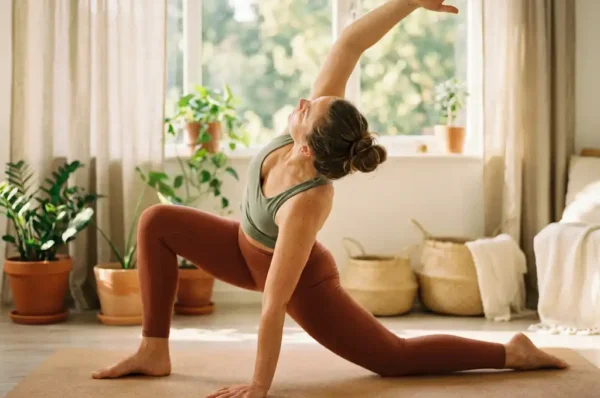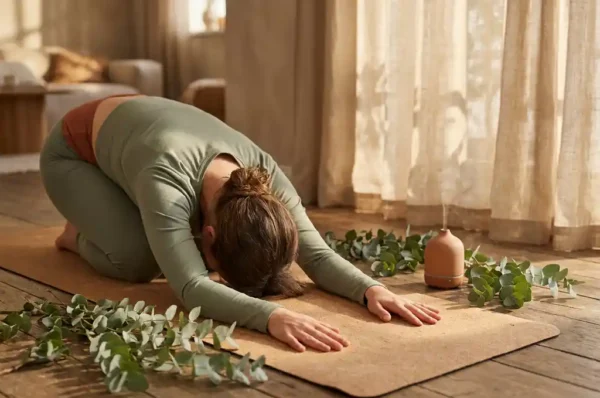



Yes, Vinyasa yoga can meaningfully improve flexibility. The practice combines continuous movement with breath, which warms up muscles and connective tissue in a way that makes them more receptive to lengthening. Most practitioners notice genuine gains in flexibility within a few weeks of consistent practice, and the benefits compound over time.
Vinyasa yoga is particularly effective because it works the whole body in every session rather than isolating individual muscles. The flowing sequences move your joints through their full range of motion repeatedly, gradually expanding what that range looks and feels like. Below, we break down exactly how it works, which areas benefit most, and how it compares to other styles.
How does Vinyasa yoga actually increase flexibility?
Vinyasa yoga increases flexibility by combining dynamic movement with sustained heat and breath-driven focus. As you flow through sequences, your muscles warm up quickly, reducing stiffness and allowing a deeper range of motion. The rhythmic linking of poses means you revisit the same joints and muscle groups multiple times in a single session, reinforcing length over time.
The mechanism behind this is straightforward. Warm muscles are more elastic than cold ones. Vinyasa generates internal heat through continuous movement, which makes the soft tissue around joints more pliable. Unlike static stretching done cold, the heat you build in a Vinyasa class means your body is genuinely ready to open up by the time you reach deeper poses.
There is also a neurological element at play. Repeated, mindful movement through a range of motion sends signals to your nervous system that a particular position is safe. Over time, your nervous system stops bracing against that range and allows the muscles to relax further into it. This is why flexibility in yoga is as much about releasing tension as it is about physically lengthening tissue.
Breath plays a supporting role, too. Exhaling into a stretch activates the parasympathetic nervous system, which encourages muscles to soften rather than contract. In Vinyasa, every transition is tied to either an inhale or an exhale, so you are constantly using breath to deepen your range of motion without forcing it.
Which muscle groups become more flexible with Vinyasa yoga?
Vinyasa yoga improves flexibility across the whole body, but the most noticeable gains tend to happen in the hamstrings, hip flexors, shoulders, and spinal muscles. These are the areas that modern sedentary lifestyles tighten most, and they are also the areas that Vinyasa sequences target most consistently.
Hips and hamstrings
Forward folds, low lunges, and warrior sequences appear in almost every Vinyasa class, making the hips and hamstrings two of the biggest beneficiaries. Tight hips are extremely common among people who sit for long periods, and the hip-opening postures woven through Vinyasa flows directly address this. Over time, poses like Pigeon and Lizard Lunge create genuine length in the hip flexors, glutes, and the deep rotators of the hip joint.
Spine and shoulders
Vinyasa sequences move the spine in all directions: forward, backward, sideways, and in rotation. Cat-Cow, Downward Dog, Cobra, and seated twists collectively work every segment of the spine. The shoulders get consistent attention through Chaturanga, Upward Dog, and arm-binding poses, which gradually improve both mobility and the stability needed to use that mobility safely.
How long does it take to see flexibility results from Vinyasa yoga?
Most people notice early flexibility improvements from Vinyasa yoga within two to four weeks of practicing three or more times per week. These initial changes are largely neurological, meaning your nervous system is learning to release tension rather than your tissue physically lengthening. Deeper, structural flexibility gains typically develop over three to six months of consistent practice.
The timeline varies depending on a few key factors. Your starting point matters: someone who is already moderately active will tend to see results faster than someone who has been sedentary for years. Frequency also plays a significant role. Practicing twice a week will produce results, but practicing four or five times a week will accelerate them noticeably.
Age is a factor, too, though not a limiting one. Connective tissue does become less elastic with age, which means older practitioners may progress more slowly. However, consistent Vinyasa practice at any age produces real flexibility gains. Many practitioners in their 40s and beyond report their most significant flexibility improvements coming from yoga precisely because it is low-impact and sustainable over the long term.
One practical tip: pairing your Vinyasa practice with a supportive setup helps you stay consistent. A quality surface makes a real difference to how freely you can move, and our natural rubber yoga mat provides the grip and cushioning that lets you settle into poses rather than worrying about slipping.
Is Vinyasa yoga better for flexibility than other yoga styles?
Vinyasa yoga is one of the most effective styles for building functional, whole-body flexibility, though it is not universally better than every other style for every type of flexibility goal. Yin yoga and Restorative yoga target deep connective tissue more directly, while Vinyasa excels at improving active flexibility, meaning the range of motion you can access while your muscles are engaged and moving.
Compared to Hatha yoga, Vinyasa tends to produce flexibility gains more quickly because of the heat generated through continuous movement. Hatha holds poses statically for longer, which can deepen individual stretches but does not warm the body in the same way. Many practitioners find that combining Vinyasa with an occasional Yin or Restorative session gives them the best of both approaches.
Compared to non-yoga flexibility training such as static stretching routines, Vinyasa has a practical advantage: it builds strength and flexibility simultaneously. A muscle that is both strong and flexible is more resilient and less prone to injury than one that is simply stretched. This makes the flexibility you gain through Vinyasa more usable in daily life and in other physical activities.
If your primary goal is flexibility and you are choosing a yoga style from scratch, Vinyasa is an excellent starting point. It is dynamic enough to keep you engaged, comprehensive enough to address the whole body, and structured enough that you can track your progress clearly over time. Explore our full range of yoga products to make sure your practice is as comfortable and effective as possible from the very first session.
Ready to take your Vinyasa practice further? At Samarali, you will find everything you need to support your flexibility journey. Whether you are looking for a natural rubber yoga mat that gives you the grip to hold deeper poses, a yoga bolster to ease into restorative stretches, or a organic cotton yoga blanket to keep muscles warm between flows, our collection is designed with your practice in mind. Browse the full yoga collection at Samarali and shop now.
Frequently Asked Questions
Can complete beginners with very tight muscles start Vinyasa yoga, or should they build baseline flexibility first?
Complete beginners with tight muscles can absolutely start Vinyasa yoga without any prior flexibility preparation. The practice itself is the tool for building flexibility, not a reward for already having it. Most Vinyasa classes offer modifications for every pose, so you can work within your current range of motion safely. Starting where you are and progressing gradually is exactly how the practice is designed to be used.
How do I avoid injuring myself while trying to improve flexibility in Vinyasa yoga?
The most important rule is to distinguish between the sensation of a productive stretch and the sensation of sharp or joint-based pain — the first is normal, the second is a signal to back off immediately. Never force yourself deeper into a pose than your breath allows; if you cannot breathe smoothly, you have gone too far. Using props like blocks and straps is not a shortcut but a smart strategy that lets you access the correct alignment without overstretching. Building heat through the earlier parts of a flow before attempting deeper poses also significantly reduces injury risk.
Will I lose the flexibility I gain if I stop practicing Vinyasa yoga?
Yes, flexibility gains are largely use-dependent, meaning they diminish if you stop the movements that created them. Early neurological gains — where your nervous system has learned to release tension — tend to fade faster than structural tissue changes built over months of consistent practice. Taking a short break of one to two weeks will have minimal impact, but extended inactivity will gradually reduce your range of motion. Maintaining even one or two sessions per week is generally enough to preserve most of the flexibility you have built.
Is Vinyasa yoga enough on its own for flexibility, or do I need to add separate stretching sessions?
For most people, a consistent Vinyasa practice is sufficient to achieve meaningful, functional flexibility without needing separate stretching sessions. The practice already incorporates dynamic warm-up, active stretching, and cool-down elements within a single class. However, if you have a specific tight area — such as chronically tight hip flexors or limited shoulder mobility — adding a short targeted stretching routine or an occasional Yin yoga session can accelerate progress in that area. Think of supplementary stretching as optional fine-tuning rather than a necessity.
Does practicing Vinyasa yoga in the morning versus the evening affect flexibility results?
Your body is naturally stiffer in the morning due to reduced fluid in the joints and lower core temperature after sleep, which means morning Vinyasa sessions may feel harder initially but can be especially effective for building the kind of flexibility that persists throughout the day. Evening sessions benefit from a body that has already been moving for hours, often allowing you to access a slightly deeper range of motion. In terms of long-term flexibility outcomes, consistency matters far more than timing — the best time to practice is whichever slot you can show up for regularly.
What are the most common mistakes people make when using Vinyasa yoga to improve flexibility?
The most common mistake is equating deeper with better — pushing aggressively into poses before the body is warm or ready often leads to strain rather than genuine flexibility gains. Another frequent error is skipping the poses that feel uncomfortable, which are usually the ones targeting your tightest areas and therefore the most valuable for your flexibility goals. Inconsistent practice is also a major obstacle; sporadic intense sessions produce far less progress than shorter, regular ones. Finally, neglecting strength work within the practice undermines flexibility, since muscles need adequate strength to safely control and maintain a wider range of motion.
Can Vinyasa yoga improve flexibility enough to support other sports or physical activities?
Yes, the functional flexibility developed through Vinyasa yoga transfers well to other physical activities because it is active flexibility — range of motion accessed while muscles are engaged — rather than passive flexibility achieved only when relaxed. Runners, cyclists, swimmers, and strength trainers commonly use Vinyasa practice to address the specific tightness patterns their sport creates, such as hip flexors for cyclists or shoulders for swimmers. The simultaneous strength and mobility development also reduces injury risk in those activities. Even two Vinyasa sessions per week alongside another sport can produce noticeable improvements in movement quality and recovery.