


The ideal yoga mat length depends on your height, with most practitioners needing a mat that is 6–12 inches longer than their body. Standard mats measure 68–72 inches long and 24–26 inches wide, but taller individuals or those practicing dynamic styles may need longer or wider options. Your mat width should accommodate your shoulder span and arm movements comfortably during poses.
What are the standard yoga mat dimensions and why do they matter?
Standard yoga mats typically measure 68–72 inches in length, 24–26 inches in width, and 3–6 mm in thickness. These dimensions work well for most practitioners under 6 feet tall and provide adequate space for common yoga poses and sequences.
Understanding why proper mat sizing matters helps you make informed decisions about your practice equipment:
- Safety and stability: When your mat is too short, your hands or feet may slip off during poses like downward dog or warrior sequences, compromising your balance and increasing injury risk
- Movement freedom: A mat that is too narrow restricts arm movements in poses like side angle or extended triangle, forcing you to adjust your alignment unnaturally
- Comfort versus connection: Thinner mats (3–4 mm) offer better ground connection for balance poses but provide less cushioning for knees and joints during floor work
- Stability trade-offs: Thicker mats (5–6 mm) add comfort for seated and lying poses but can make standing balance poses more challenging due to reduced surface feedback
These standard dimensions have become industry norms because they accommodate the majority of practitioners while remaining portable and easy to store. High-quality, sustainable yoga equipment often follows these measurements, but they are not universal solutions for every body type or practice style, which is why understanding your individual needs is crucial.
How do you choose the right yoga mat length for your height?
Add 6–12 inches to your height to determine your ideal mat length. For example, if you are 5’6″ tall, look for mats between 72 and 78 inches long. This extra length ensures your entire body stays on the mat during poses that require full extension.
Several factors beyond basic height measurements influence your length requirements:
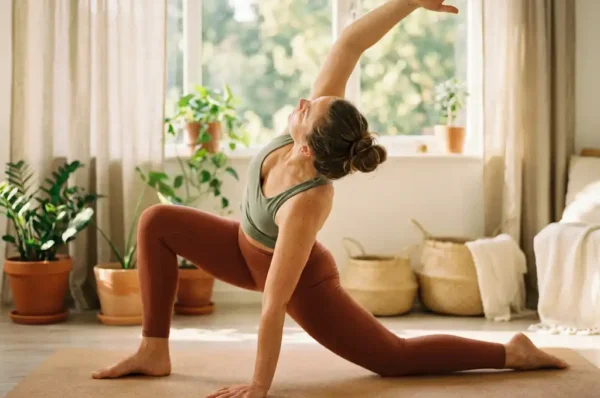
- Practice style intensity: Dynamic practices like vinyasa or ashtanga need more length because you move through flowing sequences that extend your reach beyond static poses
- Pose variations: If you frequently practice arm balances, inversions, or creative transitions, extra length provides safety buffer space
- Personal comfort preferences: Some practitioners feel more confident with generous space boundaries, while others prefer compact, defined practice areas
- Portability needs: Consider how often you transport your mat, as longer mats are heavier and bulkier to carry
To test your mat coverage, lie down with your arms extended overhead – your fingertips and toes should both remain comfortably on the mat surface. Use these height guidelines as starting points: under 5’4″ can use standard 68–72 inch mats, 5’4″ to 6’0″ should look for 72–74 inch options, and over 6’0″ typically need 78–84 inch extra-long mats. However, always prioritize your actual reach and movement patterns over general recommendations.
What is the difference between narrow and wide yoga mats for different body types?
Standard 24-inch-wide mats suit most practitioners, while wide mats (26+ inches) benefit people with broader shoulders, longer arm spans, or those who prefer extra space for arm movements and side poses.
Your shoulder width determines your minimum mat width needs. Measure from shoulder to shoulder and add 4–6 inches for comfortable arm movement. If this measurement exceeds 24 inches, consider a wide mat option.
Wide mats offer specific advantages that can significantly improve your practice experience:
- Enhanced side pose comfort: Extra width provides ample space for poses like extended side angle, triangle, and warrior II without hand placement restrictions
- Improved stability during complex poses: Arm balances and inversions benefit from wider landing zones, reducing fear and increasing confidence
- Better accommodation for larger frames: Broader body types can move freely without feeling constrained by narrow boundaries
- Increased versatility for prop use: Restorative practices with bolsters, blankets, and other yoga accessories require extra space for comfortable arrangement
However, wider mats come with practical considerations that may influence your decision. They are heavier to transport, require more storage space, and can feel unnecessarily large for petite practitioners or those with limited practice areas. The key is finding the balance between adequate space and practical usability for your specific situation and body type.
Finding your ideal yoga mat dimensions enhances both comfort and safety in your practice. Take time to assess your height, body proportions, and practice style before making your choice. When you are ready to invest in sustainable yoga equipment that supports both your practice and environmental values, we at Samarali create thoughtfully designed mats using organic cotton materials with plastic-free packaging, ensuring your wellness journey aligns with planetary health.
Browse our selection of thoughtfully crafted collection of sustainable yoga essentials—designed for mindful movement and made with respect for the planet.