


Yes, Yoga Nidra is genuinely effective for anxiety and burnout. This guided meditation practice works by systematically bringing the nervous system into a deeply restorative state, making it one of the most accessible and well-supported tools for people dealing with chronic stress, overwhelm, and emotional exhaustion. Below, we unpack exactly how it works and how to make it part of your recovery.
How does Yoga Nidra actually calm the nervous system?
Yoga Nidra calms the nervous system by guiding the body and mind into a state between wakefulness and sleep, where the parasympathetic nervous system takes over. This is the branch of the autonomic nervous system responsible for rest, digestion, and recovery. When you enter this threshold state, your heart rate slows, muscle tension releases, and stress hormones begin to drop.
The practice achieves this through a structured sequence of body scanning, breath awareness, and guided visualization. Each layer of the practice progressively withdraws attention from external stimulation and redirects it inward. This process, known in yoga philosophy as pratyahara, or sensory withdrawal, signals to the brain that it is safe to stop scanning for threats.
What makes Yoga Nidra particularly powerful for anxiety is that it does not require you to actively quiet your thoughts. Instead, you are guided through awareness rather than effort. This removes the frustration many anxious people experience with conventional meditation, where the instruction to “clear your mind” can paradoxically increase tension. With Yoga Nidra, the structure does the work for you.
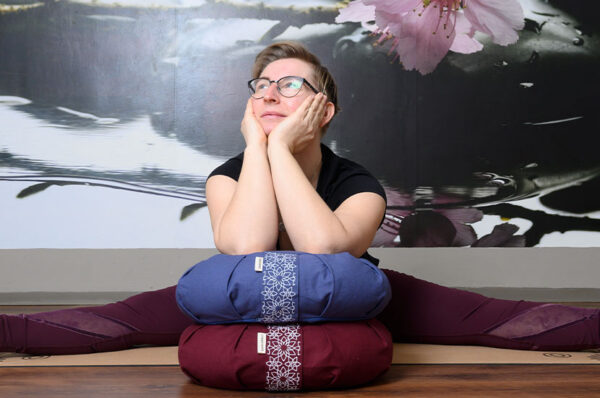
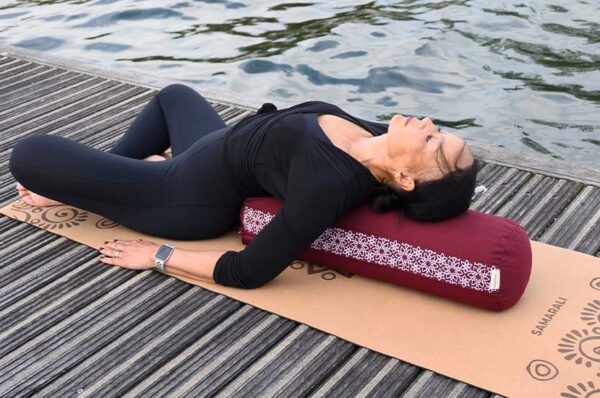
Practicing in a comfortable lying position also helps. A supportive setup, including a yoga bolster under the knees and a blanket for warmth, removes physical discomfort from the equation and allows the body to fully surrender to the practice.
What does the research say about Yoga Nidra and anxiety?
Research into Yoga Nidra consistently points to meaningful reductions in anxiety, stress, and psychological tension among regular practitioners. Studies have found that the practice lowers cortisol levels, reduces self-reported anxiety scores, and improves sleep quality, all of which are directly relevant to both anxiety disorders and burnout recovery.
Clinical settings have begun incorporating Yoga Nidra into programs for post-traumatic stress, chronic fatigue, and burnout rehabilitation. The practice is particularly valued because it is gentle enough for people who are too exhausted or dysregulated to engage in more active forms of movement or breathwork.
Researchers also point to the brainwave activity observed during Yoga Nidra as significant. The practice appears to facilitate a shift toward alpha and theta brainwave states, which are associated with deep relaxation, creativity, and emotional processing. These are the same states the brain enters during light sleep, which explains why even a short session can feel profoundly restorative.
It is worth noting that while the evidence is promising, Yoga Nidra is best understood as a complementary practice rather than a standalone clinical treatment for severe anxiety. For most people dealing with everyday stress, overwhelm, or early-stage burnout, however, it is a genuinely powerful and low-barrier tool.
How is Yoga Nidra different from regular meditation or sleep?
Yoga Nidra is distinct from both regular meditation and sleep in a specific and important way. Unlike most meditation practices, which require active mental focus or concentration, Yoga Nidra is fully guided and receptive. Unlike sleep, it maintains a thread of conscious awareness throughout, which means the restorative benefits are intentional and directed rather than passive.
How Yoga Nidra compares to conventional meditation
Most meditation practices, whether breath-focused, mantra-based, or mindfulness-oriented, ask you to sustain attention on a chosen object. This requires a degree of mental effort that can be difficult when you are anxious or burned out. Yoga Nidra removes that effort entirely. You are guided through the experience, and your only job is to follow along without trying to control what arises.
How Yoga Nidra compares to sleep
Sleep is restorative but largely unconscious. Yoga Nidra deliberately occupies the liminal space between waking and sleeping, known as the hypnagogic state, where the mind becomes highly receptive and the body enters deep rest while awareness remains present. Practitioners often describe waking from a session feeling more refreshed than after a nap, precisely because the nervous system has been guided through a structured release rather than drifting through random sleep cycles.
How often should you practice Yoga Nidra for burnout recovery?
For burnout recovery, practicing Yoga Nidra three to five times per week is a realistic and effective starting point. Even a single 20 to 30 minute session can produce noticeable shifts in how rested and regulated you feel. Consistency matters more than duration, so shorter daily sessions tend to outperform occasional longer ones.
During the acute phase of burnout, when energy reserves are at their lowest, daily practice is particularly valuable. The cumulative effect of repeated nervous system regulation helps rebuild the body’s stress resilience over time. Many practitioners notice improved sleep, reduced reactivity, and greater emotional steadiness within two to three weeks of regular practice.
There is no upper limit to how often you can practice. Because Yoga Nidra is non-effortful and deeply restorative, it does not deplete energy the way more vigorous practices might. If you feel drawn to it daily, that is a reliable signal that your system needs it.
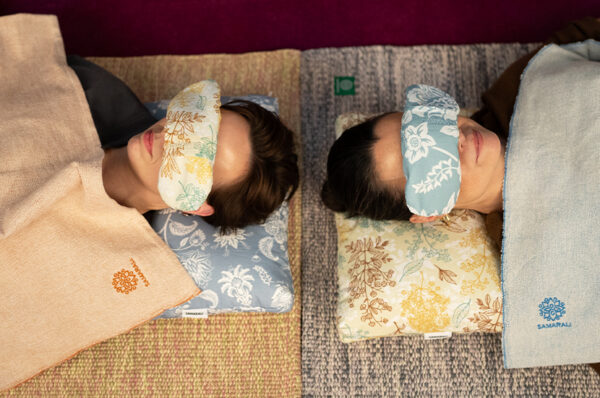
Creating a consistent environment for your practice also helps reinforce the habit. Setting aside a dedicated space with a comfortable mat, a supportive cushion, and a soft blanket makes it easier to drop into the practice quickly. Explore our meditation collection for tools designed to support exactly this kind of restorative practice.
If you are new to Yoga Nidra, starting with a guided audio recording and committing to three sessions per week for one month is a simple, low-pressure way to experience its effects firsthand. Most people find that once they feel the difference, consistency comes naturally.
Ready to create the ideal space for your Yoga Nidra practice? At Samarali, you will find everything you need to support deep rest and nervous system recovery. Settle in with a yoga bolster to keep your body fully supported, rest your head on a yoga neck pillow, and wrap yourself in a soft organic cotton yoga blanket for lasting warmth and comfort. Browse our full meditation sets to find a complete setup that makes it effortless to show up for your practice, day after day. Shop now and give your recovery the foundation it deserves.
Frequently Asked Questions
Can I practice Yoga Nidra if I've never meditated before?
Absolutely — Yoga Nidra is actually one of the best entry points into meditation precisely because it requires no prior experience or mental training. Since the practice is fully guided and you don’t need to control your thoughts or sustain focus, beginners often find it far more accessible than breath-based or mindfulness meditation. Simply find a comfortable lying position, press play on a guided audio recording, and follow the instructions. There is genuinely nothing you can do wrong.
What if I keep falling asleep during Yoga Nidra sessions?
Falling asleep, especially in the early stages of practice, is extremely common and is not something to worry about. It is often a sign that your nervous system is deeply depleted and genuinely needs rest. Over time, as your stress levels decrease and your practice deepens, you will naturally find it easier to maintain that thread of conscious awareness the practice aims for. To help stay awake, try practicing at a time of day when you are not at your most tired, keep the room slightly cool, and avoid practicing immediately after a heavy meal.
How is Yoga Nidra different from a body scan meditation?
A body scan is actually one component within a full Yoga Nidra session, but Yoga Nidra goes considerably further. A complete session typically includes a sankalpa (a short personal intention), a systematic rotation of awareness through the body, breath awareness, pairs of opposite sensations, visualization, and a gentle return to waking consciousness. This layered structure is what guides the brain through progressively deeper states of relaxation, making Yoga Nidra more comprehensive and often more restorative than a standalone body scan.
Are there any situations where Yoga Nidra might not be suitable?
Yoga Nidra is generally very safe and well-tolerated, but there are a few situations worth being mindful of. People with a history of trauma, dissociation, or certain psychiatric conditions may find that the deeply inward, altered-state quality of the practice feels destabilizing rather than calming — in these cases, working with a trauma-informed teacher or therapist is strongly recommended before practicing independently. Additionally, if you are managing severe clinical anxiety or depression, Yoga Nidra should complement, not replace, professional treatment. When in doubt, consult your healthcare provider.
What is the best time of day to practice Yoga Nidra for anxiety and burnout?
The most effective time depends on your personal schedule and goals. Practicing in the early afternoon — often the body’s natural energy dip — can serve as a powerful restorative reset that carries you through the rest of the day without the grogginess of an actual nap. Practicing in the evening can support a smoother wind-down and improve sleep quality. Morning practice is also beneficial if you want to regulate your nervous system before the demands of the day begin. Avoid practicing when you are under time pressure, as the sense of having nowhere to be is part of what allows the body to fully let go.
Do I need a teacher or special training to get started with Yoga Nidra?
No formal training is needed to begin. There are many high-quality guided Yoga Nidra recordings available through apps, YouTube, and dedicated wellness platforms, making it easy to start on your own at no cost. That said, if you find yourself wanting to deepen your understanding of the practice, explore its philosophical roots, or eventually guide others, working with a qualified teacher or attending a workshop can be genuinely enriching. For most people recovering from anxiety or burnout, however, a trusted guided audio and a comfortable, quiet space are all that is required to begin.
How long does it take to notice real results from regular Yoga Nidra practice?
Many people notice an immediate shift in how calm and rested they feel after even their very first session. However, the deeper and more lasting benefits — reduced baseline anxiety, improved sleep, greater emotional resilience, and a more regulated nervous system — typically build over two to four weeks of consistent practice. Think of it less like taking a single dose of medication and more like gradually retraining your nervous system’s default setting. The cumulative effect is where the real transformation happens, which is why committing to regular sessions, even short ones, matters far more than the occasional marathon practice.