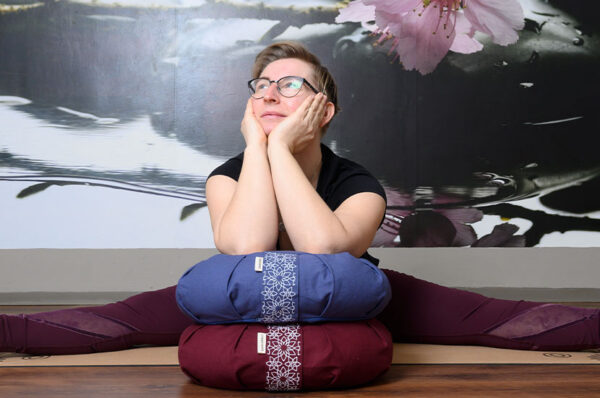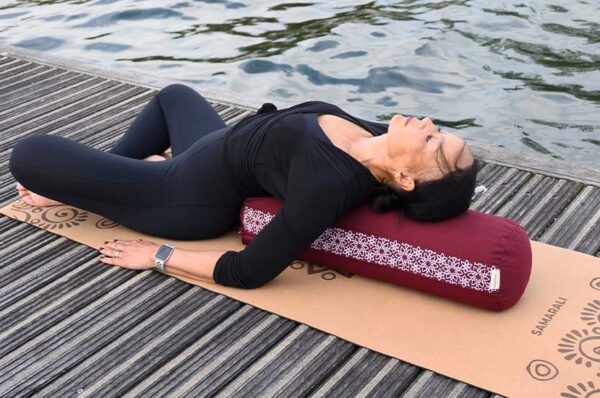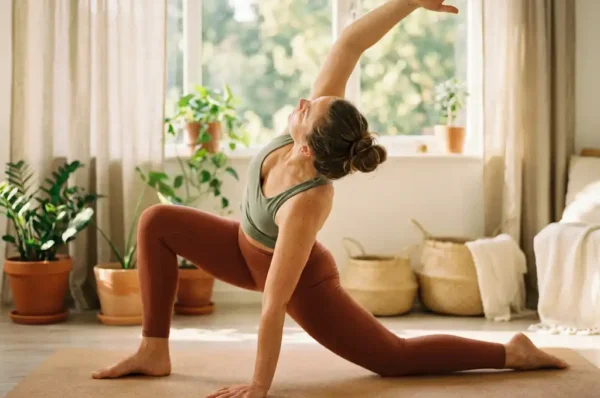



Yes, power yoga is a legitimate form of strength training, and yes, it builds real muscle. Through sustained bodyweight resistance, isometric holds, and eccentric loading during transitions, power yoga meets the core criteria sports scientists use to define strength training: resistance, progressive overload, and multi-muscle engagement. Unlike isolated weight training that targets individual muscles, power yoga engages multiple muscle groups simultaneously while integrating flexibility, balance, and breath awareness. The result is functional muscle development that translates directly to daily movements, athletic performance, and long-term physical wellness.
Whether you are a strength athlete looking to improve your squat mechanics and reduce joint wear, a fitness enthusiast seeking a new strength stimulus beyond the barbell, or someone exploring yoga for the first time and wondering whether it can build real muscle — this guide is structured to answer your specific question. Each section below addresses a different dimension of how power yoga builds strength differently from traditional weight training, so you can find exactly what you need and decide how this practice fits your goals.
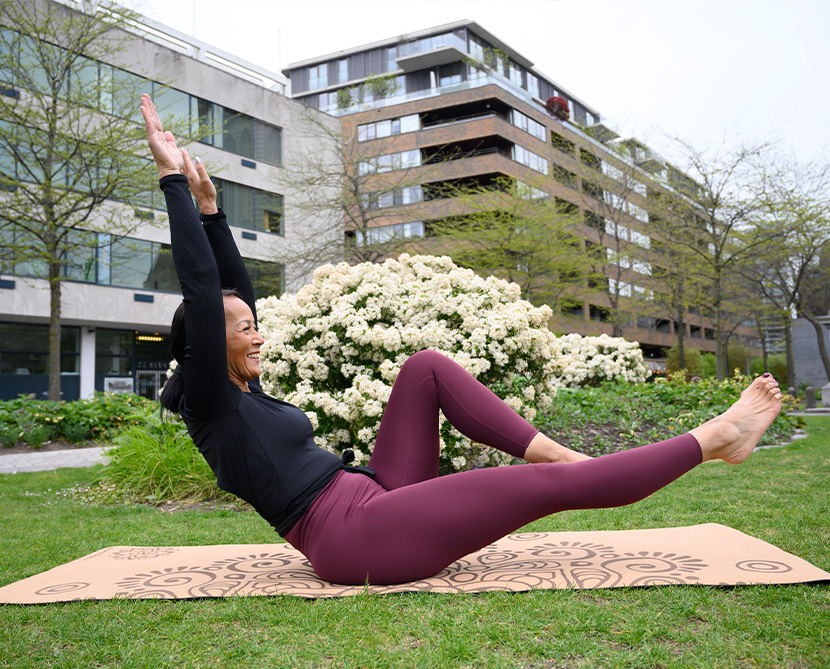
What makes power yoga different from traditional strength training?
Power yoga builds strength through dynamic bodyweight resistance and flowing sequences that challenge muscles across multiple planes of movement simultaneously. Unlike traditional weightlifting, which isolates specific muscle groups through external load, power yoga integrates strength, flexibility, balance, and coordination in every pose. This compound approach satisfies all three criteria sports scientists require for strength training: resistance, multi-muscle engagement, and the capacity for progressive overload as practitioners advance from foundational poses toward arm balances and inversions.
The continuous-flow nature of power yoga means your muscles work under tension for extended periods, building both strength and endurance. A key reason this works lies in muscle contraction mechanics: power yoga emphasizes eccentric contraction, where muscles lengthen under tension as you lower into or hold a pose. The slow lowering phase of Chaturanga, for example, creates greater muscle fiber stress than the pressing phase — which is why this single transition builds significant upper body strength without any external load. A study published in the International Journal of Yoga found that eight to twelve weeks of regular yoga practice produced measurable improvements in upper body strength and eccentric strength markers compared to control groups, consistent with the broader evidence identifying eccentric loading as one of the most effective stimuli for muscle fiber repair and growth.
Traditional weight training focuses on progressive overload through external resistance, allowing you to isolate and target specific muscles, and it remains the most efficient approach if your primary goal is maximizing muscle mass or raw lifting strength. Power yoga uses your bodyweight as variable resistance that shifts with each pose and transition, building strength that is inherently balanced and functional. You cannot develop one muscle group without engaging supporting muscles throughout your entire kinetic chain — which is precisely why power yoga builds muscle in a way that simultaneously improves mobility, joint health, and movement quality.
The physical outcomes of each approach also differ in meaningful ways. Power yoga’s eccentric and isometric emphasis develops balanced, functional muscular endurance across the full kinetic chain, because no single muscle group can be loaded in isolation — every pose demands coordinated engagement across multiple movement planes. Traditional weight training’s progressive external load, by contrast, favors localized hypertrophy and maximum force output in the muscles most directly targeted by each exercise. Neither outcome is superior; both result from different mechanical stimuli applied to different training goals. Understanding this distinction helps you choose the approach — or combination — that aligns with your performance goals and your long-term vision for your body.
The following comparison captures the core structural differences between these two training methods.
| Dimension | Power Yoga | Weight Training |
|---|---|---|
| Resistance type | Bodyweight, isometric and eccentric | External load, concentric and eccentric |
| Primary muscle engagement pattern | Full kinetic chain, multi-plane compound | Targeted isolation or compound with load |
| Progressive overload mechanism | Pose complexity, balance, and hold duration | Incremental load increase |
| Flexibility benefit | Built into every session | Requires separate mobility work |
| Joint impact | Low-impact, joint-friendly movement | Cumulative load stress over time |
| Mind-muscle connection | Continuous internal awareness required | Primarily external load focus |
| Ideal for (goal) | Functional fitness, mobility, longevity | Maximum hypertrophy, raw strength gains |
| Recovery demand | Lower; supports active recovery | Higher; requires structured rest periods |
Can power yoga replace weight training? A goal-based decision framework
The honest answer depends entirely on your training goal. Power yoga and weight training are not interchangeable — they produce different physiological adaptations, and the right choice depends on what you are trying to achieve. The sections below break this down by goal so you can make a clear, informed decision about how to structure your training.
If your goal is maximum muscle mass or raw strength gains
Weight training holds a structural advantage here that power yoga cannot fully replicate. Because external load can be increased indefinitely, traditional resistance training provides a progressive overload stimulus that exceeds what bodyweight resistance alone can deliver for maximum hypertrophy and absolute strength output. If building the largest possible muscle volume or hitting a new one-rep max is your primary objective, a barbell-based program should remain your foundation. Power yoga can serve as a valuable complement — improving mobility, reducing injury risk, and accelerating recovery — but it is not a substitute for progressive external loading in this context.
If your goal is functional fitness, mobility, and long-term joint health
This is where power yoga genuinely excels and, for many practitioners, outperforms traditional weight training as a primary method. The compound engagement, joint-friendly resistance, and simultaneous flexibility development built into every session make power yoga a strong long-term choice for practitioners prioritizing movement quality, connective tissue health, and sustainable fitness across decades. The progressive overload mechanism — advancing from foundational poses to arm balances and inversions — provides a continuous strength stimulus without the cumulative joint loading that heavy barbell work accumulates over time.
If your goal is athletic performance and cross-training balance
A combined approach produces the best results. Two to three power yoga sessions per week, focused on hip mobility, thoracic rotation, and posterior chain activation, directly support heavier lifts and cleaner movement patterns in weight training. The neuromuscular benefits of power yoga — improved proprioception, stabilizer muscle development, and kinetic chain coordination — fill the gaps that conventional barbell programs frequently leave unaddressed. For strength athletes and CrossFit practitioners, this combination reduces injury risk, improves movement precision, and creates a more resilient training foundation.
Because power yoga is capped at bodyweight resistance, it cannot match weight training for maximum hypertrophy or absolute strength gains. This is not a flaw — it is simply a different tool designed for different outcomes. What power yoga offers in return is a method that simultaneously builds strength, flexibility, joint health, and body awareness in a single practice, producing functional fitness that traditional weight training alone does not deliver. For many practitioners, that trade-off is precisely the point.
Which power yoga poses build the most functional strength?
Bodyweight resistance in power yoga builds functional strength by using your own weight as resistance while demanding stabilization and control through full ranges of motion. The resistance is constant, the movement patterns are compound, and the muscular demand increases progressively as you advance toward more challenging poses like arm balances and inversions.
Five poses deliver the highest strength stimulus in a power yoga practice:
- Chaturanga Dandasana: Targets the triceps, chest, and core through an eccentric lowering phase, building upper body pushing strength equivalent to a controlled narrow-grip push-up under full bodyweight load.
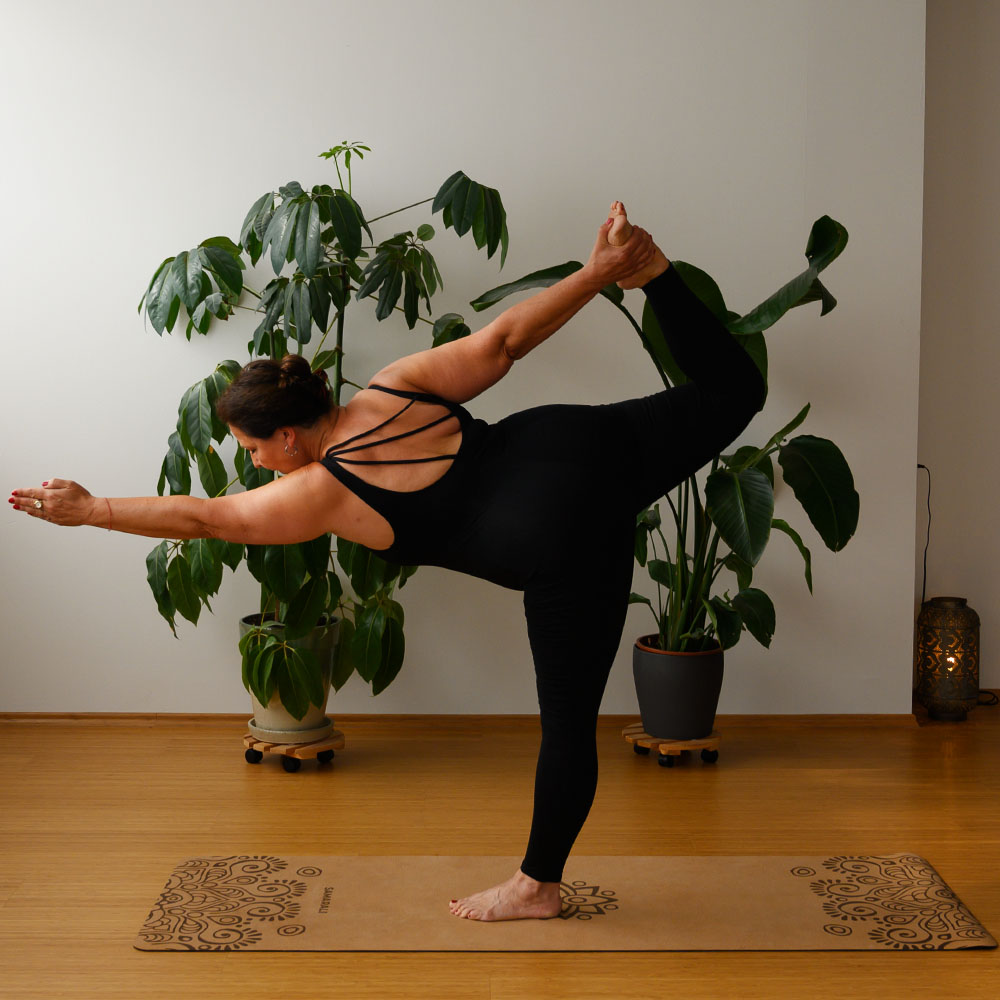
- Warrior III (Virabhadrasana III): Loads the glutes, hamstrings, and spinal erectors through single-leg posterior chain activation that demands balance-driven stabilizer recruitment.
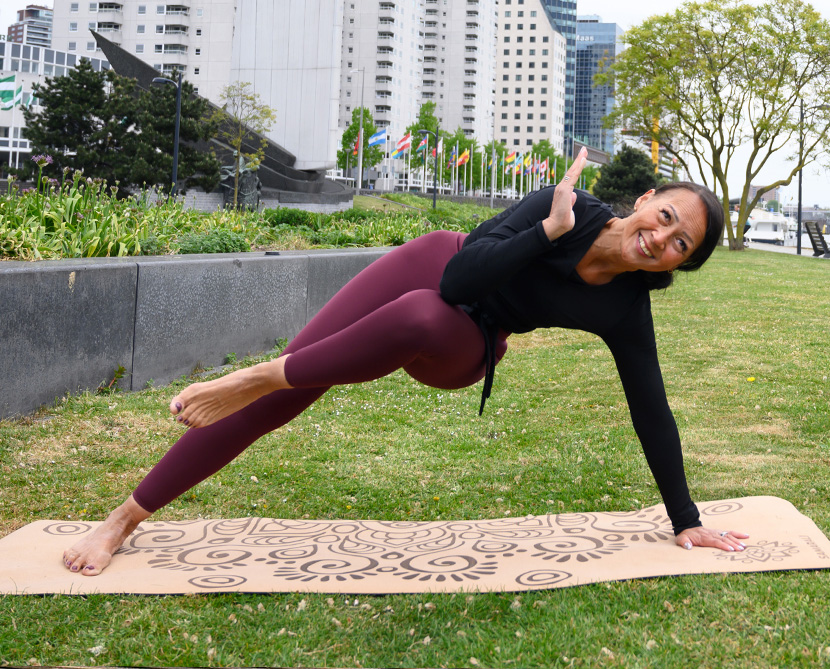
- Side Plank (Vasisthasana): Develops lateral core stability and shoulder stabilizers that traditional lifting programs frequently neglect.
- Chair Pose (Utkatasana): Builds quad and glute strength through sustained isometric holds that create significant muscular endurance demand.
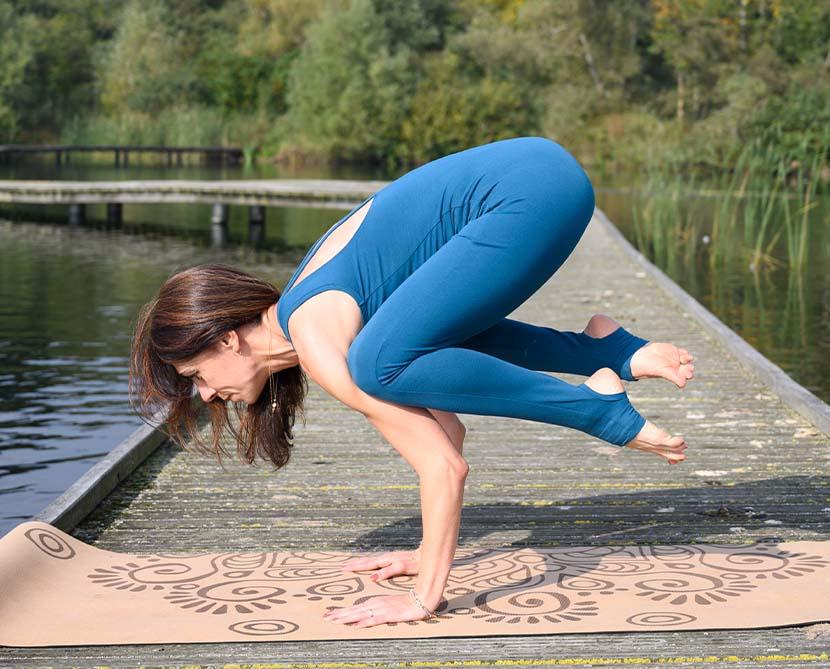
- Crow Pose (Bakasana): An advanced upper body and core strength benchmark, requiring full kinetic chain coordination and wrist-to-shoulder pressing strength under bodyweight load.
Each of these poses recruits multiple muscle groups under sustained load, creating the mechanical tension and metabolic stress that exercise physiologists identify as the two primary drivers of muscle adaptation and growth.
When you practice poses like Chaturanga or Side Plank, you are not just building arm or core strength in isolation — you are training your entire kinetic chain to work together. For strength athletes, this transfers directly into improved performance on compound lifts. The hip mobility and posterior chain activation developed through power yoga sequences supports squat depth, overhead positioning, and the stable catch position required in Olympic lifts like the power clean. Power yoga also strengthens the stabilizer muscles that conventional barbell training frequently neglects, reducing injury risk and improving movement precision in lifts that depend on exact joint alignment.
Power yoga’s emphasis on compound movements means you develop strength through natural movement patterns. Warrior sequences, for example, train your body to generate power from your legs, transfer it through your core, and express it through your arms — which is exactly how you move when carrying groceries, playing sports, or performing athletic movements. For practitioners combining power yoga with weight training, this integrated approach also supports recovery between heavy lifting sessions by activating the parasympathetic nervous system through breath control, reducing soreness and improving readiness for subsequent training days.
How to build strength with power yoga: a beginner-to-advanced progression
One of the most common barriers to using power yoga for strength is not knowing where to start. The physiological benefits are well established, but without a clear entry point, beginners often either jump too far ahead into demanding poses or underestimate the practice entirely. A structured progression resolves this by building the foundational strength and body awareness needed to advance safely and consistently.
Stage 1: Foundation (Weeks 1–4)
The goal of this stage is to build baseline stability, body awareness, and joint preparation before introducing significant muscular demand. Focus on:
- Plank Pose — develops full-body tension and core bracing patterns
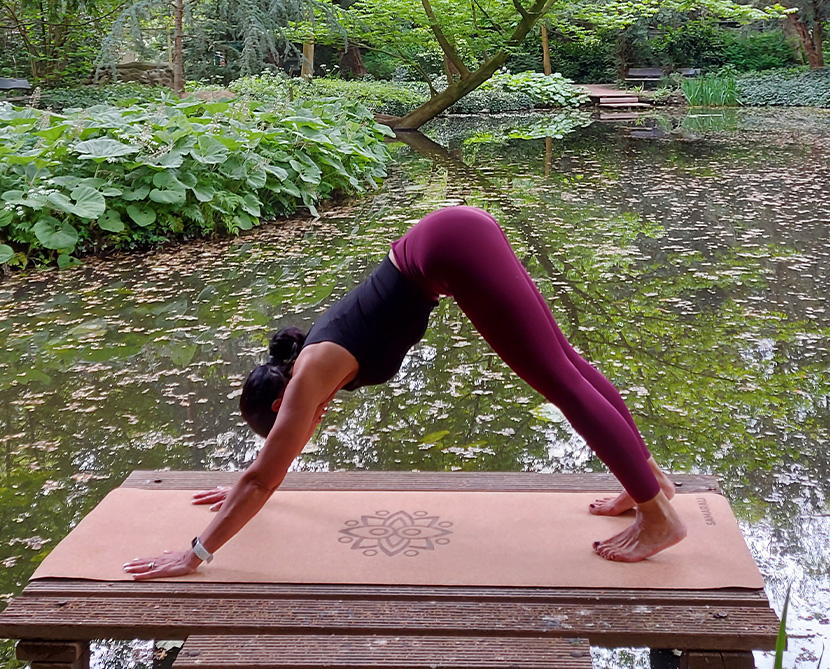
- Downward-Facing Dog (Adho Mukha Svanasana) — builds shoulder stability and posterior chain length under load
- Warrior I (Virabhadrasana I) — establishes hip stability and lower body strength fundamentals
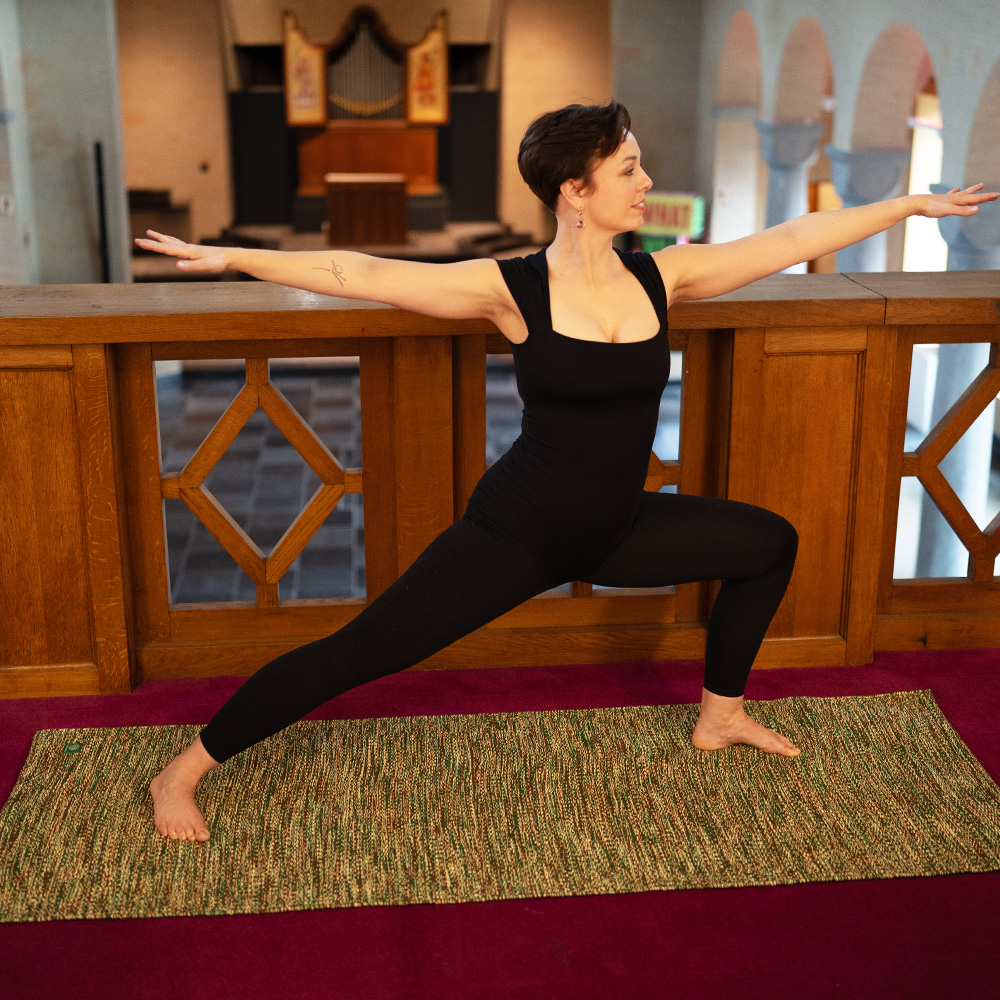
- Warrior II (Virabhadrasana II) — develops lateral hip strength and sustained isometric endurance
Stage 2: Building strength (Weeks 5–12)
This stage introduces eccentric strength demands and single-leg stability work that directly drive muscle adaptation. Focus on:
- Chaturanga Dandasana (modified, knees-down variation) — develops upper body eccentric strength progressively before full load is introduced
- Warrior III (Virabhadrasana III) — challenges single-leg posterior chain stability and balance-driven muscle recruitment
- Chair Pose (Utkatasana) — builds quad and glute endurance through sustained isometric holds
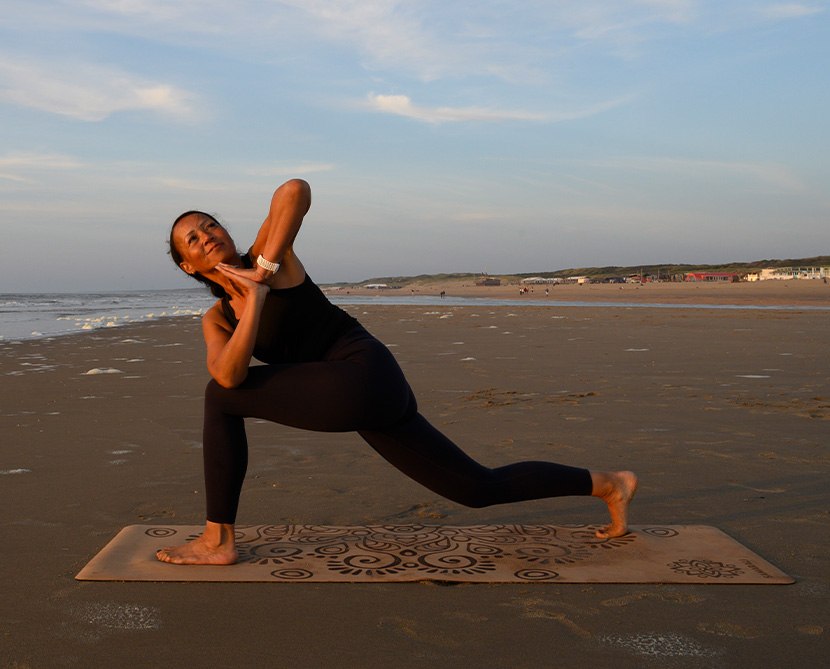
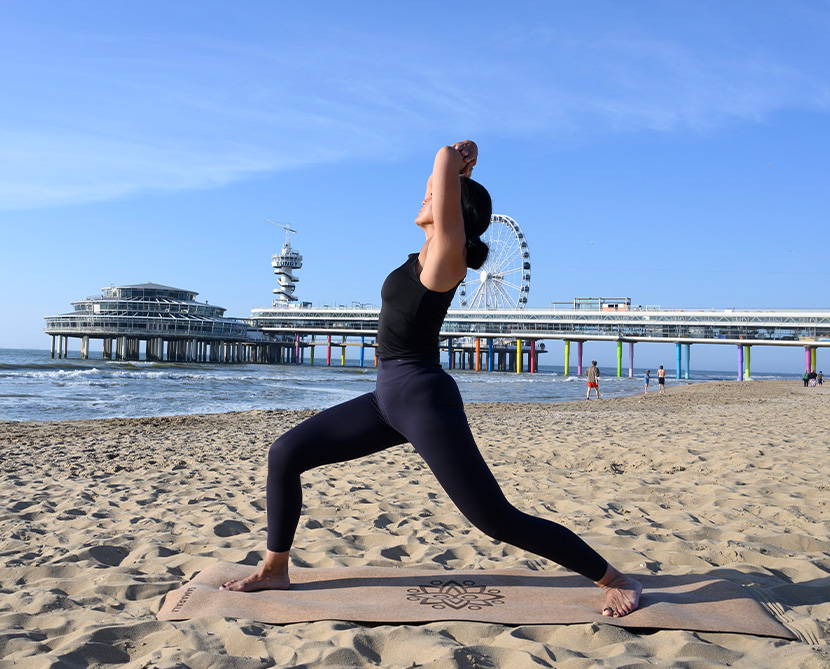
- Low Lunge to High Lunge transitions — trains hip flexor strength and kinetic chain coordination through controlled movement
Stage 3: Advanced load and complexity (Week 12 and beyond)
At this stage, power yoga becomes genuinely demanding, with neuromuscular complexity and full bodyweight load driving continued adaptation. Focus on:
- Full Chaturanga Dandasana — full bodyweight eccentric pressing demand through the complete lowering phase
- Crow Pose (Bakasana) — advanced upper body and core strength requiring full kinetic chain coordination
- Side Plank (Vasisthasana) — lateral core and shoulder stabilizer strength under sustained load
- Full vinyasa sequences — continuous flow that combines all prior strength adaptations into dynamic, high-demand movement patterns
Starting with two to three sessions per week gives your body adequate time to adapt between practices without underloading. Avoid jumping directly to arm balances like Crow Pose before foundational pressing and core strength are established — the injury risk is real, and the strength gains from progressing through the stages are far more durable than skipping ahead.
How power yoga builds neuromuscular strength: the mind-muscle advantage over weight training
One of the most significant ways power yoga builds strength differently from traditional weight training is through the neuromuscular connection it develops via breath-synchronized movement and precise alignment cues. According to the American Council on Exercise, proprioceptive training — developing your body’s ability to sense position and movement — is a foundational component of functional fitness that is frequently underdeveloped in traditional gym-based programs, making yoga-style movement training a valuable complement or primary alternative for long-term physical literacy.
The breath-synchronized movement in power yoga forces you to maintain awareness of both your breathing and muscular engagement simultaneously. This dual focus strengthens the neural pathways between your brain and muscles, improving proprioception. Research published in the Journal of Strength and Conditioning Research identified yoga-based neuromuscular training as producing measurable improvements in proprioceptive accuracy and balance performance over a twelve-week practice period — outcomes that physical therapists leverage when incorporating yoga-based movement into rehabilitation and prehabilitation programs for athletes.
Unlike weight training, where the primary focus is moving an external load through a fixed range of motion, power yoga requires you to continuously monitor internal sensations: which muscles are working, how your alignment affects stability, and how your breath influences your output. This constant internal awareness builds a sophisticated understanding of your body that enhances both performance and injury prevention. Practitioners who add power yoga to a weight training or Olympic lifting routine frequently report improved form awareness during barbell movements, because the body awareness developed on the mat carries over directly into the gym — supporting safer, more efficient mechanics in compound lifts including the power clean and squat.
What are the long-term benefits of power yoga for strength and joint health?
Research into sustained yoga practice consistently shows meaningful long-term benefits for joint health, flexibility retention, and functional strength maintenance — outcomes that become increasingly relevant as practitioners age or accumulate training volume over years. A review of long-term yoga practitioners found measurable reductions in joint pain markers and improvements in functional range of motion compared to sedentary controls, suggesting that the low-impact nature of power yoga does not come at the cost of meaningful physical adaptation. For practitioners asking whether power yoga builds muscle over the long term, the answer is yes: the progressive nature of the practice — from foundational poses to advanced arm balances — provides the ongoing overload stimulus that sustains muscle adaptation across years of consistent training.
Power yoga offers several distinct advantages for sustainable strength development that extend beyond what traditional weightlifting provides for long-term physical wellness:
- Joint health preservation — Flowing movements keep joints mobile while building strength, preventing the stiffness and reduced range of motion that can develop from repetitive weight training.
- Integrated flexibility maintenance — Each practice naturally includes stretching and mobility work, maintaining the flexibility that often decreases with isolated strength training.
- Reduced cumulative stress — Eliminates the progressive loading demands that create wear on joints, tendons, and ligaments over time.
- Balanced muscle development — Holistic sequences ensure proportional strength development across all muscle groups and movement planes.
- Sustainable progression — Strength increases through improved technique and pose variations rather than constantly adding external load.
- Injury prevention — Develops smaller stabilizing muscles that are often neglected in traditional weight training.
How to integrate power yoga into your existing training week
The long-term benefits above are most accessible when power yoga is structured deliberately into your training week rather than practiced sporadically. Two practical frameworks make this straightforward regardless of your current training volume.
For strength athletes training four or more days per week: add a 20–30 minute power yoga session on two active recovery days, focusing on hip-opening sequences after lower body lifting days and thoracic rotation flows after upper body sessions. This placement maximizes recovery benefits without competing with your primary training stimulus.
For practitioners using power yoga as their primary training method: aim for three sessions per week of 45–60 minutes, with at least one full rest day between sessions to allow adequate muscular recovery. In both cases, consistency over eight to twelve weeks is what produces the neuromuscular and joint health adaptations that make the practice genuinely transformative — not session intensity alone.
Frequently asked questions about power yoga and strength training
Does power yoga build muscle as fast as weight training?
For maximum hypertrophy, weight training builds muscle volume faster because external load can be increased indefinitely. For functional strength and movement quality, however, power yoga produces comparable results over a consistent twelve-week practice. The rate of adaptation depends heavily on your specific goal — the two methods are optimized for different outcomes, not competing on the same metric.
How many times a week should I do power yoga to build strength?
Two to three sessions per week is the most effective starting frequency for building strength with power yoga. This provides enough training stimulus to drive adaptation while allowing adequate recovery between sessions. As your foundational strength develops, you can progress toward three to four sessions per week with more demanding pose sequences and longer hold durations.
Can power yoga replace weight training entirely?
It depends on your goal. For functional fitness, mobility, and long-term joint health, power yoga can serve as a complete primary training method. For maximum muscle mass or raw strength output, weight training’s ability to add external load indefinitely gives it an advantage that bodyweight training cannot fully replicate. For most practitioners, a combined approach produces the best overall results.
Is power yoga good for weight loss as well as strength?
Yes. Power yoga’s continuous flow sequences elevate heart rate and create meaningful metabolic demand, supporting fat loss alongside strength development. The combination of sustained muscular effort, elevated heart rate, and the recovery demand of compound bodyweight movement makes power yoga an effective tool for improving body composition, not just building functional strength.
These benefits create a comprehensive approach to strength building that supports lifelong physical wellness. Unlike weightlifting programs that can become increasingly difficult to sustain safely as the body ages due to joint loading and connective tissue stress, power yoga adapts naturally to your body’s changing capacity while continuing to build functional strength, flexibility, and body awareness. For practitioners at any stage — from beginners building a foundation to experienced strength athletes managing recovery between heavy training sessions — power yoga provides a scalable, sustainable path to integrated physical fitness that enhances quality of life across decades, not just training cycles.
Both power yoga and weight training offer valuable approaches to building strength, but power yoga’s integration of flexibility, mindfulness, and functional movement creates a more sustainable path to long-term physical wellness. The practice builds not just muscular strength, but also the body awareness, joint health, and movement quality that support an active lifestyle at any age. Whether you are using power yoga as your primary strength training method or adding it as cross-training to complement weight lifting or Olympic lifting practice, having the right foundation matters. Choosing quality yoga mats that provide proper grip, cushioning, and stability is essential for safely holding strength-building poses like Chaturanga, Warrior III, and Crow Pose, and for dynamic flow sequences that demand reliable traction. Consider exploring complete yoga sets that include props like bolsters and blocks to deepen your practice safely and progressively. At Samarali, we support your power yoga journey with sustainable yoga products made from organic materials and packaged without plastic, because we believe your wellness practice should benefit both your body and the planet.
Browse our selection of thoughtfully crafted collection of sustainable yoga essentials—designed for mindful movement and made with respect for the planet.