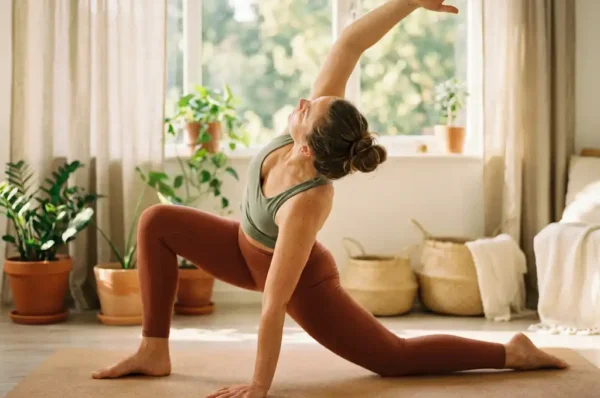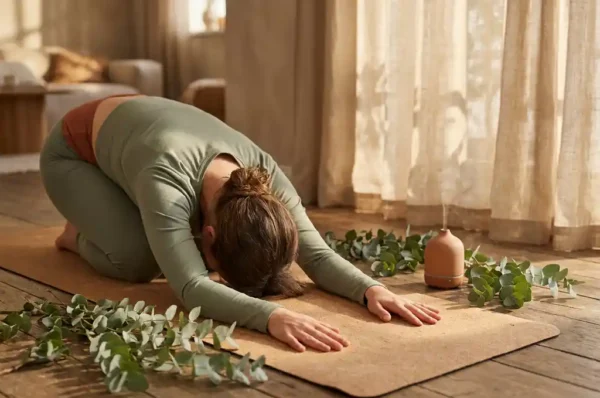



Hatha yoga and Yin yoga are two distinct styles with different paces, intensities, and goals. Hatha yoga is an active, posture-based practice that builds strength, flexibility, and body awareness through dynamic movement. Yin yoga is a slow, meditative style where poses are held for several minutes to target deep connective tissue. Both styles complement each other beautifully, and understanding their differences helps you choose the right practice for your needs.
Which yoga style is more physically demanding — Hatha or Yin?
Hatha yoga is generally more physically demanding than Yin yoga. Hatha classes involve standing poses, balancing sequences, and flowing transitions that actively engage your muscles, build heat in the body, and require coordination and stamina. Yin yoga, by contrast, asks you to be still and surrender into long-held poses rather than exert muscular effort.
That said, “demanding” can mean different things depending on your body and your practice. Hatha yoga challenges your muscles, cardiovascular system, and balance. You might hold Warrior II, flow through Sun Salutations, or work toward an arm balance. The effort is visible and physical.
Yin yoga presents a different kind of challenge. Holding a hip opener or a forward fold for three to five minutes requires patience, breath awareness, and a willingness to sit with discomfort. The difficulty is more internal. For many practitioners, staying still and releasing mental resistance is harder than any physical pose.
If you are looking for a workout that leaves you feeling energized and physically worked, Hatha yoga is the stronger choice. If you want to explore deeper layers of tension and cultivate stillness, Yin yoga offers its own demanding practice in a quieter form.
What are the main benefits of Hatha Yoga versus Yin Yoga?
Hatha yoga builds strength, improves posture, and enhances overall flexibility through active movement, while Yin yoga targets deep fascia and connective tissue, increases joint mobility, and promotes nervous system recovery. Both styles support mental wellbeing, but they do so through very different pathways.
Benefits of Hatha Yoga
- Muscle strength and tone: Active poses engage and strengthen major muscle groups throughout the body.
- Improved balance and coordination: Standing and balancing postures train proprioception and body awareness.
- Cardiovascular stimulation: Flowing sequences gently elevate the heart rate and support circulation.
- Postural alignment: Hatha yoga trains the body to hold itself well, reducing common tension patterns from desk-based lifestyles.
- Mental focus: Linking breath with movement builds concentration and a sense of presence.
Benefits of Yin Yoga
- Deep tissue release: Long-held poses work into the fascia, ligaments, and joint capsules that active yoga cannot easily reach.
- Improved joint mobility: Regular Yin practice increases range of motion over time, particularly in the hips, spine, and pelvis.
- Nervous system regulation: The slow, meditative nature of Yin activates the parasympathetic nervous system, reducing stress and promoting recovery.
- Mindfulness development: Sitting with stillness trains the mind to observe sensations without reacting, a skill that extends well beyond the mat.
- Complement to active practices: Yin balances the yang energy of more dynamic exercise, helping the body recover and restore.
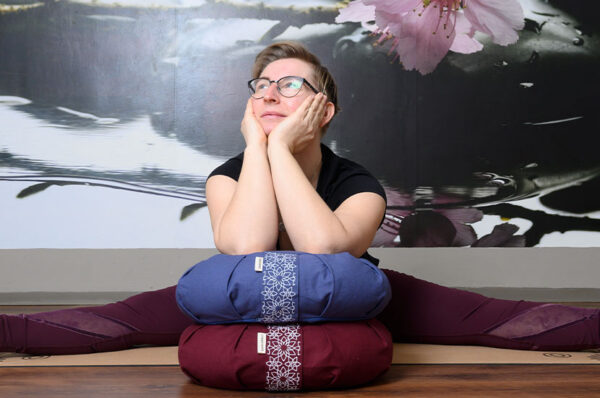
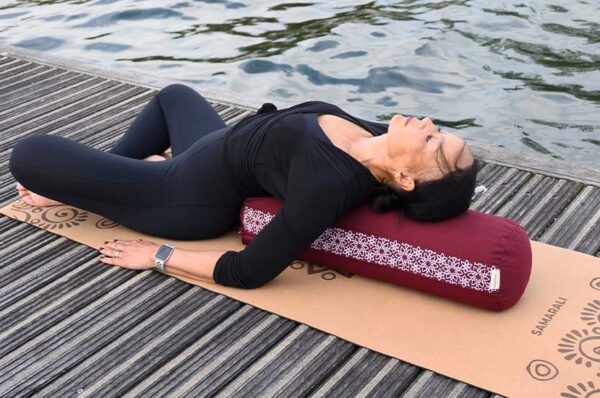
A supportive prop like a yoga bolster can make a significant difference in Yin yoga, allowing you to fully relax into long-held poses without strain.
Should you practice Hatha or Yin Yoga as a beginner?
Both Hatha and Yin yoga are well suited to beginners, and the better starting point depends on what you are looking for. Hatha yoga is ideal if you want to learn foundational poses, build body awareness, and develop a physical practice. Yin yoga is a great entry point if you are drawn to stillness, stress relief, and a gentler introduction to the mat.
Hatha yoga is one of the most traditional and widely taught styles, and most beginner yoga classes are rooted in Hatha principles. You will learn how to align your body safely, how to breathe through effort, and how the major posture families feel in your body. This gives you a strong foundation for any yoga practice you want to explore later.
Yin yoga is also beginner-friendly, but for different reasons. There are no complex sequences to memorize and no pressure to perform. You simply come into a shape, settle in, and breathe. Beginners who feel intimidated by active classes or who carry a lot of physical tension often find Yin yoga deeply accessible and immediately calming.
If you are completely new to yoga, starting with a few Hatha classes will help you get comfortable with your body on the mat. From there, adding a weekly Yin session is a wonderful way to deepen your practice and balance the more active work. Having a quality yoga mat that provides grip and cushioning will support you in both styles from day one.
Can you combine Hatha and Yin Yoga in your practice?
Yes, combining Hatha and Yin yoga is not only possible but highly recommended. The two styles complement each other directly. Hatha yoga builds strength and activates the body, while Yin yoga restores and releases it. Together, they create a well-rounded practice that supports both physical development and deep recovery.
A common and effective approach is to practice Hatha yoga on active days and use Yin yoga as a recovery or wind-down practice. Many practitioners find that a Yin session after a more dynamic Hatha class helps them release any residual tension and transition into a calmer state. Some teachers even weave a short Yin sequence into the closing portion of a Hatha class.
You can also structure your week with intention. For example, two or three Hatha sessions paired with one or two Yin sessions create a natural rhythm of effort and rest. This balance reflects a core principle in yoga philosophy: the interplay between effort and ease, or in Sanskrit, sthira and sukha.
The good news is that the props you use in both practices overlap. A bolster, a blanket, and a supportive mat serve you equally well in a dynamic Hatha flow and a long Yin hold. We offer a range of yoga accessories made from sustainable materials that are designed to support exactly this kind of varied, mindful practice.
Whether you lean toward the active energy of Hatha or the quiet depth of Yin, both paths lead to greater body awareness, reduced stress, and a more connected relationship with your practice. Ready to support your practice with the right tools? At Samarali you will find everything you need, from a natural rubber yoga mat and an organic cotton yoga blanket to a yoga bolster that makes every Yin hold more restorative. Shop the full yoga collection now and find the pieces that will carry you through every session, whether you are flowing through Hatha or melting into Yin.
Frequently Asked Questions
How long should I hold poses in Yin yoga compared to Hatha yoga?
In Yin yoga, poses are typically held for 3 to 5 minutes, and advanced practitioners sometimes hold them for up to 10 minutes. This extended duration is what allows the practice to reach deep connective tissue and fascia. In Hatha yoga, poses are generally held for 5 to 10 breaths, or around 30 to 60 seconds, which is long enough to build strength and awareness without the passive, surrendering quality of Yin. As a beginner to Yin yoga, starting with 2 to 3 minutes per pose and gradually increasing the duration as your body adapts is a safe and effective approach.
What is the best time of day to practice Hatha versus Yin yoga?
Hatha yoga is generally better suited to the morning or early afternoon, when your body is ready to be energized, warmed up, and physically engaged. The active nature of Hatha helps build heat and focus, making it a great way to set a positive tone for the day. Yin yoga, on the other hand, is an excellent evening practice because its slow, restorative quality helps the nervous system wind down and prepare for restful sleep. That said, there are no strict rules — a midday Yin session can be a wonderful stress reset, and an early morning Yin practice can gently ease stiff joints before more active movement.
Can Yin yoga help with muscle soreness after a Hatha yoga class?
Yes, Yin yoga can be a highly effective tool for recovery after a more demanding Hatha session. While Yin yoga does not target muscles directly in the same way active stretching does, the long-held poses release tension in the surrounding connective tissue and fascia, which can ease the feeling of tightness and soreness. The parasympathetic nervous system activation that comes with Yin also supports the body’s natural repair processes. Waiting 24 hours after intense Hatha practice before doing deep Yin holds is a good precaution, particularly if your muscles are acutely fatigued.
What props do I actually need to get started with both Hatha and Yin yoga at home?
For Hatha yoga at home, a good-quality non-slip yoga mat is the most essential item, along with a pair of yoga blocks to support alignment in standing and seated poses. For Yin yoga, a yoga bolster is a game-changer, as it allows you to fully relax into long holds without muscular effort or strain. A folded blanket can double as a bolster substitute and also provides cushioning under the knees or hips. Starting with a mat, two blocks, a bolster, and a blanket gives you everything you need to practice both styles safely and comfortably at home.
Is Yin yoga suitable if I have tight hips or limited flexibility?
Yin yoga is actually one of the best practices for people with tight hips or limited flexibility, because it is specifically designed to work into areas of chronic tension over time. The key is to use props generously — placing a bolster or folded blanket under your hips in seated poses removes the strain of trying to force a deep stretch before your body is ready. The goal in Yin yoga is never to reach a maximum stretch but to find a position where you feel a mild, tolerable sensation and can breathe comfortably for several minutes. Consistent practice, even just once a week, tends to produce noticeable improvements in hip mobility within a few weeks.
How do I know if I'm progressing in Hatha yoga if I'm not aiming for advanced poses?
Progress in Hatha yoga is far broader than achieving advanced postures, and most meaningful growth happens in subtler ways. Signs of progress include improved breath control during challenging poses, better postural awareness in everyday life, increased ability to stay focused and calm when a pose is difficult, and greater ease in poses that once felt awkward or uncomfortable. Keeping a simple practice journal where you note how your body and mind feel after each session can help you track this kind of qualitative progress. Remember that consistency, body awareness, and a deepening relationship with your breath are the true hallmarks of a growing Hatha practice.
Can I practice Hatha and Yin yoga if I have an injury or chronic pain condition?
Both Hatha and Yin yoga can be practiced with injuries or chronic pain, but modifications and professional guidance are essential. For Hatha yoga, informing your teacher about your condition before class allows them to offer pose alternatives that keep you safe and still engaged. For Yin yoga, it is particularly important to distinguish between the mild, productive discomfort of a deep stretch and any sharp, pinching, or nerve-related pain — the latter is always a signal to come out of the pose immediately. Consulting with a physiotherapist or a yoga teacher who has experience with therapeutic yoga before beginning either practice is strongly recommended if you are managing an ongoing injury or condition.