


Most people benefit from practicing Hatha yoga two to four times per week. This frequency gives your body enough exposure to build strength, flexibility, and breath awareness while allowing adequate recovery between sessions. If you are brand new to Hatha yoga, starting with two sessions a week and gradually increasing from there is a smart, sustainable approach.
Below, we unpack the most common questions people have about Hatha yoga frequency, session length, and what consistent practice actually does to your body over time.
How many days a week should you do Hatha Yoga?
For most practitioners, two to four Hatha yoga sessions per week strikes the right balance between progress and recovery. Beginners do well with two sessions, intermediates with three, and more experienced practitioners can comfortably train four or more times weekly. The right number depends on your current fitness level, your goals, and how your body responds after each session.
Hatha yoga is gentler on the body than many other physical disciplines, which means you can practice more frequently without the same risk of overtraining. That said, the goal is not simply to accumulate hours on the mat. Consistency and quality of attention matter far more than raw frequency.
A practical starting point looks something like this:
- Beginners: 2 sessions per week, with at least one rest day between each
- Intermediate practitioners: 3 to 4 sessions per week, mixing longer and shorter practices
- Experienced practitioners: 4 to 6 sessions per week, often combining full sessions with shorter morning or restorative practices
Listen to your body above all else. If you feel fatigued, stiff, or mentally drained heading into a session, a rest day will serve you better than forcing yourself onto the yoga mats.
Does practicing Hatha Yoga every day do more harm than good?
Practicing Hatha yoga every day is generally safe for most people, provided sessions vary in intensity. Daily practice can deepen your connection to breath, posture, and mindfulness. However, doing intense or physically demanding sequences every single day without rest or variation can lead to overuse strain, particularly in the joints, lower back, and wrists.
The key distinction is between active and restorative practice. Not every daily session needs to be a full 60-minute flow. A short 15-minute morning sequence focused on breath and gentle movement counts as practice and keeps the habit alive without taxing your body.
If you want to practice daily, consider alternating between:
- Active sessions that include standing poses, balance work, and core engagement
- Restorative sessions focused on long-held poses, supported stretches, and breathwork
- Meditation or pranayama-only sessions that give your muscles a full rest while still maintaining the practice
Daily practice becomes problematic mainly when practitioners push through pain, skip warm-up and cool-down, or ignore the signals their body is sending. Hatha yoga is rooted in self-awareness, and that awareness extends to knowing when rest is the most intelligent choice.
How long should each Hatha Yoga session be?
A typical Hatha yoga session runs between 45 and 90 minutes. This window gives enough time to warm up the body, move through a balanced sequence of postures, and wind down with relaxation. Shorter sessions of 20 to 30 minutes are still effective, especially for beginners or on days when time is limited.
Session length is less important than what you do within it. A focused, unhurried 30-minute practice often delivers more benefit than a distracted 75-minute one. That said, some elements of Hatha yoga, particularly deep stretching and savasana, do require time to take effect, so regularly cutting sessions very short can limit certain benefits.
A well-structured Hatha session typically includes:
- Centering and breathwork (5 to 10 minutes): Settling the mind and establishing a breathing rhythm
- Warm-up (10 to 15 minutes): Gentle movements to prepare the spine and joints
- Main sequence (20 to 40 minutes): Standing poses, seated poses, twists, and balances
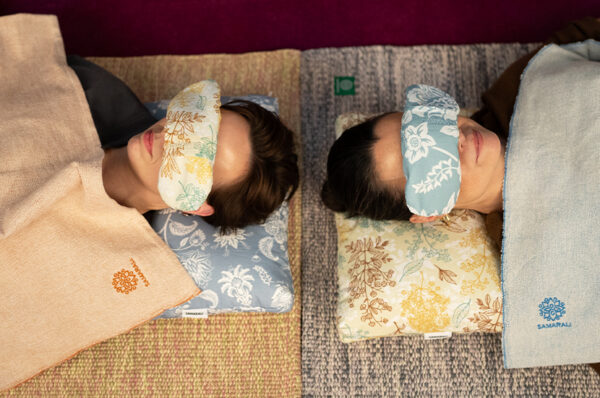
- Cool-down and savasana (10 to 15 minutes): Restorative poses and final relaxation
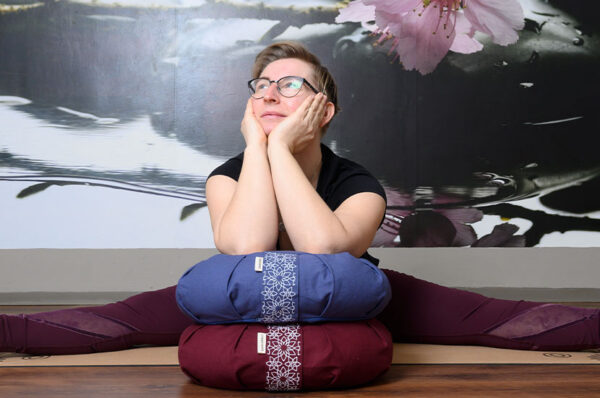
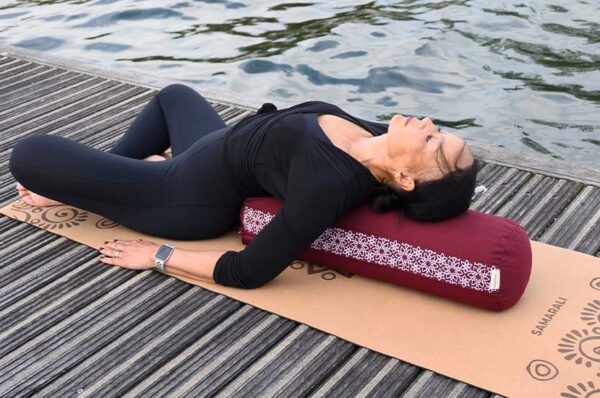
Using supportive props, like a yoga bolster, can make longer sessions more comfortable and help you hold restorative poses without strain, which is particularly useful during the cool-down phase.
What happens to your body when you practice Hatha Yoga consistently?
Consistent Hatha yoga practice produces measurable improvements in flexibility, strength, posture, and stress regulation. These changes build gradually over weeks and months rather than appearing overnight, which is part of what makes regular practice so rewarding. The body adapts in layers, and each layer of change supports the next.
Within the first few weeks of regular practice, most people notice improved range of motion in the hips, hamstrings, and spine. The nervous system begins to respond to breathwork cues, making it easier to shift out of stress responses. Posture often improves noticeably as core and back muscles strengthen through repeated engagement.
Over months of consistent practice, the benefits deepen:
- Muscular balance: Hatha yoga works both sides of the body and targets stabilizing muscles that other exercise forms often miss
- Joint health: Regular movement through full ranges of motion keeps joints lubricated and reduces stiffness
- Breath capacity: Pranayama and breath-focused movement gradually expand lung capacity and improve breath efficiency
- Mental clarity: The meditative quality of Hatha practice trains sustained attention, which carries over into daily life
- Sleep quality: Many consistent practitioners report deeper, more restful sleep as the nervous system learns to downregulate more effectively
These benefits compound over time. The practitioners who see the most transformation are not necessarily those who practice the longest each session, but those who show up consistently, week after week, with genuine presence and intention. That is the real promise of Hatha yoga.
Ready to support your practice with the right equipment? At Samarali, you will find everything you need to make each session more comfortable and intentional — from a natural rubber yoga mat that gives you the grip and cushioning your practice deserves, to a yoga bolster that makes restorative poses genuinely restful. Browse the full yoga mat collection and yoga accessories to find what fits your practice best — and show up to your next session fully equipped. Shop now.
Frequently Asked Questions
How long does it take to see real results from Hatha yoga?
Most practitioners notice early changes — improved flexibility, better sleep, and reduced tension — within two to four weeks of consistent practice. More significant physical and mental transformations, such as meaningful strength gains, postural correction, and lasting stress resilience, typically emerge after two to three months of regular sessions. The key is showing up consistently rather than waiting for the u0022perfectu0022 schedule or session length.
Is Hatha yoga enough on its own, or should I combine it with other forms of exercise?
Hatha yoga can absolutely serve as a standalone practice, especially for improving flexibility, breath control, posture, and stress management. However, if your goals include significant cardiovascular fitness or heavy muscle hypertrophy, pairing Hatha yoga with activities like walking, cycling, or strength training will give you a more complete fitness profile. The good news is that Hatha yoga complements almost every other form of exercise beautifully, reducing injury risk and improving recovery.
What should I do if I feel sore after a Hatha yoga session?
Mild muscle soreness after Hatha yoga — particularly in the hips, hamstrings, or core — is normal, especially in the early weeks of practice. The best response is a gentle restorative session the following day rather than complete inactivity, as light movement promotes blood flow and speeds recovery. If soreness is sharp, localized in a joint, or persists beyond 48 to 72 hours, it is worth consulting a healthcare professional to rule out strain or injury.
Can I practice Hatha yoga if I have no prior yoga or fitness experience at all?
Yes — Hatha yoga is widely considered one of the most beginner-friendly yoga styles precisely because of its slower pace and emphasis on foundational postures and breath. Starting with two sessions per week, using props like blocks and bolsters, and attending a beginner-specific class (in person or online) will help you build confidence and correct alignment from day one. Avoid comparing your practice to more experienced practitioners; everyone starts at the beginning.
What is the best time of day to practice Hatha yoga?
The best time is simply the time you can practice consistently. That said, morning sessions are popular because they set a calm, focused tone for the rest of the day and the body’s need for a longer warm-up encourages mindful, unhurried movement. Evening sessions work well for unwinding, releasing physical tension from the day, and preparing the nervous system for sleep — particularly restorative or breath-focused practices. Experiment with both and let your schedule and how your body responds guide the decision.
How do I know if I'm progressing in my Hatha yoga practice?
Progress in Hatha yoga is often subtler than in other fitness disciplines, so it helps to track a few different markers. Physical signs include deeper range of motion in key poses, improved balance, and the ability to hold postures with less effort. Off-the-mat signs — such as steadier breathing under stress, better posture throughout the day, and improved sleep quality — are equally valid indicators of progress. Keeping a short practice journal can make these gradual changes much easier to recognize over time.
Are there any common mistakes beginners make with their Hatha yoga routine?
The most common mistake is doing too much too soon — jumping to daily hour-long sessions before the body has adapted, which increases the risk of burnout or strain. Skipping the warm-up and savasana to save time is another frequent error, as both phases play a critical role in injury prevention and nervous system regulation. Finally, many beginners focus heavily on achieving the u0022correctu0022 shape of a pose rather than on breath and internal awareness, which is actually the core of Hatha practice.