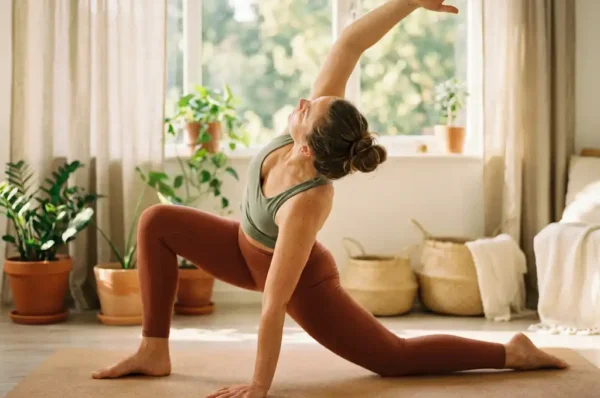



Vinyasa yoga is built on five core elements: breath (pranayama), movement (asana), gaze (drishti), energy locks (bandhas), and flow sequencing. These elements work together to create the dynamic, breath-synchronized practice that defines Vinyasa. Understanding each one helps you move with more intention, stability, and awareness on the mat.
Whether you are brand new to Vinyasa or deepening an existing practice, each element adds a distinct layer of presence and control. The questions below unpack how each one functions and why it matters.
How do the 5 elements work together in a Vinyasa flow?
In Vinyasa yoga, the five elements (breath, movement, gaze, energy locks, and sequencing) function as an integrated system rather than separate techniques. Breath drives the transitions between poses. Bandhas stabilize the body internally. Drishti focuses the mind. Sequencing creates an intelligent progression. Together, they transform a series of poses into a moving meditation.
Think of these elements as layers that build on each other. Breath is the foundation. Without it, Vinyasa becomes aerobic exercise rather than a mindful practice. Movement is synchronized to the inhale and exhale, so each transition has a clear beginning and end. Bandhas provide the internal scaffolding that keeps the spine safe and the energy contained. Drishti anchors attention, preventing the mind from wandering. And thoughtful sequencing ensures the body opens progressively, reducing injury risk while building heat and momentum.
When all five elements align, the practice enters what teachers often describe as a state of flow. The body moves fluidly, the mind stays present, and the breath becomes the quiet conductor of the entire experience. Practicing on a supportive surface makes this integration far easier. A quality yoga mat provides the grip and cushioning that lets you focus on these subtleties rather than slipping or adjusting your footing.
What role does breath play in Vinyasa yoga?
Breath is the defining element of Vinyasa yoga. Every movement is initiated and guided by either an inhale or an exhale, which is what distinguishes Vinyasa from other yoga styles. The breath sets the pace, regulates the nervous system, and keeps the practitioner anchored in the present moment throughout the sequence.
In most Vinyasa classes, practitioners use Ujjayi breath, sometimes called ocean breath. This involves a slight constriction at the back of the throat, creating an audible sound that helps maintain a steady rhythm. The sound itself becomes a feedback tool: if you can no longer hear your breath, you are likely moving too fast or working too hard.
The relationship between breath and movement is precise. Expansive movements, like lifting the arms or opening the chest, are paired with inhales. Contracting or folding movements are paired with exhales. This pairing is not arbitrary. Inhales naturally lift and expand the ribcage, making upward movements more efficient. Exhales release tension and create space for forward folds and twists. Following this rhythm makes the physical practice feel more natural and less forced.
Beyond mechanics, the breath also regulates the nervous system. Slow, controlled breathing activates the parasympathetic response, reducing stress and keeping the mind calm even during challenging sequences. This is why a well-paced Vinyasa class can feel both energizing and deeply calming at the same time.
What are bandhas and why do they matter in Vinyasa?
Bandhas are internal energy locks created by engaging specific muscle groups in the body. In Vinyasa yoga, the two most commonly used bandhas are Mula Bandha (root lock, a gentle lift of the pelvic floor) and Uddiyana Bandha (a subtle drawing in of the lower abdomen). These locks stabilize the core, protect the spine, and help channel energy upward through the body.
From a purely physical standpoint, engaging the bandhas is similar to activating deep core muscles. When you lift through the pelvic floor and draw the lower belly in and up, the lumbar spine is supported and the pelvis becomes more stable. This matters enormously in Vinyasa because the practice involves constant transitions, weight shifts, and dynamic movements that place real demand on the lower back and hips.
Mula Bandha in practice
Mula Bandha is a gentle, sustained lift of the perineum and pelvic floor. It does not mean gripping or tensing. Think of it as a subtle upward drawing sensation that you maintain throughout the practice. This lock grounds the energy of the body and creates a stable base from which all movement originates.
Uddiyana Bandha in practice
Uddiyana Bandha involves drawing the lower abdomen in and slightly upward on the exhale. In Vinyasa, this lock is particularly active during transitions like jumping forward or lifting into arm balances. It lightens the body, protects the lower back, and creates the buoyancy that makes these movements feel more controlled and less effortful over time.
Both bandhas become more accessible with consistent practice. Many students find that once they understand what they are looking for, the engagement starts to feel natural rather than forced.
How does drishti improve your Vinyasa practice?
Drishti is the practice of fixing your gaze on a specific focal point during yoga poses and transitions. In Vinyasa yoga, drishti improves balance, concentration, and the quality of movement by giving the mind a single point of focus. When the eyes are steady, the mind tends to follow, reducing distraction and deepening the meditative quality of the practice.
There are nine traditional drishti points used in yoga, including the tip of the nose, the navel, the thumbs, and a point on the horizon. Each pose has a recommended drishti that supports both the physical alignment and the internal focus of that shape. In a standing balance pose like Warrior III, for example, fixing the gaze on a still point ahead prevents the wobbling that comes from a wandering eye.
Beyond balance, drishti plays a quieter role in the overall experience of Vinyasa. When you practice without a focal point, the eyes tend to jump around the room, pulling the mind with them. This breaks the meditative thread of the practice. Maintaining drishti is one of the simplest ways to keep the practice internal, turning it from an external physical workout into a genuine inward experience.
For practitioners working toward a more consistent and intentional practice, pairing drishti with breath awareness creates a powerful anchor. When both the gaze and the breath are steady, the body tends to settle into poses with greater ease and less mental resistance. This integration of all five elements is ultimately what makes Vinyasa yoga such a rich and sustainable practice for both body and mind.
Frequently Asked Questions
I'm completely new to Vinyasa yoga — which of the five elements should I focus on learning first?
Start with the breath. Ujjayi breathing is the foundation that everything else in Vinyasa is built upon, and developing a consistent breath rhythm before worrying about bandhas or drishti will make your early practice far more manageable. Once breath feels natural, layer in drishti for balance and focus, then gradually introduce bandha awareness as your body becomes more familiar with the transitions. Trying to master all five elements at once is one of the most common beginner mistakes — progress is faster and more sustainable when you build the layers one at a time.
How do I know if I'm actually engaging my bandhas correctly, or just tensing up?
The key distinction is subtlety and sustainability — a correctly engaged bandha feels like a gentle, internal lift rather than a hard muscular grip, and you should be able to maintain it without holding your breath or creating tension elsewhere in the body. A useful test is to engage what you think is Mula Bandha and then check whether your glutes, inner thighs, or jaw are clenching at the same time; if they are, you’re over-gripping. Working with a qualified Vinyasa teacher in person, even for just a few sessions, can make an enormous difference in helping you find the correct sensation, since bandha engagement is difficult to self-diagnose from written descriptions alone.
What's the best way to practice drishti if I keep losing my gaze point mid-flow?
Begin by practicing drishti in static, held poses before attempting to maintain it through dynamic transitions — standing poses like Warrior I or Tree Pose are ideal starting points. Choose a small, specific focal point (a spot on the wall, a mark on the floor) rather than a general area, as a precise target is much easier for the brain to lock onto. Over time, as breath and movement become more automatic, sustaining your gaze through transitions will feel increasingly natural because the mind has less competing information to process.
Can I practice Vinyasa yoga safely if I have lower back issues?
Yes, but with important modifications and ideally with guidance from both a yoga teacher and a healthcare professional familiar with your condition. Consistent bandha engagement — particularly Uddiyana Bandha — is actually one of the most protective tools available for the lower back, as it activates the deep stabilizing muscles that support the lumbar spine during transitions. Avoid deep unsupported backbends and high-impact jump-throughs until your core stability improves, and don’t hesitate to use props like blocks to reduce the range of motion in forward folds. A well-structured Vinyasa practice can strengthen and decompress the lower back over time, but rushing the process is counterproductive.
How does Vinyasa sequencing differ from just stringing random poses together, and does it really matter?
Thoughtful Vinyasa sequencing follows a deliberate arc — it warms the body progressively, introduces peak poses only after the relevant muscles and joints are properly prepared, and then systematically winds the body down with counter-poses and cooling shapes. Randomly ordering poses, by contrast, risks placing demanding postures (like deep hip openers or arm balances) on a body that hasn’t been adequately prepared, which significantly increases injury risk. It also matters energetically: a well-sequenced class builds heat and momentum toward a peak, then releases it gracefully, leaving practitioners feeling balanced rather than depleted. If you’re self-practicing, studying the sequencing logic of classes you enjoy is one of the fastest ways to deepen your overall understanding of Vinyasa.
Why do I feel mentally drained rather than calm after some Vinyasa classes?
Mental fatigue after Vinyasa is almost always a sign that the breath was either too shallow, too fast, or abandoned altogether during challenging sequences — without the regulating effect of controlled Ujjayi breathing, the nervous system stays in a heightened state rather than finding the parasympathetic calm the practice is designed to produce. Another common culprit is a class pace that doesn’t match your current fitness or experience level, forcing you to spend cognitive energy just keeping up rather than integrating the five elements. Try attending a slower-paced or beginner-friendly Vinyasa class and prioritizing breath continuity above all else — even if that means taking Child’s Pose to reset — and notice whether the post-practice feeling shifts.
Are there any tools or resources that can help me deepen my understanding of these five elements outside of regular classes?
Beyond attending classes, books like ‘The Yoga Bible’ by Christina Brown or David Swenson’s Ashtanga manuals offer detailed breakdowns of breath, bandhas, and drishti that translate well to Vinyasa practice. Online platforms such as Yoga International and Glo offer courses specifically focused on pranayama and alignment fundamentals that complement in-person learning. Keeping a short practice journal after each session — noting which elements felt integrated and which felt absent — is a surprisingly effective self-coaching tool that builds body awareness much faster than passive repetition alone.