


Restorative yoga poses are one of the most effective tools for recovering from holiday stress. By holding gentle, supported positions for extended periods, your nervous system shifts out of fight-or-flight mode and into genuine rest. Poses like Supported Child’s Pose, Legs Up the Wall, and Reclined Bound Angle are particularly well suited to releasing the physical and mental tension that tends to build up over the festive season. Below, we answer the most common questions about using restorative yoga for holiday stress recovery so you can build a practice that actually works.
Which restorative yoga poses work best for stress relief?
The most effective restorative yoga poses for stress relief are those that encourage a passive, supported release of tension in the body. Supported Child’s Pose, Legs Up the Wall (Viparita Karani), Reclined Bound Angle (Supta Baddha Konasana), and Supported Savasana consistently rank among the best relaxing yoga poses for calming an overstimulated nervous system after the holidays.
Here is a closer look at each pose and why it works so well for holiday stress recovery:
- Supported Child’s Pose: Resting your torso on a bolster or folded blanket while in Child’s Pose gently compresses the belly, which stimulates the vagus nerve and encourages a parasympathetic response. It is deeply grounding and works well as an opening pose.
- Legs Up the Wall (Viparita Karani): Elevating the legs reverses blood flow, reduces swelling in the feet and ankles (common after holiday travel), and naturally slows the heart rate. It is one of the most accessible restorative yoga poses for beginners and experienced practitioners alike.
- Reclined Bound Angle (Supta Baddha Konasana): Lying on your back with the soles of your feet together and knees falling open releases tension across the inner thighs and hips, areas where many people hold chronic stress. A bolster placed under the spine deepens the chest opening.
- Supported Savasana: A bolster under the knees and a blanket over the body transforms the classic final relaxation pose into a fully supported, deeply restorative experience. This is the ideal closing pose for any yoga-after-the-holidays session.
Each of these poses works by removing muscular effort from the equation entirely, giving your body permission to let go rather than brace against stress.
How long should you hold restorative yoga poses to feel results?
For restorative yoga poses to produce genuine stress relief, you should hold each pose for a minimum of five minutes, with ten minutes being the sweet spot for most people. Shorter holds do not give the nervous system enough time to downshift from an activated state into true rest. The longer you stay, the more deeply the body releases.
Unlike active yoga styles where you move through poses in seconds, restorative practice is built around stillness and time. The first two to three minutes in a pose are often spent settling, with the deeper release happening in the minutes that follow. This is why a single five-minute hold is far more effective for holiday stress recovery than five one-minute holds.
If you are new to holding poses this long, start with five minutes per pose and gradually work toward ten. Set a gentle timer so you are not watching the clock, and use props to make the position fully comfortable. Discomfort will pull your attention away from relaxation, which undermines the whole purpose of the practice.
What props do you need for a restorative yoga practice at home?
A home restorative yoga practice requires three core props: a yoga bolster, at least one blanket, and a yoga mat. These three items cover the vast majority of restorative poses. A yoga block and an eye pillow are useful additions, but they are not essential when you are starting out.
The essential props
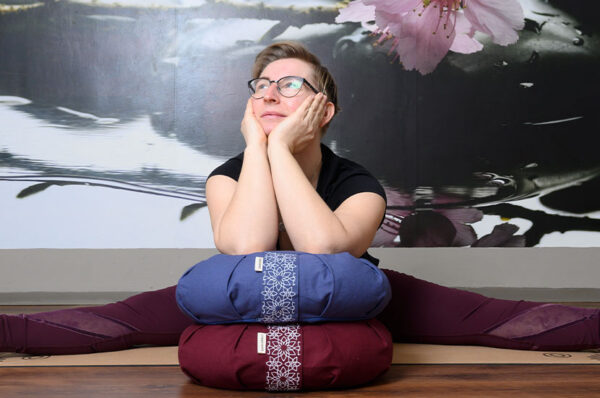
A yoga bolster is the single most important prop in restorative yoga. It provides the firm, supportive lift that allows your body to open passively without muscular effort. A bolster placed under the spine in Reclined Bound Angle or under the chest in Supported Child’s Pose transforms those poses from uncomfortable to deeply nourishing.
A good organic cotton yoga blanket serves multiple functions: folded, it can substitute for a bolster in some poses; laid flat, it provides warmth during long holds; rolled, it supports the neck or knees. Having two blankets gives you even more flexibility.
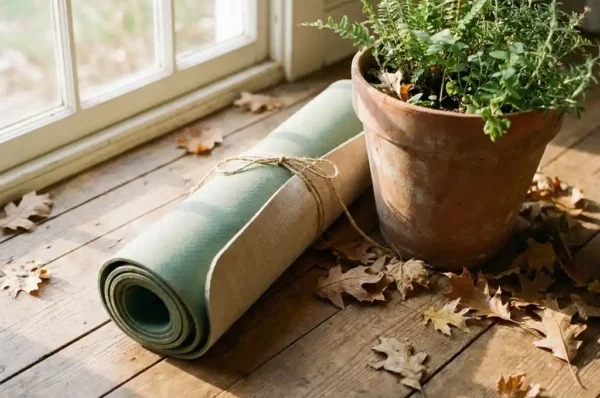
A non-slip yoga mat gives you a clean, defined space to practice and prevents sliding during floor-based poses. If you practice on hard floors, a thicker mat or a folded blanket underneath adds extra cushioning for your joints.
Helpful additions
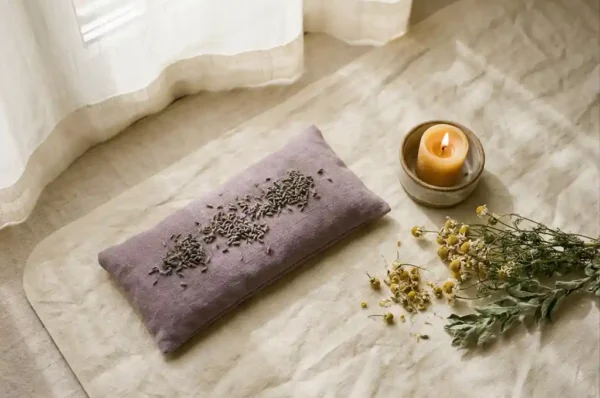
Yoga blocks help bridge gaps between your body and the floor, particularly under the knees in Supported Savasana or under the hands in transitional movements. An eye pillow blocks light and applies gentle pressure to the eye sockets, which activates the oculocardiac reflex and helps slow the heart rate. Both are inexpensive and meaningfully improve the quality of longer holds.
How often should you practice restorative yoga after the holidays?
Practicing restorative yoga two to three times per week after the holidays is enough to make a noticeable difference in stress levels, sleep quality, and overall sense of calm. Even a single weekly session is beneficial, but more frequent short practices tend to outperform one long session per week when it comes to nervous system recovery.
The post-holiday period in January 2026 is an ideal time to build this habit, partly because the contrast between holiday overstimulation and the quieter new year creates a natural opening for slower, more intentional movement. Your body is often genuinely depleted after weeks of disrupted sleep, rich food, travel, and social demands, and restorative yoga directly addresses that depletion.
A practical approach is to anchor your restorative practice to an existing routine. Practicing in the evening, for example, pairs naturally with winding down before bed and can meaningfully improve sleep quality. Even a 20-minute session with two or three poses makes a difference. You do not need to carve out a full hour to benefit from yoga for stress relief. Consistency matters far more than duration, so choose a frequency you can realistically sustain beyond January.
Frequently Asked Questions
Can I do restorative yoga if I have never practiced yoga before?
Absolutely — restorative yoga is one of the most beginner-friendly styles precisely because it requires no prior experience, flexibility, or strength. Every pose is fully supported by props, so your body does not need to do any active work. Start with just two poses, such as Legs Up the Wall and Supported Savasana, hold each for five minutes, and build from there as you grow more comfortable with stillness.
What should I do if I feel restless or anxious instead of relaxed during a pose?
Restlessness in restorative yoga is extremely common, especially in the first few sessions, and it is actually a sign that your nervous system is in a highly activated state — which is exactly why the practice is valuable. Try anchoring your attention to slow, deliberate breathing, extending your exhale to twice the length of your inhale to manually trigger the parasympathetic response. If a particular pose feels genuinely uncomfortable rather than just unfamiliar, adjust your props or switch to a different pose rather than pushing through, as physical discomfort will prevent the mental release you are aiming for.
Can I substitute household items for yoga props if I do not have a bolster or blocks?
Yes — most restorative yoga props can be improvised with items you already have at home. A firm sofa cushion or a tightly rolled sleeping bag works well in place of a bolster, while stacked bed pillows can substitute in gentler poses. Thick bath towels or folded blankets replace yoga blocks in most situations, and a folded hand towel placed over the eyes mimics the effect of an eye pillow reasonably well. The key is to ensure any substitute provides enough firmness and stability to support your body weight without collapsing mid-hold.
Is restorative yoga effective for improving sleep after the holiday period?
Yes, and it is one of the most evidence-supported benefits of a consistent restorative practice. Holding passive poses for extended periods lowers cortisol levels, reduces heart rate, and activates the parasympathetic nervous system — all physiological changes that directly prepare the body for deeper, more restorative sleep. Practicing in the evening, roughly 60 to 90 minutes before bed, tends to produce the strongest sleep benefits, and even a short 20-minute session with two or three poses can make a measurable difference in how quickly you fall asleep and how rested you feel the next morning.
How is restorative yoga different from yin yoga, and which is better for stress recovery?
Both styles involve long holds and floor-based poses, but they work the body in fundamentally different ways. Yin yoga applies gentle stress to the connective tissue and joints with the intention of increasing flexibility, meaning there is a mild, deliberate discomfort involved. Restorative yoga, by contrast, uses props to eliminate all effort and discomfort so the body can release passively — the goal is pure rest, not tissue loading. For holiday stress recovery specifically, restorative yoga is the more targeted choice because its primary aim is nervous system regulation rather than physical conditioning.
What is the best way to structure a short restorative yoga session if I only have 20 to 30 minutes?
A 20 to 30-minute session works best when you limit yourself to two or three poses and give each one a full, uninterrupted hold rather than rushing through more poses with shorter holds. A practical sequence would be to open with Supported Child’s Pose for five minutes, move into Legs Up the Wall for ten minutes, and close with Supported Savasana for five minutes — totalling 20 minutes with transitions. Set a gentle timer for each pose so you are not mentally tracking time, dim the lights, and consider playing soft background sound to help your mind settle more quickly into each hold.
Are there any situations where restorative yoga might not be appropriate after the holidays?
Restorative yoga is safe for the vast majority of people, but there are a few situations where modifications or medical guidance are worth seeking first. People who are pregnant should avoid poses that involve lying flat on the back for extended periods after the first trimester, and inversions like Legs Up the Wall may need adjustment depending on the stage of pregnancy. Those with recent injuries, particularly to the hips, spine, or knees, should consult a physiotherapist or yoga teacher before holding floor-based poses for extended periods. If you have a diagnosed anxiety disorder or trauma history, some people find prolonged stillness initially activating rather than calming — in that case, starting with shorter holds and gradually building duration is a gentler and more effective approach.