


Yes, Vinyasa yoga can absolutely build strength and endurance. The dynamic, flow-based nature of Vinyasa yoga engages multiple muscle groups simultaneously while keeping your heart rate elevated, making it an effective tool for both muscular development and cardiovascular fitness. Whether you are a complete beginner or a seasoned practitioner, Vinyasa offers real, measurable physical benefits that go well beyond flexibility. Below, we break down exactly how it works and what you can realistically expect.
How does Vinyasa yoga build muscle strength?
Vinyasa yoga builds muscle strength by repeatedly loading your body against its own weight through a continuous sequence of poses. Movements like Chaturanga Dandasana, Warrior sequences, and Plank transitions demand sustained muscular engagement from your arms, core, legs, and back. Over time, this consistent bodyweight resistance stimulates muscle development in a way that is comparable to many conventional strength exercises.
What makes Vinyasa particularly effective for strength is the time under tension principle. Holding and transitioning through poses keeps muscles working for extended periods rather than the brief bursts typical of traditional weightlifting. Your stabilising muscles, the smaller, deeper muscles that support joints and posture, get a serious workout because every pose requires balance and control, not just raw force.
Key muscle groups targeted during a typical Vinyasa flow include:
- Core: Nearly every pose activates the abdominal and lower back muscles to maintain alignment.
- Upper body: Chaturanga, Downward Dog, and arm balances build shoulder, chest, and tricep strength.
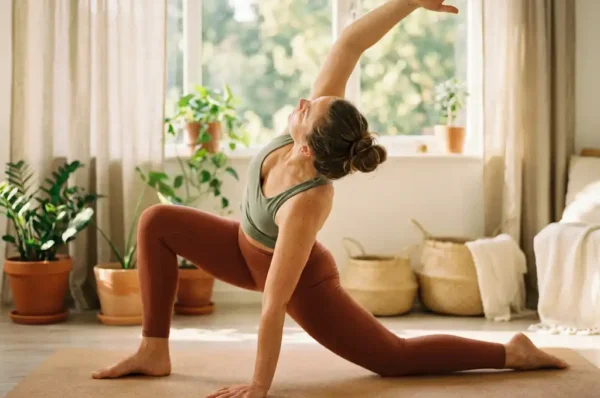
- Legs and glutes: Warrior poses, Chair pose, and lunges develop lower body power and stability.
- Back muscles: Backbends and transitions engage the entire posterior chain.
Practising on a supportive, grippy surface makes a genuine difference when you are working through these demanding sequences. A quality yoga mat gives you the traction and cushioning needed to hold poses safely and with confidence, which directly supports your ability to build strength over time.
Can Vinyasa yoga improve cardiovascular endurance?
Yes, Vinyasa yoga can meaningfully improve cardiovascular endurance. The continuous, breath-linked movement of a Vinyasa flow elevates your heart rate into a moderate aerobic zone, training your cardiovascular system in a similar way to activities like brisk walking or cycling. The faster the pace and the fewer the rest breaks, the greater the cardiovascular demand.
The key driver here is the seamless connection between breath and movement. Vinyasa, which translates roughly to “to place in a special way,” synchronises each inhale and exhale with a specific transition. This rhythmic pattern keeps your body in near-constant motion, sustaining an elevated heart rate throughout the session. Over weeks of regular practice, your heart and lungs adapt by becoming more efficient at delivering oxygen to working muscles.
It is worth noting that the cardiovascular intensity of Vinyasa varies widely depending on the style and teacher. A slow, mindful flow will sit at the lower end of the aerobic range, while a fast-paced Power Vinyasa class can push you into a genuinely vigorous workout. If building endurance is your primary goal, choosing classes that maintain momentum and limit long static holds will give you the best results.
How does Vinyasa yoga compare to traditional strength training?
Vinyasa yoga and traditional strength training develop strength through different mechanisms, and each has distinct advantages. Traditional strength training, using free weights or machines, allows for progressive overload by gradually increasing resistance beyond bodyweight. Vinyasa yoga works primarily with bodyweight, which limits maximum load but builds functional strength, flexibility, and body awareness simultaneously.
Where Vinyasa yoga has the edge
Vinyasa excels at developing functional, integrated strength. Because you are always moving through full ranges of motion, you build strength alongside flexibility rather than sacrificing one for the other. It also trains balance, coordination, and breath control in ways that isolated gym exercises simply do not address. For many people, the mind-body connection developed through Vinyasa translates into better movement quality in everyday life.
Where traditional strength training has the edge
If your goal is maximum hypertrophy (muscle size) or sport-specific power, traditional strength training wins. The ability to progressively overload with heavier weights over time creates a more direct pathway to significant muscle mass. Vinyasa yoga will tone and strengthen, but it has a natural ceiling when it comes to building bulk.
For most wellness-focused practitioners, the two approaches complement each other beautifully. Many people find that a consistent Vinyasa practice improves their performance in the gym by enhancing mobility, core stability, and recovery, while strength training adds the load-bearing stimulus that yoga alone cannot fully replicate.
How often should you practice Vinyasa yoga to see strength gains?
To see noticeable strength gains from Vinyasa yoga, practising three to four times per week is a solid target. This frequency gives your muscles enough stimulus to adapt and grow while allowing adequate recovery time between sessions. Beginners may notice improvements with as little as two sessions per week, while more advanced practitioners often benefit from daily practice with varied intensity.
Consistency matters far more than duration. A focused 45-minute Vinyasa session three times a week will produce better results than a single two-hour class once a week. Your body builds strength through repeated exposure to challenge, not occasional bursts of effort.
A few practical guidelines to structure your practice for strength development:
- Vary your intensity: Mix vigorous flow sessions with slower, deeper practices to balance effort and recovery.
- Progress gradually: Introduce more challenging poses, such as arm balances or inversions, as your foundational strength grows.
- Pay attention to alignment: Proper form activates the right muscles and reduces injury risk, making each session more effective.
- Support your practice off the mat: Adequate sleep, hydration, and nutrition all influence how quickly your body adapts to the training stimulus.
If you are just starting out, we recommend exploring our range of yoga sets to make sure you have everything you need to practise comfortably and consistently. Having the right gear removes friction from your routine, making it easier to show up regularly and stay committed to your strength goals.
Frequently Asked Questions
Can I use Vinyasa yoga as my only form of exercise, or do I need to combine it with other workouts?
Vinyasa yoga can absolutely serve as a standalone exercise practice, especially if your goals are general fitness, functional strength, flexibility, and cardiovascular health. However, if you have specific goals like significant muscle mass gain or high-level athletic performance, combining Vinyasa with traditional strength training or sport-specific conditioning will give you more complete results. For the majority of people focused on overall wellness, a consistent Vinyasa practice covers a remarkably broad range of physical fitness needs.
I'm a complete beginner with very little upper body strength — will I be able to keep up with a Vinyasa class?
Yes, and this is actually one of the best reasons to start Vinyasa yoga. Most poses have beginner-friendly modifications — for example, dropping your knees in Chaturanga or using blocks to support balance poses — that allow you to build strength progressively without overstressing your joints or muscles. The key is to communicate with your instructor, choose beginner or all-levels classes to start, and resist the urge to push into full expressions of poses before your body is ready. Your upper body strength will develop naturally over weeks of consistent practice.
How long does it typically take to notice real strength and endurance improvements from Vinyasa yoga?
Most practitioners begin noticing meaningful improvements in muscular endurance, stability, and overall energy within four to six weeks of consistent practice at three or more sessions per week. Visible strength changes — such as improved muscle tone or the ability to hold challenging poses like Plank or Warrior III with greater ease — typically become apparent within eight to twelve weeks. Individual results vary based on your starting fitness level, practice frequency, and how well you support your training with proper nutrition and recovery.
What are the most common mistakes beginners make that slow down their strength progress in Vinyasa?
The most common mistake is sacrificing alignment for speed — rushing through transitions without engaging the correct muscles means you are moving through poses rather than building strength from them. Another frequent error is skipping the foundational poses in favour of advanced variations too soon, which increases injury risk and actually delays progress. Finally, many beginners underestimate the importance of rest and recovery, practising every day at high intensity without giving muscles time to repair and grow stronger. Slowing down, focusing on form, and building volume gradually will accelerate your results far more than pushing harder.
Is Vinyasa yoga suitable for building strength if I'm recovering from an injury?
Vinyasa yoga can be a valuable part of injury rehabilitation, but it requires careful adaptation and, ideally, clearance from a physiotherapist or medical professional before you begin. Many of the low-impact, controlled movements in Vinyasa can support joint stability and muscle reactivation during recovery. However, certain poses — particularly those loading the wrists, shoulders, or knees — may need to be avoided or modified depending on your specific injury. Always inform your instructor about your condition so they can offer appropriate modifications throughout the class.
Does the style of Vinyasa class I choose make a big difference to my strength and endurance outcomes?
Yes, the style matters significantly. Power Vinyasa and Athletic Flow classes are specifically designed to maximise muscular challenge and cardiovascular demand, making them the most effective choices if strength and endurance are your primary goals. Traditional Vinyasa classes offer a more balanced blend of strength, flexibility, and mindfulness, while Slow Flow or Yin-Vinyasa hybrids prioritise mobility and recovery over intensity. Rotating between different styles is actually an excellent strategy — vigorous classes build fitness while slower sessions improve range of motion and support muscle recovery.
What equipment or accessories beyond a yoga mat can help me get more out of my Vinyasa practice for strength building?
A high-quality, non-slip yoga mat is the single most important piece of equipment, as it directly affects your ability to hold strength-demanding poses safely. Beyond that, yoga blocks can help you maintain proper alignment in poses while your strength is still developing, ensuring you are working the right muscles rather than compensating with others. A yoga strap is useful for deepening stretches without straining, which supports flexibility gains that complement your strength work. For those practising at home, investing in a complete yoga set that includes these essentials removes barriers to consistent practice and helps you progress faster.
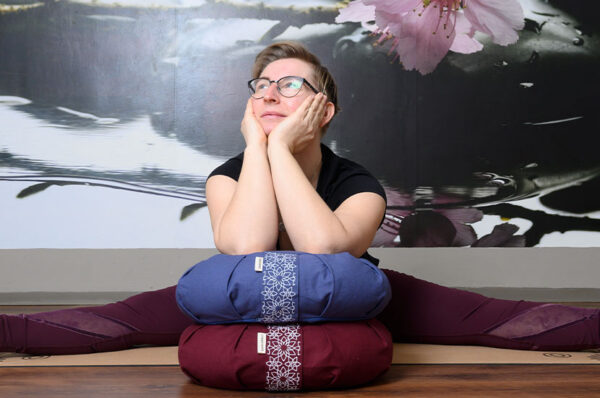
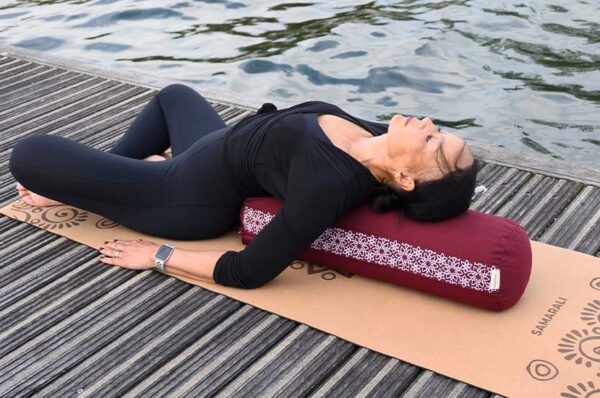
Ready to take your Vinyasa practice to the next level? At Samarali, you will find everything you need to practise with purpose and comfort. Whether you are looking for a natural rubber yoga mat that gives you the grip and support to power through demanding flows, or a complete yoga set that sets you up from day one, our collection is designed for practitioners who take their practice seriously. For those moments when your body needs to recover and restore after an intense session, our yoga bolster and organic cotton yoga blanket are the perfect companions. Give your practice the foundation it deserves — shop the Samarali yoga collection now.