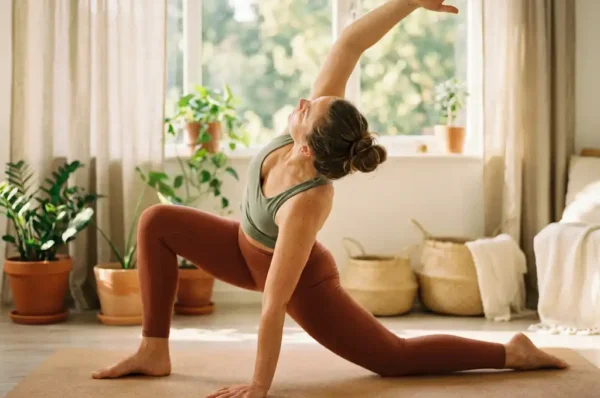



Yes, Hatha yoga can genuinely improve your sleep. Its combination of slow, intentional movement, breathwork, and relaxation techniques helps calm the nervous system and prepare both body and mind for rest. Whether you struggle to wind down at night or simply want deeper, more restorative sleep, a regular Hatha practice can make a meaningful difference.
Below, we break down exactly how it works, which poses to try, when to practice, and how it can help with more persistent sleep challenges like insomnia.
How does Hatha yoga help you fall asleep faster?
Hatha yoga helps you fall asleep faster by activating the parasympathetic nervous system, the part of your body responsible for rest and recovery. The slow, controlled movements and deep breathing that define Hatha practice lower cortisol levels, reduce muscle tension, and signal to your brain that it is safe to relax. This physiological shift makes the transition into sleep much smoother.
Unlike vigorous styles such as Vinyasa or Ashtanga, Hatha yoga is deliberately paced. Poses are held for several breaths at a time, encouraging you to settle into your body rather than power through it. This sustained stillness trains your nervous system to downregulate, which is exactly what needs to happen before sleep.
Breathwork plays a particularly important role here. Techniques like diaphragmatic breathing and extended exhales slow the heart rate and quiet mental chatter. When your mind is less busy and your body less tense, falling asleep stops feeling like an effort and starts feeling natural.
Which Hatha yoga poses are best for sleep?
The best Hatha yoga poses for sleep are those that gently release tension in the hips, lower back, and shoulders while encouraging the body to soften and let go. Forward folds, supported inversions, and reclined poses are especially effective because they activate the parasympathetic nervous system and reduce physical restlessness before bed.
Here are some of the most reliable poses to include in a pre-sleep Hatha routine:
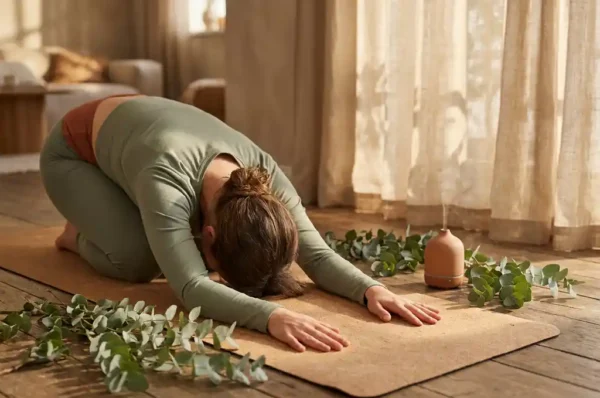
- Child’s Pose (Balasana): A deeply grounding forward fold that releases the lower back and quiets the mind. Hold for at least five to ten breaths.
- Legs Up the Wall (Viparita Karani): A gentle inversion that promotes circulation, reduces swelling in the legs, and encourages a sense of calm throughout the body.
- Supine Spinal Twist (Supta Matsyendrasana): Releases tension along the spine and hips, two areas where stress tends to accumulate during the day.
- Reclining Bound Angle (Supta Baddha Konasana): Opens the hips and chest while keeping the body completely passive, making it ideal for winding down.
- Corpse Pose (Savasana): The traditional closing pose of any Hatha practice, Savasana is essentially guided rest. Spending five to ten minutes here trains the body to fully release.
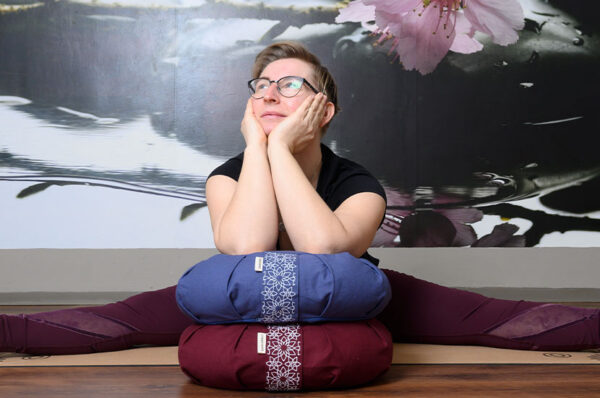
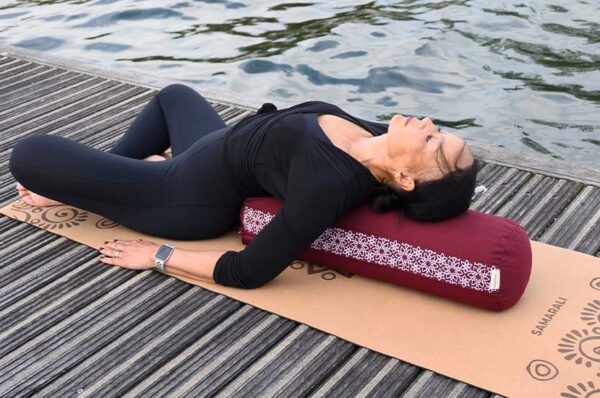
Supporting your practice with the right props makes a real difference. A yoga bolster placed under the knees or chest in reclined poses helps the body fully surrender rather than hold itself up, deepening the relaxation response. An organic cotton yoga blanket is also useful for staying warm during longer holds, since body temperature drops slightly during relaxation and stillness.
When should you practice Hatha yoga to improve sleep?
The best time to practice Hatha yoga for sleep improvement is in the evening, roughly one to two hours before bed. Practicing at this time allows your body temperature and heart rate to settle back to baseline before you lie down, while still carrying the calming effects of the session into your sleep window.
Timing matters more than most people realize. A vigorous yoga session too close to bedtime can have the opposite effect, leaving you too energized to sleep. Hatha yoga is gentler than most styles, but even a slow practice raises your internal temperature slightly. Giving yourself a short buffer between the mat and your pillow allows the relaxation benefits to land fully.
Consistency also plays a significant role. Practicing at the same time each evening reinforces your body’s natural sleep-wake rhythm. Over time, the routine itself becomes a cue that sleep is approaching, making it easier to drift off even on more stressful nights.
If evenings are genuinely not possible for you, a short morning Hatha practice still offers indirect sleep benefits by reducing overall stress and tension throughout the day, so less accumulates by the time you reach bedtime.
Can Hatha yoga help with specific sleep problems like insomnia?
Hatha yoga can be a genuinely useful tool for managing insomnia and other sleep difficulties. For people whose insomnia is driven by stress, anxiety, or physical tension, the calming and grounding nature of Hatha practice addresses the root causes rather than just the symptoms. It will not replace medical treatment for clinical sleep disorders, but as a complementary practice, it has a strong track record.
Insomnia often has two distinct components: difficulty falling asleep and difficulty staying asleep. Hatha yoga tends to help most with the first, because it directly targets the mental and physical over-activation that prevents the body from settling. The breathwork element is especially valuable here. Practices like alternate nostril breathing (Nadi Shodhana) or extended exhale breathing can interrupt the anxious thought loops that keep many people awake.
For those dealing with restless leg syndrome or physical discomfort at night, the gentle stretching involved in Hatha yoga can reduce muscle tension and improve circulation, making it easier to stay comfortable enough to sleep through the night.
It is worth approaching Hatha yoga for insomnia with realistic expectations. Most people notice improvements in sleep quality within a few weeks of consistent practice, but the benefits build gradually rather than appearing overnight. If your sleep problems are severe or long-standing, combining a regular Hatha practice with guidance from a healthcare professional is the most sensible approach.
Starting simply is perfectly fine. Even fifteen to twenty minutes of gentle yoga practice before bed, focused on breathwork and a handful of restorative poses, is enough to begin shifting your sleep patterns in a positive direction.
If you are ready to build a proper sleep-friendly yoga routine at home, Samarali has everything you need to get started. From a supportive yoga bolster for restorative poses to a cosy organic cotton yoga blanket for those longer, quieter holds, each piece is designed to help your body fully let go. Browse the full yoga mat collection and yoga essentials at Samarali and create the calming evening ritual your sleep deserves. Shop now.
Frequently Asked Questions
How long does it take to see real improvements in sleep from a regular Hatha yoga practice?
Most people begin noticing meaningful improvements in sleep quality within two to four weeks of consistent practice. The key word here is consistent — practicing three to five evenings per week tends to produce faster results than an occasional session. The benefits are cumulative, so think of it less like a quick fix and more like gradually retraining your nervous system to associate evening movement and breathwork with rest.
What if I've never done yoga before — can I still use Hatha yoga to help with sleep?
Absolutely. Hatha yoga is one of the most beginner-friendly styles precisely because it is slow-paced and focused on holding poses with awareness rather than flowing quickly between them. Start with just three or four simple poses — Child’s Pose, Legs Up the Wall, a gentle spinal twist, and Savasana — and spend more time on your breath than on getting the alignment perfect. Even a 15-minute beginner routine done consistently will begin to make a difference.
Is it okay to practice Hatha yoga in bed, or does it need to be done on a mat?
Several restorative Hatha poses can be adapted for the bed, particularly Reclining Bound Angle, gentle spinal twists, and a modified Savasana. That said, a firm yoga mat on the floor is generally more effective for poses that require stable support, like Legs Up the Wall. A good middle-ground approach is to do the more active poses on your mat, then transition to your bed for a final 5–10 minutes of breathwork and stillness as you prepare to sleep.
Which breathing technique is most effective for falling asleep, and how do I practice it correctly?
Extended exhale breathing is one of the simplest and most effective techniques for sleep. The basic method is to inhale for a count of four and exhale for a count of six to eight — the longer exhale directly activates the parasympathetic nervous system. Alternate nostril breathing (Nadi Shodhana) is another excellent option for quieting an overactive mind: use your right thumb to close the right nostril, inhale through the left, then switch and exhale through the right, alternating for five to ten cycles. Both techniques can be practiced lying down in bed.
Can I combine Hatha yoga with other sleep hygiene habits, or should it stand alone?
Hatha yoga works best as part of a broader sleep hygiene routine rather than as a standalone fix. Pairing your evening practice with other wind-down habits — dimming lights, reducing screen time, keeping a consistent bedtime, and avoiding caffeine in the afternoon — amplifies the benefits significantly. Think of your Hatha practice as the anchor of your pre-sleep routine, signaling to your body that the day is done and rest is coming.
Are there any situations where practicing Hatha yoga before bed might not be a good idea?
For most people, a gentle evening Hatha practice is very safe, but there are a few situations worth being mindful of. If you have a recent injury, certain poses like deep twists or hip openers may need to be modified or skipped — always listen to your body and avoid any position that causes sharp discomfort. If you find that any form of physical activity, even gentle yoga, tends to energize rather than calm you, try shifting your practice to earlier in the evening or focusing exclusively on breathwork and Savasana closer to bedtime.
Do I need any special equipment to start a Hatha yoga sleep routine at home?
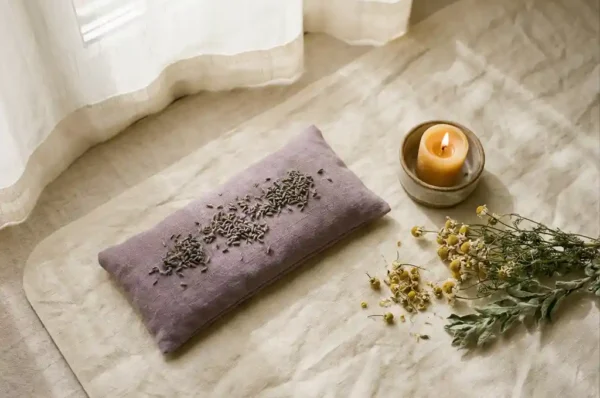
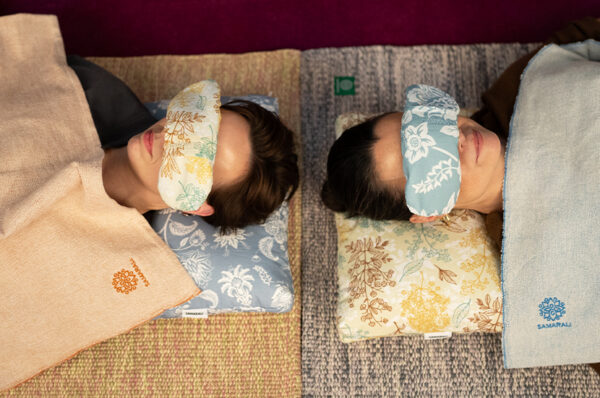
You can start with nothing more than a yoga mat and a folded blanket. That said, a few affordable props can meaningfully deepen your experience — a yoga bolster or firm pillow supports the body in reclined poses so you can fully relax without muscular effort, and a soft blanket keeps you warm during longer holds when your body temperature drops. An eye pillow can also be a worthwhile addition for Savasana, as gentle pressure over the eyes encourages the relaxation response and blocks out light.