


Yoga nidra is absolutely suitable for beginners. In fact, it is one of the most accessible yoga practices available because it requires no physical flexibility, strength, or prior yoga experience. You simply lie down, follow a guided voice, and allow the practice to do the work. The sections below answer the most common questions beginners ask before trying yoga nidra for the first time.
What actually happens during a yoga nidra session?
During a yoga nidra session, you lie still in a comfortable position while a teacher or recording guides your awareness through different layers of the body, breath, and mind. The practice systematically withdraws your attention from the external world and leads you into a deeply relaxed state between waking and sleep, known in yogic tradition as the hypnagogic threshold.
A typical session lasts between 20 and 45 minutes and follows a recognizable structure. It usually begins with settling the body in savasana, the lying-down rest pose. From there, the guide leads you through a rotation of awareness across different body parts, a focus on the breath, and often the use of a sankalpa, which is a short personal intention or resolve that you plant into the mind during its most receptive state.
Some sessions also include visualization or the exploration of opposite sensations, such as heaviness and lightness, or warmth and coolness. These techniques help the nervous system release accumulated tension without requiring any active effort on your part. You do not need to control your thoughts or achieve anything. The practice unfolds through listening and allowing.
Do you need any yoga experience to try yoga nidra?
No prior yoga experience is needed to try yoga nidra. Unlike asana-based yoga, yoga nidra involves no poses, no movement, and no physical demands. If you can lie down comfortably and follow spoken instructions, you have everything required to begin. It is genuinely one of the most beginner-friendly practices in the entire yoga tradition.
People who have never attended a yoga class in their lives regularly find yoga nidra deeply beneficial on their very first attempt. The practice is also widely used in therapeutic and clinical settings, where participants may have physical limitations that prevent any form of movement-based practice. This inclusivity is one of yoga nidra’s greatest strengths.
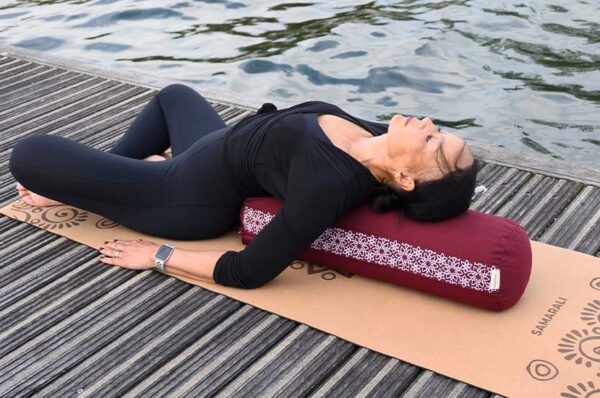
That said, beginners often benefit from having a few simple props on hand to make the lying position more comfortable. A folded blanket under the knees relieves lower back pressure, and a light cover keeps the body warm as the metabolic rate drops during deep relaxation. A supportive surface also makes a real difference. Practicing on a dedicated meditation mat rather than a hard floor helps the body settle and stay still without distraction throughout the session.
How is yoga nidra different from regular meditation or sleep?
Yoga nidra is distinct from both regular meditation and sleep. Unlike most meditation practices, yoga nidra does not ask you to sit upright, focus the mind, or maintain active concentration. Unlike sleep, it preserves a thread of conscious awareness even as the body enters deep rest. It occupies a unique middle state that neither ordinary wakefulness nor sleep can replicate.
How yoga nidra differs from meditation
Most meditation practices, including mindfulness and breath-focused techniques, require the practitioner to sustain deliberate attention. You notice when the mind wanders and gently return it to the object of focus. This is an active mental effort. Yoga nidra, by contrast, is largely receptive. You follow the guide’s voice rather than directing your own awareness. There is no “doing it right” or “doing it wrong” in the same way, which makes it far less frustrating for people who struggle with conventional meditation.
How yoga nidra differs from sleep
Sleep is unconscious. Yoga nidra is a conscious practice that deliberately induces the brain states associated with the transition into and through sleep, particularly the alpha and theta brainwave states, while the practitioner maintains a thin but real thread of awareness. This is why practitioners often report feeling as though they slept for hours after a 30-minute session. The rest is genuinely profound, but it is guided and intentional rather than passive.
How should a beginner get started with yoga nidra?
The most effective way for a beginner to start yoga nidra is to find a guided audio or video recording from a qualified teacher and practice lying down in a warm, quiet space where you will not be interrupted. Start with a shorter session of 20 to 30 minutes, practice at the same time each day if possible, and prioritize comfort above everything else.
Here are the practical steps to set yourself up for a strong first session:
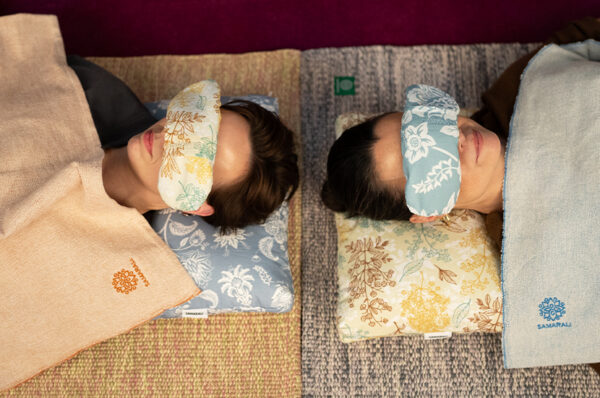
- Choose your space. Find a quiet room where you can lie flat without interruption. Dim the lights or use an eye pillow to reduce visual stimulation.
- Set up your props. Place a blanket under your knees and have a light cover nearby. An organic cotton yoga blanket works well for this, keeping the body warm without being heavy.
- Select a short guided session. For your first few sessions, choose a recording of 20 to 30 minutes. Many free options are available through yoga apps and streaming platforms.
- Set a loose intention. Before you begin, take a moment to form a simple sankalpa, a short positive statement about something meaningful to you. You do not need to perfect this. Even a simple phrase is enough.
- Let go of expectations. Some beginners fall asleep during their first session. Others feel restless. Both experiences are normal. The practice works regardless of whether you feel a dramatic result immediately.
Consistency matters more than duration when you are starting out. Even two or three sessions per week will begin to show noticeable effects on sleep quality, stress levels, and general mental clarity within a few weeks. As you grow more familiar with the structure of yoga nidra, you may also want to explore a broader meditation practice to complement the deep rest yoga nidra provides.
Frequently Asked Questions
How long does it take to notice real benefits from yoga nidra?
Most beginners begin noticing improvements in sleep quality and stress levels within two to three weeks of practicing two to three times per week. Some people report feeling calmer and more mentally clear even after their very first session, though this varies depending on the individual and how much accumulated tension they are carrying. Consistency is the most important factor — short, regular sessions will deliver more lasting results than occasional longer ones.
What should I do if I keep falling asleep during yoga nidra?
Falling asleep during yoga nidra is extremely common, especially for beginners and for anyone who is sleep-deprived, and it is not something to worry about or fight against. To stay more alert, try practicing in the morning or early afternoon rather than at night, keep the room slightly cool, and avoid practicing immediately after a heavy meal. Over time, as your nervous system becomes more familiar with the hypnagogic threshold, you will naturally find it easier to maintain that thin thread of awareness without drifting fully into sleep.
Can I practice yoga nidra if I have anxiety or a racing mind?
Yes — yoga nidra is actually one of the most recommended practices for people with anxiety precisely because it does not require you to quiet or control the mind. The guided structure does the work for you, systematically redirecting attention through the body and breath rather than asking you to wrestle with your thoughts. Clinical and therapeutic settings regularly use yoga nidra as a tool for anxiety relief, PTSD recovery, and stress-related conditions. If you find the practice initially activating, start with shorter sessions of 15 to 20 minutes and choose recordings with a slow, grounding voice.
Is there a wrong way to do yoga nidra, or can you make mistakes as a beginner?
There is genuinely no wrong way to practice yoga nidra as a beginner. Whether you fall asleep, feel restless, lose track of the guide’s voice, or don’t feel deeply relaxed, the practice is still working on the nervous system in meaningful ways. The only common mistake worth avoiding is forcing yourself to concentrate or achieve a specific state — yoga nidra is a receptive practice, and trying too hard is the one thing that can get in the way. Simply lie down, follow the voice as best you can, and trust the process.
Do I need to use a sankalpa, and how do I choose one?
Using a sankalpa is recommended but not mandatory, particularly when you are just starting out. If the concept feels unfamiliar or adds pressure to your practice, it is perfectly fine to skip it for your first several sessions and focus simply on settling into the experience. When you are ready to work with one, choose a short, positive, present-tense statement that reflects a genuine personal intention — something like u0022I am at peaceu0022 or u0022I am becoming healthier every day.u0022 Keep it simple, meaningful, and consistent across sessions rather than changing it each time.
Can yoga nidra replace sleep if I'm short on time?
Yoga nidra is often described as being deeply restorative — some teachers suggest that 30 minutes of yoga nidra can provide rest equivalent to several hours of sleep — but it is not a medically validated replacement for a full night of sleep. Think of it as a powerful complement to healthy sleep habits rather than a substitute. It is particularly useful during periods of high stress or poor sleep quality, helping the body and nervous system recover more efficiently, but maintaining regular nighttime sleep remains essential for long-term health.
What is the best time of day to practice yoga nidra as a beginner?
Yoga nidra can be practiced at any time of day, but the best time for beginners is typically mid-morning or early afternoon, when the body is relaxed but not yet fatigued enough to fall straight into sleep. Practicing in the evening or before bed is also popular and can significantly improve sleep quality, though you are more likely to drift off fully at that time. Avoid practicing immediately after eating, as digestion can create physical discomfort in the lying position and make it harder for the nervous system to settle.
Ready to build a practice that truly supports deep rest and restoration? At Samarali, you will find everything you need to create a comfortable, grounding space for yoga nidra and meditation. From a dedicated meditation mat that cushions the body during long sessions to a soft organic cotton yoga blanket that keeps you warm as you settle into stillness, each piece is chosen with mindful practice in mind. Explore the full meditation sets collection to find everything in one place, or browse the complete meditation range at Samarali and discover what supports your practice best. Shop now and make every session as restorative as it deserves to be.