


The most commonly used Savasana props for Yoga Nidra are a yoga bolster, a blanket, an eye pillow, and a neck pillow. These four props work together to help your body settle into complete stillness so your mind can move into the deeply restful, meditative state that Yoga Nidra is known for. Below, we answer the most common questions about choosing and using props for your practice.
What props are most commonly used in Yoga Nidra?
The most commonly used Yoga Nidra props are a bolster placed under the knees, a blanket for warmth, an eye pillow to block out light, and a neck pillow for head support. Together, these props allow the body to release tension completely during the extended Savasana position that forms the foundation of every Yoga Nidra session.
Because Yoga Nidra sessions typically last between 20 and 45 minutes, your body needs more support than it does during a brief end-of-class Savasana. Without props, discomfort in the lower back, neck, or legs can pull your attention away from the guided meditation and prevent you from reaching the deeper states of relaxation the practice aims for.
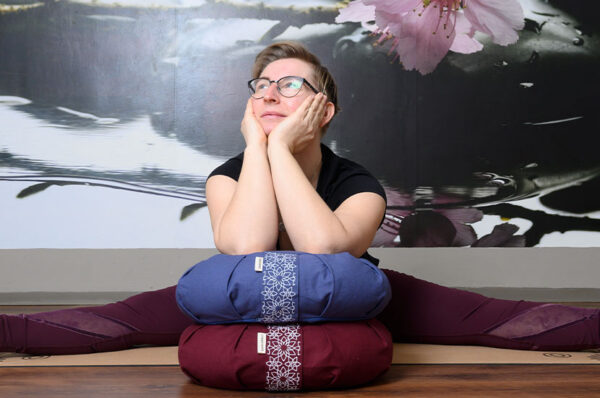
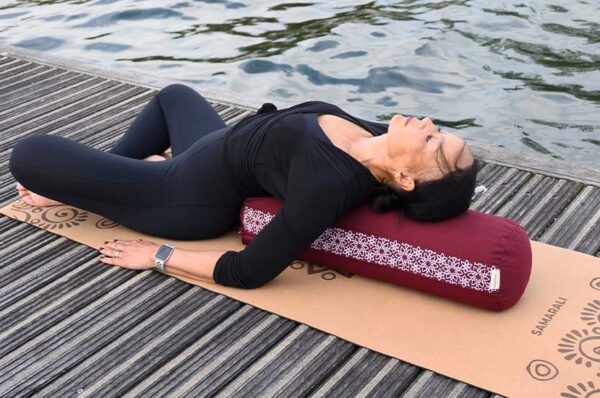
- Bolster: Placed under the knees to release tension in the lower back and lumbar spine
- Blanket: Draped over the body to maintain warmth as body temperature drops during deep relaxation
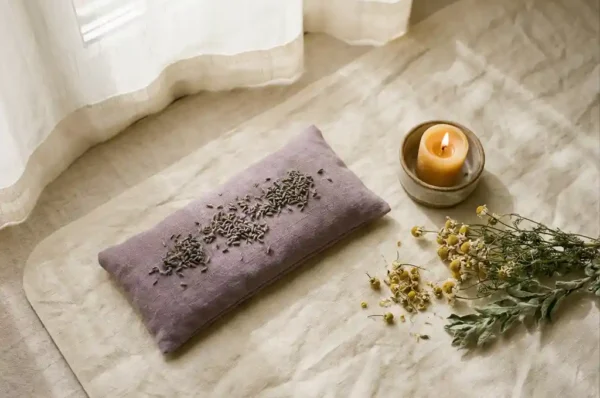
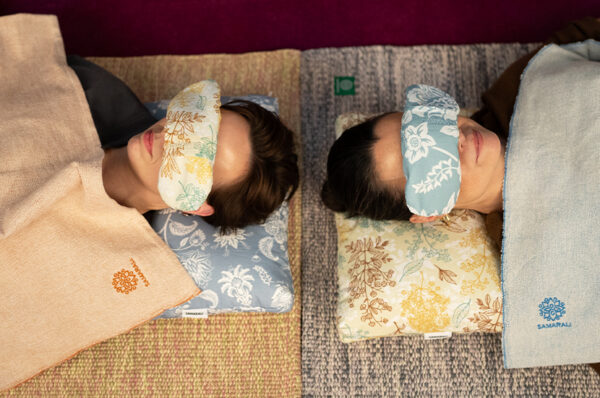
- Eye pillow: Gently weighted to encourage the eyes to stay closed and signal the nervous system to slow down
- Neck pillow: Supports the natural curve of the cervical spine so the head and neck can fully let go
Some practitioners also add a folded blanket or thin cushion under the head if they prefer more elevation, or place a rolled blanket under the ankles for additional support.
How does each Savasana prop support the body differently?
Each Yoga Nidra prop targets a specific area of physical tension. The bolster decompresses the lower back, the blanket regulates body temperature, the eye pillow reduces sensory stimulation, and the neck pillow aligns the cervical spine. Together, they create a fully supported position that removes the physical distractions that would otherwise interrupt deep rest.
Bolster and blanket
Placing a bolster under the knees softens the natural arch of the lower back, which tends to tighten when lying flat on a hard floor for an extended period. This small adjustment can make the difference between a practice that feels effortless and one where you spend the entire session shifting position. A blanket serves a different but equally important function: as you relax deeply, your metabolism slows and your body temperature drops noticeably, so having a blanket on hand prevents the mild chill that can pull you back to waking consciousness.
Eye pillow and neck pillow
An eye pillow does more than just block light. The gentle weight of a lightly filled eye pillow activates the oculocardiac reflex, which can slow the heart rate slightly and deepen the sense of calm. A yoga neck pillow supports the natural curve of the neck without pushing the chin toward the chest, keeping the throat open and the breath easy throughout the session.
What should you look for in sustainable Yoga Nidra props?
When choosing sustainable Yoga Nidra props, look for natural materials like organic cotton, natural rubber, buckwheat, or sustainably sourced filling. Avoid synthetic foams and plastic-based fabrics, which off-gas chemicals and are difficult to recycle. Certifications such as GOTS (Global Organic Textile Standard) or OEKO-TEX are reliable indicators that a product meets genuine environmental standards.
Beyond materials, consider durability. A well-made bolster or blanket crafted from organic cotton will outlast cheaper synthetic alternatives by years, which means less waste over time. This is the approach we take at Samarali: each prop is designed to support your practice for the long term without compromising environmental responsibility.
Here is what to check before buying:
- Material transparency: The brand should clearly state what the product is made from, including filling materials
- Certifications: Look for GOTS, OEKO-TEX, or equivalent third-party verification
- Country of manufacture: European-made products often meet stricter environmental and labor standards
- Washability: Removable, washable covers extend the life of bolsters and cushions considerably
- Packaging: Minimal or plastic-free packaging is a good signal of a brand’s overall sustainability commitment
Our organic cotton yoga blanket is a good example of what sustainable materials look and feel like in practice: soft, breathable, and made without synthetic additives, so it stays comfortable against your skin during long Savasana holds.
Can you practice Yoga Nidra without any props?
Yes, you can practice Yoga Nidra without props, and doing so is perfectly valid, especially when you are traveling or practicing spontaneously. However, props significantly improve the quality of longer sessions by removing physical discomfort that would otherwise compete with the meditative guidance. For sessions under 20 minutes, most people manage comfortably without them.
If you have no props available, a few simple adjustments help. Folding a hoodie or jacket under your knees mimics the effect of a bolster. A rolled-up towel under the neck replaces a neck pillow well enough for occasional use. Covering your eyes with a sleep mask or even a folded cloth serves the same light-blocking function as an eye pillow.
That said, if Yoga Nidra is a regular part of your wellness routine, investing in even one or two dedicated props makes a meaningful difference. The body learns to associate those props with deep rest, and over time, simply placing the bolster under your knees can begin to trigger a relaxation response before the guided practice even starts. Think of props not as luxuries but as tools that help your nervous system do what Yoga Nidra is designed to do.
If you are ready to build a prop setup that truly supports your practice, Samarali has everything you need. From our yoga bolster and organic cotton yoga blanket to our yoga neck pillow, every piece is made with natural materials and designed to last. Explore the full yoga collection at Samarali and find the props that will make your next session your most restful yet. Shop now.
Frequently Asked Questions
How do I know if I'm using my bolster correctly during Yoga Nidra?
Your bolster is positioned correctly when your lower back feels like it has softened into the floor rather than arching away from it. The bolster should sit just beneath the backs of your knees, not under your calves or thighs. If you still feel tension in your lumbar spine after placing it, try adjusting the height by adding a folded blanket on top of the bolster until your lower back fully releases.
What's the best way to build a Yoga Nidra prop setup if I'm starting from scratch on a budget?
Start with a bolster, as it delivers the most noticeable physical benefit during longer sessions by relieving lower back tension. From there, add a blanket next since body temperature drop during deep relaxation is one of the most common reasons people get pulled out of the practice. An eye pillow is an affordable third addition and can make a surprisingly large difference in how deeply you’re able to relax, as even small amounts of ambient light can keep the nervous system subtly alert.
Can the wrong props actually make my Yoga Nidra practice worse?
Yes, poorly chosen props can introduce new sources of discomfort rather than eliminating them. A bolster that is too firm or too tall can over-elevate the knees and strain the hip flexors, while a neck pillow that is too thick pushes the chin toward the chest and restricts the airway. When evaluating props, test them by lying in Savasana for at least five minutes before committing — discomfort that seems minor at first tends to become distracting during a 30- to 45-minute session.
Are there any additional props worth considering beyond the standard four?
A few practitioners find meaningful benefit from a light lap weight or a weighted blanket, which can deepen the sense of grounded stillness in the same way an eye pillow does for the face. Ankle bolsters or a rolled blanket placed under the ankles can also help if you experience discomfort in the backs of the heels on a hard floor. For those practicing in cooler environments or dealing with chronic tension, a second blanket folded under the head as a gentle elevation pillow is a simple and effective addition.
How should I care for and clean my Yoga Nidra props to make them last longer?
Most bolsters and cushions with removable covers should have their covers washed regularly on a gentle cycle, ideally after every few sessions, to prevent the buildup of oils and moisture that can degrade natural fabrics over time. The inner bolster itself should be aired out after each use rather than stored in a sealed bag or cupboard. For organic cotton blankets, washing in cold water and air-drying rather than tumble-drying preserves the fiber integrity and prevents shrinkage.
Does it matter what surface I practice Yoga Nidra on, or is a yoga mat sufficient?
A standard yoga mat provides enough cushioning for shorter sessions but can feel quite firm during a 40-minute practice, particularly for anyone with bony prominences at the tailbone, shoulder blades, or heels. Practicing on a carpet or adding a folded blanket beneath your mat significantly improves comfort for longer sessions. If you practice Yoga Nidra frequently, some practitioners prefer a dedicated folded blanket layer beneath them as a base rather than relying solely on a mat.
Is there a specific order or ritual for setting up my props that enhances the practice?
Setting up your props intentionally before each session can itself become part of the transition into a relaxed state, effectively signaling to your nervous system that rest is coming. A simple routine of laying out your blanket, positioning your bolster, and placing your eye pillow within reach creates a consistent sensory cue that the body begins to associate with deep relaxation over time. This kind of pre-practice ritual is especially useful if you tend to arrive at your mat with a busy mind, as the physical act of preparation provides a gentle bridge between activity and stillness.