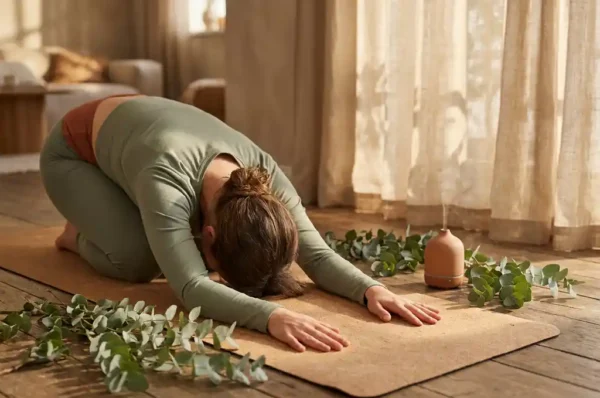



Building a home Yoga Nidra practice is straightforward: find a quiet space, lie down comfortably, and follow a guided audio session for 20 to 45 minutes. No prior yoga experience is required, and the setup is minimal compared to most other practices. Below, we cover everything from what you need to get started to how to stay present throughout your session.
What do you need to start a home Yoga Nidra practice?
To start a home Yoga Nidra practice, you need a comfortable surface to lie on, something to keep you warm, support for your head and knees, and a guided audio recording. The goal is complete physical stillness, so comfort is the priority above everything else.
Unlike active yoga styles, Yoga Nidra is practiced entirely in Savasana, the supine resting pose. This means your setup is less about movement and more about creating conditions where your body can fully let go. A few key items make a real difference:
- A supportive surface: A yoga mat or a meditation mat works well. You want something that cushions your spine without being so soft that you sink into it awkwardly.
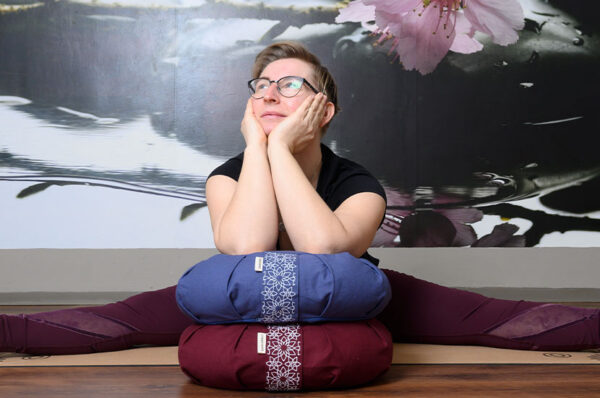
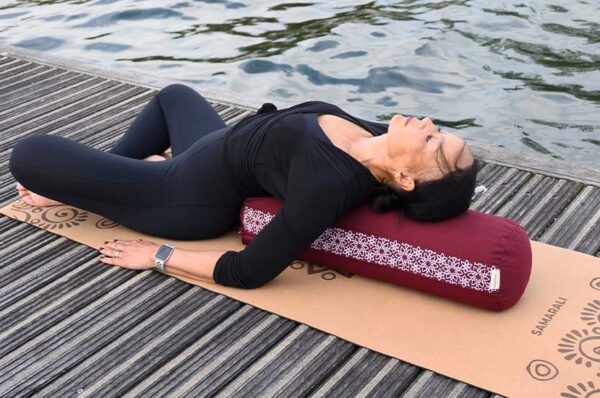
- A bolster or rolled blanket under your knees: This takes pressure off the lower back during long sessions. A yoga bolster is ideal for this purpose.
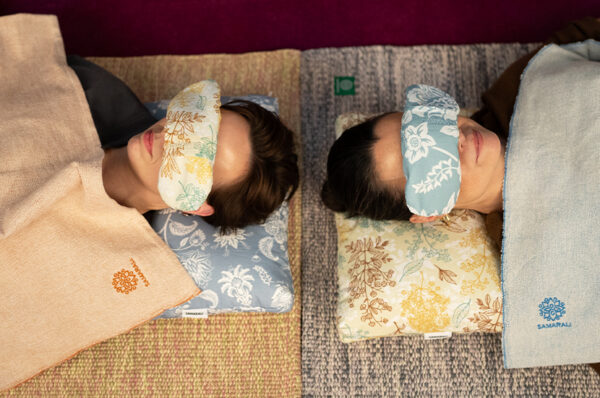
- A blanket: Body temperature drops quickly when you are still for 30 minutes or more. An organic cotton blanket keeps you warm without overheating.
- A neck pillow or folded blanket under your head: Light support keeps your neck neutral and prevents tension from building during the session.
- A guided recording: Apps, YouTube, or dedicated Yoga Nidra teachers all offer audio sessions. Choose one with a calm, clear voice that suits your pace.
A quiet, dimly lit room completes the setup. Silence notifications on your phone before you begin, and let anyone in your home know you need uninterrupted time.
How long should a Yoga Nidra session be for beginners?
For beginners, a Yoga Nidra session of 20 to 30 minutes is the ideal starting point. This duration is long enough to move through the full rotation of consciousness and body scan without overwhelming someone new to the practice. Many teachers say 30 minutes of Yoga Nidra can feel as restorative as several hours of sleep.
Shorter sessions of 15 to 20 minutes are a good entry point if you find it difficult to stay still or if your schedule is tight. As you become more familiar with the stages of the practice, including the body scan, breath awareness, visualization, and the Sankalpa or intention setting, you can extend sessions to 45 minutes or even an hour.
Consistency matters more than duration when you are starting out. A 20-minute session three or four times a week will build the habit and deepen your familiarity with the practice far more effectively than one long session every couple of weeks.
When is the best time of day to practice Yoga Nidra?
The best time to practice Yoga Nidra is either in the early morning before the day begins or in the early evening before dinner. Both windows offer a natural bridge between activity and rest, which is when the practice tends to be most effective. That said, Yoga Nidra is flexible and genuinely beneficial at any time of day.
Early morning practice works well because the mind is relatively quiet before the demands of the day arrive. Practicing just after waking, while still in a semi-drowsy state, can help you drop into the hypnagogic threshold that Yoga Nidra aims for.
Evening practice is popular for winding down and releasing accumulated stress. Practicing before dinner rather than right before bed gives you the restorative benefits without the risk of falling into a full night’s sleep mid-session, which can disrupt your sleep cycle if you practice too late.
Midday sessions are also effective, particularly for people who experience an afternoon energy dip. A 20 to 30 minute Yoga Nidra session during a lunch break can restore focus and reduce mental fatigue for the second half of the day.
The most important factor is simply choosing a time you can protect consistently. A regular slot in your day builds the habit faster than optimizing for the theoretically perfect hour.
How do you stay awake during Yoga Nidra at home?
To stay awake during Yoga Nidra at home, keep your eyes slightly open with a soft downward gaze, practice at a time when you are not already exhausted, and actively engage with each stage of the guided session rather than passively listening. Falling asleep occasionally is normal, but staying in the aware, liminal state is where the deeper benefits occur.
Several practical adjustments help maintain that fine balance between deep relaxation and conscious awareness:
- Avoid practicing immediately after a heavy meal: Digestion pulls energy inward and makes staying alert much harder.
- Keep the room slightly cool rather than warm: A room that is too warm encourages sleep. Use a light blanket rather than turning up the heating.
- Try a slight incline: Propping your upper body at a very gentle angle with a bolster or folded blanket can prevent the full collapse into sleep that a completely flat position sometimes triggers.
- Set a clear intention before you begin: The Sankalpa, or resolve, that Yoga Nidra uses is not just a spiritual tool. Mentally stating your intention to remain aware throughout the session primes your mind to stay present.
- Choose a well-paced recording: Some guided sessions are very slow and monotone, which encourages sleep. Look for a teacher whose pacing keeps you gently engaged without feeling rushed.
It is worth noting that falling asleep occasionally during Yoga Nidra is not a failure. It often signals that your body needed the rest. Over time, as your nervous system becomes more familiar with the practice, staying in that conscious, deeply relaxed state becomes easier and more natural.
Frequently Asked Questions
Can I practice Yoga Nidra if I've never done any form of yoga before?
Absolutely. Yoga Nidra requires no prior yoga experience, physical flexibility, or knowledge of yoga philosophy. Because the entire practice is done lying still in one position, it is one of the most accessible entry points into the broader world of yoga. All you need is the ability to follow spoken guidance and a willingness to rest.
What's the difference between Yoga Nidra and regular meditation or sleep?
Yoga Nidra occupies a unique state between waking and sleeping, often called the hypnagogic threshold, which is distinct from both alert seated meditation and ordinary sleep. Unlike most meditation practices, you are lying down and being guided through specific stages such as body scanning, breath awareness, and visualization, rather than simply observing your thoughts. Sleep is an unconscious state, whereas Yoga Nidra trains you to remain consciously aware even as your body and mind reach profound levels of relaxation.
How do I choose the right guided Yoga Nidra recording as a beginner?
Start with a recording that is 20 to 30 minutes long, clearly structured, and led by a teacher with a calm but varied vocal pace that keeps you gently engaged. Platforms like Insight Timer, YouTube, and dedicated apps such as Aura or Spotify all offer free options from experienced teachers. Listen to the first minute or two before committing to a full session to make sure the voice and pace feel comfortable for you, since a mismatch here is one of the most common reasons beginners abandon the practice early.
Is it okay if I fall asleep every time I practice Yoga Nidra?
Falling asleep occasionally is completely normal, especially in the early weeks, and it usually means your body is carrying a significant sleep debt or stress load. However, if you are consistently falling asleep in every session, it is worth adjusting your timing, room temperature, or body position using the tips covered in this post to encourage conscious awareness. The long-term goal is to train your nervous system to rest deeply while remaining aware, and that capacity develops gradually with consistent practice.
How soon can I expect to notice benefits from a regular Yoga Nidra practice?
Many practitioners report feeling calmer and more mentally clear after just one or two sessions, particularly in terms of reduced stress and improved sleep quality that same night. Deeper benefits, such as greater emotional resilience, reduced anxiety, and improved focus, typically become noticeable after two to four weeks of consistent practice three or more times per week. Like most wellness practices, the results compound over time, so regularity matters far more than the length of any single session.
Can Yoga Nidra replace sleep if I'm short on time?
Yoga Nidra is deeply restorative and some teachers suggest that 30 minutes can offer rest equivalent to several hours of sleep, but it is not a direct substitute for a full night of sleep over the long term. It works best as a complement to healthy sleep habits rather than a replacement for them. That said, a midday Yoga Nidra session is an excellent tool for recovering from mild sleep deprivation or an afternoon energy slump without disrupting your nighttime sleep cycle.
Are there any situations where I should avoid practicing Yoga Nidra?
Yoga Nidra is generally considered very safe for most people, but those with certain mental health conditions such as severe dissociation, psychosis, or trauma-related disorders should consult a qualified therapist or trauma-informed yoga teacher before starting, as deep relaxation and visualization can occasionally surface difficult experiences. If you are pregnant, practicing with a bolster to support a side-lying position may be more comfortable than lying flat on your back in later trimesters. Always listen to your body, and if any stage of a guided session feels uncomfortable, it is perfectly fine to simply rest quietly until it passes.
Ready to create the ideal space for your Yoga Nidra practice? At Samarali, you will find everything you need to practice with ease and comfort. From a supportive meditation mat and a yoga bolster to keep your body at ease during long sessions, to a cosy organic cotton yoga blanket that keeps you warm without overheating — each piece is thoughtfully made to support deep rest. Browse the full meditation collection at Samarali and find what your practice has been missing. Shop now and settle in.