


Yes, yoga nidra can meaningfully improve mental health. This guided meditation practice, often called “yogic sleep,” brings the body into a deeply relaxed state while the mind remains alert, creating conditions that directly support emotional regulation, stress reduction, and psychological resilience. Below, we unpack the key questions people ask about yoga nidra and mental well-being.
How does yoga nidra affect the brain and nervous system?
Yoga nidra works by shifting the nervous system from a sympathetic (fight-or-flight) state into a parasympathetic (rest-and-digest) state. During a session, brainwave activity slows from the alert beta state toward alpha and theta waves, the same patterns associated with deep relaxation, creativity, and the threshold between waking and sleep. This shift gives the brain a genuine opportunity to reset.
When the nervous system is chronically activated by stress, the body holds tension, sleep suffers, and emotional reactivity increases. Yoga nidra interrupts that cycle. By guiding awareness through systematic body scanning, breath observation, and visualisation, the practice signals safety to the nervous system. Over time, regular sessions can help recalibrate the stress response, making it easier to return to a calm baseline after challenging situations.
What makes yoga nidra particularly effective is the theta brainwave state it reliably induces. Theta activity is associated with memory consolidation, emotional processing, and insight. Accessing this state consciously, rather than only during the moments before sleep, gives practitioners a window to process emotions and reduce mental noise in a way that ordinary waking meditation does not always reach.
What mental health conditions can yoga nidra help with?
Yoga nidra shows the most consistent benefit for anxiety, stress-related disorders, insomnia, and burnout. It is also increasingly used as a complementary support for depression, post-traumatic stress, and chronic pain conditions that carry a significant psychological component. It is not a replacement for clinical treatment, but it works well alongside it.
For anxiety, the practice directly addresses the physiological arousal that keeps anxious thought patterns running. By repeatedly guiding the body into deep relaxation, yoga nidra helps break the association between mental worry and physical tension. People who practice regularly often report that anxious thoughts lose some of their grip over time.
For those dealing with burnout or emotional exhaustion, yoga nidra offers something that active forms of exercise or even seated meditation sometimes cannot: genuine effortlessness. The practitioner is guided to do nothing except follow awareness. That quality of non-doing is deeply restorative for a nervous system that has been overworked.
In trauma-informed settings, yoga nidra is valued because it allows practitioners to observe difficult emotions and body sensations from a safe distance, without being overwhelmed by them. The structure of the practice provides containment, which is important when working with trauma responses.
How often should you practice yoga nidra to see mental health benefits?
Most practitioners begin to notice mental health benefits with three to four sessions per week, each lasting between 20 and 45 minutes. Consistency matters more than duration. A shorter daily practice tends to produce more noticeable results than longer, infrequent sessions, because the nervous system responds to repeated signals rather than occasional ones.
For beginners, starting with two or three sessions per week is realistic and sustainable. Even a single 20-minute session can produce an immediate sense of calm and mental clarity, which is one reason yoga nidra is often described as equivalent to several hours of sleep in terms of its restorative effect on the body and mind.
If you are using yoga nidra specifically to address anxiety or sleep difficulties, practicing in the evening or before bed can be particularly effective. The transition into theta brainwave states that yoga nidra facilitates mirrors the natural process of falling asleep, making it a practical tool for those who struggle to switch off at the end of the day.
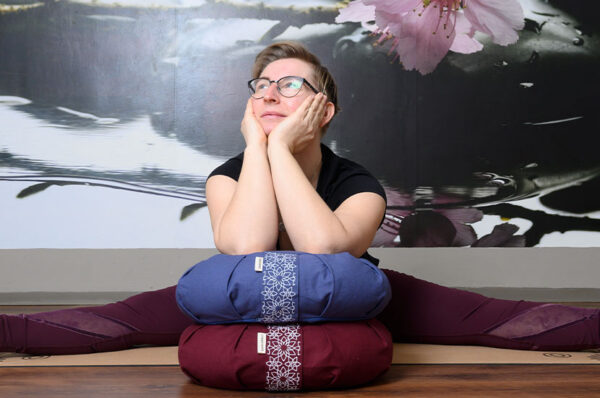
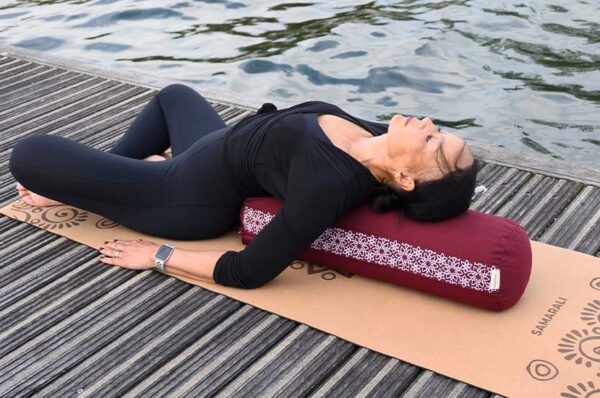
Having a comfortable, supportive setup helps you commit to regular practice. A yoga bolster or meditation cushion can make the lying or seated position more sustainable, especially for longer sessions, so your body stays relaxed rather than distracted by discomfort.
Is yoga nidra better than meditation for mental health?
Yoga nidra and meditation are different tools that serve overlapping but distinct purposes. Yoga nidra is not strictly better than meditation, but it may be more accessible and more immediately effective for people who struggle to quiet the mind during traditional seated practice. For deep relaxation and nervous system recovery specifically, yoga nidra has a clear structural advantage.
Traditional meditation practices, such as mindfulness or focused attention meditation, require the practitioner to actively direct and sustain awareness. This is a skill that takes time to develop, and many beginners find it frustrating. Yoga nidra removes that barrier. Because the practice is guided and the body is lying down, there is no performance pressure. The practitioner simply follows instructions, making it far easier to access a genuinely relaxed state from the very first session.
That said, seated meditation builds capacities that yoga nidra does not fully replicate. Mindfulness practice, for example, trains the ability to observe thoughts in real time during daily life, which is a powerful skill for managing anxiety and emotional reactivity outside of formal practice. The two approaches complement each other well.
For someone dealing with acute stress, exhaustion, or significant anxiety, yoga nidra is often the better starting point because it delivers results quickly and requires no prior experience. As a longer-term mental health practice, combining yoga nidra with a seated meditation practice tends to produce the most well-rounded results. At Samarali, we design our products to support both, because we believe the best wellness practice is the one you will actually return to.
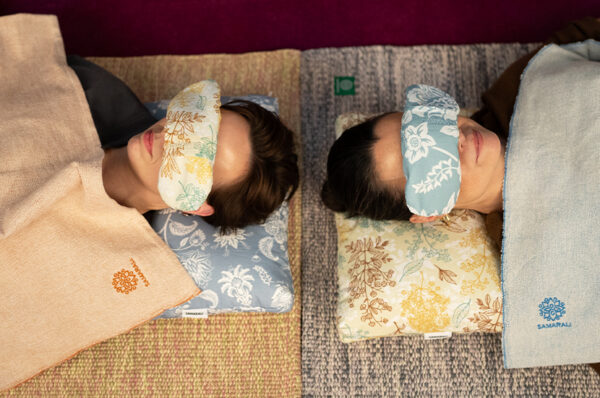
Ready to deepen your practice with the right support? At Samarali, you will find everything you need to make yoga nidra a consistent, comfortable part of your routine — from a yoga bolster to place under your knees during sessions, to a meditation mat and a soft organic cotton yoga blanket to keep you warm as your body settles into deep relaxation. Explore our full meditation sets and find the setup that supports your mind and body best. Shop now.
Frequently Asked Questions
Can I practice yoga nidra if I have no prior experience with meditation or yoga?
Absolutely — yoga nidra is one of the most beginner-friendly wellness practices available. Because it is fully guided and practiced lying down, there is nothing to u0022get rightu0022 and no prior skill required. Simply find a comfortable position, press play on a guided recording, and follow along. Many people experience deep relaxation and mental clarity from their very first session.
What is the best way to get started with yoga nidra at home?
The easiest entry point is a guided audio recording or app — popular platforms like Insight Timer, YouTube, and Spotify offer a wide range of free yoga nidra sessions led by experienced teachers. Set up a quiet, warm space where you can lie flat undisturbed, ideally with a yoga bolster under your knees and a blanket over your body to maintain warmth as your core temperature drops during deep relaxation. Start with a 20-minute session and build from there once the practice feels familiar.
Is it normal to fall asleep during yoga nidra, and does it still work if I do?
Falling asleep, especially in early sessions, is very common and nothing to worry about. The practice is still beneficial even if you drift off, as your body continues to rest and recover. However, the deeper mental health benefits — such as emotional processing in the theta state and conscious rewiring of the stress response — are more fully realised when you remain in that hypnagogic threshold between waking and sleep. If you consistently fall asleep, try practicing at a time of day when you are less fatigued, such as mid-morning or early afternoon.
Are there any situations where yoga nidra might not be appropriate or could feel uncomfortable?
For most people yoga nidra is very safe, but individuals with a history of severe trauma, dissociation, or certain psychotic conditions should approach the practice carefully and ideally with guidance from a trauma-informed teacher or mental health professional. The inward, body-focused nature of the practice can occasionally surface difficult emotions or sensations, particularly in early sessions. If this happens, it is fine to open your eyes, pause the recording, and ground yourself before continuing — the practice should always feel like a place of safety, not pressure.
How is yoga nidra different from a body scan or progressive muscle relaxation?
While all three practices involve bringing awareness to the body, yoga nidra is a more comprehensive and structured system. A body scan or progressive muscle relaxation typically focuses on releasing physical tension, whereas yoga nidra moves through multiple distinct stages — including breath awareness, pairs of opposite sensations, visualisation, and the setting of a personal intention (sankalpa) — that together engage the mind at progressively deeper levels. This layered approach is what enables yoga nidra to reach the theta brainwave state and produce its more profound effects on emotional processing and mental health.
How long does it take to notice lasting mental health improvements from yoga nidra?
Most people notice an immediate improvement in mood and calmness after a single session, but lasting changes to anxiety levels, sleep quality, and emotional resilience typically emerge after four to eight weeks of consistent practice. Research studies on yoga nidra and mental health generally report significant improvements within this timeframe when participants practice three or more times per week. Think of it similarly to physical exercise — the immediate effect is noticeable, but the transformative benefits accumulate through repetition over time.
Can yoga nidra be used alongside therapy or psychiatric medication?
Yes, and it is increasingly being integrated into clinical and therapeutic settings precisely because it complements rather than conflicts with conventional mental health treatment. Yoga nidra does not replace therapy, medication, or medical advice, but it can meaningfully support the nervous system regulation work done in therapy and help manage the day-to-day symptoms of conditions like anxiety and depression. Always inform your therapist or doctor that you are incorporating yoga nidra into your routine, especially if you are working through trauma, so they can help you integrate the practice safely.