


Yes, yin yoga can be genuinely helpful for chronic pain. By targeting the connective tissues, fascia, and joints through long, passive holds, yin yoga encourages the body to release deep-seated tension that more active movement rarely reaches. It works best as a complementary practice alongside other forms of care, and the sections below break down exactly how and when it helps.
How does yin yoga affect the body’s pain response?
Yin yoga influences the body’s pain response primarily by stimulating the connective tissues and fascia through sustained, low-load stretching. When you hold a pose for two to five minutes, the nervous system gradually shifts from a state of guarding into a more parasympathetic, rest-and-digest mode. This shift can reduce the perception of pain and interrupt chronic tension cycles that keep the body locked in discomfort.
Unlike dynamic movement, which primarily works the muscles, yin yoga targets the deeper layers of tissue surrounding joints and the spine. Fascia, the web-like connective tissue that wraps around every structure in the body, can become stiff and restricted when it is not regularly moved through its full range. Prolonged gentle stress applied during yin holds encourages the fascia to rehydrate and become more pliable, which many practitioners find reduces the persistent, dull ache that comes with chronic conditions.
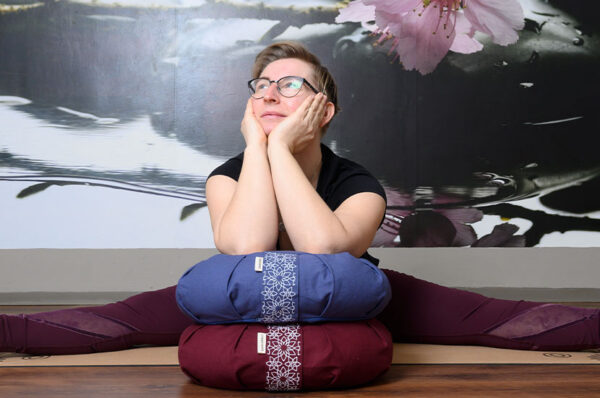
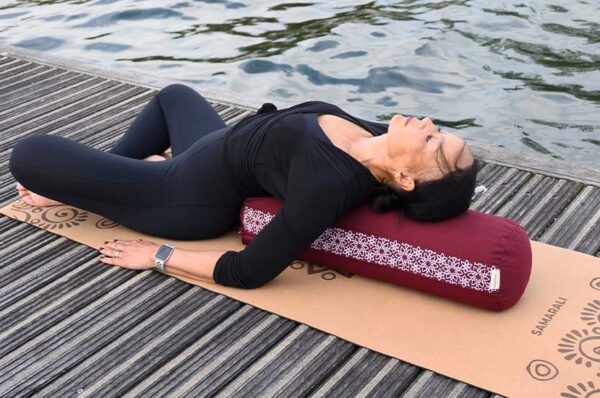
There is also a meaningful neurological dimension. Slow, mindful breathing during yin practice activates the vagus nerve, helping to regulate the nervous system’s overall stress response. Since chronic pain is often amplified by a sensitized nervous system, anything that calms that system can make pain feel more manageable. Pairing your practice with supportive props makes a real difference here. A yoga bolster allows you to fully relax into positions without straining, so the nervous system receives a signal of safety rather than effort.
What types of chronic pain can yin yoga help with?
Yin yoga tends to be most beneficial for chronic pain that originates in the joints, connective tissues, or is driven by nervous system sensitization. Conditions such as lower back pain, hip tightness, neck and shoulder tension, fibromyalgia, and general stiffness associated with sedentary lifestyles are among the areas where practitioners most commonly report meaningful relief.
Lower back pain is perhaps the most frequently cited benefit. Many people carry chronic tension in the lumbar spine and hips due to prolonged sitting, and yin poses like the butterfly, dragon, and sleeping swan directly address these areas by encouraging the hip flexors, sacral ligaments, and lumbar fascia to release over time.
For those dealing with fibromyalgia or widespread pain syndromes, the deeply restorative nature of yin yoga can help calm an overactive pain-signaling system. The emphasis on stillness, breath awareness, and acceptance during holds mirrors elements of mindfulness-based pain management, which has a well-established body of support in the wellness community.
Neck and shoulder tension, often linked to stress and screen time, also responds well to yin practice. Poses targeting the cervical spine and upper back, especially when supported with props like an organic cotton yoga blanket, allow the muscles and connective tissues in those areas to soften gradually without forcing the movement.
Are there cases where yin yoga could make pain worse?
Yes, there are situations where yin yoga can aggravate rather than relieve chronic pain. Acute injuries, active inflammation, hypermobility conditions, and certain nerve impingements are among the cases where the long holds characteristic of yin practice may do more harm than good. Understanding your specific condition before starting is essential.
If you have an acute injury, such as a recent disc herniation, a torn ligament, or a fresh muscle strain, the prolonged passive stretching in yin yoga can stress already vulnerable tissue. The body needs a degree of stability and protection during the initial healing phase, and yin’s emphasis on releasing tension can undermine that.
People with hypermobility disorders, including hypermobile Ehlers-Danlos syndrome, need to be particularly cautious. Yin yoga encourages you to move past muscular resistance into the connective tissue, which is exactly the tissue that is already too lax in hypermobile individuals. Pushing further into end-range positions can increase joint instability and worsen pain rather than ease it.
Nerve-related pain, such as sciatica or thoracic outlet syndrome, also warrants care. Some yin poses place sustained tension on nerves, and if a nerve is already compressed or irritated, holding that stretch for several minutes can intensify symptoms. In these cases, shorter holds, modified positions, and guidance from a qualified teacher or physiotherapist are strongly advisable before continuing independently.
How often should someone with chronic pain practice yin yoga?
For most people managing chronic pain, two to three yin yoga sessions per week is a reasonable and effective starting point. This frequency allows the body enough time to adapt and recover between sessions while still providing consistent stimulation to the connective tissues and nervous system. Starting with shorter sessions of twenty to thirty minutes is often wiser than jumping straight into a full hour.
Consistency matters more than intensity with yin yoga. The benefits accumulate gradually over weeks and months, so a gentle, regular practice tends to outperform occasional longer sessions. If you are new to yin or working with significant pain, beginning with one session per week and observing how your body responds before increasing frequency is a sensible approach.
It is also worth paying attention to how you feel in the twenty-four hours after practice. Some mild muscle soreness or a temporary increase in awareness around a tight area can be normal, especially early on. However, if pain noticeably worsens or lingers for more than a day after a session, that is a signal to reduce the duration of holds, modify poses, or consult a healthcare professional.
Setting up your practice space thoughtfully also supports a sustainable routine. Having the right yoga props within reach means you are more likely to use them and less likely to push beyond what your body needs on any given day. We design our props with exactly this kind of mindful, supported practice in mind.
Frequently Asked Questions
How is yin yoga different from restorative yoga, and does it matter which one I choose for chronic pain?
While both practices involve stillness and props, yin yoga intentionally applies a mild, sustained stress to connective tissues and fascia, whereas restorative yoga focuses purely on relaxation with full support so the body exerts almost no effort at all. For chronic pain rooted in fascial restriction or joint stiffness, yin yoga’s targeted tissue loading may offer more direct structural benefit. Restorative yoga, on the other hand, can be the better starting point if your nervous system is highly sensitized or if you are in a flare-up period and need pure rest rather than gentle challenge.
Can I practice yin yoga at home without a teacher, or is professional guidance necessary for chronic pain?
Many people safely practice yin yoga at home for chronic pain, especially once they have a basic understanding of their condition and how their body responds to holds. That said, at least a few sessions with a qualified yin yoga teacher or a physiotherapist familiar with the practice is strongly recommended before going fully independent, particularly if your pain has a specific diagnosis like a disc issue, hypermobility, or nerve involvement. A professional can help you identify which poses to modify or avoid, so your home practice becomes a safe and effective tool rather than a guessing game.
How do I know if a sensation during a yin hold is productive discomfort or a warning sign I should stop?
A useful distinction is between a dull, spreading, or achy sensation — which is typically the connective tissue responding to the stretch and is generally considered productive — versus sharp, shooting, burning, or electrical sensations, which are warning signs to come out of the pose immediately. Numbness or tingling, especially in the limbs, is another signal to back off, as it can indicate nerve compression. A good rule of thumb is to aim for a sensation you can breathe through comfortably; if your breath becomes short or held, the pose is too intense and needs to be modified with props or reduced in depth.
Should I combine yin yoga with other treatments for chronic pain, or is it effective enough on its own?
Yin yoga works best as one layer within a broader pain management approach rather than a standalone solution. It complements physiotherapy, medical treatment, strength training, and mindfulness practices particularly well, as each addresses a different dimension of chronic pain — structural, neurological, and psychological. For example, pairing yin yoga with gentle strengthening exercises helps ensure that the increased range of motion you gain through yin is supported by adequate muscle stability, reducing the risk of aggravating joints over time. Always keep your healthcare provider informed about any new practices you are adding to your routine.
What is the best time of day to practice yin yoga when managing chronic pain?
Evening is often the most effective time for yin yoga when managing chronic pain, as the long, calming holds naturally support the transition into rest and can improve sleep quality — a factor that has a significant impact on pain perception. Morning practice is also beneficial for those who experience significant stiffness upon waking, as it gently mobilizes tissues before the demands of the day. The most important factor, however, is consistency, so choosing a time you can realistically maintain several times per week will always outweigh the theoretical advantages of any particular hour.
Are there specific yin yoga poses I should avoid if I have lower back pain?
Deep forward folds performed with a rounded spine, such as a fully unsupported seated forward fold, can place significant load on lumbar discs and should be approached with caution or avoided entirely if you have disc-related lower back pain. Instead, supported versions using a bolster across the thighs or a folded blanket under the sitting bones can make the same poses accessible without stressing the lower back. Poses that involve spinal twisting should also be kept gentle and well within a pain-free range, and it is worth working with a teacher to identify which specific yin shapes feel supportive versus aggravating for your particular back condition.
How long does it typically take to notice a reduction in chronic pain from a regular yin yoga practice?
Most practitioners report a noticeable shift in how their chronic pain feels within four to eight weeks of consistent practice, though some experience a meaningful sense of relief — particularly in tension and nervous system calming — even after the first few sessions. Structural changes in the fascia and connective tissue, however, develop gradually over months rather than days, so managing expectations and committing to a long-term routine is important. Keeping a simple practice journal to track pain levels, sleep quality, and mood after sessions can be a motivating way to observe progress that might otherwise feel too gradual to notice day to day.
Ready to build a yin yoga practice that truly supports your body? At Samarali, we offer a carefully curated collection of props designed for exactly this kind of slow, intentional practice. Whether you need a yoga bolster to melt into deep holds without strain, an organic cotton yoga blanket to support your neck and shoulders, or a natural rubber yoga mat to ground your practice, every piece is made with quality and comfort in mind. Explore our full yoga mat collection and yoga accessories and give your body the support it deserves. Shop now at Samarali.