


A daily yoga nidra practice offers genuine, wide-ranging benefits for both mind and body. Regular practice supports deeper sleep, reduced stress, improved emotional regulation, and a greater sense of inner calm. It is one of the most accessible forms of guided meditation available, requiring no prior experience and very little time.
Unlike more physically demanding practices, yoga nidra works by guiding you into a state between waking and sleep, where the nervous system can reset and the mind can process tension it might otherwise hold onto. Below, we unpack the most common questions people have about making yoga nidra a daily habit.
How long does it take to feel the benefits of yoga nidra?
Many people notice the benefits of yoga nidra after just one or two sessions. A single practice of 20 to 30 minutes can leave you feeling noticeably calmer, more rested, and mentally clearer. For deeper, more lasting changes to sleep quality, stress resilience, and emotional balance, consistent practice over several weeks tends to produce the most meaningful results.
The speed at which you feel results depends on a few factors: how much stress or sleep debt you are carrying, how regularly you practice, and how deeply you are able to relax during each session. People dealing with burnout, chronic stress, or anxiety often report feeling a significant shift within the first week of daily practice. Others who are already fairly well-rested may notice subtler changes that build gradually.
What makes yoga nidra particularly effective is that even a short session is considered equivalent to several hours of ordinary sleep in terms of how deeply the body rests. This is not a metaphor. The practice guides you into a state of physical stillness and mental receptivity that allows the nervous system to recover in ways that normal daytime activity simply does not permit.
What does yoga nidra do to the brain and nervous system?
Yoga nidra shifts the brain into a theta wave state, the same slow brainwave pattern that occurs in the moments just before falling asleep. In this state, the nervous system moves from sympathetic activation (the stress response) into parasympathetic dominance (the rest and digest response). This shift allows the body to reduce cortisol, lower heart rate, and release physical tension held in the muscles and connective tissue.
The theta state is particularly significant because it is associated with heightened receptivity, creativity, and emotional processing. During yoga nidra, the conscious mind becomes quieter while deeper layers of awareness remain active. This is why the practice is sometimes used to work with deeply held patterns, habits, or emotional responses that are harder to access during ordinary waking life.
From a neurological standpoint, regular yoga nidra practice has been linked to improved regulation of the autonomic nervous system, meaning the body becomes better at switching between states of alertness and rest. Over time, this can translate into better sleep onset, lower baseline anxiety, and a greater ability to recover from stressful events without staying stuck in a heightened state of arousal.
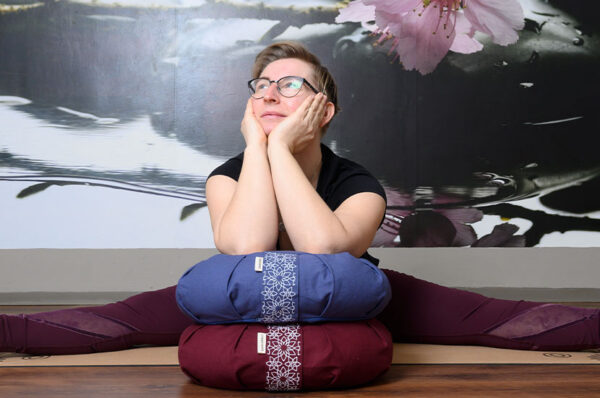
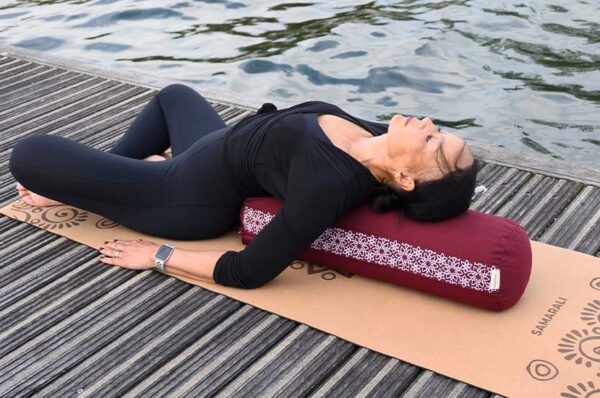
A supportive setup matters here. Practicing on a comfortable surface, such as a yoga bolster or a folded blanket beneath your knees, helps the body fully release physical tension so the nervous system can do its work without distraction.
How is yoga nidra different from regular meditation or sleep?
Yoga nidra is distinct from both regular meditation and sleep in a specific and important way. In most meditation practices, you remain in a fully wakeful state and actively direct your attention. In sleep, consciousness withdraws entirely. Yoga nidra occupies the threshold between the two, where the body rests as deeply as it does in sleep while a thread of conscious awareness remains present.
This combination is what makes yoga nidra uniquely restorative. The body receives the physiological benefits of deep rest while the mind stays just conscious enough to receive guidance, process experience, and remain lightly aware. It is guided rather than self-directed, which makes it far more accessible for people who struggle with conventional meditation or find it difficult to quiet a busy mind.
Compared to sleep, yoga nidra is intentional. You enter it deliberately, follow a structured rotation of awareness through the body, and emerge from it with a sense of having rested deeply rather than simply having passed time unconscious. Many people find it more refreshing than a nap of the same duration, precisely because the quality of rest is different.
Compared to seated or movement-based meditation, yoga nidra requires no effort to concentrate or maintain posture. You lie down, close your eyes, and follow a voice. This makes it an excellent entry point for anyone new to meditation or anyone whose nervous system is too activated to settle into a more demanding practice.
Should you practice yoga nidra every day?
Yes, practicing yoga nidra every day is not only safe but actively encouraged. Unlike vigorous physical practices that require recovery time, yoga nidra places no strain on the body. Daily practice builds cumulative benefits, gradually retraining the nervous system toward greater balance and resilience. Even a short 15 to 20 minute session each day can produce meaningful results over time.
The best time to practice is whenever you can do so consistently. Many people find it helpful in the early evening as a way to decompress after work, or just before bed to support deeper sleep. Others use it in the afternoon as a restorative break. Morning practice is less common but can be effective for setting a calm, grounded tone for the day.
If you are new to yoga nidra, starting with three to four sessions per week and building toward daily practice is a sensible approach. This gives you time to become familiar with the format and notice how your body responds before committing to a full daily routine.
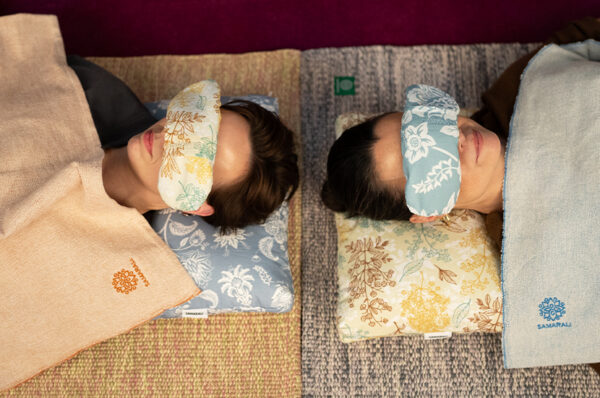
Creating a consistent space for your practice helps reinforce the habit. Keeping a dedicated spot with a comfortable mat, a blanket for warmth, and perhaps a meditation cushion nearby signals to your body and mind that this is time set aside for rest. The more consistent the environment, the more quickly your nervous system learns to relax when you arrive there.
Ultimately, yoga nidra is one of those rare practices where more is genuinely better, as long as it feels nourishing rather than obligatory. If daily practice ever starts to feel like a chore, it is worth revisiting the time of day or the length of the session rather than abandoning the practice altogether. The goal is to make it something you look forward to, not something you tick off a list.
If you are ready to create a dedicated space for your yoga nidra practice, Samarali has everything you need to settle in with ease. From a supportive yoga bolster and a soft organic cotton yoga blanket to a comfortable meditation mat, each piece is chosen to help your body fully let go so your practice can do its work. Explore the full meditation sets collection at Samarali and find what supports your rest best. Shop now.
Frequently Asked Questions
Can I do yoga nidra if I always fall asleep during the practice?
Falling asleep during yoga nidra is extremely common, especially in the early stages of practice, and it is not something to worry about. It often signals that your body is carrying a significant sleep debt and is taking what it needs. Over time, as your nervous system becomes more balanced and your sleep debt reduces, you will likely find it easier to stay in that twilight state between waking and sleep. In the meantime, practicing at a slightly less drowsy time of day, or propping your head up just a little, can help you stay at the threshold without fully crossing into sleep.
What is a sankalpa, and do I need one to practice yoga nidra?
A sankalpa is a short, heartfelt intention or resolve — a single sentence that reflects something meaningful you want to cultivate in your life, such as ‘I am at peace’ or ‘I trust myself.’ Many yoga nidra sessions invite you to plant your sankalpa at the beginning and end of the practice, when the mind is most receptive. You do not need one to benefit from yoga nidra, and beginners are encouraged to simply start practicing without one and let a sankalpa arise naturally over time. When it does feel right to use one, keep it positive, present-tense, and personally meaningful rather than goal-oriented.
How do I choose the right yoga nidra recording or teacher to follow?
The most important factor is finding a voice and pacing that feel genuinely soothing to you, since you will be following that guidance in a deeply relaxed state. Look for recordings that include a body scan (rotation of awareness), breath awareness, and ideally a pairs-of-opposites section, as these are hallmarks of a traditional, well-structured practice. Apps like Insight Timer and YouTube offer hundreds of free options across different lengths and styles, so experimenting with a few before committing to one is a practical first step. If you find a teacher whose style resonates, following their recordings consistently can deepen your experience over time.
Is yoga nidra safe during pregnancy?
Yoga nidra is generally considered very safe during pregnancy and is often recommended as a gentle, restorative practice for expectant mothers. Since it is entirely non-physical, there is no risk of overstretching or overexertion. In later trimesters, lying flat on your back may become uncomfortable, so practicing on your side with a bolster or pillow for support works just as well. As with any wellness practice during pregnancy, it is worth checking with your healthcare provider, particularly if you have any complications, but for most people yoga nidra is one of the safest and most beneficial practices available throughout all stages of pregnancy.
Can yoga nidra replace therapy or treatment for anxiety and insomnia?
Yoga nidra is a powerful complementary tool for anxiety and insomnia, but it works best alongside rather than as a replacement for professional care. Research supports its effectiveness in reducing cortisol, lowering physiological markers of stress, and improving sleep quality, which makes it a genuinely useful addition to a broader wellness or treatment plan. If you are working with a therapist or doctor on anxiety or sleep issues, mentioning your yoga nidra practice is worthwhile, as many mental health professionals actively encourage it. Think of it as something that creates the conditions for healing rather than a standalone cure.
What should I do if my mind stays too busy to relax during yoga nidra?
A busy mind during yoga nidra is not a sign that you are doing it wrong — it is simply the mind doing what minds do. The key difference from other practices is that you are not required to silence your thoughts; you only need to keep returning your attention to the guidance whenever you notice you have drifted. Over time, this gentle returning trains the nervous system to settle more readily. If mental noise is persistent, choosing a recording with a slightly faster pace or more frequent cues can help anchor your attention, and ensuring your practice space is free from notifications or interruptions makes a significant difference.
How does yoga nidra fit into a broader yoga or wellness routine?
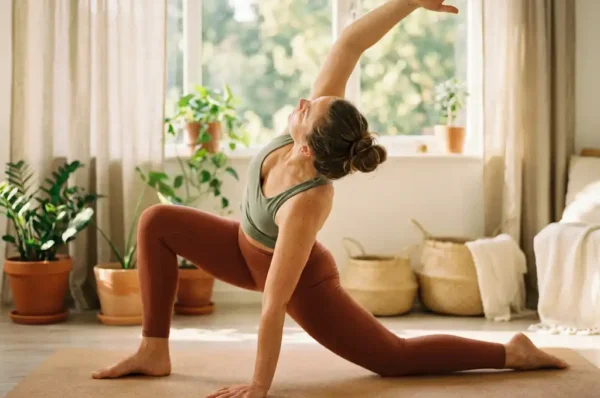
Yoga nidra pairs exceptionally well with more physically active practices and can be used as a cool-down after a yoga asana session, a recovery tool on rest days, or a standalone daily ritual entirely separate from physical movement. Many practitioners find that adding yoga nidra to an existing routine amplifies the benefits of their other practices by giving the nervous system dedicated time to integrate and restore. There is no conflict with other forms of meditation, breathwork, or exercise — if anything, yoga nidra tends to make those practices feel more effective by reducing the baseline stress and fatigue you bring to them.