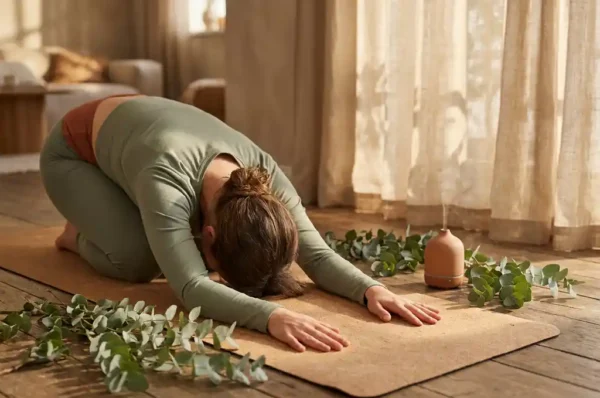



Yes, Yoga Nidra is genuinely effective for stress relief. It works by guiding your nervous system out of the fight-or-flight state and into deep rest, which allows the body to release physical and mental tension in a way that ordinary relaxation rarely achieves. Whether you are brand new to yoga or a seasoned practitioner, Yoga Nidra offers a practical, accessible tool for managing everyday stress.
Below, we answer the most common questions people have about how Yoga Nidra works for stress, how it compares to regular meditation, and how to get the most out of your practice.
How does Yoga Nidra actually reduce stress in the body?
Yoga Nidra reduces stress by shifting the nervous system from a sympathetic (stress-activated) state into a parasympathetic (rest-and-digest) state. This shift lowers cortisol levels, slows the heart rate, and relaxes muscular tension throughout the body. The practice achieves this through a guided rotation of awareness, breath focus, and the cultivation of a deeply relaxed yet conscious state.
Unlike simply lying down to rest, Yoga Nidra uses a structured sequence that systematically withdraws your attention from external stimulation. This process, known in yoga philosophy as pratyahara, allows the mind to settle without falling completely asleep. The result is a state sometimes described as being on the threshold between waking and sleeping, where the body regenerates and the nervous system genuinely unwinds.
The physical effects are real and noticeable. Muscle tension that accumulates throughout the day begins to dissolve as the body stops bracing against perceived threats. Breathing naturally deepens and slows. Over time, regular practice trains the nervous system to return to this calm baseline more easily, which means everyday stressors start to feel less overwhelming.
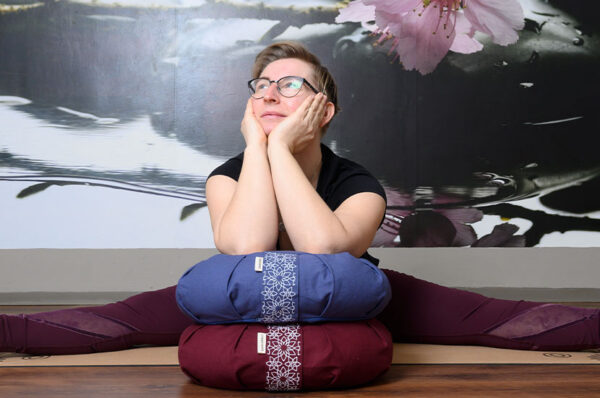
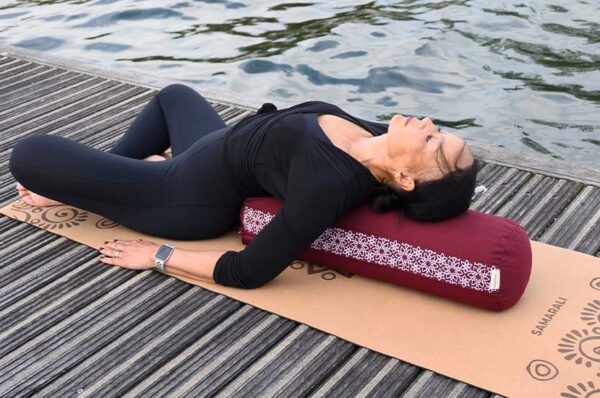
To support a comfortable and effective practice, having the right props makes a significant difference. A yoga bolster placed under your knees during Savasana can help your lower back fully release, which deepens the physical relaxation that Yoga Nidra depends on.
What’s the difference between Yoga Nidra and regular meditation for stress?
The key difference is that regular meditation typically asks you to sit upright and actively direct your attention, while Yoga Nidra is practiced lying down and uses a guided script to dissolve mental effort entirely. For stress relief specifically, Yoga Nidra often works faster and more deeply for people who find it difficult to quiet a busy mind through seated meditation alone.
In most meditation styles, you work to observe thoughts, return to a focal point, or cultivate a particular quality like compassion or clarity. There is an element of mental effort involved, which can itself feel stressful for beginners or for people who are already exhausted.
Yoga Nidra removes that effort almost entirely. You are guided through the practice step by step, which means the thinking mind has something to follow without having to generate anything itself. This makes it particularly effective for people whose stress manifests as racing thoughts, mental fatigue, or an inability to switch off.
That said, the two practices complement each other well. Regular meditation builds long-term awareness and emotional resilience, while Yoga Nidra provides immediate, deep restoration. Many practitioners use both, turning to Yoga Nidra on high-stress days and seated meditation as a daily anchor.
How often should you practice Yoga Nidra to feel less stressed?
Practicing Yoga Nidra three to four times per week is enough for most people to notice a meaningful reduction in stress levels. Even a single session of 20 to 30 minutes can produce immediate relief, but consistent practice over several weeks is what creates lasting change in how your nervous system responds to pressure.
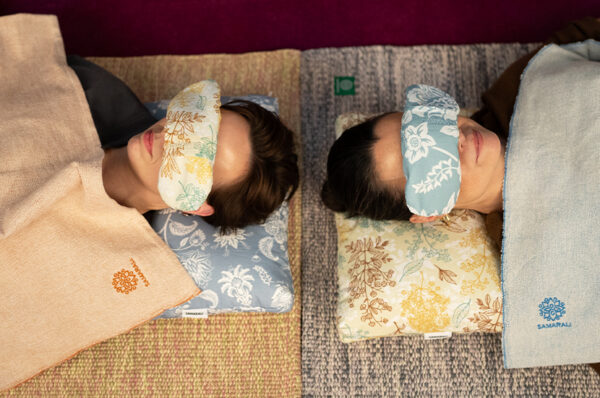
The good news is that Yoga Nidra is one of the most accessible practices in the wellness toolkit. You do not need a yoga mat, special clothing, or prior experience. You simply need a quiet space, something comfortable to lie on, and a guided audio track or teacher to follow.
If you are going through a particularly stressful period, a short daily session of even 15 to 20 minutes can be more effective than a longer session practiced infrequently. Consistency matters more than duration. Think of it less like a workout and more like sleep: the benefits compound when you show up regularly.
For those who want to build a dedicated home practice space, a supportive meditation mat and a soft blanket can make it much easier to settle into the practice quickly and comfortably, removing any friction that might otherwise get in the way of showing up consistently.
Can Yoga Nidra help with anxiety and sleep problems too?
Yes, Yoga Nidra is widely used to ease both anxiety and sleep difficulties, and for good reason. The same mechanisms that make it effective for stress, specifically its ability to calm the nervous system and reduce mental hyperactivity, also address the root causes of anxiety and insomnia. Many people find that a session practiced in the evening significantly improves their ability to fall and stay asleep.
Yoga Nidra and anxiety
Anxiety often involves the nervous system getting stuck in a state of high alert, interpreting ordinary situations as threatening. Yoga Nidra gently interrupts this pattern by giving the body repeated experiences of deep safety and rest. Over time, this retrains the nervous system to spend less time in that hypervigilant state. The practice also incorporates the setting of a sankalpa, a short personal intention or resolve, which can help anchor a calmer sense of self beneath the anxiety.
Yoga Nidra and sleep
For sleep problems, Yoga Nidra is particularly valuable because it mimics the transitional state between wakefulness and sleep. Practicing it before bed helps the mind let go of the day’s mental activity and eases the body into the conditions needed for deep, restorative sleep. Unlike sleep aids, there are no side effects, and the practice itself builds a skill you carry with you. Many people report that even if they do not fall asleep during a session, they sleep noticeably better afterward.
It is worth noting that Yoga Nidra is not a replacement for professional support if anxiety or sleep problems are severe or chronic. But as a complementary tool, it is one of the gentlest and most effective practices available, and in 2026, its growing presence in clinical wellness settings reflects just how seriously practitioners and researchers alike are taking its benefits.
Ready to create the ideal space for your Yoga Nidra practice? At Samarali, you will find everything you need to settle in with ease and comfort. From a supportive meditation mat and a cosy organic cotton yoga blanket to a yoga bolster that helps your body fully release, our meditation sets are thoughtfully designed to support a consistent, restorative practice. Give your nervous system the care it deserves — shop the collection at Samarali and find what works best for you.