


Breathwork and yoga are two of the most effective tools for managing holiday stress, and they work even better when combined. Both practices directly regulate the nervous system, shifting the body out of fight-or-flight mode and into a calmer, more grounded state. Below, we answer the most common questions about using breathwork and yoga to get through the holiday season with more ease and less anxiety.
What types of breathwork work best for holiday stress?
The most effective breathwork techniques for holiday stress are those that activate the parasympathetic nervous system quickly. Box breathing, diaphragmatic breathing, and alternate nostril breathing are all strong choices. Each one slows the heart rate, lowers cortisol, and brings the mind back to the present moment within just a few minutes of practice.
Box breathing
Box breathing involves inhaling for four counts, holding for four, exhaling for four, and holding again for four. This rhythmic pattern is used by athletes and first responders to manage acute stress, and it works just as well when you are overwhelmed by a packed holiday schedule or a difficult family gathering. Even two or three rounds can create a noticeable shift in how you feel.
Alternate nostril breathing
Known in yoga as Nadi Shodhana, alternate nostril breathing balances the left and right hemispheres of the brain and is particularly useful for holiday anxiety that feels scattered or mentally chaotic. You close one nostril, inhale through the other, switch, and exhale. The deliberate focus required also pulls attention away from stressful thoughts, making it a dual-purpose tool for mindful breathing during the holidays.
Diaphragmatic breathing
Also called belly breathing, this is the simplest starting point if you are new to breathwork for stress. Place one hand on your chest and one on your belly, then breathe so that only the lower hand rises. Most people breathe shallowly when stressed, and switching to diaphragmatic breathing alone can interrupt a stress response within minutes.
Which yoga poses help calm a stressed nervous system?
Restorative and forward-folding yoga poses are the most effective for calming a stressed nervous system during the holidays. Poses like Child’s Pose, Legs Up the Wall, Seated Forward Fold, and Supported Bridge signal safety to the body, slow the breath naturally, and reduce the physical tension that accumulates with holiday stress.
- Child’s Pose (Balasana): A gentle forward fold that compresses the belly, encourages deep breathing, and quiets the mind. Hold for at least five breaths.
- Legs Up the Wall (Viparita Karani): Lying with your legs resting vertically against a wall reverses blood flow, reduces swelling in the legs from travel or standing, and triggers a deep relaxation response.
- Seated Forward Fold (Paschimottanasana): Folding forward over straight or bent legs stimulates the vagus nerve, which plays a central role in stress management and nervous system regulation.
- Supported Bridge Pose: Placing a yoga bolster or folded blanket under the sacrum and resting in a passive backbend opens the chest and counteracts the hunched posture that stress and screen time create.
- Supine Twist: A gentle spinal rotation while lying down releases tension in the back and hips, areas where many people physically hold stress.
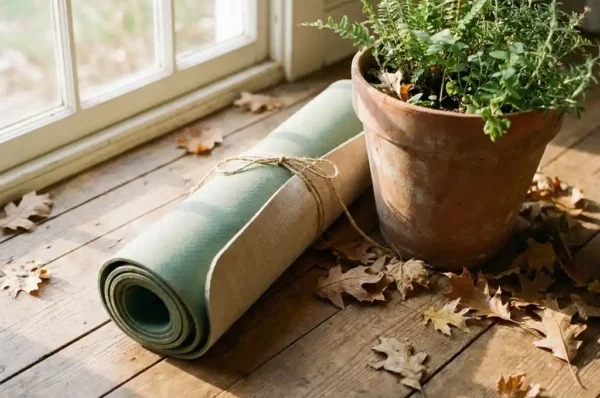
You do not need a long session to benefit from these poses. Even ten minutes on a yoga mat in a quiet corner of your home can meaningfully reduce holiday anxiety when the poses are held long enough for the nervous system to respond.
How do you combine breathwork and yoga into a short stress-relief routine?
To combine breathwork and yoga into a short stress-relief routine, start with two to three minutes of breathing exercises to settle the mind, move through three to five calming yoga poses while maintaining slow nasal breathing, and close with one to two minutes of stillness or a final breath technique. The entire routine can take as little as fifteen minutes.
Here is a simple structure you can use any time during the holiday season:
- Open with box breathing (2-3 minutes): Sit comfortably and complete five to eight rounds of box breathing. This primes the nervous system before you even move into your body.
- Move through calming poses (8-10 minutes): Flow slowly through Child’s Pose, Seated Forward Fold, Supine Twist on both sides, and Legs Up the Wall. Hold each pose for five to eight breaths rather than rushing through.
- Breathe through the poses: Coordinate your breath with movement. Inhale to lengthen or prepare, exhale to fold or release. This synchronization is what makes yoga for stress relief more effective than stretching alone.
- Close with Nadi Shodhana (2 minutes): Finish seated with three to five rounds of alternate nostril breathing to consolidate the calm state you have built through the practice.
Consistency matters more than duration here. A fifteen-minute routine practiced every day during the holiday season will deliver far better stress management results than a single long session once a week.
When should you use breathwork versus yoga for stress relief?
Use breathwork when you need immediate stress relief in any setting, and use yoga when you have time and space to move your body. Breathwork is portable and discreet, making it ideal for acute holiday stress situations like crowded shopping centres, tense family moments, or pre-event anxiety. Yoga works better as a daily reset that addresses the physical and mental accumulation of holiday stress over time.
Think of it this way: breathwork is your in-the-moment tool, and yoga is your ongoing maintenance practice. If you are sitting at a holiday dinner and feel your anxiety rising, a few rounds of slow diaphragmatic breathing can calm you within minutes without anyone around you noticing. If you have been carrying tension in your shoulders and lower back after days of travel and disrupted routines, a short yoga session will address what breathing alone cannot reach.
The two approaches also reinforce each other. Regular yoga practice trains you to breathe more consciously during stressful moments, and regular breathwork makes you more present and focused during yoga. For anyone navigating the particular demands of the holiday season, using both together is the most effective approach to stress management rather than treating them as separate options.
If you are building a home practice and want a dedicated space that supports both, we offer a range of meditation and yoga essentials designed to make your routine feel grounded and intentional, even during the busiest time of year.
Frequently Asked Questions
How quickly can breathwork or yoga actually reduce holiday stress, and how will I know it's working?
Breathwork can produce noticeable physiological changes — like a slower heart rate and reduced muscle tension — within just two to five minutes, while a short yoga session of ten to fifteen minutes can shift your overall stress state significantly. You will know it is working when your breathing feels easier, your thoughts slow down, and the physical tightness in areas like your shoulders, jaw, or chest begins to release. Over days and weeks of consistent practice during the holiday season, you may also notice that you recover from stressful moments more quickly than you did before.
What if I have no experience with yoga or breathwork — where do I actually start?
Start with diaphragmatic breathing alone, since it requires no equipment, no prior experience, and no specific setting — just two hands and a few minutes of quiet. Once belly breathing feels natural, add a single pose like Child’s Pose or Legs Up the Wall and hold it while maintaining that slow, deep breath. Trying to learn too many techniques at once is one of the most common beginner mistakes, so building gradually from one simple tool gives you a sustainable foundation rather than an overwhelming to-do list.
Can I practice these techniques if I have physical limitations or injuries that prevent certain yoga poses?
Absolutely — breathwork is entirely accessible regardless of physical ability, and most of the calming yoga poses described can be modified or replaced with seated or lying-down alternatives. For example, if Seated Forward Fold is uncomfortable for your lower back or hamstrings, a reclined version with a strap or simply resting in Savasana with slow nasal breathing delivers many of the same nervous system benefits. Always listen to your body, use props like bolsters or folded blankets to reduce strain, and consult a healthcare provider if you are working around a specific injury or medical condition.
Is it normal to feel more emotional or even tearful during these practices, especially around the holidays?
Yes, this is completely normal and actually a sign that the practice is working. Slow breathwork and restorative yoga poses activate the parasympathetic nervous system, which can release stored emotional tension that the body has been suppressing during high-stress periods — and the holiday season tends to carry a particularly heavy emotional load for many people. Rather than resisting it, treat any emotional release as part of the stress-relief process; it typically passes quickly and is followed by a genuine sense of calm and relief.
What is the biggest mistake people make when trying to use yoga or breathwork for stress relief?
The most common mistake is treating these practices as a last resort — waiting until stress has become overwhelming before reaching for them, rather than using them proactively as a daily buffer. A five-minute breathwork session in the morning or a short evening yoga routine is far more effective as a preventative tool than trying to undo hours of accumulated tension in a single sitting. Another frequent error is rushing through poses or breath cycles without giving the nervous system enough time to actually respond, so prioritize slowness and stillness over completing a checklist of techniques.
How do I stay consistent with these practices when my holiday schedule is unpredictable and constantly changing?
Anchor your practice to an existing daily habit rather than trying to carve out a separate block of time — for example, five rounds of box breathing right after you wake up, or Legs Up the Wall for ten minutes before bed. Because breathwork requires no equipment and yoga can be done in as little as ten minutes with just a mat, the barrier to entry is low enough to fit into even the most chaotic holiday schedule. On days when a full routine is genuinely impossible, even two to three minutes of slow diaphragmatic breathing counts as a meaningful practice and keeps the habit alive.
Can children or other family members join these practices, and are there holiday-specific adaptations worth trying?
Yes — box breathing and diaphragmatic breathing are simple enough for children as young as five or six to learn, and framing them as a fun counting game makes them even more accessible for younger family members. Gentle yoga poses like Child’s Pose and Legs Up the Wall are also naturally appealing to kids and can turn a solo stress-relief practice into a shared family wind-down ritual, which is particularly valuable during the socially intense holiday period. Practicing together not only multiplies the calming effect but also models healthy stress management for younger family members in a way that sticks long after the holidays are over.