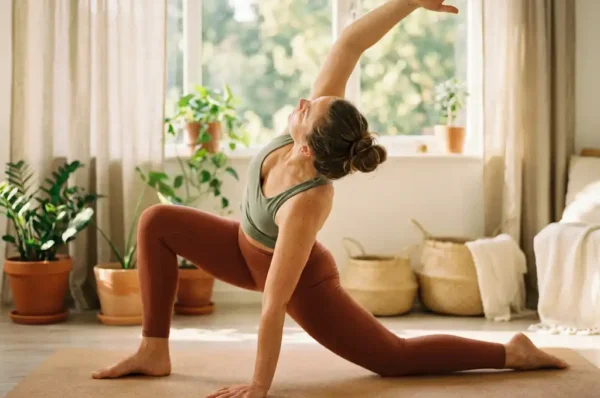



Hatha yoga reduces stress by activating the parasympathetic nervous system, the body’s natural “rest and digest” response, through a combination of slow movement, conscious breathing, and sustained postures. This shift counteracts the physiological effects of chronic stress, lowering cortisol levels and calming an overactive mind. Below, we break down exactly how this works, which poses help most, and how to build a practice that genuinely makes a difference.
What happens in your body when Hatha Yoga relieves stress?
When you practice Hatha yoga, your body moves out of the sympathetic “fight or flight” state and into a parasympathetic state of calm. Slow, deliberate postures combined with deep diaphragmatic breathing signal safety to your nervous system, reducing the release of stress hormones like cortisol and adrenaline. Heart rate drops, muscle tension releases, and mental chatter begins to quiet.
The breath is the most direct lever here. In Hatha yoga, breathwork is not optional or secondary. Each posture is held long enough for the breath to deepen, and that extended exhalation specifically activates the vagus nerve, which runs from the brainstem to the abdomen and plays a central role in regulating stress responses. The longer you hold a pose and breathe consciously, the more pronounced this calming effect becomes.
Beyond the nervous system, Hatha yoga also reduces physical tension stored in the body. Stress accumulates in predictable places: the shoulders, jaw, hips, and lower back. Holding poses that target these areas while breathing into them releases muscular holding patterns that would otherwise keep the body in a low-grade state of alarm. Over time, this teaches the body a new baseline, one that is more relaxed even outside of practice.
Which Hatha Yoga poses are most effective for stress relief?
The most effective Hatha yoga poses for stress relief are those that combine gentle opening with long holds and supported positions. Forward folds, restorative backbends, hip openers, and inversions are particularly powerful because they target the areas where stress physically accumulates and encourage the nervous system to downregulate.
Grounding and forward-folding poses
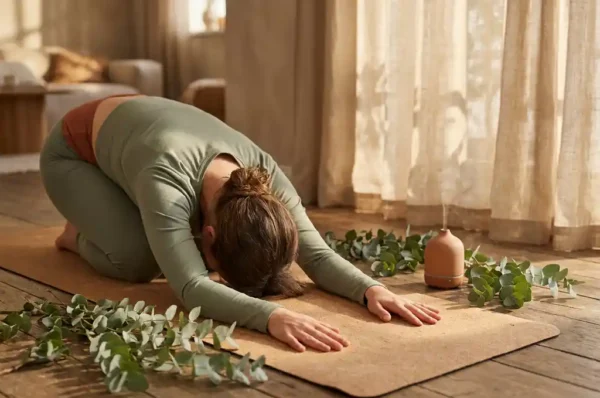
Child’s Pose (Balasana) and Standing Forward Fold (Uttanasana) are foundational stress-relief postures. Both bring the head below the heart, which has a measurable calming effect on the nervous system. Child’s Pose, in particular, gently compresses the abdomen, encouraging slow, full breaths. Holding either pose for 60 to 90 seconds while breathing deeply amplifies the effect considerably.
Supported and restorative poses
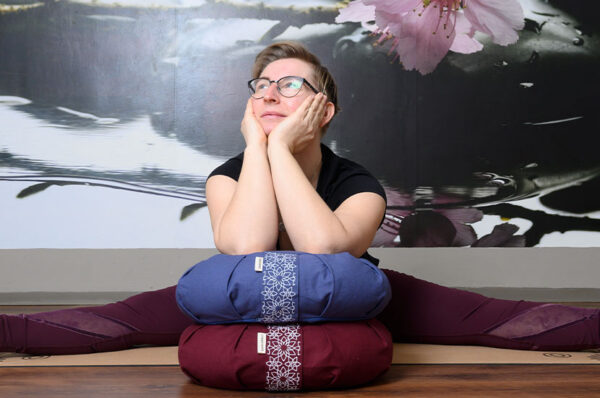
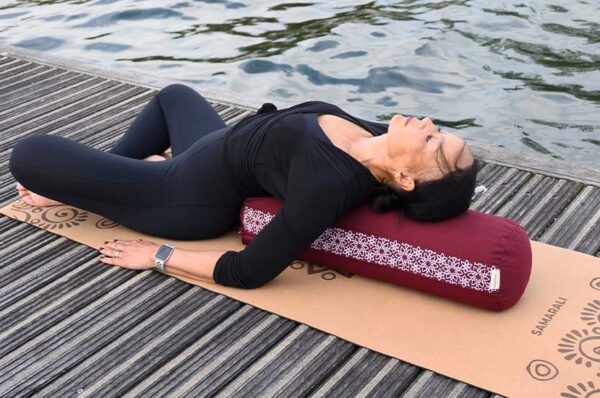
Supported Bridge Pose and Legs Up the Wall (Viparita Karani) are among the most accessible and effective poses for nervous system recovery. Legs Up the Wall requires almost no flexibility and can be held for five to ten minutes, making it ideal at the end of a stressful day. Using a yoga bolster under the hips in supported Bridge Pose adds a gentle chest opening that releases tension from the front of the body and encourages deeper breathing.
How often should you practice Hatha Yoga to reduce stress?
Practicing Hatha yoga three to four times per week is enough to produce noticeable reductions in stress for most people. Consistency matters more than duration. A focused 30-minute session practiced regularly delivers more lasting benefit than a single long session once a week.
That said, even a single session has an immediate effect. After one Hatha yoga class, most practitioners report feeling calmer, more grounded, and mentally clearer. The cumulative benefit builds over weeks and months as the nervous system learns to access that parasympathetic state more readily, both during practice and in daily life.
If stress is particularly acute, shorter daily practices of 15 to 20 minutes can be more effective than less frequent longer ones. Morning practice helps set a calm tone for the day, while evening practice supports the transition into rest and better sleep. What matters most is finding a rhythm you can sustain. Rolling out your yoga mat consistently, even briefly, builds the habit that makes the stress-relief benefits compound over time.
Is Hatha Yoga better for stress than other styles of yoga?
Hatha yoga is particularly well suited for stress relief compared to more dynamic styles because its slower pace and longer holds give the nervous system time to shift into a calmer state. Vinyasa, Ashtanga, and Power yoga can be physically invigorating and mood-lifting, but their faster tempo keeps the body in a more activated state, which is not always what chronic stress requires.
Yin yoga and Restorative yoga go even further in the direction of stillness and are excellent complements to Hatha for deep stress recovery. However, Hatha offers a useful middle ground: it builds body awareness, strength, and flexibility while still being slow enough to work directly on the stress response. For someone carrying significant mental or physical tension, starting with Hatha is often more accessible than jumping into a vigorous flow class.
The key distinction is intentionality. Hatha yoga’s emphasis on breath-synchronized movement and mindful presence is what makes it effective for stress, not just the physical postures themselves. A fast-paced class done mindlessly will not deliver the same result as a slower practice done with full attention to breath and sensation. For anyone in 2026 navigating a high-demand lifestyle, Hatha yoga offers a practical, evidence-supported way to build genuine resilience against stress, one breath and one pose at a time.
Ready to support your practice with the right tools? At Samarali, you’ll find everything you need to make your stress-relief practice as effective as possible — from a natural rubber yoga mat that grounds you in every session to a yoga bolster that makes restorative poses deeply supportive. Pair them with a cosy organic cotton yoga blanket for those long, calming holds. Shop the yoga collection and give your practice the foundation it deserves.
Frequently Asked Questions
How quickly can I expect to feel stress relief from Hatha yoga?
Most people notice an immediate calming effect after their very first session, including reduced heart rate, looser muscles, and a quieter mind. However, lasting and consistent stress relief typically develops over 4 to 8 weeks of regular practice, as the nervous system gradually learns to shift into a parasympathetic state more efficiently. If you practice three to four times per week, many people report noticeably lower baseline stress levels within the first month.
Can I practice Hatha yoga for stress relief if I'm a complete beginner with no flexibility?
Absolutely. Hatha yoga is one of the most beginner-friendly styles precisely because its slower pace and held postures allow you to ease into each position at your own comfort level. Poses like Legs Up the Wall and Child’s Pose require virtually no flexibility and are among the most effective for stress relief. Props such as yoga blocks, bolsters, and blankets make every pose accessible regardless of your starting point, so there is no flexibility threshold you need to meet before you can benefit.
What is the best time of day to practice Hatha yoga for stress relief?
Both morning and evening practice offer distinct stress-relief benefits, so the best time is ultimately the one you can stick to consistently. A morning practice helps regulate your cortisol response early in the day, setting a calmer physiological tone before stressors arise. An evening practice, especially one focused on restorative poses and long holds, helps the body wind down, lowers residual tension from the day, and can significantly improve sleep quality.
What's the biggest mistake people make when using Hatha yoga to manage stress?
The most common mistake is rushing through poses without prioritizing the breath, which essentially turns a stress-relief practice into just another physical workout. The breath is the primary mechanism through which Hatha yoga activates the parasympathetic nervous system, so if you are holding poses while breathing shallowly or holding your breath entirely, you are leaving most of the benefit on the table. Slow down, extend your exhales, and treat each breath as the actual practice rather than a background detail.
Can Hatha yoga replace other stress management strategies, like therapy or medication?
Hatha yoga is a powerful complementary tool for stress management, but it is not a replacement for professional mental health support or prescribed treatment when those are needed. Research consistently shows that yoga reduces cortisol, improves mood, and supports emotional regulation, making it an excellent addition to a broader wellness plan. If you are dealing with clinical anxiety, depression, or trauma, practicing Hatha yoga alongside therapy or medical guidance will typically produce better outcomes than either approach alone.
How long should I hold each pose to get the stress-relief benefit?
For meaningful nervous system downregulation, aim to hold stress-relief poses for at least 60 to 90 seconds, though restorative poses like Legs Up the Wall can and should be held for five to ten minutes for maximum effect. The first 30 seconds of a hold are often spent settling into the position, and the deeper physiological calming happens in the time that follows. Pairing longer holds with slow, extended exhales amplifies the vagal nerve activation that drives the stress-relief response.
Are there any situations where Hatha yoga might increase stress rather than reduce it?
Yes, in a few specific scenarios. Practicing in a highly competitive environment, comparing yourself to others, or pushing through pain can activate the stress response rather than calm it. Similarly, if you are severely sleep-deprived or in acute physical distress, a vigorous session may add strain rather than relief. In those cases, opting for a fully restorative or gentle Yin-style practice, or even just five minutes of supported breathing, is a smarter choice that will still deliver the parasympathetic benefits you are looking for.