


A sustainable yoga mat for Vinyasa yoga is a high-performance mat made from natural or recycled materials, such as natural rubber, organic cotton, or cork, that provides the grip, cushioning, and durability needed for fast-paced flow sequences. Unlike conventional PVC mats, sustainable options are free from harmful chemicals and designed to have a lower environmental footprint without sacrificing function. Below, we answer the most common questions about choosing and using a sustainable mat for your Vinyasa practice.
What makes a yoga mat suitable for Vinyasa practice?
A yoga mat is suitable for Vinyasa yoga when it offers reliable grip, adequate cushioning, and enough surface stability to support continuous movement through linked poses. Vinyasa is a dynamic, flow-based style where transitions happen quickly, so a mat that shifts underfoot or loses traction mid-sequence creates both a safety risk and a distraction from your practice.
The key performance factors to look for are:
- Grip: The mat surface must hold your hands and feet firmly, even as sweat builds up during an active session. Open-cell materials like natural rubber absorb moisture rather than repelling it, which actually improves grip as the practice intensifies.
- Thickness: A mat between 4mm and 5mm offers a balance of joint cushioning and ground connection. Too thick and you lose the stability needed for standing balance poses; too thin and your knees and wrists will feel every transition.
- Texture: A textured or slightly raised surface pattern adds traction without making the mat feel sticky or restrictive during smooth transitions.
- Size: A longer mat (around 185cm or more) gives you room to move through sun salutations and jump-backs without stepping off the edge.
Density also matters. A mat that compresses too easily under pressure will feel unstable in Warrior poses and lunges. Natural rubber mats tend to have excellent density, which is one reason they are so well suited to active styles like Vinyasa.
What materials are used in sustainable yoga mats?
Sustainable yoga mats are made from natural, renewable, or recycled materials that replace the petroleum-based PVC found in conventional mats. The most common sustainable materials are natural rubber, organic cotton, cork, and jute, each offering a different balance of grip, texture, and environmental benefit.
Natural rubber
Natural rubber is harvested from rubber trees and is one of the most popular sustainable mat materials for active yoga styles. It biodegrades at end of life, provides excellent grip, and has a natural density that supports dynamic movement. Our natural rubber yoga mat is a strong example of how this material performs in practice, combining a non-slip surface with the responsiveness Vinyasa practitioners need.
Organic cotton
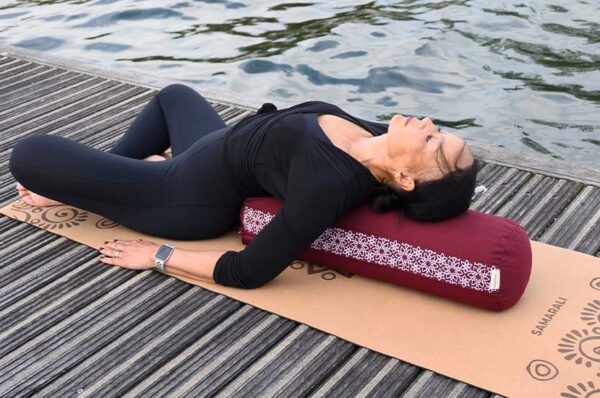
Organic cotton mats and rugs are woven rather than foam-cast, making them breathable, washable, and free from synthetic coatings. They work especially well layered over a rubber base mat for added grip, or on their own for gentler practices. Cotton is also a great choice for practitioners with latex sensitivities. Our organic cotton yoga rug reflects this tradition, drawing on centuries of yoga practice where woven cotton mats were the standard.
Cork
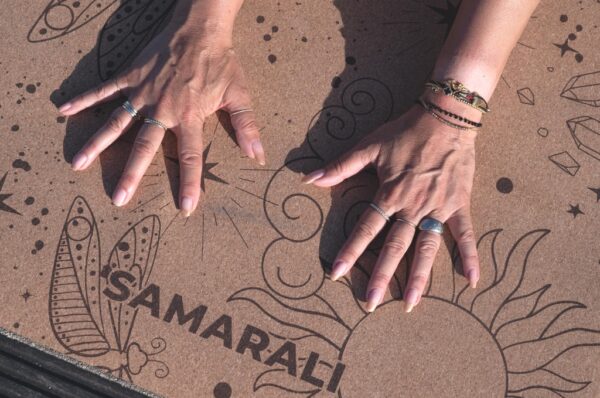
Cork is harvested from the bark of cork oak trees without cutting them down, making it a genuinely renewable resource. Cork surfaces become grippier when wet, which is a real advantage in a sweaty Vinyasa class. It also has natural antimicrobial properties, which means less odor buildup over time.
Jute
Jute is a fast-growing natural fiber that requires minimal water and no pesticides to cultivate. Jute mats have a slightly rough, earthy texture that provides good traction, though they tend to be firmer and less cushioned than rubber options.
How does a sustainable mat perform compared to a standard PVC mat in Vinyasa?
A high-quality sustainable mat performs as well as or better than a standard PVC mat in Vinyasa yoga, particularly when it comes to grip during active sweating. PVC mats are inexpensive and durable, but their closed-cell surface can become slippery as moisture builds, which is the opposite of what you want in a flow practice. Natural rubber and cork mats improve traction as they get wet.
Here is how the two compare across the factors that matter most for Vinyasa:
- Grip when dry: Both perform well, though PVC can feel slightly stickier out of the box due to its synthetic coating.
- Grip when sweaty: Natural rubber and cork outperform PVC significantly here, as their open or textured surfaces absorb and channel moisture rather than sitting on top of it.
- Cushioning: PVC foam mats often feel softer initially, but they compress and lose their cushioning over time. Natural rubber maintains its density longer.
- Durability: A quality natural rubber mat will typically outlast a budget PVC mat, though it requires more careful maintenance (more on that below).
- Weight: Sustainable mats, especially natural rubber, tend to be heavier than PVC. A yoga mat bag makes carrying one much more manageable.
- Environmental impact: PVC production releases toxic chemicals and the material does not biodegrade. Sustainable mats have a significantly lower lifecycle impact.
The trade-off is usually price. Sustainable mats cost more upfront, but their longevity and the avoided environmental cost make them better value over time for a regular Vinyasa practitioner.
How do you care for a sustainable yoga mat after Vinyasa sessions?
To care for a sustainable yoga mat after Vinyasa sessions, wipe it down immediately after practice with a damp cloth or a gentle, natural mat spray, then allow it to air dry completely before rolling it up. Moisture trapped inside a rolled mat encourages bacteria and odor, and for natural rubber mats specifically, prolonged dampness can degrade the material over time.
Follow these steps to keep your mat in good condition:
- Wipe after every session: Use a soft cloth lightly dampened with water, or a spray made from diluted mild soap or tea tree oil. Avoid alcohol-based cleaners on natural rubber as they dry out the material.
- Air dry flat or hang it: Roll the mat loosely and stand it upright, or hang it over a rack. Never store it rolled tightly while still damp.
- Deep clean monthly: For a thorough clean, hand wash with a small amount of gentle, natural soap and cool water. Rinse thoroughly and air dry in a shaded area. Direct sunlight breaks down natural rubber over time, so avoid leaving the mat outside to dry in strong sun.
- Store away from heat and UV: Keep your mat in a cool, shaded space. A mat bag not only makes transport easier but also protects the surface from dust and light when stored.
- Avoid harsh chemicals: Strong detergents, bleach, and essential oils applied directly can break down the natural materials and reduce the mat’s grip and lifespan.
With consistent care, a natural rubber or cork mat used for regular Vinyasa practice can last several years, making the upfront investment genuinely worthwhile. The better you treat it, the better it performs, which is a good reflection of the mindful approach that Vinyasa yoga itself encourages.
Ready to find the right mat for your practice? At Samarali, we carry a carefully selected range of sustainable yoga essentials designed to support an active flow practice. Whether you are looking for a natural rubber yoga mat that grips better as you sweat, an organic cotton yoga rug for a breathable, natural feel underfoot, or a yoga mat bag to carry it all with ease, you will find everything you need in our yoga mats collection. Shop now and bring more intention — and sustainability — to every session.
Frequently Asked Questions
How do I break in a new natural rubber yoga mat before my first Vinyasa class?
New natural rubber mats can feel slightly slippery straight out of the packaging due to a light surface residue from manufacturing. To break it in, wipe it down with a damp cloth a few times before your first session, or do one or two gentle practices on it at home before taking it to a class. Some practitioners also lightly sprinkle the surface with water during the first few uses to help the open-cell rubber activate its grip. Within a few sessions, the surface will settle and perform at its best.
Can I use a sustainable yoga mat if I have a latex allergy?
Natural rubber contains latex proteins, so it is not suitable for practitioners with a confirmed latex allergy. In that case, organic cotton or jute mats are the safest sustainable alternatives, as they are entirely plant-based and free from latex. Cork mats are another good option, though many cork mats are backed with a thin layer of natural rubber, so it is important to check the product specifications carefully before purchasing. Always consult with a healthcare professional if you have a severe latex sensitivity.
What is the best way to store a sustainable yoga mat to make it last longer?
The single most important storage habit is to ensure your mat is fully dry before rolling it up and putting it away, as trapped moisture is the primary cause of material degradation and odor in natural mats. Store it loosely rolled in a cool, shaded space away from direct sunlight and heat sources, both of which break down natural rubber and cork over time. Using a yoga mat bag adds an extra layer of protection from dust, light, and accidental damage during transport or storage. Avoid storing heavy objects on top of a rolled mat, as this can permanently compress or deform the surface.
How do I know when it is time to replace my sustainable yoga mat?
The clearest signs that a mat needs replacing are visible surface breakdown, such as flaking, pilling, or thinning patches, and a noticeable loss of grip that does not improve after cleaning. For natural rubber mats used in regular Vinyasa practice, this typically happens after three to five years, depending on how well the mat has been maintained. If you find yourself slipping during poses that used to feel stable, or if the mat has developed an odor that persists even after deep cleaning, it has likely reached the end of its useful life. When it is time to retire it, look into recycling programs or repurposing the mat as a non-slip underlay for rugs or kneeling pads.
Is a thicker sustainable mat better for protecting my joints during Vinyasa?
Not necessarily. While extra cushioning may seem beneficial for joint protection, mats thicker than 5mm can actually reduce stability in standing and balance poses, which are central to Vinyasa practice. A 4mm to 5mm natural rubber mat provides sufficient cushioning for wrists and knees during transitions while still keeping you close enough to the ground for a secure, grounded feel. If you have specific joint concerns such as sensitive knees, a better solution is to use a folded blanket or a small pad under the affected joint rather than switching to a thicker mat across the board.
Can I use a sustainable yoga mat outdoors for Vinyasa practice?
Yes, sustainable mats can be used outdoors, but a few precautions will help protect the material. Avoid practicing on rough concrete or gravel surfaces, which can abrade and tear natural rubber or cork over time. More importantly, limit direct sun exposure during and after your session, as UV light degrades natural rubber relatively quickly. If you enjoy outdoor practice regularly, a jute or cork mat may be more resilient to the elements than a pure rubber mat, and always bring the mat indoors to dry and store it out of sunlight after use.
Are sustainable yoga mats worth the higher upfront cost for someone just starting Vinyasa?
For someone just beginning Vinyasa, a sustainable mat is a worthwhile investment if you are committed to practicing regularly, because the performance benefits, particularly the improved grip during sweaty sessions, will support your progress from the start rather than creating frustration with a slippery surface. That said, if you are still exploring whether Vinyasa is the right style for you, starting with a mid-range option and upgrading once you are practicing consistently is a perfectly reasonable approach. When you are ready to invest, prioritize a natural rubber mat in the 4mm to 5mm range, as it offers the best balance of performance, durability, and sustainability for active flow practice.