


Yes, Yin Yoga can genuinely help you sleep better. This slow, meditative practice works by calming the nervous system, releasing deep physical tension, and shifting your body into a state that is physiologically ready for rest. It is especially effective when practiced in the evening as part of a wind-down routine.
Unlike more energetic yoga styles, Yin Yoga holds passive poses for several minutes at a time, giving your connective tissue and mind the space to fully let go. Whether you struggle with racing thoughts, physical restlessness, or simply find it hard to switch off after a busy day, a short Yin practice before bed can make a meaningful difference. Below, we break down exactly how it works and how to get the most from it.
How does Yin Yoga calm the nervous system for sleep?
Yin Yoga calms the nervous system by activating the parasympathetic response, commonly known as the “rest and digest” state. Holding still, passive poses for two to five minutes at a time sends signals to the brain that it is safe to slow down, which lowers heart rate, reduces cortisol, and prepares the body for deep sleep.
When you are stressed or overstimulated, your sympathetic nervous system keeps you in a state of alertness. Yin Yoga gently interrupts this cycle. The long holds encourage slow, deliberate breathing, which directly influences the vagus nerve, a key pathway in regulating your body’s stress response. As you breathe slowly in a held pose, your heart rate variability improves and your nervous system gradually shifts gears.
There is also a psychological dimension to this. Sitting with stillness and mild discomfort in a Yin pose trains the mind to stop reacting to every sensation and thought. Over time, this same quality of non-reactivity begins to carry over into how you experience the moments before sleep, making it easier to lie down without your mind spiralling into the events of the day.
What Yin Yoga poses are best for sleep?
The best Yin Yoga poses for sleep are those that target the hips, lower back, and chest, as these areas hold the most accumulated tension from daily life. Poses like Reclined Butterfly, Legs Up the Wall, Child’s Pose, and Supported Fish are particularly effective because they combine gentle compression or release with a naturally calming body position.
Floor-based poses that release tension
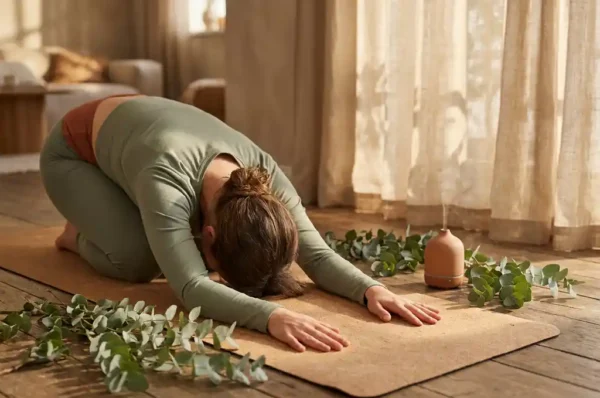
Reclined Butterfly, where you lie on your back with the soles of your feet together and knees falling open, is one of the most accessible sleep-prep poses. It opens the hips and inner groin while keeping the spine fully supported. Holding it for three to five minutes with slow breathing creates an almost immediate sense of heaviness and calm. Child’s Pose works in a similar way, folding the body inward to create a sense of safety and withdrawal from external stimulation.
Supported poses using props
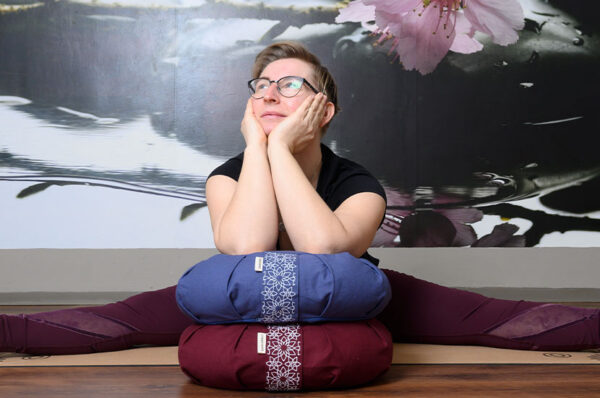
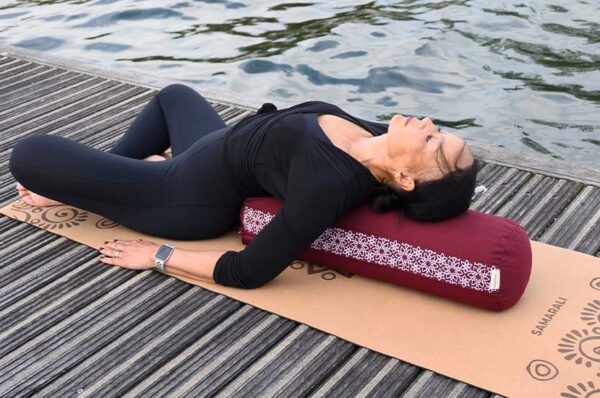
Using props makes a significant difference in Yin Yoga for sleep. A yoga bolster placed under the spine in Supported Fish opens the chest and counteracts the forward hunching that builds up through screen time and desk work. Placing a folded organic cotton yoga blanket under the hips in seated forward folds allows the body to release without strain. When your body is fully supported, it stops bracing and can surrender into genuine rest.
When should you do Yin Yoga to improve sleep?
The most effective time to practice Yin Yoga for better sleep is in the one to two hours before bed. Practicing in this window allows the nervous system calming effects to carry you directly into sleep, rather than dissipating over the course of a longer evening.
A practice of just 20 to 40 minutes is enough to produce a noticeable shift in your mental and physical state. You do not need a full hour-long session to feel the benefit. Even five to ten minutes of a single supported pose can be enough on nights when time is short.
It is worth avoiding vigorous movement or stimulating activities immediately after your Yin practice. Dim the lights, keep the room quiet, and move slowly from your mat to bed. Think of your Yin session as the beginning of sleep, not just a precursor to it. Consistency also matters more than duration. A short Yin practice done regularly, even three or four evenings a week, will produce more lasting improvements to sleep quality than an occasional longer session.
How is Yin Yoga different from other yoga styles for sleep?
Yin Yoga differs from other yoga styles for sleep primarily in its pace, depth, and physiological target. While styles like Vinyasa or Hatha yoga work through movement and muscle engagement, Yin Yoga holds passive poses for extended periods to release the connective tissue, fascia, and joints that other styles rarely reach. This makes it uniquely suited to the kind of deep physical letting-go that precedes quality sleep.
Restorative yoga is the style most often compared to Yin, and while both are slow and prop-friendly, there is a meaningful distinction. Restorative yoga is almost entirely passive, with the body fully supported so that no effort is required. Yin Yoga, by contrast, involves a mild, sustained stress on the connective tissue, which creates a deeper release over time. For sleep specifically, both styles are beneficial, but Yin tends to produce a stronger sense of physical heaviness and mental stillness.
Yoga Nidra, a guided meditation practice sometimes grouped with sleep-focused yoga, works differently again. It targets the conscious mind directly through body scanning and visualisation rather than physical postures. Many practitioners find that combining a short Yin practice with a Yoga Nidra session afterwards creates the most powerful pre-sleep routine, addressing both the body and the mind in sequence.
Ready to build your own evening Yin practice? At Samarali, you will find everything you need to make each session as restorative as possible. Support your poses with a yoga bolster, soften your holds with an organic cotton yoga blanket, and settle into your practice on a natural rubber yoga mat that keeps you grounded from the very first pose. Explore the full yoga collection at Samarali and shop now to set up the sleep routine your body deserves.
Frequently Asked Questions
How long does it take to notice improvements in sleep quality from a regular Yin Yoga practice?
Most people notice a difference in how quickly they fall asleep and how calm they feel at bedtime within one to two weeks of practicing Yin Yoga three or more evenings per week. Deeper, more sustained improvements to overall sleep quality, such as fewer night wakings and feeling more rested in the morning, typically develop over four to eight weeks of consistent practice. The key is regularity rather than duration, so a short 20-minute session most evenings will outperform a longer session done only occasionally.
Can I do Yin Yoga for sleep if I have never done any yoga before?
Yes, Yin Yoga is one of the most beginner-friendly yoga styles precisely because it requires no prior experience, flexibility, or fitness level. The poses are passive and floor-based, and the use of props like bolsters and blankets means you can fully support your body regardless of your range of motion. Start with just two or three simple poses, such as Reclined Butterfly and Legs Up the Wall, hold each for two to three minutes, and focus on slow breathing rather than trying to achieve a particular shape.
What if I fall asleep during my Yin Yoga practice?
Falling asleep during a Yin session, especially in supported or reclined poses, is extremely common and is not something to worry about. If it happens regularly, it may be a sign that your practice window is too close to your natural sleep onset time, so try shifting it slightly earlier in the evening. If you fall asleep in a pose that is not ideal for sleeping all night, such as a seated forward fold, setting a gentle timer for each pose will help you stay conscious enough to transition safely to bed when you are ready.
Are there any situations where Yin Yoga before bed might not be a good idea?
Yin Yoga is generally very safe, but there are a few situations where caution is warranted. If you have a recent joint injury, hypermobility disorder, or a condition affecting connective tissue, the sustained stress that Yin places on fascia and joints may not be appropriate without guidance from a physiotherapist or experienced teacher. Practicing on a very full stomach can also make floor-based and folding poses uncomfortable, so allow at least 90 minutes after a large meal before your session.
Should I use music or silence during a Yin Yoga sleep practice?
Both can work well, and the best choice depends on your personal response to sound. Soft, slow instrumental music or nature sounds can help quieten a busy mind in the early stages of a pose, making it easier to settle. However, silence tends to deepen the meditative quality of Yin over time and is more consistent with the sensory reduction your brain needs as it approaches sleep. A practical approach is to use gentle ambient music at the start of your session and allow it to fade into silence for the final one or two poses.
Can Yin Yoga help with sleep issues caused by anxiety or chronic stress, or is it only useful for physical tension?
Yin Yoga addresses both dimensions simultaneously, which is one of its greatest strengths as a sleep tool. The physical stillness and long holds directly downregulate the nervous system, reducing the physiological markers of stress such as elevated heart rate and cortisol. At the same time, the practice of staying present with sensation without reacting to it builds a form of mental resilience that directly counteracts the anxious thought loops that keep many people awake. For those dealing with clinical anxiety or chronic stress, Yin Yoga works best as part of a broader approach that may also include therapy, breathwork, or medical support.
What is the one most common mistake people make when practicing Yin Yoga for sleep?
The most common mistake is treating Yin Yoga like a stretching session and focusing on pushing deeper into poses rather than simply surrendering to a comfortable, supported position. In Yin, the goal is not intensity but release, and straining to go further actually activates the muscles and nervous system in a way that is counterproductive for sleep preparation. Find the first point of mild sensation in a pose, use props generously to support your body there, and let gravity and time do the work rather than effort.