


Yes, Vinyasa yoga can meaningfully improve mental focus. The practice links breath with continuous movement, which trains your attention in a very direct, practical way. Over time, this builds the kind of sustained concentration that carries well beyond the yoga mat and into everyday life. Below, we unpack exactly how that process works, what the evidence says, and which poses deliver the biggest benefit.
How does Vinyasa yoga train the brain to focus?
Vinyasa yoga trains the brain to focus by demanding continuous, coordinated attention between breath, movement, and body position. Because each pose flows immediately into the next, your mind cannot afford to wander without losing the thread of the sequence. This constant re-anchoring to the present moment is essentially a focused attention exercise repeated hundreds of times per session.
The mechanism is rooted in how the nervous system responds to deliberate, rhythmic activity. Synchronising breath with movement activates the parasympathetic nervous system, which reduces stress hormones that fragment attention. At the same time, holding awareness across multiple inputs simultaneously, such as where your hands are, when to inhale, and how to transition to the next pose, strengthens the prefrontal cortex, the region of the brain most responsible for executive function and sustained concentration.
Think of it as interval training for your attention span. Every time your mind drifts during a Vinyasa flow and you bring it back to the breath, you are completing one mental repetition. The more sessions you practise, the stronger that ability to redirect and hold focus becomes. This is why many practitioners report sharper concentration at work or during study after establishing a regular Vinyasa routine.
What does research say about yoga and mental focus?
Research consistently shows that regular yoga practice is associated with improvements in attention, working memory, and cognitive flexibility. Studies examining mind-body practices that combine breath control with physical movement, which is precisely what Vinyasa yoga does, find that participants demonstrate measurable gains in sustained attention and the ability to filter out distractions after as few as eight weeks of consistent practice.
Much of this research points to two overlapping pathways. First, yoga reduces cortisol and other stress-related hormones that are known to impair concentration and memory consolidation. Second, the mindfulness component embedded in Vinyasa, specifically the instruction to stay present with the breath, activates neural circuits associated with attentional control in a way that mirrors the effects of dedicated meditation practice.
It is worth noting that not all yoga styles produce identical cognitive outcomes. Vinyasa yoga, with its dynamic, breath-led sequences, appears particularly effective for focus because it requires active, moment-to-moment decision-making throughout the session. Slower, more static styles still offer benefits, but the continuous flow of Vinyasa creates a more demanding attentional environment.
How long does it take for Vinyasa yoga to improve focus?
Most practitioners notice early improvements in mental focus within two to four weeks of practising Vinyasa yoga three or more times per week. These initial gains tend to reflect reduced mental chatter and a greater ability to return attention to a task after distraction. Deeper, more stable improvements in sustained concentration typically emerge after eight to twelve weeks of consistent practice.
The timeline varies depending on a few key factors:
- Session frequency: Practising three or more times per week accelerates neurological adaptation compared to once-weekly sessions.
- Session length: Even 30-minute flows deliver attentional benefits, though 45 to 60 minutes allows more time for the nervous system to shift into a focused state.
- Consistency over intensity: Showing up regularly matters far more than pushing harder in any single session. The brain adapts through repetition, not effort alone.
- Starting point: People with high baseline stress or attention difficulties often notice more dramatic early improvements simply because there is more room to gain.
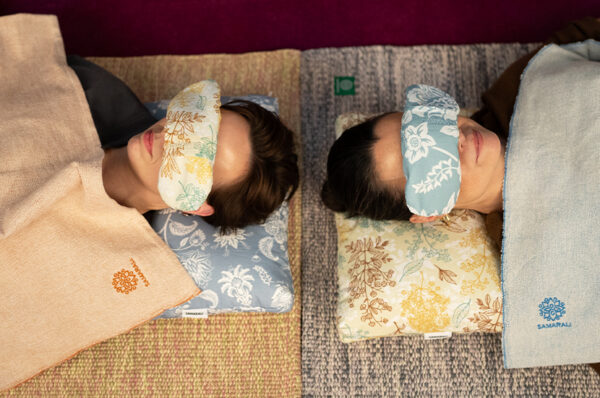
Pairing your Vinyasa practice with even a short seated meditation afterwards can accelerate these results. Transitioning from dynamic flow to stillness teaches the mind to maintain focus without the anchor of movement, which deepens the overall attentional training. A supportive meditation mat makes that post-flow wind-down much more comfortable and helps you stay grounded in the stillness.
Which Vinyasa poses are best for building concentration?
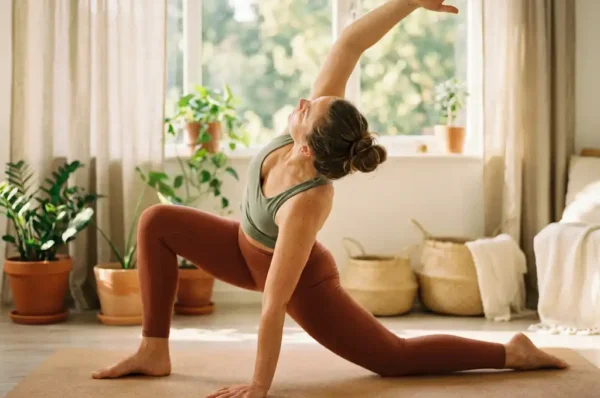
The Vinyasa poses best suited for building concentration are balance poses, long holds within a flow, and transitions that require precise breath timing. These postures demand the highest level of present-moment awareness and therefore provide the most direct attentional training within a Vinyasa sequence.
Here are the most effective categories of poses for focus:
- Tree Pose (Vrksasana): Standing on one leg with your gaze fixed on a single point, called a drishti, trains both visual and mental focus simultaneously. Even a brief wobble reveals exactly when the mind has drifted.
- Warrior III (Virabhadrasana III): This full-body balance requires active engagement across every muscle group while maintaining a steady breath, making it one of the most cognitively demanding poses in a Vinyasa flow.
- Eagle Pose (Garudasana): The complex limb wrapping forces the brain to process proprioceptive information from multiple body parts at once, which strengthens attentional capacity and spatial awareness.
- Chaturanga to Upward Dog transition: The precision required in this classic Vinyasa transition, lowering slowly, opening the chest, pressing through the hands, all timed to the exhale and inhale, builds the habit of breath-led attention that defines the practice.
- Half Moon Pose (Ardha Chandrasana): Balancing on one hand and one foot while extending the body horizontally demands sustained, undivided attention and rewards it with stability.
To get the most from these poses, practise them on a stable, non-slip surface. A quality yoga mat makes a real difference when you are working on balance and precision, since grip and cushioning directly affect how safely and confidently you can hold these demanding positions. We design our natural rubber yoga mat with exactly this kind of focused practice in mind, offering the traction and support that lets you stay fully present rather than worrying about slipping.
Ultimately, the most effective approach is to treat every pose in your Vinyasa flow as a focus exercise, not just the challenging ones. The cumulative effect of staying attentive across an entire session is what builds lasting mental clarity over time.
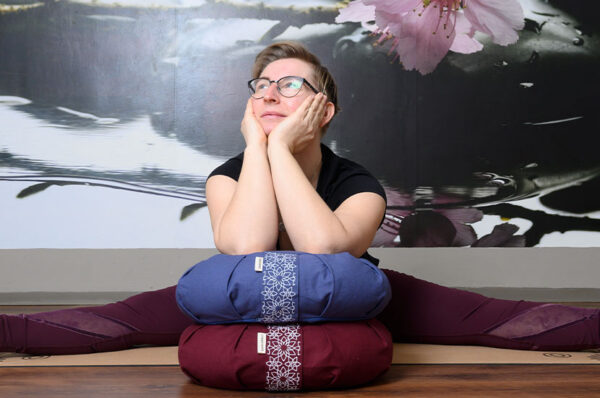
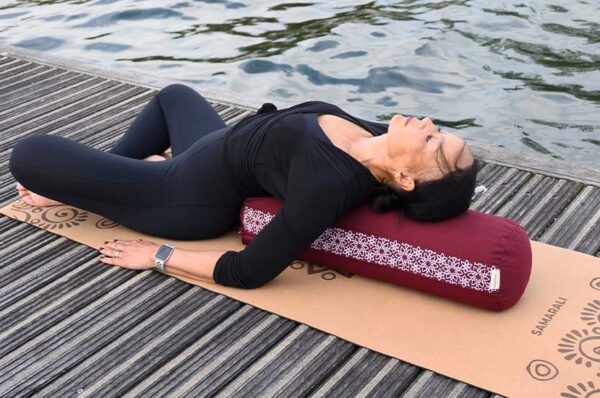
If you are ready to deepen your practice with the right support, explore the yoga and meditation collections at Samarali. Whether you need a natural rubber yoga mat to keep you grounded through every balance pose, a meditation mat for your post-flow stillness practice, or a yoga bolster to support longer holds and restorative transitions, Samarali has everything you need to show up fully — session after session. Shop the collection now and give your focus practice the foundation it deserves.
Frequently Asked Questions
Can complete beginners use Vinyasa yoga to improve focus, or is some experience required first?
Beginners can absolutely start using Vinyasa yoga for focus improvement right away, though it helps to begin with a beginner-friendly class or guided flow that breaks down transitions slowly. In the early stages, the learning curve of new poses can actually amplify the attentional training, since your brain is working hard to process unfamiliar movements. If a full Vinyasa flow feels overwhelming at first, starting with shorter 20–30 minute beginner sequences three times per week is a perfectly effective entry point.
How is Vinyasa yoga different from meditation for improving focus — should I do both?
Vinyasa yoga and meditation train focus through different but complementary mechanisms: Vinyasa uses movement and breath as anchors for attention, while seated meditation trains the mind to sustain focus without any physical stimulus. Doing both is genuinely more effective than either practice alone, as the dynamic attentional training of Vinyasa reinforces the stillness-based concentration built in meditation. A practical approach is to close each Vinyasa session with 5–10 minutes of seated meditation, using the calm nervous system state the flow creates as a launchpad for deeper mental stillness.
What are the most common mistakes people make when using Vinyasa yoga for mental focus?
The biggest mistake is treating the session as a physical workout and ignoring the breath, which strips away the very element that makes Vinyasa effective for concentration. Another common error is practising too fast, rushing through transitions without the deliberate breath-to-movement synchronisation that drives attentional training. Finally, inconsistency undermines results more than almost anything else — sporadic intense sessions are far less effective than shorter, regular practices because the brain adapts through repeated exposure, not occasional effort.
Can Vinyasa yoga help with focus issues related to stress, anxiety, or burnout specifically?
Yes, and this is actually where Vinyasa yoga tends to show some of its most noticeable results. Chronic stress, anxiety, and burnout all impair focus primarily through elevated cortisol and an overactive sympathetic nervous system, and Vinyasa directly addresses both by activating the parasympathetic response through rhythmic breath and movement. Practitioners dealing with burnout in particular often report that Vinyasa helps them re-establish a baseline of mental clarity that had previously felt out of reach. For best results in these cases, prioritise slower, more deliberate flows over fast-paced power sequences, at least initially.
How do I structure a Vinyasa session specifically to maximise the focus-building benefits?
Structure your session with a clear intention at the start — simply stating to yourself that this practice is about attention, not performance, primes the brain for the right kind of engagement. Build your sequence around the balance and precision poses mentioned in the post, and deliberately slow down your transitions to ensure every movement is breath-led rather than momentum-led. Close with 5–10 minutes of Savasana followed by a short seated meditation, which consolidates the attentional gains made during the flow and trains the mind to maintain focus in stillness.
Will the focus benefits from Vinyasa yoga carry over into work, studying, or other daily tasks?
Yes, and this transfer effect is one of the most well-documented benefits of consistent mind-body practice. The attentional skills trained during Vinyasa — redirecting a wandering mind, sustaining concentration under mild discomfort, and anchoring awareness to a single point — are the same cognitive skills required for deep work, studying, and complex problem-solving. Many practitioners report noticing the carryover effect within the first few weeks, particularly as an improved ability to return focus to a task after interruption rather than getting pulled into distraction.
Is there a best time of day to practise Vinyasa yoga for maximum focus benefits?
Morning practice is widely favoured for focus benefits because it sets a calm, attentive mental tone before the demands of the day accumulate, and the post-practice clarity tends to carry through several hours of work. That said, a lunchtime or early afternoon session can be highly effective for resetting focus after a mentally draining morning. The most important factor is choosing a time you can stick to consistently — the neurological benefits of Vinyasa are driven by routine repetition, so a sustainable schedule will always outperform an optimal but irregular one.