


A cosy yin yoga sequence for Christmas evenings at home is one of the most restorative ways to wind down during the festive season. Holding slow, passive poses for two to five minutes each allows your nervous system to shift into a deep rest state, releasing the tension that builds up around Christmas. Below, we answer the most common questions about building your own relaxing yin yoga evening routine at home.
What makes yin yoga the perfect practice for Christmas evenings?
Yin yoga is the perfect practice for Christmas evenings because it works directly against the overstimulation of the festive season. Unlike more active styles, yin yoga involves holding still, passive poses for an extended time, which activates the parasympathetic nervous system and encourages genuine rest. It requires no prior experience, no large space, and very little energy to begin.
Christmas evenings tend to arrive after long days of socialising, cooking, travelling, or shopping. The body holds that stress in the hips, lower back, and shoulders. Yin yoga targets the connective tissues in exactly those areas, releasing deeply held physical and emotional tension in a way that a quick stretch simply cannot match.
What makes yin yoga particularly well suited to winter is its meditative quality. The long holds give you time to breathe slowly, to notice how your body feels, and to genuinely slow down. There is no performance involved. You simply settle into a pose, breathe, and let go. For anyone who finds the Christmas period emotionally complex or physically exhausting, that simplicity is a genuine gift.
What props do you need for a cosy yin yoga session at home?
For a cosy yin yoga session at home, you need a supportive surface, something to sit or rest on, and something warm to cover yourself with. The essential props are a yoga mat, a bolster or firm cushion, and a blanket. These three items make long-held yin poses comfortable and accessible for any body.
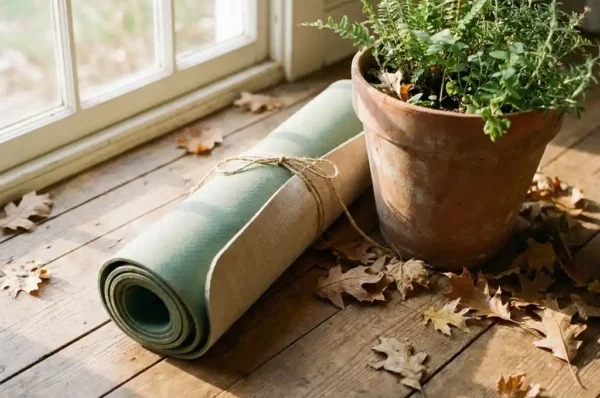
A good yoga mat provides the foundation for your practice. For yin yoga specifically, a mat with a little cushioning is helpful because you spend time lying or sitting still rather than moving dynamically. Beyond the mat, the props that genuinely transform a yin session are the ones that support your body in each pose so you can fully relax without strain.
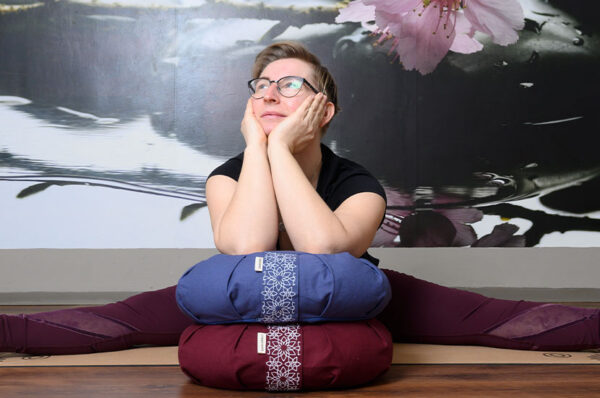
- Yoga bolster: A yoga bolster is the single most useful prop for yin yoga. It supports the spine in supported fish, elevates the hips in butterfly, and cushions the chest in sphinx. Without one, you can use a firmly rolled blanket, though a bolster offers more consistent support.
- Blanket: A warm blanket serves two purposes in yin yoga. It can be folded to support the knees or hips in seated poses, and it keeps you warm during the final resting pose when body temperature drops. An organic cotton yoga blanket works beautifully for both.
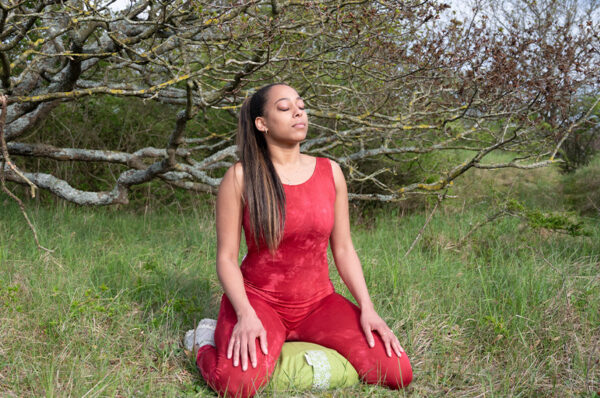
- Meditation cushion: If seated poses feel uncomfortable without elevation, a firm cushion under the hips makes a significant difference to your comfort and posture.
You do not need to buy everything at once. Start with what you have at home and add props over time as you build a regular yin yoga evening routine.
What is a good yin yoga sequence for Christmas evenings at home?
A good yin yoga sequence for Christmas evenings at home should take around 40 to 60 minutes, move through the hips, spine, and shoulders, and end in a long savasana. The following sequence is gentle enough for beginners and deeply effective for experienced practitioners looking to unwind after a busy festive day.
The sequence
- Supported child’s pose (3 to 5 minutes): Begin kneeling with your bolster lengthwise under your torso. Rest your forehead on the bolster and let your arms relax alongside it. This pose gently opens the lower back and hips while calming the mind immediately.
- Butterfly pose (3 to 4 minutes): Sit upright with the soles of your feet together and your knees falling out to the sides. Fold slowly forward over your feet, letting your spine round naturally. Rest your forearms on your feet or the floor. This opens the inner thighs and lower back.
- Dragon pose, right side then left (2 to 3 minutes each side): Step your right foot forward into a low lunge, keeping your back knee on the mat. Sink your hips low and hold. This is one of the most effective poses for releasing the hip flexors, which tighten from sitting during long Christmas gatherings or car journeys.
- Sleeping swan, right side then left (3 to 4 minutes each side): From dragon, lower your back knee and slide your front shin toward horizontal, resting your torso over it. Place your bolster under your hip or torso for support. This deeply releases the outer hip and glutes.
- Supported fish pose (3 to 5 minutes): Place your bolster horizontally across your mat and lie back over it so it supports your mid-back. Let your arms fall open to the sides. This counteracts the rounded posture that comes from hours of cooking, wrapping gifts, or looking at screens.
- Legs up the wall (5 minutes): Shuffle your hips close to a wall and extend your legs upward. This simple inversion calms the nervous system, reduces swelling in the legs, and prepares the body for sleep.
- Savasana (5 to 10 minutes): Lie flat on your back, cover yourself with your blanket, and do nothing. Let the practice settle. This is not optional. The rest at the end is when the body integrates everything the sequence has offered.
How long to hold each pose
In yin yoga, holding for two to five minutes is the standard range. If you are new to yin yoga at home, start at the lower end of each hold time and build gradually. Use a gentle timer so you are not watching a clock, and focus on slow, natural breathing throughout. The goal is a relaxed edge, not discomfort.
How do you create a cosy atmosphere for yin yoga at home?
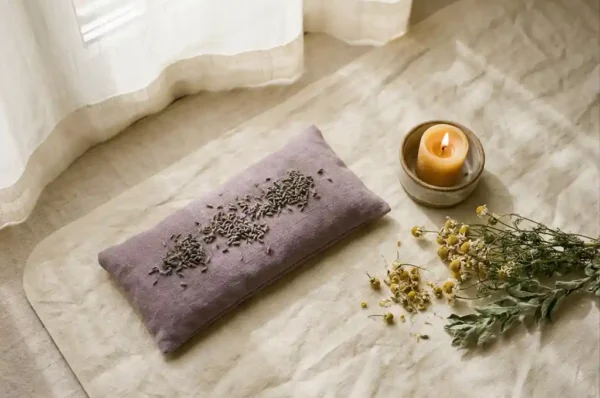
To create a cosy atmosphere for yin yoga at home, focus on warmth, soft light, and gentle sound. Dim or turn off overhead lighting in favour of candles or a lamp, set the room temperature slightly warmer than usual since the body cools during still poses, and choose quiet ambient music or nature sounds to support a relaxed state of mind.
The environment you practice in has a direct effect on how deeply you can relax. A cluttered, brightly lit room with background noise keeps the nervous system alert. A warm, softly lit space with minimal visual distraction tells the body it is safe to let go.
A few simple steps make a real difference for your Christmas yin yoga evening routine:
- Clear a small area of floor space before you begin so you are not stepping around furniture mid-sequence.
- Gather all your props before you start. Interrupting a hold to find a blanket breaks the meditative quality of the practice.
- Put your phone on silent and set a single timer for the session length rather than timing each pose individually at first.
- Add a scent you associate with calm, such as cedarwood, frankincense, or orange, through a candle or diffuser. These work particularly well in winter and complement the festive atmosphere.
- Wear warm, comfortable layers you can remove if needed. Socks are welcome in yin yoga.
The most important element is intention. Even five minutes of deliberate stillness in a warm, quiet corner of your home counts as a meaningful practice. You do not need a dedicated yoga room or expensive equipment to experience the restorative benefits of a cosy yoga Christmas evening. You just need to begin.
Frequently Asked Questions
How do I know if I'm holding a yin yoga pose correctly if I'm practising alone at home?
In yin yoga, the key indicator is finding a ‘relaxed edge’ — a sensation of mild, tolerable intensity that you can sustain without gripping or bracing. You should be able to breathe slowly and fully throughout the hold. If you feel sharp, shooting, or joint pain, come out of the pose immediately and reduce the depth. A helpful self-check is to scan your face and jaw every minute or so; if you’re clenching, you’ve gone too deep.
What if I fall asleep during savasana or legs up the wall?
Falling asleep during savasana is completely fine — it’s actually a sign that your nervous system has successfully shifted into a deep rest state, which is exactly the goal of a Christmas evening yin practice. If you’re concerned about sleeping on the floor all night, set a gentle alarm before you begin. Over time, regular practice tends to improve overall sleep quality, so you may find you drift off more easily in bed after your session.
Can I do this yin yoga sequence if I have tight hips or lower back pain?
Yes, but with mindful modifications. Use your bolster or a folded blanket generously under the hips in butterfly and sleeping swan to reduce the depth of the stretch, and never push into any sensation that feels sharp or compressive in the lower back. Dragon pose can be made gentler by placing a folded blanket under the back knee for cushioning. If you have a specific injury or chronic condition, it’s worth checking with a physiotherapist or experienced yoga teacher before starting.
How often should I do this Christmas yin yoga routine to feel the benefits?
Even practising two to three times per week during the festive season will produce noticeable benefits in sleep quality, hip mobility, and stress levels. That said, yin yoga is gentle enough to practise daily if you enjoy it, since it works the connective tissues rather than fatiguing the muscles. Many people find that making it a nightly wind-down ritual — even just 20 to 30 minutes — creates a meaningful sense of calm and structure during the often chaotic Christmas period.
What music or sounds work best for a cosy Christmas yin yoga session?
Slow ambient music, soft instrumental tracks, or nature sounds such as rain, wind, or a crackling fire work particularly well for yin yoga because they support a meditative state without demanding attention. For a festive touch, slow acoustic or instrumental versions of Christmas music can add seasonal warmth without being distracting. Apps like Insight Timer and Spotify have dedicated yin yoga and sleep playlists, and YouTube offers free options specifically designed for long-hold yoga sessions.
Is this yin yoga sequence suitable for complete beginners who have never done yoga before?
Yes — this sequence is one of the most beginner-friendly yoga practices you can start with, because there are no complex movements, balance challenges, or strength requirements. Each pose is passive and supported, meaning your body settles into the shape rather than actively working to hold it. The most important thing for beginners is to use plenty of props for support and to honour their own comfortable edge rather than comparing themselves to images of deeper poses.
Can children or elderly family members join in with this Christmas yin yoga routine?
Yin yoga is generally well-suited to older adults because its slow, supported nature places minimal strain on the joints and requires no cardiovascular exertion — though anyone with osteoporosis should avoid deep forward folds and check with their doctor first. Children can join in for shorter holds of one to two minutes, and often enjoy the cosy, candlelit atmosphere. Practising together as a family can turn the routine into a lovely shared Christmas evening ritual, though younger children may prefer to join only for the final savasana with a blanket.