


For yoga nidra, the most commonly used meditation cushion is a zafu or a supportive bolster placed under the knees or lower back while lying in savasana. Because yoga nidra is practiced lying down, the cushion’s role is less about seated support and more about releasing tension so your body can fully relax. Below, we cover everything you need to know about choosing the right support for your practice.
What position do you use for yoga nidra?
Yoga nidra is practiced lying flat on your back in savasana, the traditional resting pose. Unlike seated meditation styles, the entire practice takes place in a reclined position with your arms slightly away from your body, palms facing up, and your eyes closed. The goal is complete physical stillness so your awareness can turn inward.
Because you remain motionless for anywhere between 20 minutes and an hour, physical comfort is essential. Even minor discomfort in the lower back or neck can pull your attention away from the guided practice. This is exactly why props like cushions, bolsters, and blankets matter so much in yoga nidra, even though you are not sitting up.
Most practitioners place a cushion or rolled blanket under their knees to release tension in the lower back, and a thin pillow or folded blanket under the head to support the natural curve of the neck. Some people also cover themselves with a blanket, since body temperature tends to drop during deep relaxation.
Which type of meditation cushion works best for yoga nidra?
A firm, round cushion placed under the knees works best for yoga nidra. A traditional zafu or a half-moon cushion provides just enough lift to soften the lumbar curve and allow the lower back to release fully. The firmness matters: a cushion that compresses too quickly loses its support before the session ends.
That said, the term “meditation cushion” covers a wide range of shapes and purposes. For seated practices, height and stability are the priorities. For yoga nidra, you need something that holds its shape under the weight of your legs for an extended period without flattening out.
Zafu and round cushions
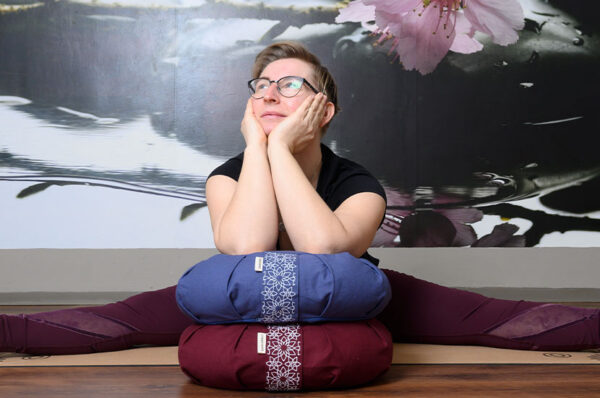
A zafu is the classic buckwheat or kapok-filled round cushion used across many meditation traditions. Placed under the knees in savasana, it creates a gentle elevation that softens tension in the hips and lower spine. Buckwheat-filled versions are especially useful because they conform slightly to the shape of your legs without collapsing.
Half-moon and crescent cushions
Half-moon cushions are designed to cradle the knees more naturally than a round zafu. Their curved shape fits the backs of the knees well and distributes weight more evenly. If you find a standard round cushion rolls or shifts during practice, a crescent shape offers a more stable alternative. You can explore our range of meditation cushions to find the shape that suits your body best.
Can you use a regular bolster instead of a meditation cushion?
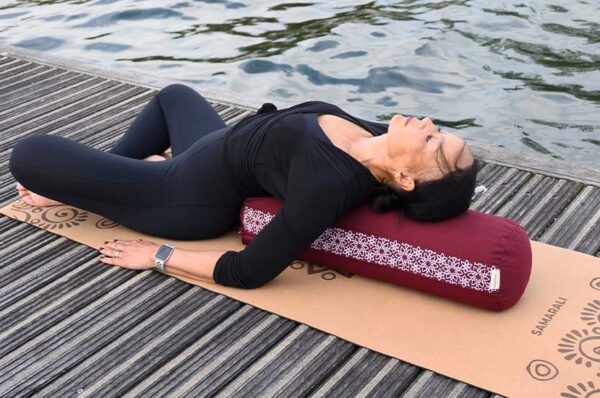
Yes, a yoga bolster is an excellent alternative to a meditation cushion for yoga nidra and is often preferred. A bolster placed under the knees provides broader, more evenly distributed support than a round cushion, which many people find more comfortable during longer sessions. It also works well under the upper back or as a gentle chest opener.
The key difference between a bolster and a meditation cushion in this context is surface area. A bolster supports the full length of the lower legs rather than just the backs of the knees, which can feel more natural for people with tight hamstrings or lower back sensitivity. Our yoga bolster is filled with a supportive inner core that holds its shape throughout a full yoga nidra session.
A bolster also offers more versatility if you practice restorative yoga alongside yoga nidra. You can use the same prop for supported bridge pose, reclined butterfly, or chest-opening shapes before transitioning into your nidra practice.
What should you look for when choosing a yoga nidra cushion?
When choosing a cushion for yoga nidra, prioritize firmness, filling material, and cover fabric. The cushion needs to hold its shape for the full duration of the practice, feel comfortable against your skin or clothing, and be made from materials that align with your values around sustainability and quality.
Here are the key factors to consider:
- Firmness and fill: Buckwheat hulls offer adjustable, long-lasting support. Kapok is lighter and slightly softer. Avoid synthetic foam fills that compress quickly and lose support mid-session.
- Shape: Round zafus work well for most people. Half-moon shapes offer better knee cradle. Bolsters provide the widest surface area for full-leg support.
- Cover material: Natural fabrics like organic cotton or hemp are breathable and comfortable for extended contact with skin. Synthetic covers can feel warm and less pleasant during deep relaxation.
- Size and weight: A cushion that is too small may shift during practice. A cushion that is too heavy becomes inconvenient to move between sessions or travel with.
- Sustainability: If eco-conscious living is part of your yoga philosophy, choosing a cushion made from organic or natural materials extends that intention into your props as well.
It is also worth thinking about whether you want a dedicated yoga nidra prop or something that serves multiple purposes across your practice. A bolster or a supportive meditation mat used underneath your body can double as general restorative support, making it a more versatile investment. The right choice ultimately comes down to your body, your practice style, and how much time you spend in reclined versus seated meditation.
Ready to build a yoga nidra setup that truly supports your practice? At Samarali, you will find everything you need to practice in comfort — from our supportive yoga bolster and meditation cushions to a cosy organic cotton yoga blanket to keep you warm as you drift into deep relaxation. All our props are made with natural, sustainable materials that align with a mindful way of living. Shop our meditation sets and find the perfect combination for your practice.
Frequently Asked Questions
How thick should a cushion be when placed under my knees for yoga nidra?
A cushion height of around 4 to 6 inches is ideal for most people practicing yoga nidra. This range provides enough lift to release tension in the lower back without over-elevating the knees, which can create its own strain. If you find your lower back still feels tight, try adding a folded blanket on top of the cushion to fine-tune the height to your body.
What if I feel discomfort in my lower back even when using a cushion?
Lower back discomfort during savasana usually means the lumbar spine needs more support or a different prop placement. Try moving the cushion slightly higher toward the mid-thighs rather than directly under the knees, or switch to a bolster for broader contact across the lower legs. If discomfort persists, placing a thin folded blanket directly under the lumbar curve can bridge the gap between your back and the floor.
Can I use a regular bed pillow instead of buying a dedicated meditation cushion?
A bed pillow can work as a short-term substitute, but it typically compresses too quickly to provide reliable support throughout a full yoga nidra session. Most bed pillows are designed for side or back sleeping, not for sustained weight-bearing under the knees, and they tend to flatten within minutes. If you practice regularly, investing in a buckwheat zafu or a yoga bolster will give you consistent support that a standard pillow simply cannot match.
Do I need any other props besides a cushion to set up a comfortable yoga nidra space?
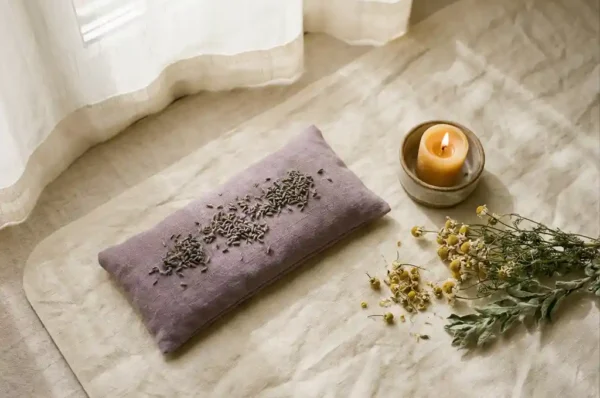
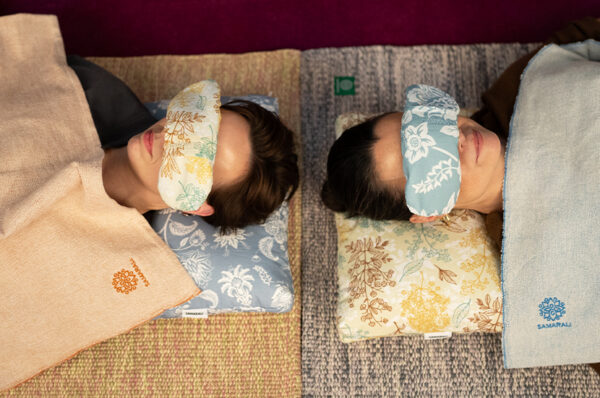
Beyond a knee cushion or bolster, a thin pillow or folded blanket under the head and a warm blanket to cover the body are the two most impactful additions to your setup. Since body temperature drops during deep relaxation, having a blanket within reach before you begin prevents the need to move mid-session. An eye pillow is also worth considering, as gentle pressure over the eyes encourages the nervous system to settle more quickly into a relaxed state.
How do I know whether a zafu or a bolster is the right choice for my body?
The best way to decide is to consider the length of your sessions and any existing tension in your lower back or hamstrings. If you practice for 30 minutes or longer, or if you have tight hamstrings or lower back sensitivity, a bolster’s wider surface area tends to feel more comfortable over time. A zafu is a great choice if you also use the cushion for seated meditation, since it gives you a versatile prop that serves both practices without taking up extra space.
Is it okay to fall asleep during yoga nidra, and does my prop setup affect that?
Falling asleep occasionally is common, especially for beginners or when you are sleep-deprived, but the intention of yoga nidra is to remain in a state of conscious awareness just at the threshold of sleep. Being too physically comfortable can make it easier to drift off fully, so if you find yourself consistently falling asleep, try practicing at a slightly cooler temperature or skipping the blanket. On the other hand, if discomfort keeps pulling you out of the practice, improving your prop setup is the priority first.
How should I care for and maintain my yoga nidra cushion to make it last?
Most quality meditation cushions come with a removable outer cover that can be machine washed regularly, which is the most important maintenance step since the cover absorbs sweat and skin oils over time. The inner fill casing should be spot cleaned only and aired out periodically to prevent moisture buildup, especially with buckwheat hulls. Buckwheat fills can also be topped up or fully replaced if the cushion loses firmness over years of use, making it a more sustainable long-term investment than foam-filled alternatives.