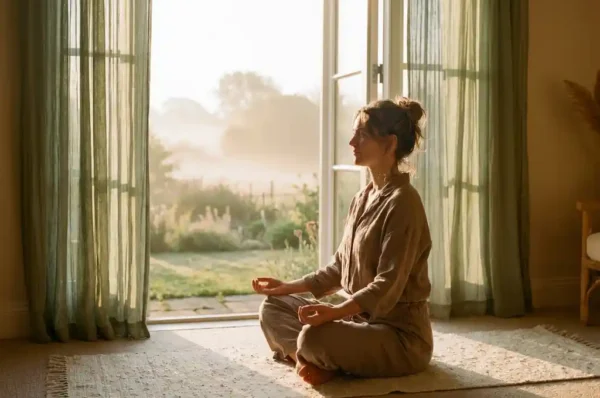



A daily Vinyasa yoga practice delivers a wide range of physical, mental, and emotional benefits that build meaningfully over time. This flowing, breath-linked style of yoga strengthens and stretches the body, calms the nervous system, and cultivates a focused, present-moment mindset. Below, we answer the most common questions people have about committing to Vinyasa every day.
How does a daily Vinyasa practice change your body over time?
A daily Vinyasa practice gradually builds functional strength, improves flexibility, and enhances cardiovascular endurance. Because Vinyasa links movement to breath in a continuous flow, it works multiple muscle groups simultaneously, making it both a strength and mobility practice. Most practitioners notice visible changes in posture, muscle tone, and overall body awareness within four to eight weeks of consistent daily practice.
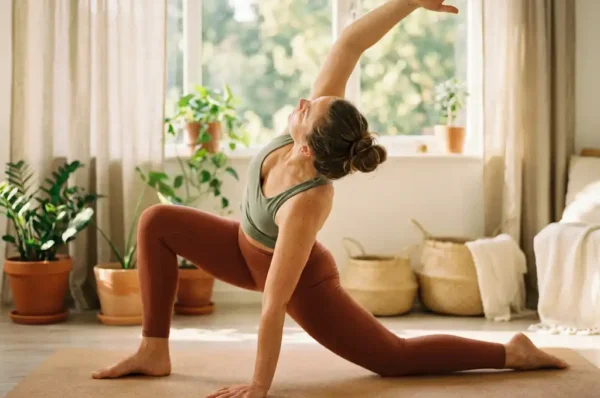
In the early weeks, your body adapts by increasing joint mobility and loosening chronically tight areas like the hips, hamstrings, and shoulders. Over months, the compound movements in sequences like Sun Salutations build real muscular endurance in the core, arms, and legs without the bulk associated with traditional weight training.
Posture is one of the most noticeable long-term changes. The constant attention to spinal alignment in Vinyasa yoga retrains the muscles that support the spine, which directly counters the forward-rounding that comes from sitting at a desk all day. Practitioners often report standing taller and feeling less back pain after a few months of daily practice.
Your balance and proprioception, your body’s awareness of where it is in space, also improve significantly. The single-leg standing poses and transitions that appear throughout Vinyasa sequences train the stabilizing muscles around the ankles and knees, which become increasingly valuable as we age. A supportive yoga mat makes a real difference here, giving you the grip and cushioning needed to build these skills safely.
What mental health benefits does Vinyasa yoga offer?
Vinyasa yoga offers meaningful mental health benefits including reduced stress and anxiety, improved mood, sharper focus, and greater emotional resilience. The synchronization of breath and movement activates the parasympathetic nervous system, shifting the body out of fight-or-flight mode and into a calmer, more regulated state. These effects are felt immediately after a single session and deepen with consistent daily practice.
The meditative quality of Vinyasa is one of its most underrated strengths. Because each movement is tied to an inhale or exhale, your attention is anchored to the present moment throughout the entire session. This is essentially moving meditation, and it produces many of the same cognitive benefits as seated mindfulness practice, including reduced rumination and improved emotional regulation.
Daily Vinyasa also builds what many practitioners describe as mental grit. Holding a challenging pose, staying present through discomfort, and returning to your mat even when motivation is low all translate into a stronger capacity to handle difficulty off the mat. Over time, this quiet discipline becomes one of the most valuable things the practice gives you.
Is it safe to do Vinyasa yoga every single day?
Yes, it is safe to practice Vinyasa yoga every day for most people, provided you vary the intensity and listen to your body. Vinyasa is a dynamic practice, and doing high-intensity flows seven days a week without variation can lead to overuse fatigue or minor joint strain. The key is building a weekly rhythm that includes both active and restorative sessions.
A practical approach is to alternate between more vigorous flows and shorter, gentler practices throughout the week. On days when your body feels fatigued or sore, a 20-minute slow-paced Vinyasa focused on hip opening or spinal mobility is far more beneficial than pushing through a demanding sequence. This kind of intuitive adjustment is at the heart of a sustainable daily practice.
Beginners should ease into daily practice gradually. Starting with three to four sessions per week and building up over a month or two allows the connective tissues, which adapt more slowly than muscles, to strengthen alongside your growing practice. If you experience sharp or persistent pain in any joint, that is a clear signal to rest and, if needed, consult a physiotherapist or experienced yoga teacher.
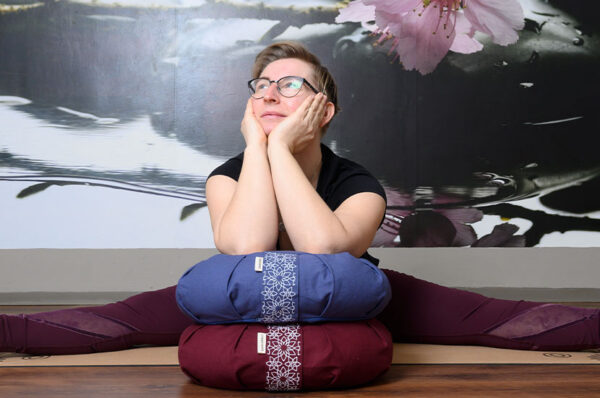
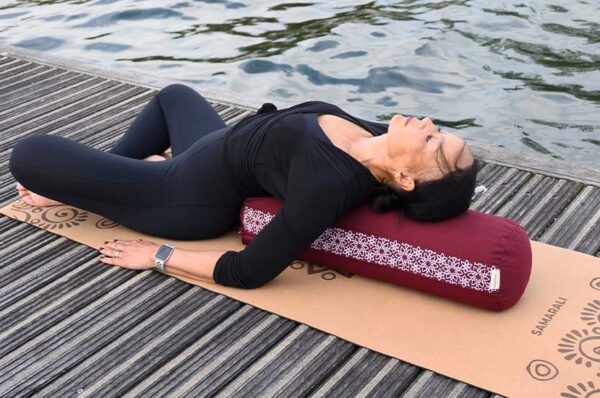
Proper props also play a role in keeping practice safe over the long term. Using a yoga bolster for supported poses and restorative sessions helps the body recover between more active days, making daily practice genuinely sustainable rather than a grind.
How long should a daily Vinyasa session be to see results?
A daily Vinyasa session of 20 to 45 minutes is enough to see consistent physical and mental results. You do not need hour-long classes every day to benefit from the practice. Shorter, focused sessions practiced consistently outperform occasional long sessions when it comes to building strength, flexibility, and mental clarity over time.
The right session length depends on your goal and where you are in your practice:
- 20 to 30 minutes: Ideal for beginners, busy days, or recovery-focused sessions. A well-structured short flow covering a warm-up, a core sequence, and a brief closing can deliver real benefits and keep the habit sustainable.
- 30 to 45 minutes: A solid middle ground for most practitioners. This length allows time to build heat, explore more complex transitions, and wind down properly with a short Savasana.
- 45 to 60 minutes: Best suited for deeper exploration, working toward peak poses, or when you have the energy and time to go further. Reserve these sessions for two or three days a week rather than every day.
Consistency matters far more than duration. A 25-minute Vinyasa practice every morning will reshape your body and mind more effectively than a 75-minute class twice a week. The daily repetition reinforces neuromuscular patterns, keeps the body supple, and builds the mental habit of showing up, which is ultimately what makes the practice transformative.
Ready to support your daily practice with the right gear? At Samarali, you’ll find everything you need to show up and flow with confidence — from a natural rubber yoga mat that gives you the grip and cushioning your practice deserves, to a yoga bolster for those essential restorative sessions. Browse the full yoga collection and find the tools that make every session something to look forward to. Shop now and set yourself up for a practice that lasts.
Frequently Asked Questions
What should a beginner's first week of daily Vinyasa practice look like?
Start with three to four sessions of 20 to 25 minutes rather than jumping straight into daily practice. Focus on foundational poses like Downward Dog, Warrior I, and Cat-Cow to build familiarity with breath-movement linking before adding complexity. By the end of week one, your goal should be consistency and comfort, not intensity. A non-slip yoga mat and a couple of blocks will help you modify poses safely as your body finds its footing.
How do I stay motivated to practice Vinyasa every day when life gets busy?
The most effective strategy is to anchor your practice to an existing habit, such as practicing right after waking up or immediately after your morning coffee, so it becomes automatic rather than optional. On genuinely busy days, give yourself permission to do just 10 to 15 minutes — even a short Sun Salutation sequence counts and keeps the habit alive. Many experienced practitioners also find that laying out their mat the night before removes the mental friction that leads to skipped sessions. Remember, a short practice done daily is always more powerful than a perfect practice done occasionally.
Can Vinyasa yoga replace other forms of exercise, like strength training or cardio?
For many people, a well-structured daily Vinyasa practice can serve as a primary form of exercise, covering cardiovascular conditioning, functional strength, and mobility in a single session. That said, if your specific goals include maximal muscle hypertrophy or sport-specific athletic performance, complementary strength or conditioning work may still be beneficial. Vinyasa excels as a full-body, low-impact practice that most people can sustain long-term without the joint wear associated with high-impact cardio or heavy lifting. Think of it less as a replacement and more as an exceptionally versatile foundation.
What are the most common mistakes people make when starting a daily Vinyasa practice?
The most common mistake is prioritizing intensity over consistency — doing aggressive, hour-long flows for the first two weeks and then burning out entirely. A close second is neglecting breath awareness and treating Vinyasa like a purely physical workout, which strips away most of its mental health benefits. Many beginners also skip Savasana at the end of sessions, but this final resting pose is where the nervous system integrates the work done during practice and should never be rushed. Starting slower, breathing intentionally, and honoring the full structure of a session will get you further faster.
How do I know if my body needs a rest day versus just feeling lazy?
A useful rule of thumb is to distinguish between mental resistance and physical signals. Mental resistance — not feeling like practicing, low motivation, or mild fatigue — is usually best met by showing up anyway, even for a gentle 20-minute session. Physical signals that warrant a true rest or restorative day include persistent joint soreness, muscle pain that doesn’t ease after warming up, disrupted sleep, or a general feeling of depletion. On those days, swapping your flow for a bolster-supported restorative session or even just breathwork and stretching keeps the habit intact without stressing a body that needs recovery.
Will daily Vinyasa practice make me inflexible or injured if I'm naturally stiff?
Quite the opposite — Vinyasa is one of the most effective practices for gradually and safely improving flexibility, especially for people who start out stiff. The key is using props like blocks, straps, and a bolster to meet your body where it is rather than forcing range of motion you haven’t yet earned. Progress for naturally stiff practitioners is real but slower, typically unfolding over three to six months rather than a few weeks, so patience is essential. Consistently showing up and working within your current range will produce far better results than pushing aggressively through tightness.
Is online Vinyasa content enough to build a safe and effective daily practice, or do I need in-person classes?
High-quality online Vinyasa classes can absolutely support a safe and effective daily practice, particularly once you have a basic understanding of foundational poses and alignment cues. However, investing in even a handful of in-person or live virtual sessions with an experienced teacher early on is highly worthwhile — a trained eye can catch alignment habits that are hard to self-diagnose and that, left uncorrected, can cause strain over time. Think of in-person guidance as a periodic check-in rather than a daily requirement. As your practice matures, a mix of online classes for daily consistency and occasional teacher-led sessions for refinement is an ideal long-term approach.