


Yes, yin yoga is genuinely good for recovery after sports. It targets the deep connective tissues — fascia, ligaments, and joint capsules — that intense exercise stresses but that most recovery methods overlook. By holding passive poses for several minutes at a time, yin yoga encourages these tissues to release tension and regain their natural range of motion. Below, we unpack exactly how it works and how to fit it into your training life.
How does yin yoga help muscles recover after exercise?
Yin yoga supports muscle recovery by releasing tension held in the fascia — the connective tissue web that surrounds and connects every muscle in your body. After intense exercise, fascia can tighten and shorten, contributing to soreness and reduced mobility. Yin yoga’s long-held, passive poses gently stress this tissue, encouraging it to lengthen and rehydrate over time.
Unlike dynamic stretching or active cool-down routines, yin yoga asks you to completely relax the target muscle and let gravity and time do the work. Poses are typically held for two to five minutes, which is long enough to move beyond the muscle itself and create gentle traction on deeper structures. This process stimulates the production of synovial fluid in the joints, which lubricates cartilage and helps reduce post-exercise stiffness.
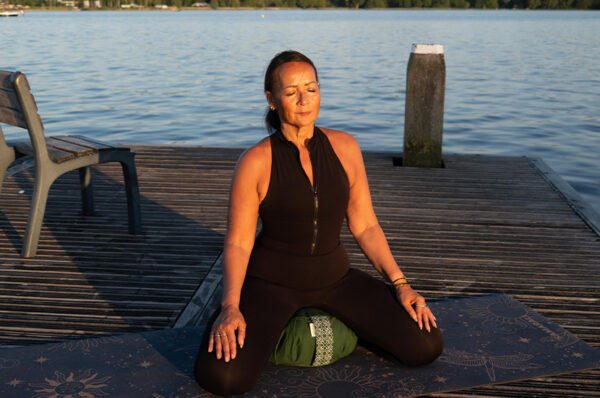
There is also a strong nervous system component. Yin yoga activates the parasympathetic nervous system — the body’s rest-and-digest mode — which directly counters the sympathetic stress response triggered by hard training. Spending time in this calmer physiological state lowers cortisol, reduces inflammation, and creates the internal conditions the body needs to repair muscle fibres efficiently. A supportive surface matters here too; practising on a quality mat helps you fully relax into each pose without discomfort. Our natural rubber yoga mat provides the cushioning and grip needed for longer holds.
What are the specific benefits of yin yoga for athletes?
For athletes, yin yoga offers several targeted benefits: improved joint mobility, reduced injury risk, faster tissue recovery, and better stress regulation. These benefits compound over time, making yin yoga a valuable long-term investment in athletic longevity rather than just a short-term fix after a hard session.
Joint mobility and injury prevention
Regular yin yoga practice gradually increases the range of motion in hips, spine, shoulders, and knees — areas that take significant load during most sports. Greater mobility means the body can move more efficiently and absorb impact better, which directly reduces the likelihood of overuse injuries and strains. Athletes who incorporate yin yoga consistently often report fewer tight spots that need constant foam rolling or physiotherapy attention.
Stress regulation and mental recovery
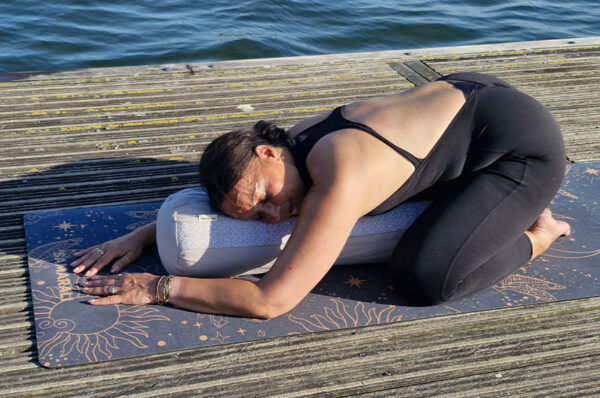
Physical recovery is only half the equation. Training also taxes the nervous system and the mind, particularly for competitive athletes managing performance pressure. Yin yoga’s meditative quality — staying still, focusing on breath, tolerating mild discomfort without reacting — builds mental resilience alongside physical recovery. This dual benefit is something few other recovery modalities offer. Pairing your practice with a yoga bolster makes supported yin poses more accessible and comfortable, allowing you to stay in position long enough to gain the full benefit.
When should you do yin yoga in your training schedule?
The best time to do yin yoga for recovery is on rest days or in the evening after a hard training session. Practising yin yoga when your muscles are already warm — after a workout rather than before it — allows the tissue to release more readily. On complete rest days, a yin session helps maintain mobility without adding physical stress to the body.
Avoid doing yin yoga immediately before strength training or high-intensity sport. Because yin yoga temporarily relaxes connective tissue and reduces its elastic stiffness, performing explosive or heavy movements straight after can increase injury risk. A gap of several hours, or saving yin for the end of the day, is the practical rule of thumb.
In terms of frequency, two to three yin sessions per week is a reasonable starting point for most athletes. One session focused on the lower body (hips, hamstrings, lower back) and one on the upper body and spine covers the areas most commonly affected by training load. As your body adapts, you can increase frequency or session length based on how you feel.
Is yin yoga better for recovery than stretching or foam rolling?
Yin yoga, static stretching, and foam rolling each target different tissues and serve different recovery purposes, so they are more complementary than competitive. That said, yin yoga reaches deeper structures — particularly fascia and joint capsules — that foam rolling and brief stretching do not address as effectively. For athletes seeking comprehensive recovery, combining all three is more effective than choosing just one.
Foam rolling is excellent for releasing superficial muscular tension and improving blood flow immediately after exercise. It works quickly and is well suited to pre-session warm-ups or short post-session routines. Static stretching improves muscle length when held for 30 to 60 seconds and is straightforward to integrate into any cool-down.
Yin yoga requires more time — a typical session runs 45 to 75 minutes — but it works on a different level. The extended holds create a sustained, low-load stress on connective tissue that shorter stretches simply cannot replicate. Over weeks and months, this leads to structural changes in tissue flexibility and joint health that foam rolling and brief stretching alone cannot produce. For athletes dealing with chronic tightness, recurring stiffness, or reduced joint range of motion, yin yoga often delivers noticeable improvements where other methods have plateaued.
The honest answer is that yin yoga is not a replacement for foam rolling or stretching — it is a deeper, slower layer of recovery work that completes the picture. If you are short on time, foam rolling covers the basics. If you want lasting mobility and genuine tissue-level recovery, regular yin yoga practice is worth the investment.
Frequently Asked Questions
How long does it take to notice recovery benefits from yin yoga as an athlete?
Most athletes notice improvements in post-session stiffness and general mobility within two to four weeks of consistent practice — typically two to three sessions per week. Deeper structural changes in connective tissue and joint range of motion tend to develop over one to three months, as fascia and ligaments adapt more slowly than muscle. The key is regularity rather than intensity; even shorter 30-minute sessions add up meaningfully over time.
Can I do yin yoga if I'm sore or injured?
Mild to moderate muscle soreness (DOMS) is generally fine to work with in yin yoga, as the gentle, passive nature of the practice can actually help ease that kind of discomfort. However, if you are dealing with an acute injury — a fresh sprain, tear, or inflamed joint — you should avoid loading that area and consult a physiotherapist before practising. When in doubt, work around the injured area and focus your yin session on unaffected parts of the body.
What are the most important yin yoga poses for sport-specific recovery?
The most universally valuable poses for athletes are Dragon (hip flexors and groin), Sleeping Swan or Half Pigeon (outer hips and glutes), Caterpillar (hamstrings and lower back), Sphinx or Seal (lumbar spine and hip flexors), and Shoelace (outer hips and IT band). Runners and cyclists benefit most from lower-body focused sequences, while swimmers and overhead athletes should prioritise thoracic spine and shoulder openers like Thread the Needle. Holding each pose for three to five minutes is where the connective tissue benefit really begins.
Do I need any equipment to start a yin yoga recovery practice?
At a minimum, a good-quality yoga mat with adequate cushioning is essential, since you will be holding floor-based positions for several minutes at a time. Beyond that, props like a bolster, two yoga blocks, and a blanket significantly improve accessibility — they allow you to fully relax into poses rather than straining to hold a shape, which is the entire point of yin. You do not need a studio membership; plenty of free and paid yin yoga sessions are available online, making it easy to start a home practice immediately.
Is yin yoga suitable for beginners who have never done any yoga before?
Yes — yin yoga is actually one of the most beginner-friendly yoga styles because it does not require strength, balance, or prior flexibility. The focus is on stillness and passive relaxation rather than movement skill, so athletes new to yoga typically adapt quickly. The main challenge for beginners is mental: staying still and tolerating the mild sensation of a long hold. Starting with shorter holds of two minutes and gradually building to four or five minutes is a practical approach for those just getting started.
Can yin yoga replace a dedicated rest day, or should it be treated as additional training load?
Yin yoga is low enough in physical demand that it is generally considered restorative rather than an additional training load, making it appropriate on rest days without compromising recovery. It does not stress the cardiovascular system or create meaningful muscular fatigue, so it will not interfere with your body's repair processes. Think of it the way you would think of a gentle walk or light mobility work — it supports recovery rather than competing with it.
What's the biggest mistake athletes make when starting yin yoga for recovery?
The most common mistake is pushing too hard into the pose — treating yin yoga like a flexibility workout and forcing the stretch to its maximum edge. Yin poses should be held at about 60–70% of your maximum range, where you feel a gentle, sustainable sensation rather than sharp or intense discomfort. Overstretching connective tissue can cause irritation or micro-damage, the opposite of the recovery effect you are after. Less effort, more patience, and consistent practice over time is the correct approach.
Ready to build your yin yoga recovery practice at home? At Samarali you will find everything you need to get started — from our natural rubber yoga mat, designed for the cushioning and grip that long holds demand, to our yoga bolster, which makes supported poses genuinely accessible and deeply restorative. Round out your setup with an organic cotton yoga blanket for extra comfort during floor-based sequences. Browse the full yoga mat collection and yoga sets at Samarali and find the right foundation for your recovery routine. Shop now and give your body the recovery it deserves.