


Winter solstice yoga is a meaningful practice of slowing down, turning inward, and honoring the natural rhythm of the year’s longest night. It combines gentle, restorative movement with breath awareness and stillness to support rest and inner renewal. The solstice offers a natural invitation to pause, reflect, and set intentions for the months ahead. Below, we answer the most common questions about building a solstice yoga ritual that truly nourishes you.
What makes the winter solstice meaningful for a yoga practice?
The winter solstice is meaningful for yoga because it marks the year’s longest night and the return of light, making it a powerful moment for reflection, release, and renewal. In yoga philosophy, the cycles of nature mirror the cycles of the body and mind. Honoring the solstice through practice aligns your inner world with the outer world, creating a sense of grounded presence that everyday sessions often miss.
Across many traditions, the winter solstice has been recognized as a threshold moment. It is not simply an astronomical event but a cultural and spiritual one. Yoga, rooted in the idea that we are part of a larger whole, naturally connects with this seasonal turning point. Practicing on or around the solstice encourages you to meet the darkness with curiosity rather than resistance, using it as fertile ground for self-inquiry.
For many practitioners, the solstice yoga ritual becomes an annual anchor, a moment in the year when the practice feels genuinely ceremonial rather than routine. It invites you to ask: What am I carrying that no longer serves me? What do I want to cultivate as the light returns? These are not abstract questions. They become embodied through movement, breath, and stillness on the mat.
What yoga poses are best for a winter solstice ritual?
The best yoga poses for a winter solstice ritual are slow, grounding, and restorative. Think forward folds, hip openers, supported inversions, and poses that encourage surrender rather than effort. Yin and restorative yoga styles are particularly well suited to solstice practice because they mirror the season’s invitation to go inward and conserve energy.
Grounding and releasing poses
Child’s Pose (Balasana) is a cornerstone of any solstice session. It is deeply surrendering, encourages breath into the back body, and symbolizes the act of bowing to something greater than yourself. Seated Forward Fold (Paschimottanasana) works similarly, inviting you to let go of the need to push forward and instead soften into what is. Both poses are excellent for calming the nervous system during the dark, often overstimulating holiday season.
Supported and restorative poses
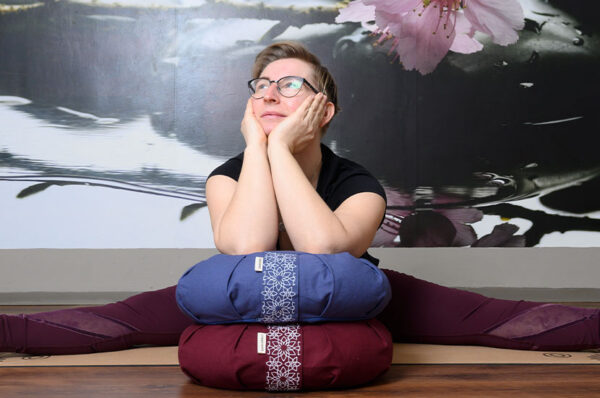
Supported poses are where the solstice ritual truly shines. Legs Up the Wall (Viparita Karani) reverses the usual downward pull of gravity and encourages deep rest. Reclined Bound Angle Pose (Supta Baddha Konasana) opens the hips and chest while the body is fully supported. Using a yoga bolster under the spine or hips in these poses adds warmth and comfort, making it easier to stay still long enough for genuine release. Savasana, held for longer than usual, is the perfect closing pose for a solstice practice, giving the body time to integrate everything that has been stirred.
How do you create a simple winter solstice yoga ritual at home?
To create a simple winter solstice yoga ritual at home, set aside 30 to 60 minutes in a warm, dimly lit space, open with a few minutes of seated stillness or journaling, move through a slow sequence of grounding poses, and close with an extended Savasana and a moment of intention-setting. The key is creating a container that feels intentional rather than incidental.
Here is a straightforward structure you can follow:
- Prepare your space. Clear a quiet corner, light a candle or use low lighting, and gather any props you need. Warmth matters in winter, so have a blanket close by. An organic cotton yoga blanket works beautifully here, both for warmth during Savasana and for extra support in seated poses.
- Open with stillness. Sit for three to five minutes in silence. Notice the quality of the darkness, the quiet, and your own breath. You might light a candle to symbolize the returning light.
- Set an intention. Before moving, name something you want to release and something you want to welcome. Keep it simple and honest.
- Move through a slow sequence. Spend 20 to 40 minutes in grounding, restorative poses. There is no need for a demanding sequence. Let the poses be long and unhurried.
- Close with Savasana and reflection. Hold Savasana for at least ten minutes. Afterwards, take a few moments to journal or simply sit with whatever arose during the practice.
The ritual does not need to be elaborate to be meaningful. Consistency of intention matters far more than complexity.
Should you practice yoga differently in winter than in other seasons?
Yes, yoga practice benefits from being adapted to winter. In colder months, the body naturally wants to conserve energy, move more slowly, and turn inward. Practicing in alignment with this seasonal rhythm, rather than against it, supports both physical wellbeing and mental resilience. Winter is an ideal time to favour restorative and yin styles over vigorous vinyasa, and to spend more time in meditation and breathwork.
Ayurveda, the traditional wellness system closely linked to yoga, describes winter as a Vata and Kapha season, one that calls for warmth, nourishment, and steadiness. Practically, this means warming up more gradually before practice, holding poses for longer, and prioritizing grounding over intensity. It also means being gentler with yourself if your energy levels are lower than in spring or summer.
A few practical adjustments make winter yoga practice more effective and enjoyable:
- Warm up the room before you begin, or practice in the warmest part of your home
- Extend your warm-up sequence to protect joints and muscles that are colder and less pliable
- Incorporate more breathwork, particularly warming pranayama techniques like Kapalabhati or Ujjayi breath
- Use props generously to make poses more supportive and sustainable
- Allow your seasonal yoga practice to include more stillness, seated meditation, and reflection than in warmer months
Seasonal yoga is not about doing less. It is about doing what genuinely serves you at this time of year. Winter is an invitation to build a relationship with rest, and that is a practice worth taking seriously.
Frequently Asked Questions
How long should a winter solstice yoga session last for it to feel meaningful?
There is no fixed minimum, but 30 to 60 minutes tends to be the sweet spot for a solstice ritual to feel genuinely ceremonial rather than rushed. What matters most is the quality of your attention, not the duration. Even a 20-minute session done with full intention, candle lit and phone away, will carry more weight than an hour of distracted movement.
Do I need any special equipment or props to do a winter solstice yoga ritual?
You do not need anything elaborate, but a few props make a meaningful difference in restorative and yin-style sessions. A yoga bolster, a blanket, and a block are the most useful items for supported poses like Legs Up the Wall or Reclined Bound Angle. If you do not own props yet, folded blankets, firm pillows, and stacked books are perfectly functional substitutes that allow you to start right away.
What if I'm a complete beginner — can I still do a winter solstice yoga ritual?
Absolutely, and in many ways the solstice ritual is one of the most beginner-friendly yoga experiences you can have. Because the focus is on slow, restorative poses rather than complex sequences or advanced postures, there is very little technical barrier to entry. Start with just three or four simple poses, Child’s Pose, Legs Up the Wall, and a long Savasana, and let the intention and stillness do most of the work.
What are the most common mistakes people make when trying to create a solstice yoga ritual?
The most common mistake is over-complicating the session by trying to plan an elaborate sequence, which often leads to it never happening at all. A second frequent pitfall is treating the ritual like a regular workout and pushing for intensity when the whole point is surrender and rest. Keep the structure simple, resist the urge to fill every moment with movement, and trust that stillness is the practice, not a gap in it.
Can I combine breathwork or meditation with my solstice yoga practice, and if so, how?
Yes, and doing so significantly deepens the experience. A practical approach is to open your session with five minutes of slow, conscious breathing to settle the nervous system, weave gentle Ujjayi breath throughout the movement portion, and close with a seated meditation or body scan after Savasana. Even a simple practice of inhaling for four counts and exhaling for six counts activates the parasympathetic nervous system and reinforces the inward, restorative quality of the solstice.
Is it better to practice alone or with others for a winter solstice ritual?
Both have real value, and the right choice depends on what you personally need most at this time of year. Practicing alone offers deep quiet and the freedom to move at your own pace, which suits the introspective nature of the solstice beautifully. Practicing with a small group of trusted friends or family, even virtually, can add a sense of shared ceremony and community that amplifies the feeling of marking something significant together.
How can I carry the intention I set during my solstice practice into the weeks that follow?
Write your intention down immediately after your practice while it still feels alive, and place it somewhere you will see it daily, such as a journal, a mirror, or your phone wallpaper. Revisiting your solstice intention once a week through a short journaling check-in is one of the most effective ways to keep it from fading into the background. Many practitioners find it meaningful to hold the same intention all the way through to the spring equinox, using each yoga session in between as a quiet opportunity to reconnect with it.