


Using a meditation cushion during the Christmas season means giving yourself a dedicated, comfortable seat for short daily stillness practices that interrupt the cycle of holiday stress. Even five to ten minutes of supported, upright sitting can reset your nervous system and help you move through the season with more patience and presence. Below, we answer the most common questions about making meditation cushions work for you this Christmas.
What makes the Christmas season so hard to stay calm?
The Christmas season is hard to stay calm in because it stacks multiple stressors simultaneously: financial pressure, packed social calendars, family dynamics, disrupted routines, and the cultural expectation to feel joyful. This combination activates the body’s stress response repeatedly throughout the day, leaving many people feeling anxious, irritable, or emotionally depleted by the time December ends.
Unlike everyday stress, holiday stress is layered. You might be managing gift shopping while hosting guests, while navigating a difficult family relationship, while trying to maintain your exercise routine. Each individual demand feels manageable, but the accumulation is what wears people down. The nervous system has limited capacity to recover when stressors keep arriving before the previous ones have resolved.
There is also a gap between expectation and reality that makes the season particularly draining. Advertising, social media, and cultural tradition all frame Christmas as a time of warmth and togetherness, which can amplify feelings of stress or loneliness when reality falls short of that image. Recognising this gap, rather than pushing through it, is the first step toward a more mindful Christmas.
How does a meditation cushion help during the holidays?
A meditation cushion helps during the holidays by creating a physical anchor for your practice. When you have a dedicated cushion in a consistent spot, sitting down becomes a deliberate, low-effort ritual rather than something you have to prepare for. The cushion elevates your hips above your knees, which tilts the pelvis forward, lengthens the spine naturally, and allows you to sit upright without muscular strain for longer periods.
Posture matters more than most people realise when it comes to meditation for the holidays. Slumping on a sofa or sitting cross-legged on a hard floor both create physical discomfort that pulls attention away from the breath and towards the body. A well-designed meditation cushion removes that distraction, making it significantly easier to stay present for even a short session.
Beyond the physical support, the cushion functions as a psychological cue. Over time, sitting on it signals to your brain that this is a moment of intentional rest. During a season when every surface in your home might be associated with tasks, food preparation, or social activity, having one object that means stillness is genuinely valuable. It lowers the mental barrier to actually sitting down and doing the practice.
What’s the best way to use a meditation cushion for short holiday sessions?
The best way to use a meditation cushion for short holiday sessions is to keep your practice simple, timed, and consistent. Sit on your cushion, set a timer for five to ten minutes, close your eyes, and focus on your breath. That is the entire method. During the Christmas season, simplicity is not a compromise; it is the strategy. A short practice you actually do is far more effective than a longer one you keep postponing.
Setting up your sitting position
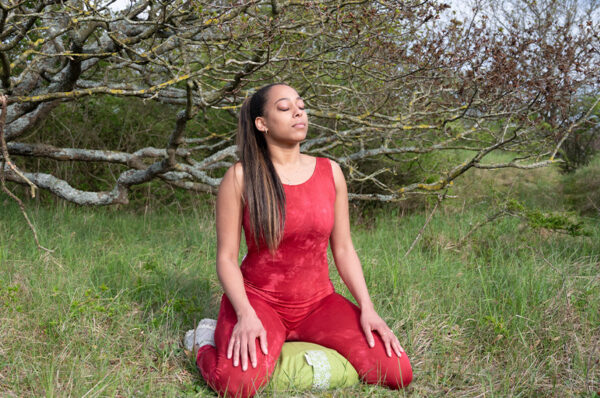
Place the cushion on a flat surface, sit on the front third of it rather than the centre, and cross your legs comfortably in front of you. This positioning uses the cushion’s height most effectively, encouraging the pelvis to tilt forward and the lower back to adopt its natural curve. Rest your hands on your knees or in your lap, let your shoulders drop away from your ears, and allow your chin to tuck very slightly.
If cross-legged sitting is uncomfortable, try kneeling with the cushion between your thighs and calves in a seiza position. A yoga bolster can also support this position well if you want additional height or width beneath you.
Choosing a focus for the session
During the holidays, breath awareness is the most practical focus because it requires no preparation and works anywhere. Simply notice the sensation of air entering and leaving your nostrils, or the rise and fall of your chest. When thoughts about gift lists, family plans, or work deadlines arise, acknowledge them without judgement and return to the breath. This act of returning, done repeatedly, is the practice itself. It builds the same mental muscle that makes you calmer and more responsive in the rest of your day.
Where should you set up your meditation cushion at home during Christmas?
Set up your meditation cushion in the quietest corner of your home that you can access consistently, ideally away from the main gathering spaces and screens. The specific room matters less than the reliability of the spot. A bedroom corner, a spare room, or even a section of a hallway works well if it is somewhere you can return to each day without having to move things around first.
During Christmas, homes tend to fill with decorations, guests, and general clutter, which makes a dedicated meditation corner more valuable, not less. Keeping your cushion visible and in place serves as a daily reminder that the space exists for you. If you pack it away, you are far less likely to use it.
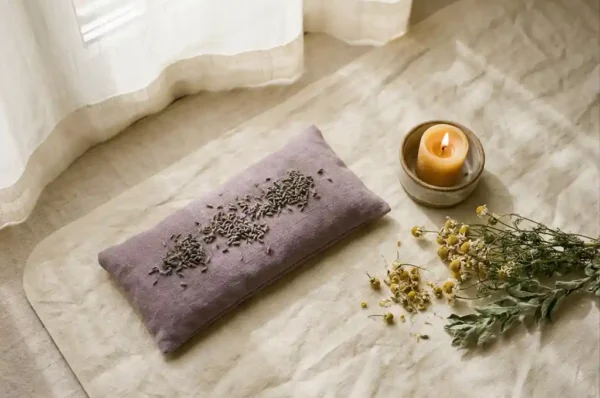
A few practical touches can make the spot feel more intentional without requiring much effort. A candle, a small plant, or a folded blanket nearby can signal that this area belongs to your practice. If you share your home with others, communicating that this is your quiet time, even briefly, sets a boundary that most people will respect. The goal is not a perfect meditation room but a reliable, low-friction place where sitting down with your cushion feels like the obvious and easy thing to do.
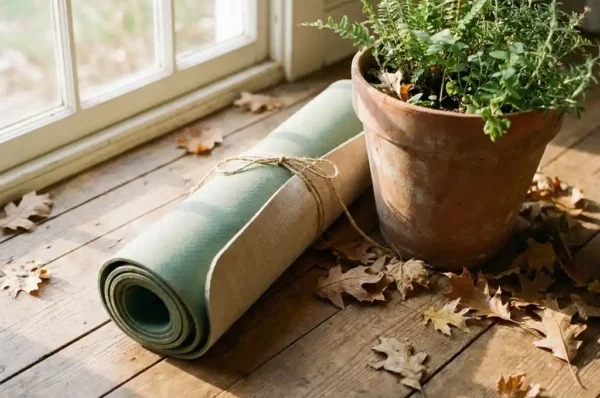
If you are building out a fuller practice space, pairing your cushion with a meditation mat beneath it adds warmth and definition to the area, which further reinforces the habit. Small environmental signals like this make a genuine difference when motivation is low and the holiday season is pulling your attention in every direction.
Frequently Asked Questions
How do I stay consistent with meditation when my holiday schedule keeps changing?
Anchor your session to a fixed daily event rather than a fixed time — for example, sitting on your cushion immediately after your morning coffee or right before bed, regardless of what the rest of the day holds. This habit-stacking approach means your practice travels with your routine even when that routine shifts. During the Christmas period, aiming for the same five minutes every day is far more sustainable than longer sessions that depend on a predictable schedule.
What if I can't stop thinking about my to-do list while I'm sitting?
This is one of the most common experiences in meditation, and it does not mean you are doing it wrong — it means your mind is doing exactly what minds do. Rather than trying to silence holiday thoughts, keep a small notepad next to your cushion and jot down any urgent tasks before you begin, so your brain can release them. During the session, each time a thought pulls your attention, simply label it ‘thinking’ and return to the breath; this redirection is the skill you are actively building.
Can children or other family members use the meditation cushion too?
Yes, and involving children in even a two-minute breathing exercise on the cushion can be a surprisingly effective way to bring calm into a busy household. Keep expectations low — children may fidget, peek, or last only a minute, and all of that is fine. If the cushion becomes a shared family object, just make sure you also protect some solo sitting time for yourself, since your own nervous system recovery is what allows you to show up patiently for everyone else.
Is there a specific type of meditation cushion that works best for holiday stress relief?
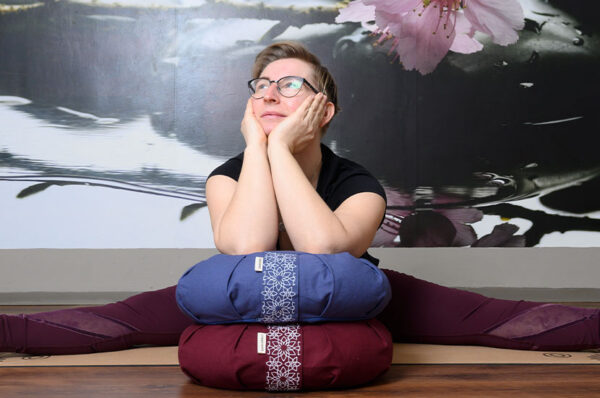
For most people, a standard round zafu filled with buckwheat hulls is the most versatile starting point — it provides firm, adjustable support and suits a wide range of body types and sitting styles. If you find cross-legged sitting uncomfortable even with a zafu, a crescent-shaped cushion offers better thigh support, or a zabuton mat layered beneath your cushion adds extra cushioning for your ankles and knees. The best cushion is ultimately the one that removes physical discomfort from the equation so your attention can stay on the practice.
What should I do if I only have two or three minutes to sit during a particularly hectic day?
Use them — two minutes of deliberate, upright breathing on your cushion is genuinely better than nothing, and research on brief mindfulness practices supports this. Sit down, take three slow, intentional breaths, and then continue with whatever you need to do. The value is not only in the physiological reset but in the act of choosing stillness at all; even a very short pause reinforces the habit and signals to your nervous system that recovery is available.
How do I handle it if family members make comments or jokes about my meditation practice?
Keep your practice low-key and frame it in practical terms if anyone asks — something like ‘I just take a few quiet minutes in the morning to clear my head’ tends to land better than a detailed explanation of mindfulness. You do not owe anyone a justification for taking five minutes to yourself. If comments persist, the most effective response is simply continuing the habit; people tend to stop questioning a practice when they notice it makes you calmer and easier to be around.
After the Christmas season ends, how do I build on what I've started?
The holiday period is actually an excellent foundation to build from, because you have already proven to yourself that you can maintain a practice under difficult conditions. In January, consider extending your sessions by two to three minutes each week until you reach a length that feels genuinely nourishing rather than obligatory. Pairing your cushion practice with a guided meditation app or a simple breathwork routine can also add variety and structure as you move from a stress-management tool into a longer-term daily habit.