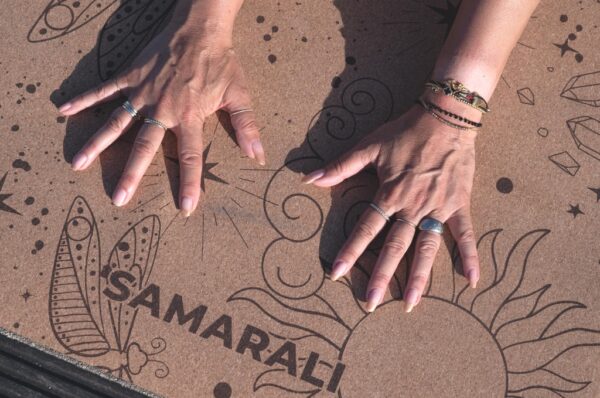



The best eco-friendly accessories for Vinyasa yoga are a natural rubber or organic cotton yoga mat, supportive props like a yoga bolster and blanket, and a reusable mat bag made from sustainable materials. The key is choosing products made from renewable, biodegradable, or certified organic materials that can handle the dynamic, flow-based movement of a Vinyasa practice. Below, we break down exactly what to look for and why it matters.
Which materials make yoga accessories truly eco-friendly?
Eco-friendly yoga accessories are made from materials that are either naturally renewable, biodegradable, or produced without harmful chemicals. The most trustworthy options include natural rubber, organic cotton, jute, cork, and recycled fibers. What separates these from conventional alternatives is their lower environmental footprint across the full product lifecycle, from raw material to end of life.
Natural rubber, tapped from rubber trees, is one of the most popular sustainable choices for yoga mats because it is biodegradable and provides excellent grip. Organic cotton is grown without synthetic pesticides or fertilizers, making it a gentler option for both your skin and the soil. Cork is another standout material: it is harvested without cutting down the tree, making it inherently renewable.
Materials to avoid include PVC (polyvinyl chloride), which releases toxic chemicals during production and does not biodegrade, and synthetic foam blends that are petroleum-derived. If an accessory lists “TPE” or “foam” without further detail, it is worth researching whether the material is truly recyclable or is just marketed as eco-friendly without certification to back it up.
What eco-friendly accessories do you need for Vinyasa yoga?
For a Vinyasa yoga practice, the essential eco-friendly accessories are a non-slip yoga mat, a supportive bolster, a lightweight blanket, and a durable mat bag. Because Vinyasa is a flowing, movement-intensive style, your accessories need to be both functional and durable enough to handle regular, dynamic use while still being made from sustainable materials.
Yoga mat
A high-quality mat is the foundation of any Vinyasa practice. Look for a natural rubber yoga mat that offers grip, cushioning, and stability during transitions between poses. Natural rubber mats perform especially well when things get sweaty, which is common in a flowing Vinyasa class.
Bolster and blanket
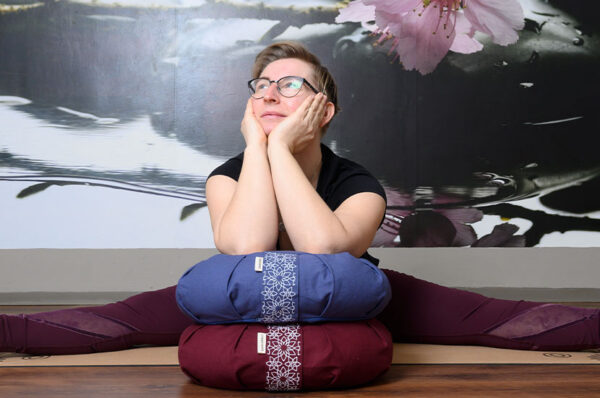
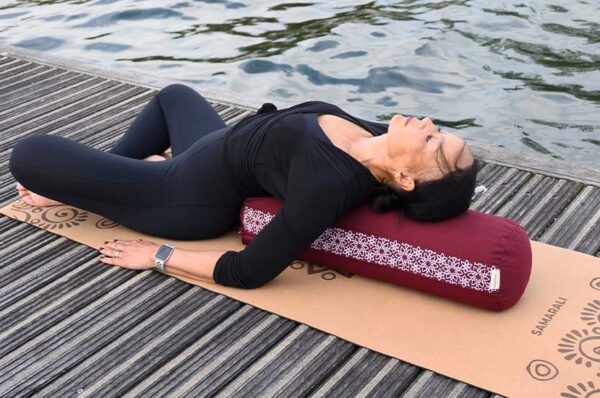
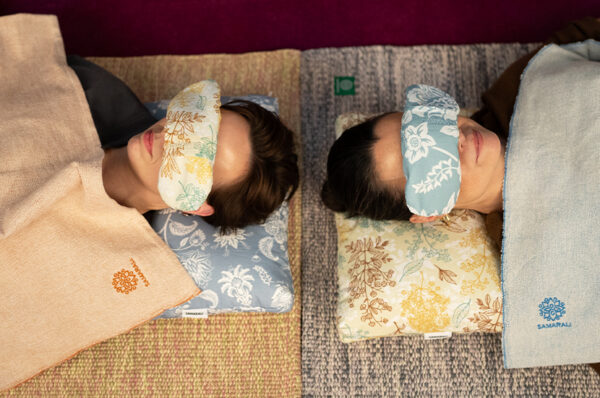
A yoga bolster is useful for restorative moments within a Vinyasa sequence, particularly for supported backbends or end-of-practice relaxation. Pair it with an organic cotton yoga blanket for added warmth during Savasana or as a prop for seated poses. Both should be made from natural, washable fabrics to stay fresh over time.
Mat bag
A yoga mat bag made from organic cotton or recycled fabric keeps your mat protected between sessions without adding unnecessary plastic to your kit. It is a small but meaningful swap that rounds out a genuinely sustainable practice setup.
How do you choose the best sustainable yoga mat for Vinyasa?
The best sustainable yoga mat for Vinyasa is one that combines natural, certified materials with enough grip and thickness to support continuous movement. For Vinyasa specifically, prioritize grip over cushioning, since the style demands stability in quick transitions. A natural rubber base with a textured surface is generally the most reliable combination.
Here is what to look for when evaluating your options:
- Material: Natural rubber or organic cotton are the most sustainable and performance-tested choices for Vinyasa flow.
- Thickness: A mat between 4mm and 6mm offers a good balance of joint support and ground connection during standing poses.
- Grip: Look for a non-slip surface that holds up even when wet from perspiration.
- Certifications: OEKO-TEX, GOTS (Global Organic Textile Standard), or similar certifications confirm the materials meet verified environmental and safety standards.
- Durability: A sustainable mat that wears out in six months is not truly eco-friendly. Natural rubber mats tend to be long-lasting when cared for properly.
We also offer an organic cotton yoga rug as a complementary option for practitioners who prefer a softer, breathable surface layered over a mat. It is particularly well-suited for slower Vinyasa flows or warm indoor practices where grip from natural fiber is sufficient.
Are certified eco-friendly yoga products worth the higher price?
Yes, certified eco-friendly yoga products are worth the higher price for most conscious practitioners. Certifications like OEKO-TEX, GOTS, and FSC verify that the materials and manufacturing processes meet independently audited environmental and safety standards. You are not just paying for a label; you are paying for accountability, transparency, and a product that genuinely does what it claims.
From a practical standpoint, certified sustainable yoga accessories tend to be more durable than cheaper, uncertified alternatives. Natural rubber mats, organic cotton blankets, and responsibly sourced props are built to last, which means fewer replacements over time. When you calculate cost per use rather than upfront price, the difference often narrows significantly.
There is also the question of what you are avoiding. Non-certified products may still contain chemical residues, synthetic dyes, or materials that off-gas over time, which matters when you are breathing deeply in close contact with your mat or props for an hour or more. For a practice as physically intimate as Vinyasa yoga, what your accessories are made of is a genuine health consideration, not just an ethical one.
For practitioners who are new to sustainable yoga gear and want to explore the full range of options, browsing a curated selection of yoga mats designed with both performance and environmental standards in mind is a practical starting point. Investing in quality, certified accessories from the beginning tends to be more satisfying and more sustainable in every sense of the word.
Ready to build a sustainable Vinyasa practice from the ground up? At Samarali, you will find a carefully curated range of eco-friendly yoga accessories — from our natural rubber yoga mat and organic cotton yoga rug to a yoga bolster, organic cotton yoga blanket, and yoga mat bag — all made from certified, sustainable materials that support both your practice and the planet. Shop the full yoga mat collection and complete your setup today.
Frequently Asked Questions
How do I care for a natural rubber yoga mat to make it last longer?
To extend the life of a natural rubber yoga mat, clean it after each session with a gentle, natural spray cleaner or a damp cloth with mild soap, then air-dry it flat away from direct sunlight, as UV exposure can degrade the rubber over time. Avoid rolling it with the top surface facing inward, as this can cause creasing, and never machine-wash or submerge it in water. With consistent care, a high-quality natural rubber mat can last several years, making it a genuinely cost-effective and sustainable investment.
Can I use an organic cotton yoga rug as my only mat for Vinyasa, or do I need something underneath it?
For most Vinyasa practices, an organic cotton yoga rug works best when layered over a non-slip base mat, since the dynamic transitions and sweaty conditions of a flow class can cause a standalone rug to shift on smooth studio or home floors. However, if you practice on a carpeted surface or prefer a slower, more grounded Vinyasa style, a cotton rug alone can provide sufficient traction. The combination of a natural rubber mat underneath and a cotton rug on top is a popular setup that maximizes both grip and comfort.
What should I look for on a product label to confirm an accessory is genuinely eco-friendly and not just greenwashed?
Look for third-party certifications printed on the label or listed in the product description, such as OEKO-TEX Standard 100, GOTS (Global Organic Textile Standard), or FSC (Forest Stewardship Council) for cork and wood-based materials — these are independently audited and not self-issued. Be cautious of vague terms like u0022natural,u0022 u0022green,u0022 or u0022eco-consciousu0022 that appear without any certification to back them up. Transparent brands will also disclose where their materials are sourced and manufactured, which is a strong indicator of genuine accountability.
How do I know what thickness of eco-friendly yoga mat is right for my Vinyasa practice?
For Vinyasa yoga, a mat in the 4mm to 5mm range is generally the sweet spot: thick enough to cushion your knees and wrists during transitions, but thin enough to maintain a stable connection to the floor in standing and balancing poses. If you have sensitive joints or practice on hard floors, leaning toward 5mm to 6mm is reasonable, though anything thicker can compromise stability in dynamic movements. Beginners may prefer slightly more cushioning while they build strength, while experienced practitioners often prefer a thinner, firmer surface for better proprioceptive feedback.
Are there eco-friendly options for practitioners on a tighter budget who can't afford fully certified gear right away?
Yes — a practical approach is to prioritize the accessories you have the most physical contact with, starting with your yoga mat, since that is where material quality and chemical safety matter most. For props like bolsters and blankets, you can often find second-hand options in good condition, which is itself a sustainable choice by extending the life of existing products. As your practice deepens and budget allows, gradually replacing individual items with certified sustainable alternatives is a more manageable path than overhauling your entire kit at once.
What is the most common mistake people make when switching to eco-friendly yoga accessories?
The most common mistake is assuming that any product marketed as u0022naturalu0022 or u0022eco-friendlyu0022 is automatically safe, sustainable, and high-performing — without checking for certifications or reading the full materials list. Another frequent misstep is choosing accessories based on sustainability alone without considering whether they suit the specific demands of Vinyasa yoga, such as grip performance under sweat or durability through frequent use. Taking a few minutes to verify certifications and read honest user reviews before purchasing will save you from disappointing products that underdeliver on both the eco and performance fronts.
How do I properly dispose of or recycle an old yoga mat when it's time to replace it?
Natural rubber mats are biodegradable, but they break down slowly in landfill conditions, so it is worth exploring better end-of-life options first. Many yoga studios, community centers, and animal shelters accept old mats for reuse as floor padding or pet bedding. Some brands also offer take-back or recycling programs, and platforms like TerraCycle occasionally run collection schemes for yoga equipment — checking the brand’s website or contacting them directly is a good first step before discarding a worn-out mat.