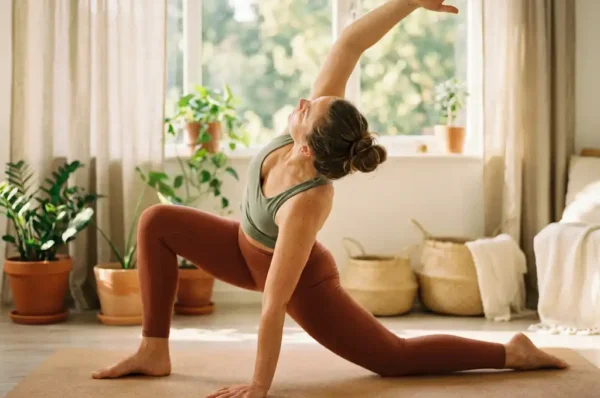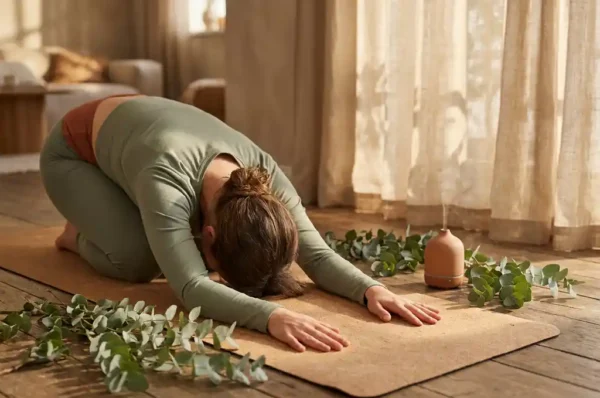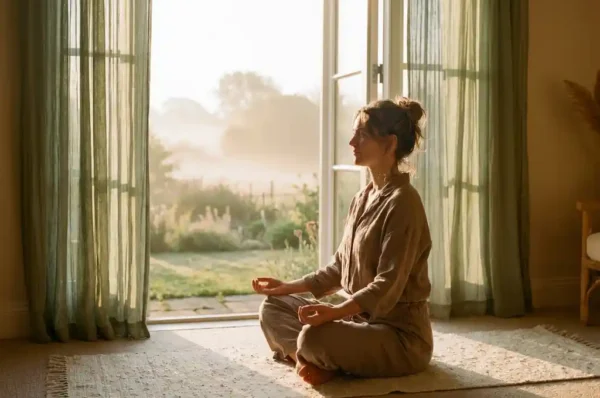



Most people benefit from practicing Vinyasa yoga two to four times per week, with three sessions being the sweet spot for steady progress. This frequency gives your body enough challenge to build strength and flexibility while allowing adequate time to recover between sessions. Below, we break down what regular practice does to your body, how to find your ideal rhythm, and how long each session should be.
What happens to your body when you practice Vinyasa Yoga regularly?
Regular Vinyasa yoga practice creates meaningful, cumulative changes in your body over time. Because Vinyasa links breath with continuous movement, it simultaneously trains cardiovascular endurance, muscular strength, and flexibility. Within a few weeks of consistent practice, most people notice improved posture, better core stability, and a greater range of motion in the hips, shoulders, and spine.
Beyond the physical, Vinyasa has a measurable effect on the nervous system. Rhythmic breathing patterns activate the parasympathetic nervous system, which helps lower stress hormones and improve sleep quality. Many practitioners also report sharper mental focus, partly because holding and transitioning through poses demands sustained concentration.
Over months of regular practice, the benefits compound. Joints become more mobile, muscles develop functional strength rather than bulk, and balance improves noticeably. Because Vinyasa is a weight-bearing practice, it also supports bone density in a gentle, low-impact way. The key is consistency: sporadic sessions deliver far less than a steady, manageable weekly rhythm.
How many times a week should you do Vinyasa Yoga?
For most practitioners, two to four Vinyasa yoga sessions per week is the ideal range. Beginners do well starting with two sessions and building from there, while intermediate and advanced practitioners often thrive with three to four. This frequency is enough to see real progress without overtaxing the body.
Beginners: start with two sessions
If you are new to Vinyasa, two sessions per week gives your muscles, joints, and connective tissue time to adapt to the demands of flow-based movement. Jumping straight into daily practice when your body is not yet conditioned increases the risk of strain. Use your off days for gentle walking, stretching, or restorative practices to stay active without adding intensity.
Intermediate and advanced practitioners: aim for three to four
Once your body has adapted and you feel comfortable moving through sun salutations and standing sequences without significant soreness, increasing to three or four sessions per week accelerates progress. At this stage, you can also begin varying the intensity, alternating a challenging flow class with a slower, more alignment-focused session to keep the practice balanced and sustainable.
If your goal is stress relief or general wellness rather than athletic progression, even two well-chosen sessions per week deliver significant benefits. Quality of attention during practice matters as much as raw frequency. A supportive foundation helps too: practicing on a stable, grippy surface like a natural rubber yoga mat makes a real difference in how safely and confidently you move through sequences.
Can you do Vinyasa Yoga every day?
Yes, you can practice Vinyasa yoga every day, but it requires thoughtful variation in intensity. Doing a vigorous, full-length flow seven days a week is likely to lead to fatigue or overuse injuries over time. The more sustainable approach is to alternate between energetic sessions and gentler, shorter practices throughout the week.
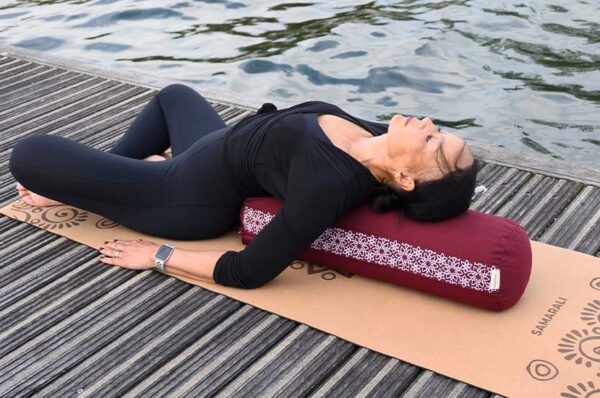
Daily practice works well when you treat some sessions as active recovery rather than full workouts. A 20 to 30 minute slow flow, a restorative sequence, or even a focused breathwork practice counts as practice without adding significant physical load. This keeps the habit alive and reinforces the meditative dimension of yoga without grinding down your joints and muscles.
Listen to your body honestly. Persistent fatigue, recurring soreness in the same joints, or a sense of dread before practice are all signs you need more rest. Experienced practitioners who practice daily typically have years of conditioning behind them and know how to modulate effort intuitively. If you are within your first year of Vinyasa, daily practice is ambitious but manageable if you keep most sessions short and moderate in intensity.
How long should each Vinyasa Yoga session be?
A typical Vinyasa yoga session should last 45 to 75 minutes for a complete, well-rounded practice. This window allows enough time for a proper warm-up, a sustained flow sequence, peak poses, and a cool-down with Savasana. Shorter sessions of 20 to 30 minutes are still effective when time is limited, especially for more experienced practitioners who can move efficiently.
Session length should match your goal for that day. If you are working on building strength and stamina, a 60 to 75 minute session gives you room to explore challenging sequences and hold poses longer. If you are practicing for stress relief or as a complement to another workout, 30 to 45 minutes is often enough to feel the benefit without adding fatigue.
For beginners, starting with 45 minute classes is a sensible approach. Shorter sessions reduce the risk of mental and physical burnout while still covering the fundamental elements of a Vinyasa flow. As your endurance and familiarity with the sequences grow, extending sessions gradually feels natural rather than forced.
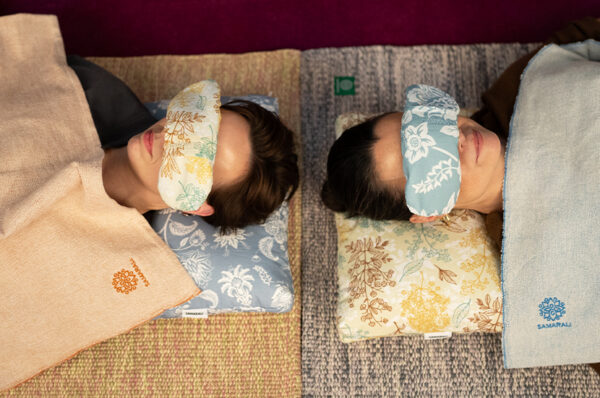
Whatever duration you choose, never skip the final rest pose. Savasana is not optional filler: it is the period when your nervous system integrates the work done during the session. Even five minutes of stillness at the end of a shorter practice makes the whole session more effective. If you practice at home and want to support your cool-down and recovery, exploring our range of yoga mats and accessories can help you create a comfortable, dedicated space that makes showing up consistently that much easier.
Frequently Asked Questions
How do I know if I'm progressing in my Vinyasa practice?
Progress in Vinyasa yoga shows up in subtle but measurable ways: smoother transitions between poses, the ability to hold challenging postures longer without losing breath control, and reduced soreness after sessions you once found exhausting. You might also notice postural improvements in your daily life, like sitting taller or moving with less stiffness in the morning. Keeping a simple practice journal — even just a few notes after each session — can help you spot patterns and milestones that are easy to overlook in the day-to-day.
What should I do on rest days between Vinyasa sessions?
Rest days don’t have to mean complete inactivity. Light activities like walking, swimming, or gentle stretching help flush out muscle soreness and maintain mobility without adding stress to tissues that are still recovering. Yin yoga or a short foam-rolling routine are particularly effective complements to Vinyasa because they target the connective tissue and fascia that flow-based practices tend to compress and load. The goal is active recovery — keeping the body moving gently so you show up to your next Vinyasa session feeling refreshed rather than stiff.
Is Vinyasa yoga enough on its own, or should I combine it with other forms of exercise?
For many people, a consistent Vinyasa practice covers a wide spectrum of fitness needs — cardiovascular conditioning, functional strength, flexibility, and stress management — making it a well-rounded standalone routine. That said, if your goals include significant muscle hypertrophy or sport-specific performance, pairing Vinyasa with resistance training or your chosen sport will fill in the gaps. Think of Vinyasa as an excellent foundation that enhances nearly any other physical activity by improving body awareness, breathing efficiency, and injury resilience.
What are the most common mistakes beginners make with their Vinyasa practice frequency?
The two most common mistakes are doing too much too soon and being inconsistent with scheduling. Jumping into daily vigorous sessions in the first few weeks almost always leads to burnout or minor injuries that force a longer break, which ultimately slows progress. On the other end, practicing only when motivation strikes — rather than on a fixed weekly schedule — prevents the body from building the cumulative adaptation that makes Vinyasa so effective. Committing to two set days per week and treating them like non-negotiable appointments is a far more reliable strategy than relying on inspiration alone.
Can I do Vinyasa yoga if I'm also doing strength training or running in the same week?
Absolutely — Vinyasa pairs well with both strength training and running, and many athletes use it specifically as a recovery and mobility tool. The key is to be mindful of scheduling: avoid placing a high-intensity Vinyasa session the day after a heavy leg day or a long run, as your muscles will already be fatigued and your form may suffer. A shorter, slower Vinyasa flow on those days, or placing your more vigorous sessions on days when your legs and core are fresh, will let you get the most out of both practices without one undermining the other.
How long does it realistically take to see noticeable results from Vinyasa yoga?
With two to three sessions per week, most practitioners notice early changes — improved flexibility, better breathing, and reduced stress — within three to four weeks. More significant physical changes, like visible improvements in core strength, balance, and overall body composition, typically become apparent after two to three months of consistent practice. Results vary depending on your starting fitness level, session quality, and how well you support your practice with adequate sleep and nutrition, but the timeline is encouraging: Vinyasa rewards consistency relatively quickly compared to many other forms of exercise.
Should I practice Vinyasa yoga in the morning or evening for the best results?
Neither time is objectively superior — the best time is whichever slot you can stick to consistently. Morning practice tends to energize the body, improve focus for the day ahead, and establish a reliable habit since fewer scheduling conflicts arise early in the day. Evening practice, on the other hand, is excellent for releasing tension accumulated during the day and can significantly improve sleep quality when the session ends with a proper cool-down and Savasana. If you have the flexibility to choose, experiment with both for a week or two and pay attention to how each timing affects your energy, mood, and sleep.
Ready to build a consistent Vinyasa practice with the right support? At Samarali, you will find everything you need to show up to your mat with confidence. Whether you are looking for a high-quality natural rubber yoga mat that keeps you grounded through every flow, a soft organic cotton yoga blanket for Savasana and restorative sessions, or a yoga bolster to support deeper stretches and recovery, Samarali has you covered. Browse the full yoga mat collection and complete your practice space today — shop now.